Lucid, Nuro and Uber Unveil Autonomous Taxi
NEWS
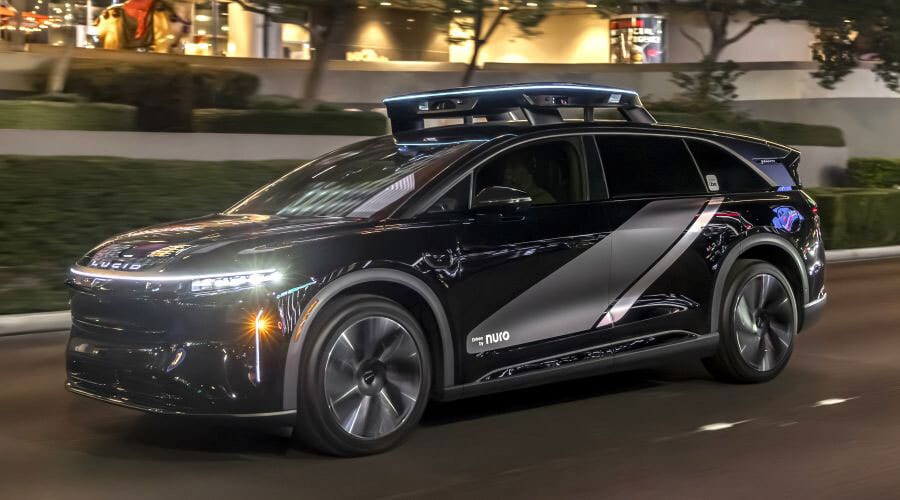
Lucid, Nuro and Uber are testing an autonomous taxi that is based on Lucid’s Gravity sport utility vehicle. Photo courtesy Lucid Group Inc.
LAS VEGAS—Lucid Group Inc., Nuro Inc. and Uber Technologies Inc. have unveiled their much-anticipated autonomous vehicle, which is based on Lucid’s Gravity SUV that will be assembled at the company’s factory in Casa Grande, AZ.
The vehicle features next-generation high-resolution cameras, solid-state lidar and radar systems that provide 360-degree perception. The sensors are integrated throughout the Gravity’s body and in a low-profile roof-mounted module designed to maximize visibility while preserving the vehicle's signature design. An in-vehicle visualization system displays what the robotaxi sees and its planned path in real-time, including maneuvers such as yielding to pedestrians, slowing at traffic lights, changing lanes and dropping off passengers.
“Our robotaxi program with Uber and Nuro is a key part of how [we are] leveraging [our] technology to create a more sustainable future of mobility that is widely accessible,” says Kay Stepper, vice president of ADAS and autonomous systems at Lucid. “Our engineering, range and interior comfort offers a unique platform, and when combined with Nuro’s technology and Uber’s scale, we are collectively building an experience like no other.”
“The debut of our production intent robotaxi is a significant milestone on our path to delivering autonomy at scale,” adds Dave Ferguson, CEO of Nuro. “By bringing together [our] proven level 4 autonomy, Lucid’s advanced vehicle architecture and Uber’s global reach, we’re building a service designed for real-world operations and long-term growth.”
Autonomous on-road vehicle testing began last month in the San Francisco Bay Area, where the ride-hailing service is expected to launch later this year.
“The [testing] program evaluates dozens of critical capabilities across the full autonomy stack, including [our] end-to-end AI foundation model, which blends state-of-the-art AI with clear, verifiable safety logic for comfortable, reliable performance,” explains Ferguson. “In addition to on-road testing, [we are conducting] closed-course testing and simulation to validate performance across a wide range of scenarios.”
GreenPower Motor Co. to Build EV Factory in Arizona

GreenPower Motor plans to assemble electric school buses at a new factory in New Mexico. Photo courtesy GreenPower Motor Co.
SANTA TERESA, NM—GreenPower Motor Co., a Canadian manufacturer of electric school buses and Class 4 commercial vehicles, plans to build an assembly plant here. The new 135,000-square-foot facility will serve as the company’s base for North American operations.
“Establishing [our] new manufacturing facility in Santa Teresa marks a significant milestone in our expansion and commitment to safe, sensible, sustainable transportation,” says Fraser Atkinson, CEO of GreenPower. “This strategic move leverages the region’s highly skilled and dedicated workforce, which has long been recognized as a key driver of economic growth and innovation in southern New Mexico.”
According to Atkinson, Santa Teresa’s Foreign Trade Zone designation, which offers streamlined customs and other support to manufacturers, was a key factor in the company’s decision. The town is a suburb of El Paso, TX, that is located just north of the Mexican border.
Hesai Plans to Double Lidar Production
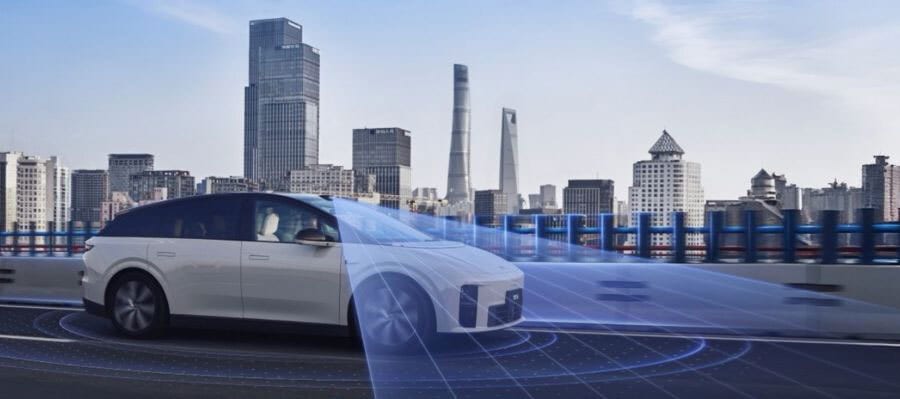
Due to growing demand for advanced driver assistance systems and autonomous vehicles, Hesai plan to double production of its popular lidar units. Illustration courtesy Hesai Technology
LAS VEGAS—Hesai Technology, the leading supplier of lidar products, plans to increase its annual production capacity. Due to growing demand for advanced driver assistance systems (ADAS) and autonomous vehicles, it plans to build 4 million units this year vs. 2 million in 2025.
“Our customers are scaling faster than ever, and we are scaling with them,” says David Li, CEO of Hesai. “By expanding our annual capacity to over 4 million units and adding our new Thailand facility, we’re building a global manufacturing footprint that can reliably support mass production. Our commitment is simple: deliver world-class lidar, at scale, with the consistency and trust that the automotive industry demands
“This expansion is backed by [our] robust in-house manufacturing capabilities,” explains Li. “By building an integrated R&D and production center from the ground up, [we have] established a solid foundation for mass production, while maintaining consistent quality at scale.”
According to Li, Hesai has developed four generations of proprietary ASICs, enabling rapid product iteration, high reliability and globally replicable production. Its fully automated production lines now feature a 10-second cycle time.
Li claims that lidar-equipped vehicles reduce fatal highway accidents by 90 percent and lower regular traffic accidents by 30 percent compared with camera-only systems. At the recent CES show, Hesai displayed its next-generation L3 automotive lidar suite, featuring the long-range ETX and short-range FTX devices. With compact form factors designed to simplify vehicle integration, ETX is optimized for behind-the-windshield, in-cabin installation, while FTX enables short-range blind-spot detection.
Prototype Highway Wirelessly Charges Heavy-Duty Electric Trucks
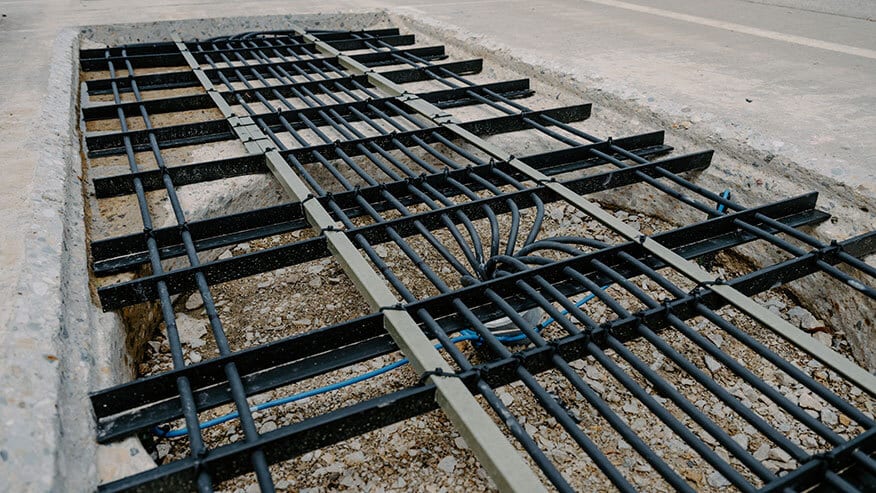
Coils embedded in a concrete roadway wirelessly charge heavy-duty electric trucks driving at highway speeds. Photo courtesy Purdue University
WEST LAFAYETTE, IN—Engineers at Purdue University recently designed a roadway that wirelessly charges heavy-duty electric trucks driving at highway speeds. The 0.25-mile electrified roadway, built by the Indiana Department of Transportation, is located along a stretch of U.S. Highway 52/U.S. Highway 231. The system allows highway pavement to provide power to EVs similarly to how smartphones use magnetic fields to wirelessly charge when placed on a pad.
The dynamic wireless power transfer system features a series of transmitter coils that are buried with concrete pavement in a dedicated highway lane. The coils transmit power to receiver coils attached to the underside of electric trucks
It works at power levels much higher than what has been demonstrated in other parts of the United States. For instance, during a recent test, the system delivered 190 kilowatts to a truck traveling at 65 miles per hour.
“Transferring power through a magnetic field at these relatively large distances is challenging,” says Dionysios Aliprantis, Ph.D., a professor of electrical and computer engineering at Purdue who worked on the project. “And, what makes it more challenging is doing it for a heavy-duty vehicle moving at power levels thousands of times higher than what smartphones receive.”
“This is a system designed to work for the heaviest class of trucks all the way down to passenger vehicles,” adds Aaron Brovont, Ph.D., an assistant professor of electrical and computer engineering. “Since trucking contributes the most to U.S. gross domestic product compared to other modes of freight transportation, lowering costs for heavy-duty electric trucks could help attract more investment into electrifying highways that all vehicle classes would share.”
According to Brovont, if heavy-duty trucks could charge or stay charged using highways, their batteries could be smaller in size and they could carry more cargo, significantly reducing the cost of using EVs for freight transportation.

February 2026 | ASSEMBLYMAG.com