FOCUS ON AEM

Power electronics dictate the way that electrical energy flows throughout EVs. Illustration courtesy Aumovio Engineering Solutions
Demand for advanced power electronics is forcing engineers to explore next-generation components.

The power electronics architecture of electric vehicles dictates the way in which electrical energy flows from the battery to motors and other devices. It delivers power in a precise, controlled manner, at a specific voltage and with a specific AC or DC current waveform.
For example, an onboard battery charger manages the flow of electrical power from the AC charging infrastructure into battery-compatible direct current, a process which requires efficient power factor correction and needs galvanic isolation to ensure safety.
The process is complicated by the fact that the charger must be compatible with residential single-phase AC charging, commercial three-phase charging and emerging DC interfaces that bypass the charger entirely. Increasingly, the onboard charger might also support bidirectional capability to enable vehicle-to-grid and vehicle-to-load functionality.
Demand for power electronics is expected to grow over the next 10 years, driven by increasing demand for electric vehicles and data centers. A recent report by IDTechEx predicts the market will grow 10 percent annually, reaching $65 billion by 2036.
Automakers are searching for increased efficiency, consistent reliability and greater power density. Increasingly, this means turning to wide bandgap semiconductors, silicon carbide (SiC) and gallium nitride (GaN). These technologies have the potential to revolutionize the power electronics industry, enabling high-voltage operation and new power architectures, such as 800-volt systems.
“The traction inverter transforms high-voltage direct current from the battery into a precisely controlled three-phase alternating current that drives electric motors,” says Matthew Fall, technology analyst at IDTechEx. “Torque and speed are tightly controlled, ranging from standstill to rotational speeds of thousands of RPM.”
Software control of the traction inverter is a key factor that determines the efficiency and thermal performance of electric vehicles, so it remains a closely guarded secret for most OEMs.
Nathan Eddy // Contributing Writer
EV Applications
The primary application for SiC is the inverter, which takes DC power stored in an EV battery and turns it into AC power for traction motors.
SiC’s bandgap of 3.26 electron volts (eV) vs. 1.12eV for silicon (Si), and three-fold higher thermal conductivity, enables smaller power electronics components, which reduces on-resistance and switching losses. This facilitates switching frequencies over 50 kilohertz. Silicon insulated-gate bipolar transistors (IGBTs) are usually limited to under 20 kilohertz, which improves motor control and reduces the size of passive components required.
“However, SiC remains a more expensive material than silicon, so many budget EV models have yet to adopt the technology,” notes Fall.
A DC-DC converter steps down high-voltage power from the main battery to a lower voltage to power auxiliary devices, such as air conditioning and infotainment systems. It also provides galvanic isolation between high-voltage and low-voltage components. DC-DC converters have stringent reliability requirements, because they must operate continuously across all vehicle states, from when the ignition is not even on to maximum power demand during rapid acceleration.
Automatically feed and install metal or plastic clips with verifiable precision. Auto-feed direct to insert point technology for rapid clip insertion. Machine builder packages for collaborative and industrial robots. Engineered part interface tooling mirrors part tower and is ruggedly built for repeatable clip insertion. Videos and more on Visumatic's website.
Visumatic Industrial Products
859-255-7907
sales@visumatic.com
www.visumatic.com
Automotive Trim Panel Clip Insertion Gear
“Increasingly, the DC-DC converter and onboard battery charger are being integrated into the same system, reducing component count and assembly complexity,” says Fall. “However, this introduces complexity as both [devices] must be electrically isolated for safety.
“Power electronics manufacturing differs depending on the material,” explains Fall. “Silicon has historically been the semiconductor material of choice for EV applications at both high and low voltages. With mature, diverse supply chains and decades of manufacturing refinement, silicon is the cheapest semiconductor material for power applications. Silicon carbide is more complex and expensive.”
SiC cannot be grown from melt. The dominant crystal growth method for SiC is physical vapor transport, where SiC powder sublimes and recrystallizes on a seed crystal under tightly controlled temperatures.
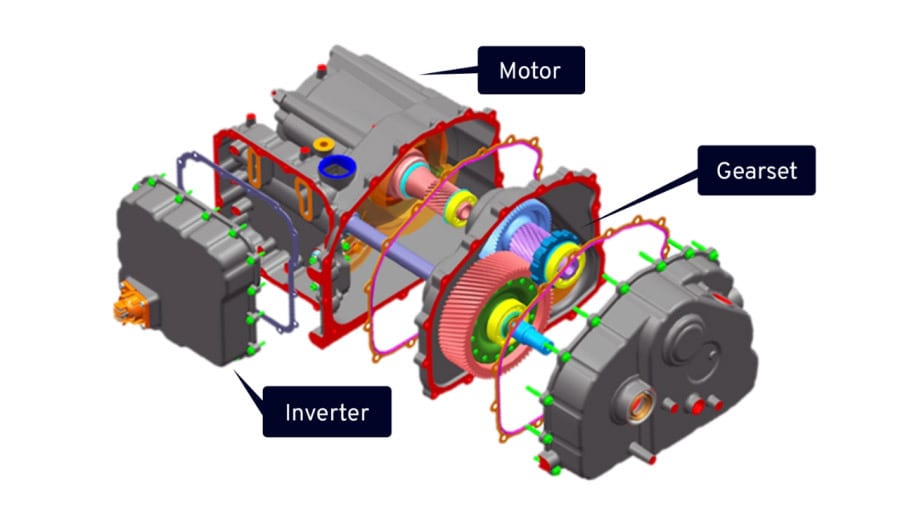
Inverters take DC power stored in an EV battery and turn it into AC power for traction motors. Illustration courtesy General Motors
While 300-millimeter Si wafers are commonplace, SiC wafers are commercially available at only 200-millimeter, which reduces the number of dies available per wafer. However, Wolfspeed Inc. recently announced that it has developed a 300-millimeter SiC monocrystalline wafer.
Thermal and mechanical interfaces between the semiconductor die and substrate are usually achieved with silver sintering. Interconnection is facilitated by wire bonding, using either aluminum or copper. Whether wire or ribbon is used depends on the specific power module, which is encapsulated in epoxy resin and attached to a metal frame for improved thermal management before it’s attached to a printed circuit board (PCB).
According to Fall, there is considerable variability in the materials and processes used in module packaging. This affects device performance, thermal management and the module’s ability to perform in robust automotive environments.
“Components must be tested extensively,” Fall points out. “The power electronics automotive qualification process represents one of the most demanding series of reliability tests in engineering, involving extremes of temperature and mechanical stress, with operational lifetimes measured in decades.”
Qualified power modules are then transformed into complete inverters, onboard battery chargers or DC-DC converters. That process involves module mounting, thermal interface material application, attachment of cold plates, electrical interconnection and system-level testing.
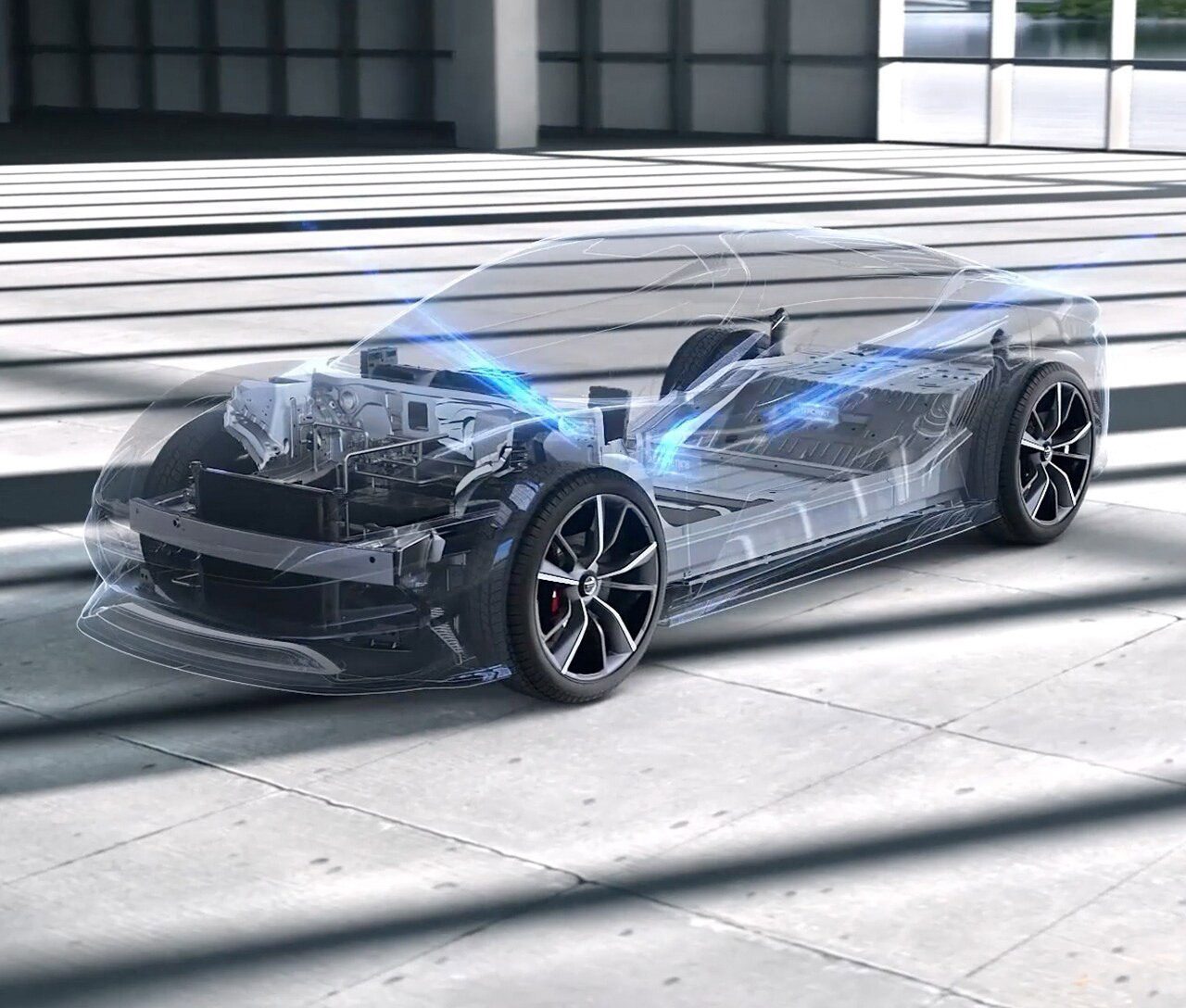
BYD’s “8-in-1” power train combines an onboard charger and DC-DC converter, as well as six other components, into a single assembly module. Illustration courtesy BYD Auto Co.
Engineering Challenges
Thermal management is one of the biggest power electronics challenges facing automotive engineers today. That’s because with silicon carbide, the incumbent single-sided cooling approach—whereby heat dissipates through the backside of the die to the substrate, baseplate and then to the cold-plate—is fundamentally limited for higher power densities.
Double-sided cooling has emerged as the preferred method for high-power density applications. In this architecture, a metal (often copper) substrate is directly bonded to the topside to enable cooling on both sides of the die. However, this increases manufacturing complexity.
Over the operating temperature range, adding another substrate with yet another coefficient of thermal expansion leads to further mismatch between the different materials, which must be accounted for by adding a thermal interface.
“Thermal interface materials are a critical consideration, establishing effective heat transfer paths between components,” says Fall. “As power densities continue to increase, thermal management considerations will remain a key part of the conversation.
“Future solutions will likely include some combination of advanced cooling architectures and next-generation thermal interface materials,” explains Fall.
At the same time, EV engineers continue to pursue reducing the size of power electronics components to increase, for example, the space available to the battery.
“This drive for miniaturization is actively counterproductive for thermal management and necessitates simultaneous optimization of semiconductor efficiency and thermal management capability,” warns Fall.
He believes BYD Auto Co.’s “8-in-1” power train represents one of the most aggressive integration systems currently available. It combines onboard charging, a DC-DC converter and six other components into a single assembly module.
“This reportedly reduces mass and volume, and increases manufacturing efficiency, but reduces serviceability of the vehicle,” explains Fall. “Other players with high levels of vertical integration are increasingly combining multiple power train components in the same assembly.”
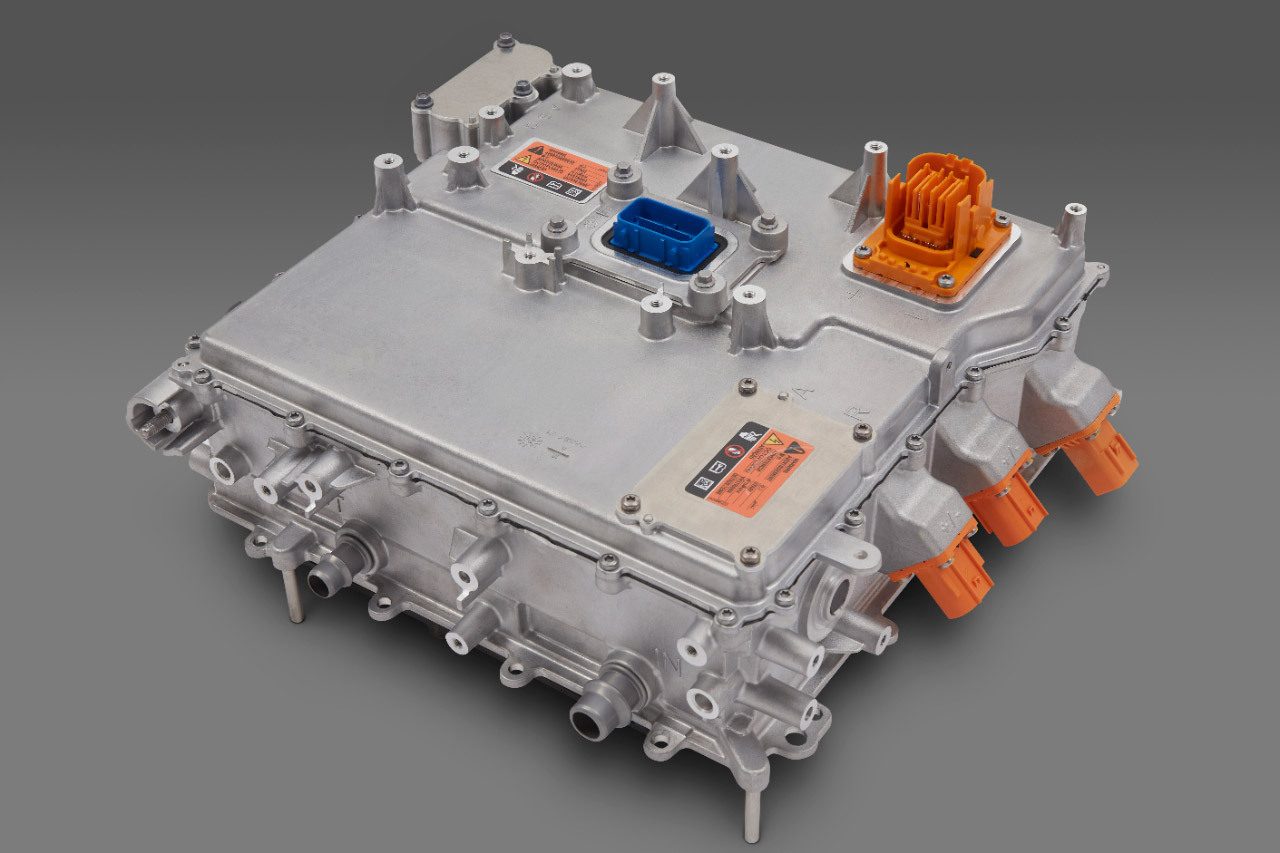
A dual-sourcing strategy enables GM to reduce the risk of production delays associated with semiconductors used in inverters and other components. Photo courtesy General Motors
GM Takes a Hybrid Approach
General Motors is balancing internal integration with a globally distributed supply chain as it scales power electronics production across its electric vehicle lineup. While the company maintains deep relationships with Tier One suppliers for core components, its manufacturing strategy reflects a hybrid model—one that combines outsourced electronics assembly with in-house system integration at the vehicle and subassembly level.
Within GM, power electronics broadly encompass high-voltage systems, including onboard chargers, inverters, accessory power modules and wiring harnesses.
“Anything that is not the battery that’s high voltage I consider power electronics,” says Bethany Combs, power electronics design system engineer at GM. “These systems are central to vehicle operation, managing energy conversion, propulsion and charging across EV platforms.”
GM relies on suppliers to handle the most complex aspects of electronics production, particularly processes that require clean room environments and high-precision assembly. The vendors deliver fully assembled, sealed units that are then integrated into larger vehicle systems.
Once those components arrive, GM’s role shifts to system-level integration. In truck platforms, for example, power electronics modules are first mounted to cradles and other structural elements before being shipped to final assembly plants. There, they are integrated into the vehicle alongside other major systems.
This layered approach allows the automaker to separate high-complexity electronics manufacturing from final vehicle assembly, while maintaining control over integration and validation.
In some cases, GM performs more direct assembly of exposed electronics. Inverter systems, for instance, may be integrated into drive units prior to final installation. These components can be partially open during assembly, requiring additional care in handling and testing.
Despite the technical complexity of these systems, the physical assembly process is relatively straightforward compared to the upstream manufacturing performed by suppliers. Automation is used extensively, but not exclusively.
Operators remain involved in key steps, such as positioning components and initiating assembly sequences, supported by a range of manufacturing controls designed to ensure consistency and traceability.
“It still requires an operator to pick parts up from the pallet and then drop them into the drive unit or the cradle itself,” says Combs.
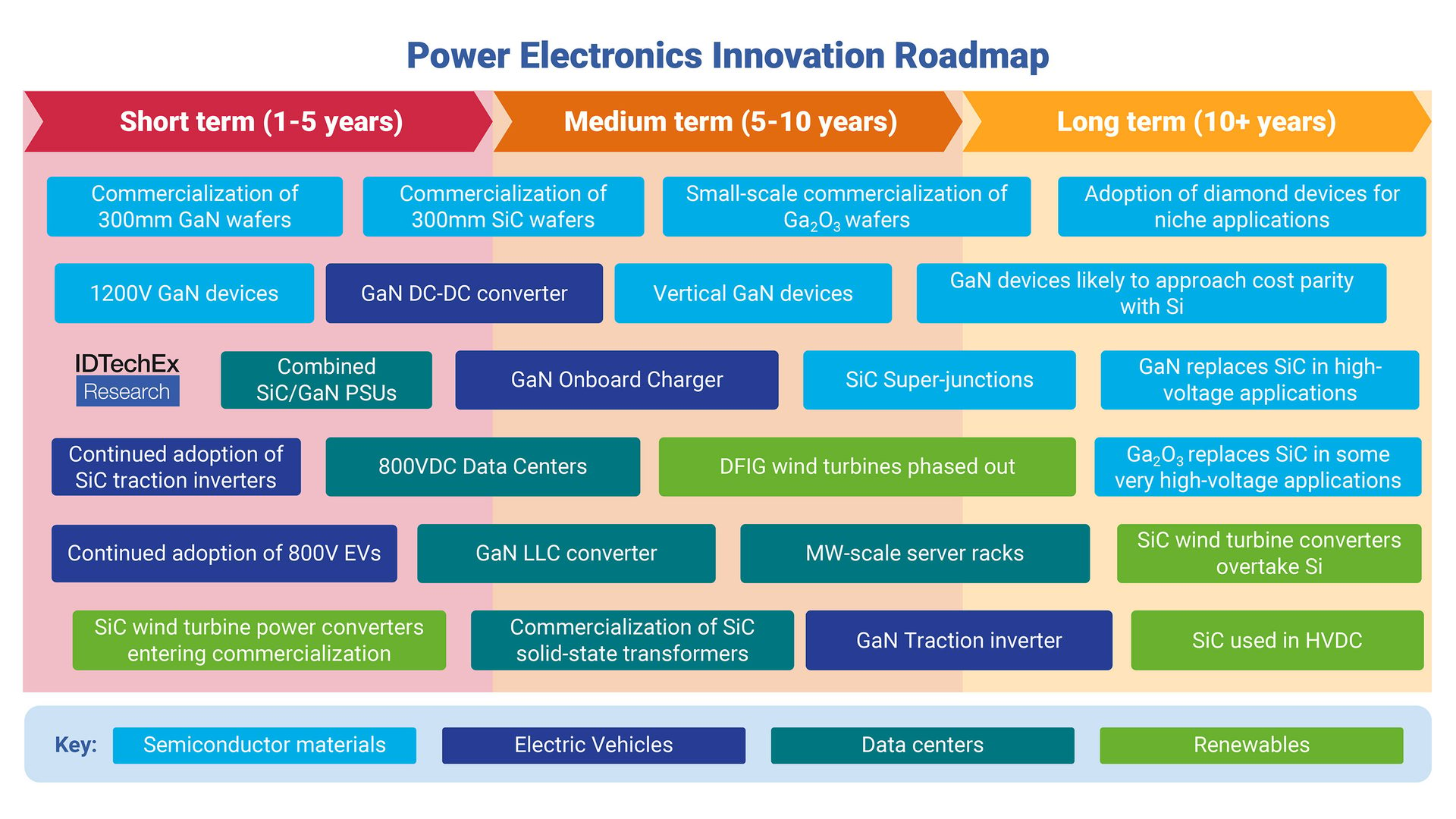
Power electronics will continue to evolve over the next decade. Illustration courtesy IDTechEX
That combination of automation and manual intervention reflects the current state of EV manufacturing, where variability in component size, weight and configuration limits the extent to which processes can be fully automated. At the same time, strict controls are applied throughout the assembly process, particularly given the safety and reliability requirements of high-voltage systems.
Supply chain management remains a critical factor in this model. Power electronics components rely on a global network of suppliers, with semiconductors representing a particular point of vulnerability. In response to disruptions that occurred during the COVID-19 pandemic, GM has increased its focus on supply chain resilience, particularly around chip sourcing.
A dual-sourcing strategy enables the company to provide suppliers with alternative component options that meet the same performance and packaging requirements, reducing the risk of production delays. GM has also established a dedicated semiconductor team to monitor supply conditions and maintain visibility into potential shortages.
Traceability is another key element of the automaker’s supply chain strategy. Suppliers maintain detailed records of component origins and manufacturing conditions, enabling GM engineers to track issues back to their source if defects arise. This level of visibility is particularly important given the distributed nature of the supply chain, where components may be sourced and manufactured across multiple regions.
Quality control processes have evolved alongside this complexity, though many of the underlying principles remain consistent. Early challenges in EV power electronics were often tied to solder quality and PCB manufacturing—areas where established industry standards already existed.
As electrification has scaled, GM has leveraged those existing standards to build more robust quality systems, supported by regional supplier quality teams that work directly with manufacturing partners. These teams provide on-site oversight, ensuring that production lines meet specifications and that process controls are consistently applied across facilities.
At the system level, integration decisions are shaped by both technical and economic considerations. While GM has developed in-house designs in the past, the resource intensity of full-scale electronics manufacturing makes sourcing the preferred approach for many components.
“It makes more sense to source from a Tier One at the module level,” notes Combs. “This division of labor allows us to focus on system integration and vehicle-level performance, while suppliers handle the complexities of electronics production.”
At the same time, the automaker retains influence over key subcomponents and specifications, ensuring that systems meet performance, cost and reliability targets.
According to Combs, the evolution of power electronics within GM’s EV platforms in the near future is likely to be shaped less by manufacturing breakthroughs than by optimization. She points to cost and customer use cases as primary drivers, noting that not all advances—such as higher-power charging—align with real-world demand.
“The bigger focus is certainly cost and optimizing power electronics to be as low cost as possible, while fitting customer needs,” says Combs.
That emphasis reflects a broader shift in the EV market, where early innovation is giving way to refinement and scale.
As power electronics become more standardized and integrated, the challenge for GM and other automakers will be maintaining flexibility and resilience across increasingly complex supply chains, while delivering systems that meet diverse and evolving customer requirements.
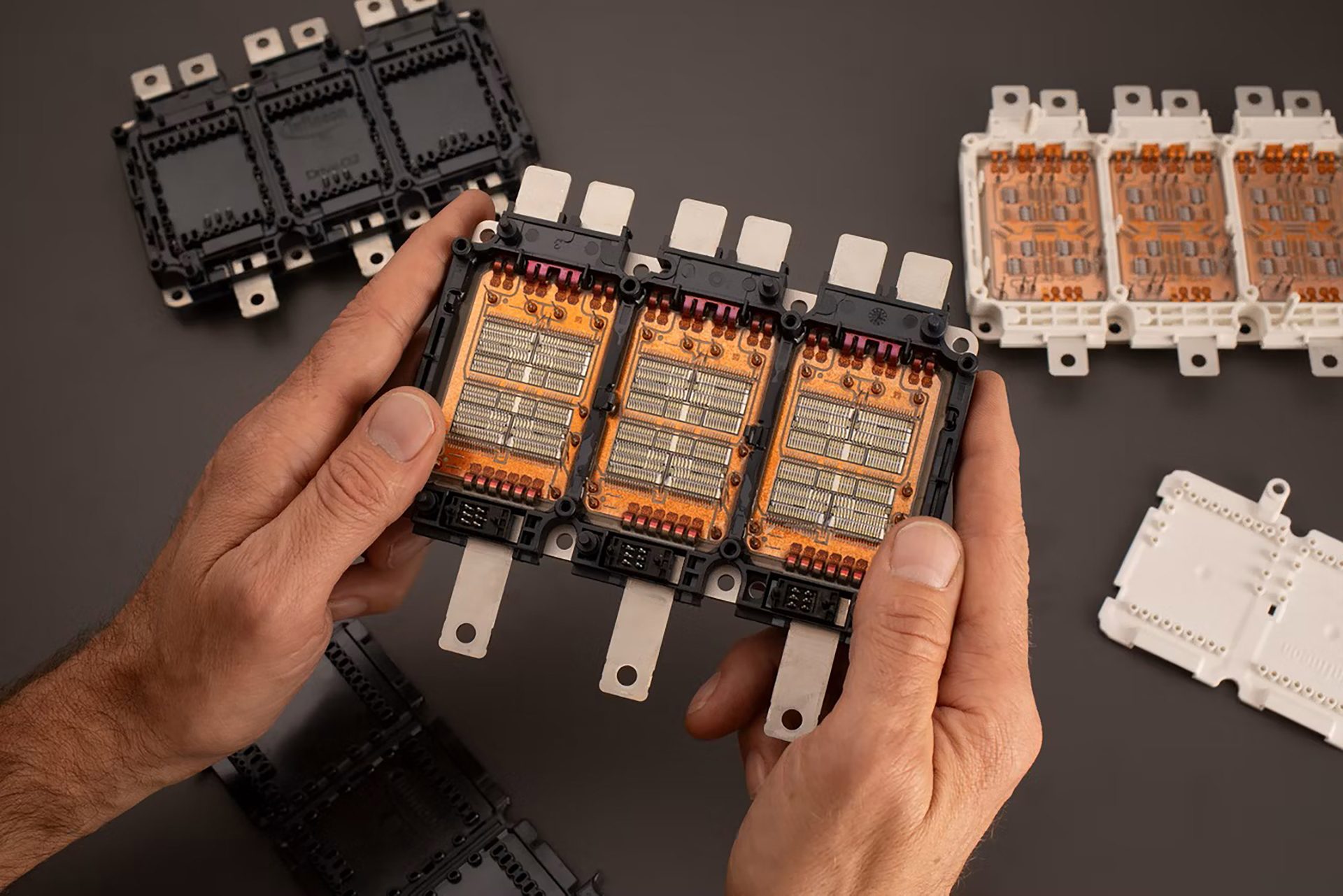
Infineon uses automation to ensure consistent quality and yield. Photo courtesy Infineon Technologies AG
Infineon’s Full System Support
Infineon Technologies AG is a leading supplier of automotive microcontrollers and power systems, including Si, SiC and GaN components. It features a broad portfolio of product variants such as power modules, discrete devices and bare dies.
These components are essential for applications such as onboard battery chargers, DC-DC converters and inverters that are used in both fully electric and hybrid vehicles.
“We offer full system support for OEMs not only with power switches, but also other relevant system components, such as microcontrollers, drivers and sensors,” says Stefan Obersriebnig, business line head for ATV high voltage at Infineon. “This enables us to deliver optimized systems that seamlessly integrate sensing, control and actuation functions.”
Infineon’s semiconductor manufacturing operation is divided into frontend and backend processes. The company’s in-house production takes place at large-scale fabs in Dresden, Germany; Kulim, Malaysia; and Villach, Austria. Backend production of items such as HybridPACK Drive Generation 2 power modules occurs in Cegled, Hungary, and Warstein, Germany.
“Frontend, where chips are manufactured, requires the strictest clean room conditions, so it is highly automated to minimize contamination, maximize precision and optimize cost,” explains Obersriebnig. “Backend, where devices are assembled and packaged, also maintains clean room standards, though less stringent. We use automation to guarantee quality and cost-effectiveness
“Our vertically integrated supply chain ensures robust chip supply, stable production processes and reliability for our automotive customers, while being able to optimize the cost structure of our production processes,” says Obersriebnig. “[We rely on] tightly controlled production windows and stable processes, automated wherever possible, to ensure consistent quality and yield.”
Infineon also specializes in hall-sensor based current measurement devices, which simplify assembly for its customers and provide space savings at the vehicle level.
“Together, these strategies translate into tangible reductions in manufacturing complexity and cost, helping accelerate electrification without compromising quality,” claims Obersriebnig.
The company employs a suite of simulation and modeling tools that enable it to optimize development before moving to prototyping.
“Beyond traditional simulation, we offer virtual reference designs and extensive component libraries, helping designers to model complex analog systems,” notes Obersriebnig. “These digital tools enable rapid iteration, reduce development time and risk, and support innovation.”
As the auto industry moves toward more digital and AI-driven design processes, Obersriebnig believes these capabilities are becoming essential to achieving high quality and optimized EV power electronics, as well as speeding up the design process. That’s because cost, performance and speed requirements are driving innovation in packaging and assembly.
“We anticipate broader adoption of molded packages and PCB-based solutions with embedded chips for both Si and SiC technologies,” says Obersriebnig. “New materials, such as GaN, are also set to play a larger role in automotive applications, enabling next-generation efficiency and power density.
“As these technologies mature, manufacturing will become more automated, integrated and digitalized to support higher volumes, tighter tolerances and lower costs,” predicts Obersriebnig.
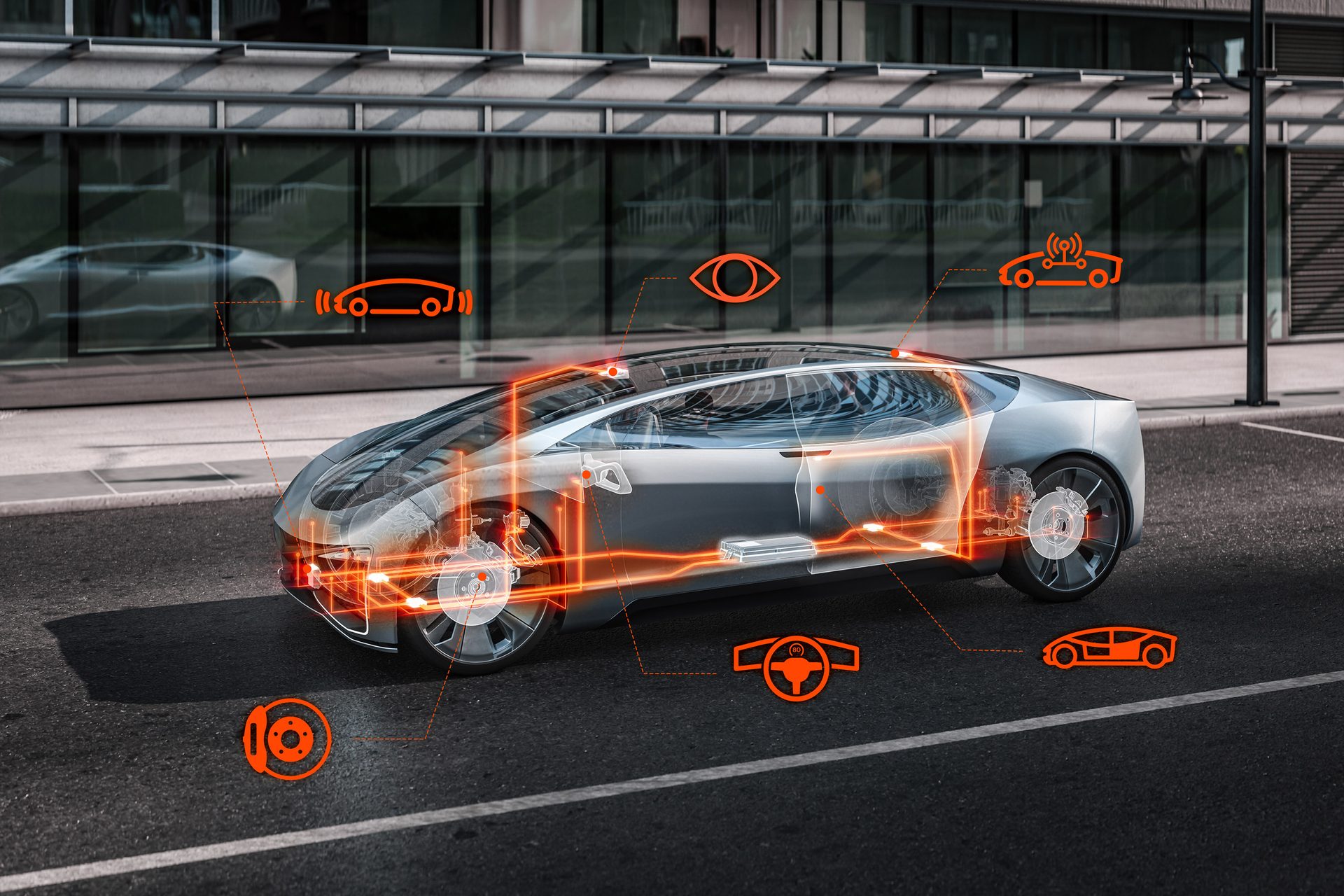
Power electronics must be optimized across electrical, thermal and mechanical domains. Illustration courtesy Aumovio Engineering Solutions
Aumovio Emphasizes Flexibility
As EV architectures mature, the role of suppliers is increasingly defined by their ability to balance between integration and complexity. Power electronics are no longer standalone components; they are tightly coupled systems that must be optimized across electrical, thermal and mechanical domains.
The challenge facing automotive engineers is to design and manufacture systems that can meet evolving performance requirements while remaining scalable, reliable and economical.
Aumovio Engineering Solutions was spun off from Continental AG in September 2025. It has since positioned itself as a leading EV power electronics supplier, focusing on high-performance power conversion systems across a wide range of vehicle segments.
Rather than offering standardized components alone, Aumovio specializes in flexible, application-specific products built around bidirectional converters, multi-level inverters and complete electrified systems. Its broad product portfolio spans voltage ranges from 48 to 1,000 volts, and includes traction inverters, DC-DC converters, starter generators and high-voltage energy recovery systems, along with specialized components such as spark generators for exhaust thermal management.
“That breadth reflects a system-level approach to power electronics, where individual components are designed not in isolation but as part of a broader architecture,” says Neil Cheeseman, chief engineer for electric drivetrain and propulsion functions at Aumovio.
“The majority of projects require a system-level approach,” explains Cheeseman. “Our dedicated design process ensures that interacting components are optimized together to minimize overall losses, maximize efficiency, and reduce cooling and total system cost.”
At the manufacturing level, Cheeseman says the complexity of power electronics is driven less by scale than by the number of subassemblies and the constraints imposed by high-voltage operation.
A typical inverter, for example, incorporates multiple PCBs, a power module, DC link capacitors, current and voltage sensing systems, and separate high- and low-voltage connectors. While the assembly process shares similarities with lower-voltage electronics, it requires tighter controls around cleanliness, electrostatic discharge and high-voltage safety.
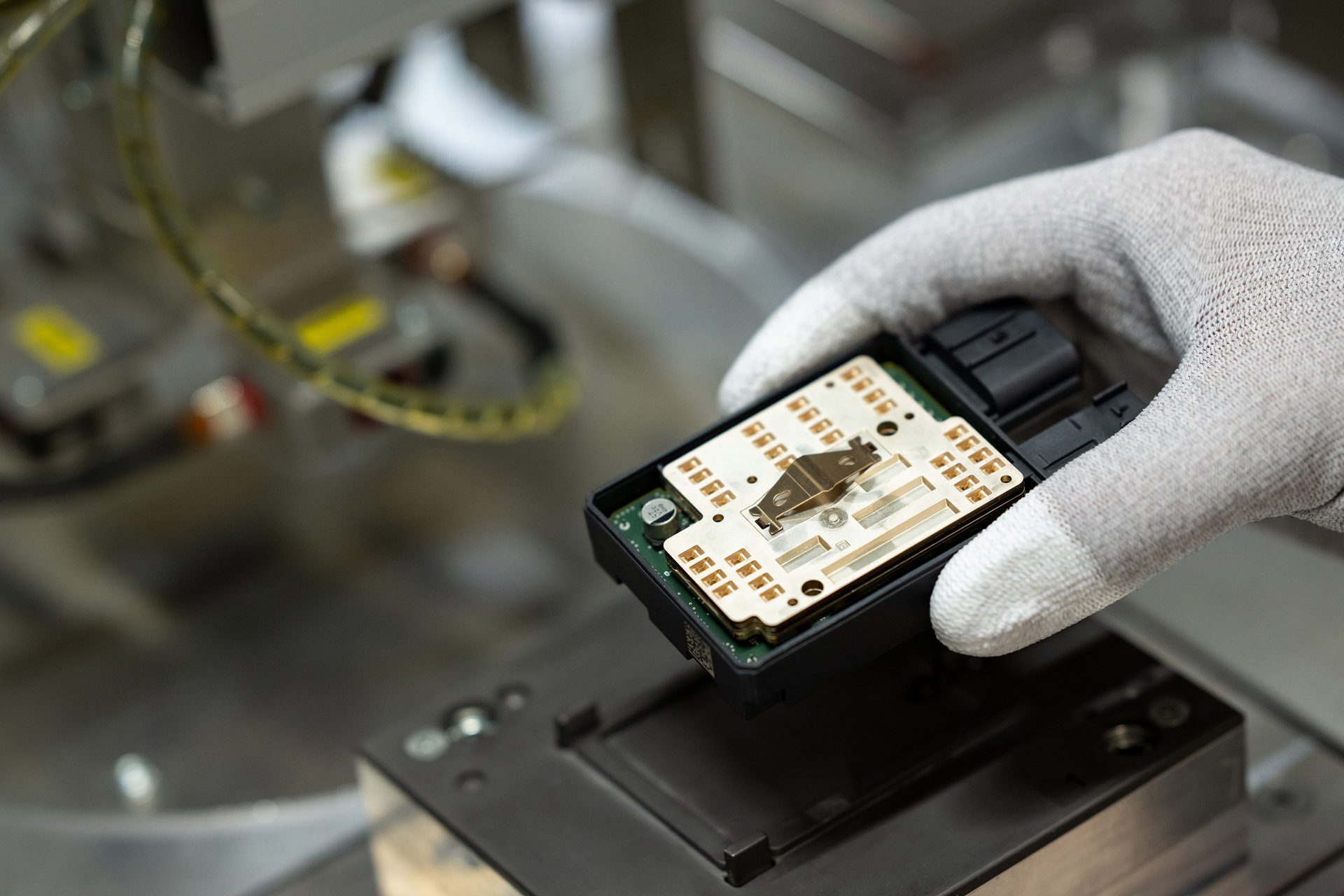
Tier One suppliers are designing systems that meet evolving EV performance requirements while remaining scalable, reliable and economically viable. Photo courtesy Aumovio Engineering Solutions
“In the case of an inverter, the subassembly count is higher,” notes Cheeseman, pointing to the additional components required to manage power conversion and measurement. High-voltage component sourcing also introduces constraints, with critical elements such as power modules and capacitors limited to a smaller pool of specialized suppliers.
Production volumes within Aumovio are typically in the low thousands per year, with prototype and low-volume manufacturing handled internally and higher-volume production supported by other business units. This hybrid model reflects the diversity of applications the company supports, where customization often takes precedence over scale.
Design considerations add another layer of complexity. High switching speeds and voltage levels require careful PCB layout to manage electromagnetic interference and ensure appropriate creepage and clearance distances, all within the tight packaging constraints of automotive systems. These factors must be addressed early in product development to avoid downstream manufacturing and performance issues.
Simulation plays a central role in managing those challenges. Aumovio relies heavily on digital engineering to model electrical and thermal behavior across operating conditions, enabling engineers to optimize performance and reliability before hardware is built.
“By accurately modeling temperature and voltage extremes during development, we can optimize performance while maximizing lifetime and reliability,” says Cheeseman. “AI further enhances this process, by providing insights about the behavior of the various elements used in power electronics.”
This enables engineers to evaluate multiple configurations and control strategies more quickly than traditional methods. These simulation environments also support system calibration and validation. For instance, hardware-in-the-loop testing allows teams to evaluate converter performance in real time before moving to more costly dynamometer testing, reducing development risk and shortening timelines.
As with other suppliers, one of the most significant challenges lies in system integration, particularly as the automotive industry moves toward “X-in-1” architectures that combine multiple functions into a single unit. While integration reduces costs and simplifies vehicle architecture, it also introduces new manufacturing constraints.
“One of the greatest challenges in assembling modern power electronics is system integration,” claims Cheeseman. “Integrating components such as an electric motor and inverter into a single assembly can require those components to be brought into specialized environments, including clean rooms, adding cost and complexity to the process.”
At the same time, increasing battery voltages are pushing the limits of existing component technology. As systems approach 1,000 volts, available power modules—whether based on IGBT or silicon carbide—do not always align with emerging requirements.
Power modules are not yet available at greater than 1,200 volts, which creates design issues such as how to manage voltage stress within tight packaging constraints. Addressing those challenges often requires close collaboration with suppliers, particularly for components such as DC link capacitors, where minimizing parasitic inductance is critical.
Cheeseman expects manufacturing processes to eventually feature greater integration and reduced component counts. For example, by embedding high-current switching elements directly into PCBs—particularly in 48-volt systems—manufacturers will be able to simplify assembly, improve thermal management and reduce overall system size.
“Power electronics manufacturing is evolving toward reduced complexity and improved integration,” says Cheeseman. “These changes [will] streamline production, while supporting the broader industry trend toward more compact, efficient and cost-effective electrified power trains.”

ASSEMBLY ONLINE
For more information on electric vehicle manufacturing, visit www.assemblymag.com to read these articles:
MAy 2026 | ASSEMBLYMAG.com