MONTH 2023
Plastic and Metal Welding
Labor shortages are driving new demand for automation.
Options for Screwfeeding
PeyMar engineers mounted a welding cobot to a linear rail. This enables one robot to operate across six welding stations continuously. Photo courtesy Dobot
Manufacturer of dental chairs saves space, reduces costs and increases productivity by mounting a cobot welder to a linear slide.
Boosts Output
Cobot Welding System
John Sprovieri // Chief Editor
Dental chairs serve two purposes. The first is to ensure that patients are as comfortable as possible in a stressful environment. The second is to position patients, lighting and instruments so that dentists and hygienists can perform their tasks accurately, efficiently and ergonomically.
PeyMar, a manufacturer of dental chairs based in Mexico City, has been successfully finding that balance since 2014.
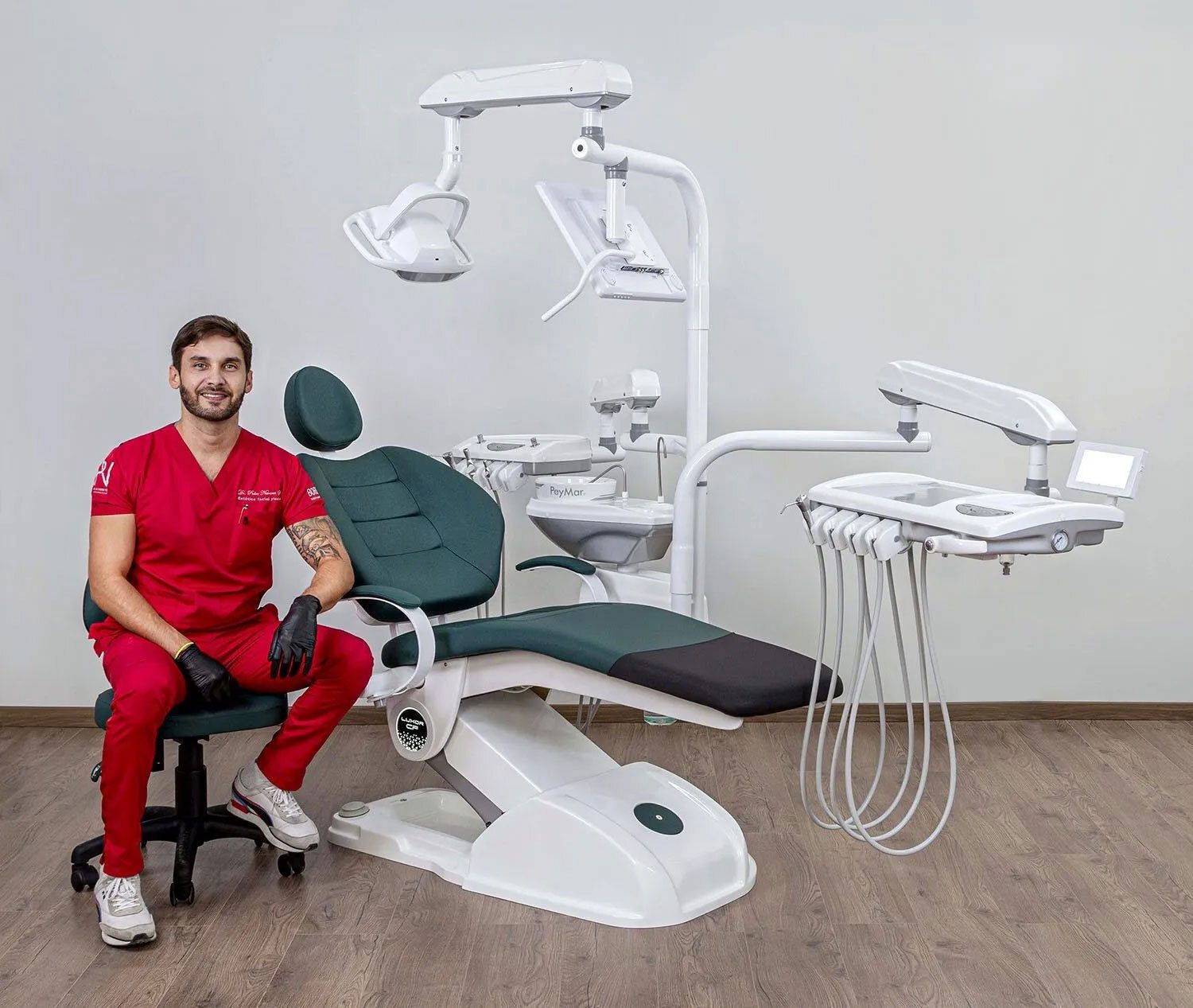
Dental chairs must position patients, lighting and instruments so that dentists and hygienists can perform their tasks accurately, efficiently and ergonomically. Photo courtesy PeyMar
To manufacture the chairs, the company must weld a variety of metal frames and components. The welding process posed several challenges for the company, including:
- Inefficiency: Traditional welding setups required multiple operators and machines for different workstations, leading to bottlenecks and increased cycle times.
- Space constraints: The shop floor had limited space, making it difficult to accommodate multiple welding stations and equipment.
- High labor costs: Employing multiple workers for different welding tasks increased costs and management complexity.
- Integration issues: PeyMar engineers struggled to integrate existing robots with various welding systems and accessories, limiting flexibility and customization.
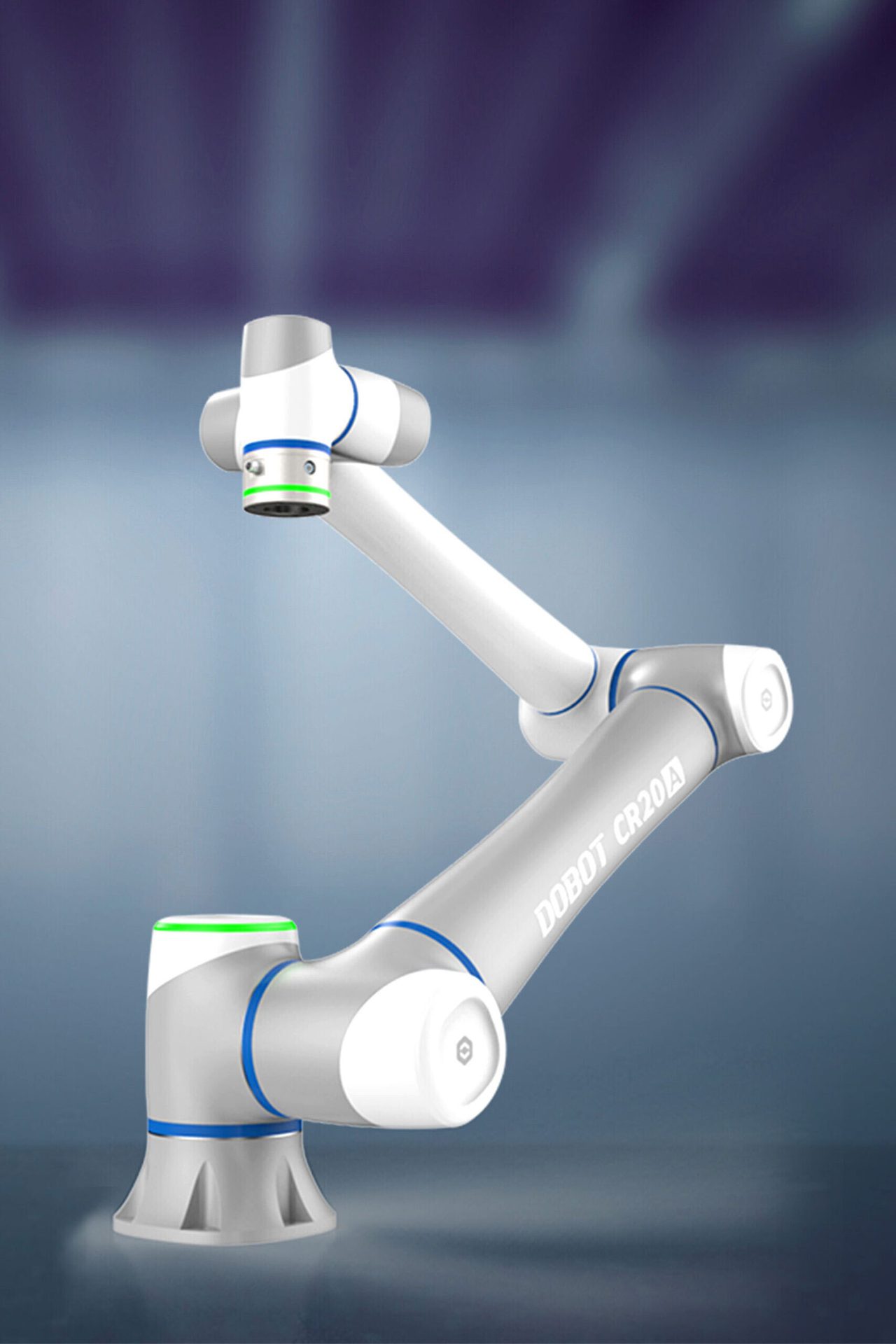
The CR20A cobot can carry a maximum payload of 20 kilograms, and it has a maximum reach of 1,700 millimeters. Photo courtesy Dobot
To address these challenges, engineers developed a custom system that consists of a Dobot CR20A collaborative robot mounted to a linear rail and equipped with a welder from Miller Electric Manufacturing LLC. This configuration enables a single robotic arm to operate across six welding stations continuously, requiring only one employee to manage the process.
Now, the cobot can weld one component while the operator replaces the completed part, minimizing downtime and maximizing output. By using one robot across multiple stations, PeyMar made the most of its limited floor space. It also reduced costs for labor, capital investment and maintenance.
The CR20A can carry a maximum payload of 20 kilograms, and it has a maximum reach of 1,700 millimeters. The CR20A has a dual-channel end-effector design, which can directly connect to multiple end tools. It also features a visual status indicator at the base for intuitive recognition of operating status.
With an advanced motion control algorithm, the CR20A operates more stably, with residual vibrations reduced by 50 percent during high-speed emergency stops.
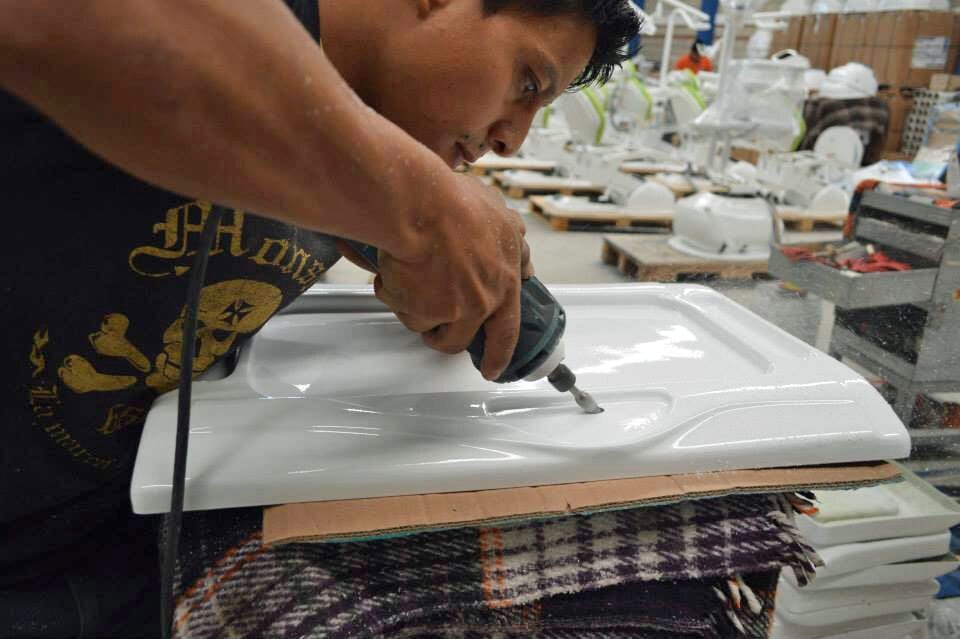
PeyMar has been manufacturing dental chairs in Mexico City since 2014. Photo courtesy PeyMar
Cobot Specifics
Dobot’s new CRA series of cobots have been designed for high-speed, safety and stability. Joint speed has been increased to 223 degrees per second, which is among the fastest in the industry. This improvement allows for a wider range of applications and reduces cycle time for common tasks, such as material handling, by as much as 25 percent.
An EtherCAT bus is used by the joint servomotor, providing a vast bandwidth of hundreds of megabits and a joint response speed in the millisecond range. This enhances the cobot’s speed and trajectory smoothness.
Each cobot is calibrated with a laser calibration system, ensuring an absolute positioning accuracy of under 0.4 millimeter. This enables the robot to tackle high-precision assembly tasks.
The cobot is governed by a stand-alone safety controller that is rated at PLd Cat.3. It features more than 20 safety functions, and it is certified to ISO 13849-1, ISO 10218-1, and ISO/TS 15066. With proper risk assessment, the cobot can collaborate with people without the need for additional fencing.
In the event of a power outage, the robot engages an electromagnetic brake within 18 milliseconds. This ensures position retention within 1 millimeter and safeguards against equipment or product damage.
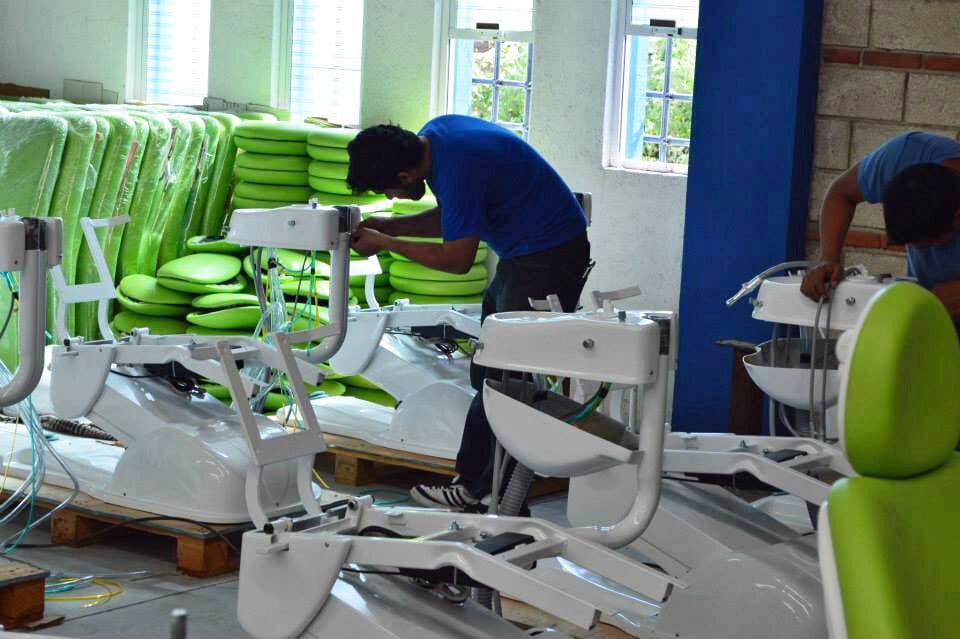
Dental chairs require numerous manual assembly processes. Photo courtesy PeyMar
The cobot can be programmed for “virtual fencing,” enabling engineers to devise safety measures tailored to their unique production settings. As an option, the cobot can be equipped with a “safety skin” that instantly stops the cobot if it should contact a person. This ensures optimal safety at every stage of the assembly process.
The cobots have 24 DI and DO interfaces, supporting both PNP and NPN switching. They are also configured with more than 30 functions for robot control and status feedback, providing convenience and flexibility for integration and control.
Additionally, the cobots come equipped with standard communication methods like Modbus TCP/RTU, EtherNet/IP and Profinet. This aids integration with PLCs, HMIs, and other devices, eliminating worries about communication protocol compatibility.
DobotStudio Pro software simplifies the task of programming the cobot. Programming is accomplished with intuitive and user-friendly “blocks.” By combining various blocks, engineers can easily create flexible programs. At the same time, skilled developers can design intricate programs and manage advanced applications through the provision of adaptable LUA script programming.
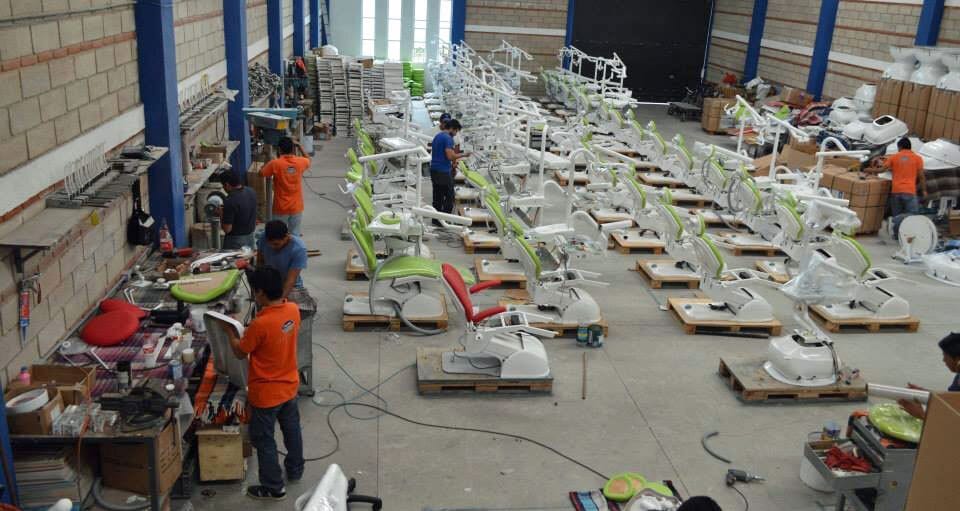
PeyMar ships dental chairs worldwide. Photo courtesy PeyMar
A wide range of plug-in accessories is available, including grippers, force sensors, and 2D and 3D vision. By using the ready-to-use APIs from the plugins, engineers can develop applications in a short span of time.
A range of application packages is available, including welding, palletizing and machine tending. By adjusting parameters, programs can be easily created.
A log enables engineers to access historical status, operation records, and parameter modification information. This allows for swift problem identification and minimizes downtime.
Engineers can leverage offline programming to execute, debug and validate programs without being connected to the robot. The cobot also supports access via computer, tablet or teach pendant. Both wired and wireless connection methods are available.
For more information, visit www.dobot-robots.com.