MONTH 2023

FROM THE EDITOR

Once again, Trump administration policies are seemingly at odds. Earlier this year, we pointed out how anti-immigrant policies and rhetoric are seemingly inconsistent with the administration’s goal of increasing domestic manufacturing.
Now, the administration has throttled the domestic EV industry while simultaneously sending gas prices through the roof.
On March 24, the average price of gasoline in the U.S. stood at $3.98 a gallon—a sharp increase from $2.95 a month prior. Gas prices have jumped some 30 percent nationally since the U.S. and Israel attacked Iran three weeks ago and Iran blocked 20 percent of the global oil supply.
Californians, who already faced prices over $1 per gallon higher than the national average, are especially feeling the squeeze. California holds the highest state average at over $5.80 per gallon. Washington and Hawaii also boast gas prices above $5 a gallon. I paid $4.35 per gallon over the weekend in suburban Chicago.
By itself, this news would be hard to take. But, it’s all the more nettlesome given that the administration has done everything possible to scuttle the domestic EV industry just as it was beginning to take off.
Five years ago, in November 2021, President Joe Biden signed into law the Bipartisan Infrastructure Law, which, among other things, set a goal of building 500,000 publicly available EV charging stations by 2030. Similarly, in August 2022, President Biden signed into law the Inflation Reduction Act, which promised to spur domestic investment in EV technology. The bipartisan legislation included automotive manufacturing and consumer purchase incentives to expand vehicle electrification in the United States.
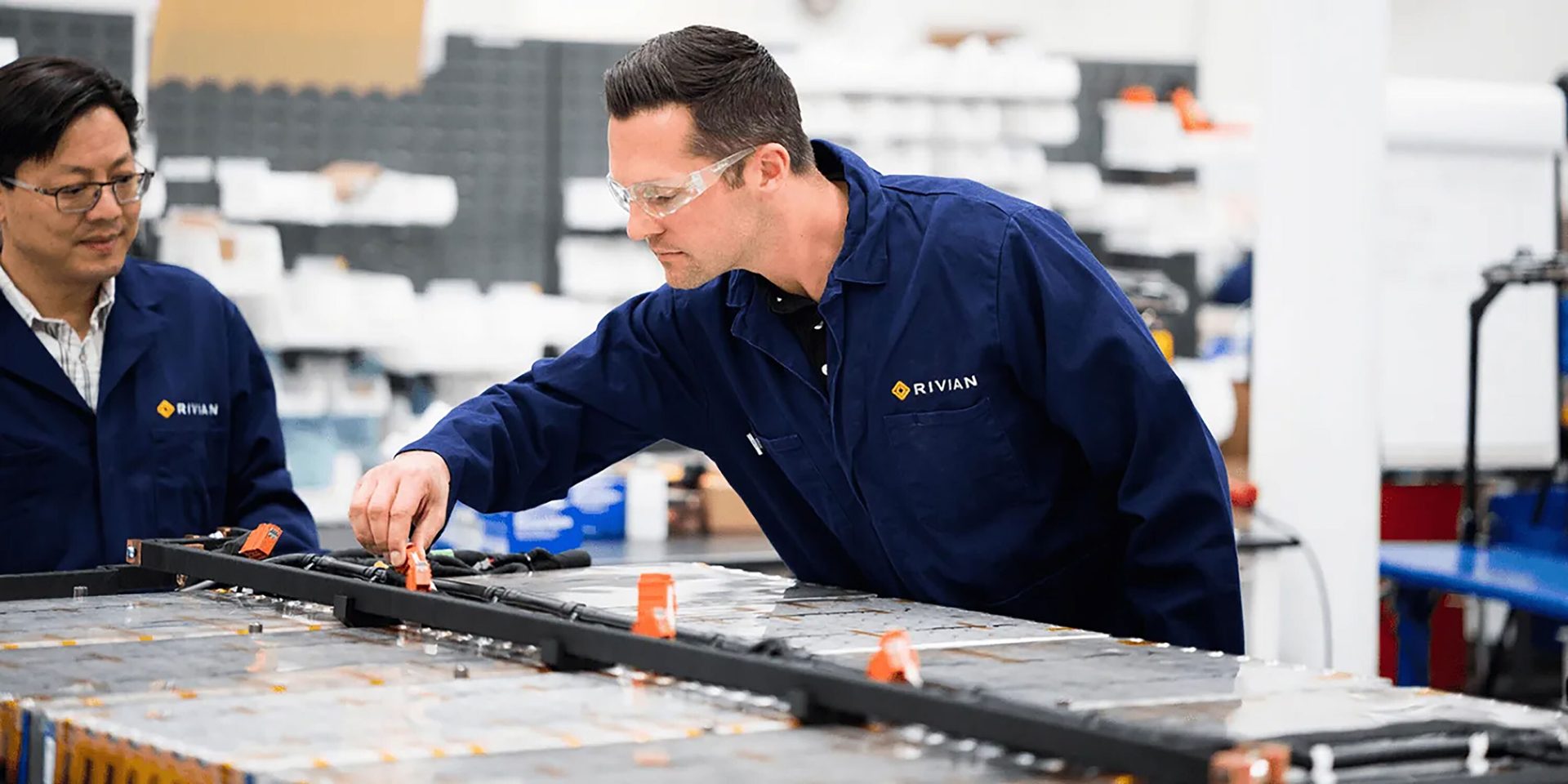
The Trump administration has dismantled federal EV incentives, rolled back emissions standards, and halted funding for charging infrastructure. Photo courtesy Rivian
Emboldened by federal support, the Detroit Three automakers set out to meet what they hoped would be increased demand for EVs. They built battery factories, retooled assembly lines, and invested millions of dollars in new EV models.
Then, we changed presidents. Since every incoming presidential administration must undo whatever the previous administration achieved, the Trump administration promptly dismantled federal EV incentives, rolled back emissions standards, and halted funding for charging infrastructure. EV tax credits for consumers were rescinded.
For the Detroit Three automakers, 2025 was a little like the recurring gag in the Peanuts comic strip, in which Lucy always pulls the football away just as Charlie Brown is about to kick it. Invariably, good old Charlie Brown ends up flat on his back, dazed and humiliated. Both Ford and GM took billion-dollar write-downs on their EV investments during the past fiscal years. And Stellantis recently announced the biggest of the bunch: a $26 billion write-down that will lead to the automaker’s first annual loss since it began in 2021.
As gas prices continue to soar, one wonders how the domestic EV market might have benefited. Perhaps sales will increase, tax credit or not.
We’ve said it before, but it bears repeating: U.S. energy policy need not—and should not—be a zero-sum game. Just as a healthy diet should not consist of eating ribeye steaks seven days a week, a robust energy policy needs to include a mix of energy sources—both renewables and fossil fuels. Advocating for clean energy does not mean an end to fossil fuel production and consumption. Quite the opposite. It should prolong their use.
The risk of China decoupling is an important consideration for companies sourcing there.
About the Author
Harry Moser is the president of the Reshoring Initiative. His column will appear every other month, alternating with Austin Weber’s “On Campus.” Has your company reshored production? Are you thinking about it? We’d like to hear of your success or help you achieve it. With your approval, we would love to report on your successes or opportunities in future issues. Contact harry.moser@reshorenow.org.