
MONTH 2023

Manufacturing Software
Labor shortages are driving new demand for automation.
Options for Screwfeeding
Berlin Gardens relies on robotic cells for welding aluminum fixtures to the bottoms of furniture pieces. Photo courtesy Visual Components
Offline programming eliminates the need to halt production.
Software Saves Time When Programming Robotic Welding
Vanessa S. Stiles // Contributing Writer
Robotic automation has revolutionized manufacturing across many industries, but automated systems require the programming skills of people, and this can create a production bottleneck. This is especially true when robots require reprogramming for a variety of products, as the cumulative programming hours create a drain on the company.
For Berlin Gardens, an Ohio manufacturer of outdoor furniture, the need to cut down the time spent programming robotic welding arms led to an investment in offline programming using digital twins.
Berlin Gardens began in 1988 as a greenhouse selling flowers in the heart of Ohio Amish country. Currently located in Millersburg, OH, the company has evolved to specialize in manufacturing high-quality outdoor plastic furniture and backyard structures, employing state-of-the-art machinery alongside time-honored crafting techniques. Under the leadership of Sam Yoder since 2008, the company has expanded its workforce to 250 employees.

In the past 15 years, the plastic furniture industry has transformed significantly. What was once a novel concept has now become a competitive and bustling market segment. Berlin Gardens has established itself as a key player by blending technology with a lean manufacturing approach, constantly refining processes to balance the pursuit of quality with the need for speedy fabrication. At the core of its success is a company culture that prioritizes employee satisfaction.
Berlin Gardens relies on robotic cells for welding aluminum fixtures to the bottoms of furniture pieces. However, the time spent programming robots began to conflict with the company’s culture.
“Our lead programmer would spend hours on end in the back of the cell to make sure he had the robot in the right position to program each point,” says Derrick Yoder, the aluminum production manager at Berlin Gardens. “We could spend up to 13 hours on a single program, and a lot of those would be after-hours or on weekends.”
To compound this, the task of positioning the robot at the right angle for a specific weld would put physical strain on the programming team, reducing job satisfaction and increasing costs. “With a welding application, it’s very easy to have a bad part due to the robot being at the wrong angle during the weld,” Yoder explains.
Additionally, many of the joints were similar. “They are symmetrical and square, with a lot of repetition,” he explains. The monotony for the programming team became a sore point for a management team, who are committed to keeping workers engaged and interested. These factors made offline programming an especially tempting option to consider.
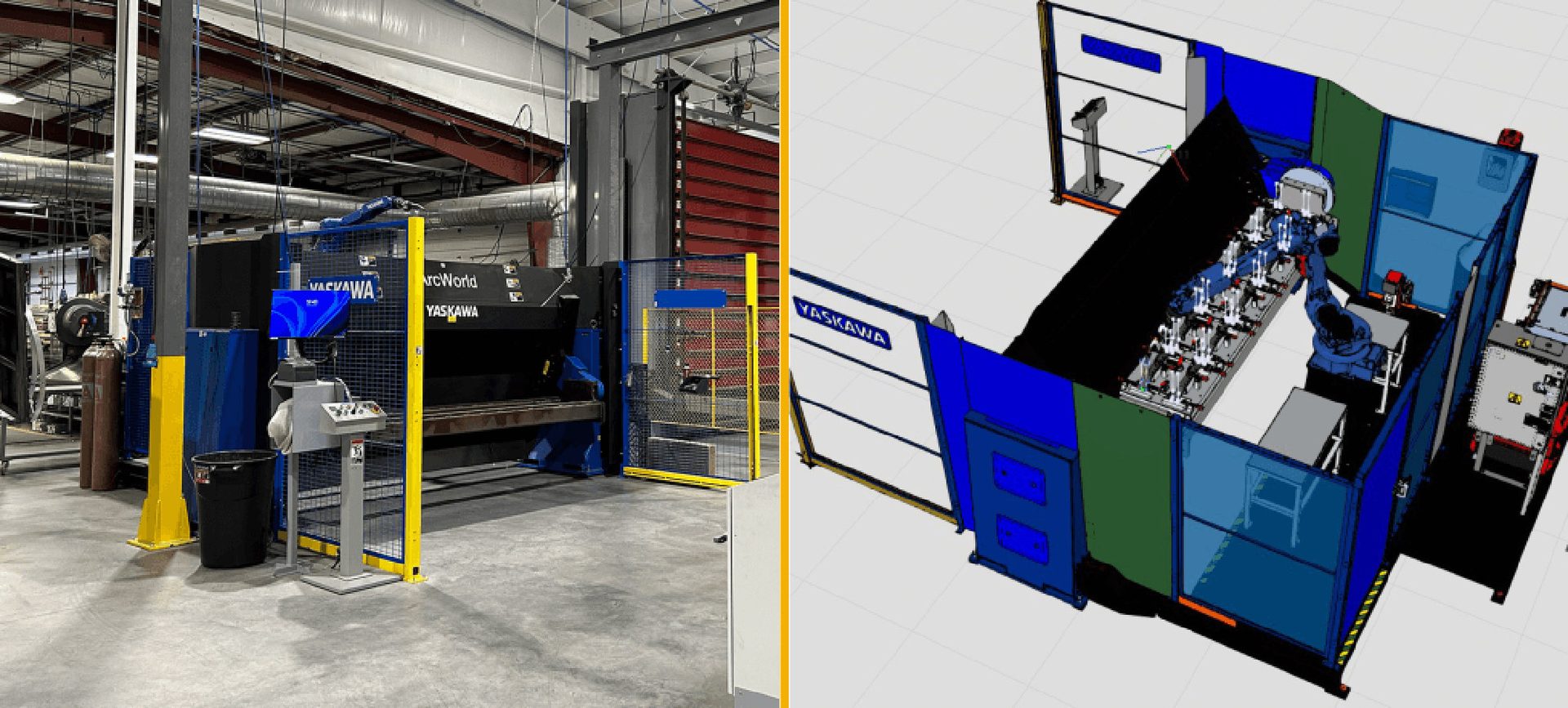
For one assembly, programming the robot manually required 13 hours. With offline programming, the same task can be completed in under three hours. Photo courtesy Visual Components
Moving to Offline Programming
Offline programming (OLP) is the use of software to program robotic cells outside of the production environment. It benefits manufacturers by eliminating the need to halt production to reprogram the robots and by cutting down on the time needed to program them. The technology would be perfect for Berlin Gardens, but the company first had to find a supplier to work with.
“We had looked into several different companies, but none of them seemed to fit what we needed them to do,” Yoder explains.
Eventually, the company found Visual Components’ OLP Software. “The ease of use was the first thing that came to mind for us,” Yoder notes. “Andy, one of our lead programmers, had little to no experience with computers.”
As an Amish worker, he rarely had use for computers outside work, but he found the software exceptionally user-friendly and efficient. With just a couple of clicks, he could program multiple robot paths for the Yaskawa robot cell on a single platform.
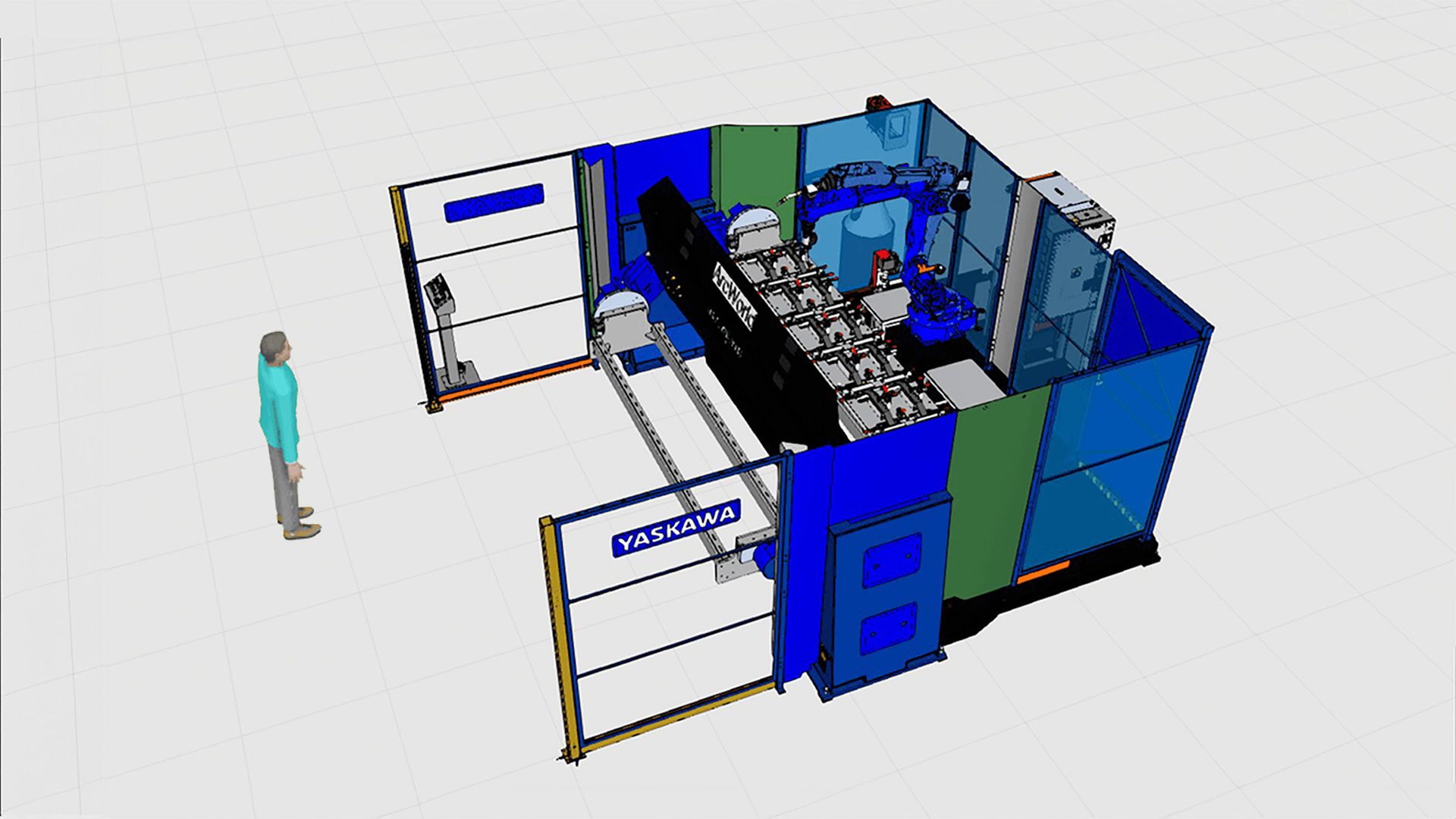
With just a few clicks, engineers can program multiple robot paths in a welding cell. Photo courtesy Visual Components
Yoder was blown away by the reduction in repetitive work. “The biggest difference was the number of points programmed by simply selecting a joint in the software,” he explains.
When an engineer chooses a single weld in the CAD file, the software automatically generates multiple lines of programming code for the robot. “And it’s not all simple movements,” he continues. “We have different fixtures where it takes a bit of maneuvering to place the welds, but the software handles them just fine with accuracy.”
Additionally, the knowledge could be stored in the software for future robot programmers to reuse or optimize.
While the ease of use and reduction in repetitive work were welcome, the efficiency gains exceeded expectations. For one complex fixture, programming manually had previously required 13 hours to get into production. With offline programming, it could now be completed in under three hours, an 80 percent reduction in programming time. “That gives you a small glimpse into the labor saved,” Yoder says, “not to mention the efficiency of how the program runs.”
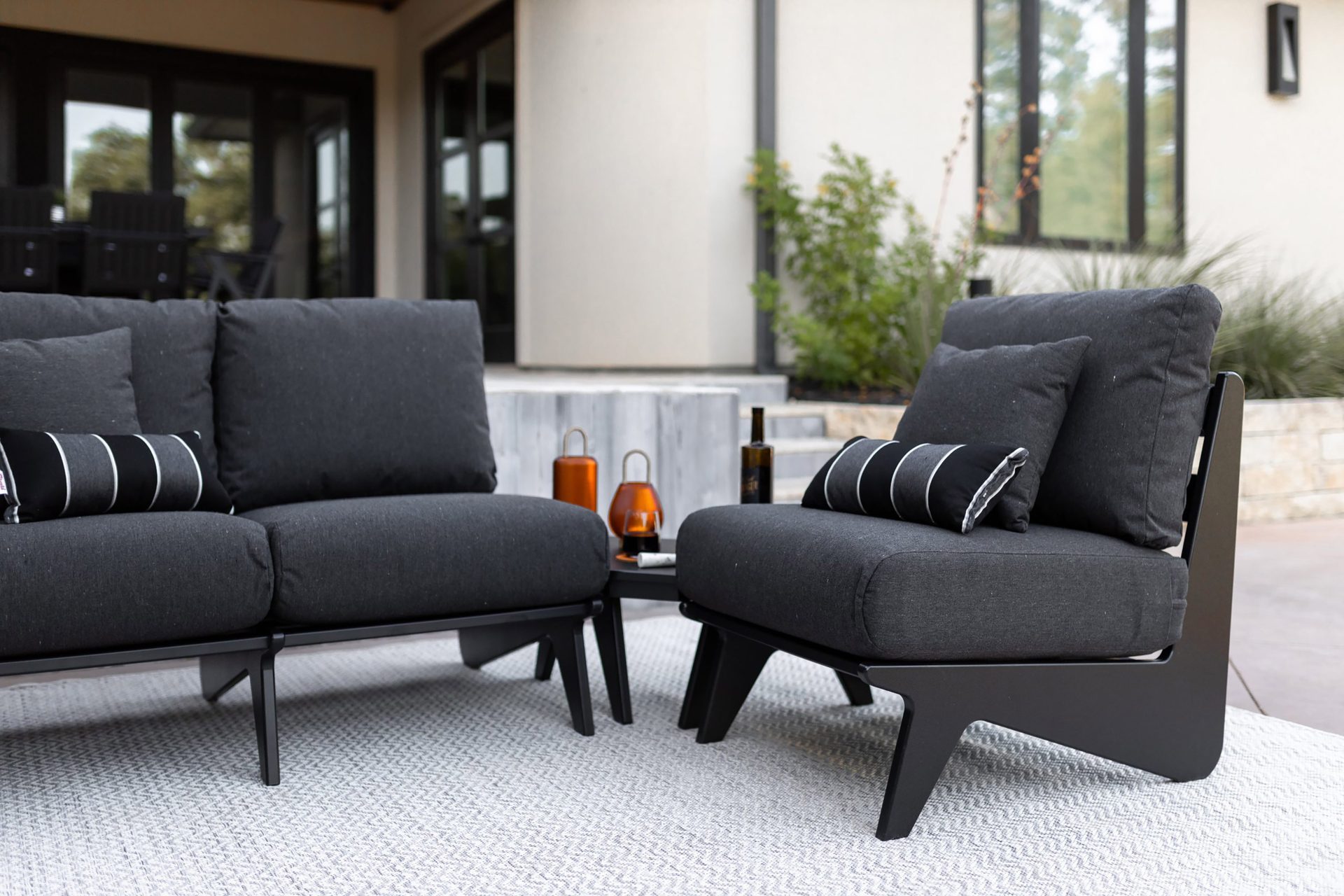
Berlin Gardens specializes in manufacturing high-quality outdoor plastic furniture and backyard structures. Photo courtesy Visual Components
Cutting out that programming time has led to significant labor savings and has enhanced the overall operational agility of the company. Pivoting between projects is no longer a matter of shutting down the welding cell and painstakingly reprogramming the robots over the course of a dozen hours. Instead, new projects can be prepared within a single shift, and the programming team can continuously refine the robotic paths.
“Before, everything was very repetitive and hours were invested to manually move the robot,” Yoder reflects. “Pain points for our team were intensified when inconsistent robot moves caused inefficiencies. The OLP software changed that because everything can be controlled with the same movements each time.”
Vitally to Berlin Gardens, OLP efficiencies were achievable and aligned with the core values of the company. “We improved safety for our employees by keeping them out of the back of the cell,” Yoder adds. “Most importantly, employees have a more enjoyable job experience.”
For more information on OLP software, visit www.visualcomponents.com.
Inspection System
ASSEMBLY ONLINE
For more information on robot programming software and digital twins, visit www.assemblymag.com to read these articles: