
MONTH 2023

Capital Spending Survey
Labor shortages are driving new demand for automation.
Options for Screwfeeding
Pratt & Whitney will spend $285 million to expand its assembly plant in Asheville, NC, a move that is expected to create 325 new jobs. Photo courtesy Pratt & Whitney
Suppliers of assembly technology are optimistic about 2026.
US Manufacturers Make
John Sprovieri // Chief Editor
All things considered, 2025 was a pretty good year for U.S. manufacturing.
Manufacturing employment hasn’t grown, but it hasn’t exactly decreased, either. According to the Bureau of Labor Statistics, 12,706,000 Americans were employed in manufacturing in September 2025, the last month for which data is available. That’s compares with 12,800,000 in September 2024, a decrease of less than 1 percent.
While labor strife dominated the headlines in 2024, this year has been calm.
On May 4, some 3,000 union workers at aerospace supplier Pratt & Whitney went on strike, putting a damper on production of jet engines for military aircraft, including the F-35 Joint Strike Fighter. Less than four weeks later, members of the International Association of Machinists and Aerospace Workers approved a four-year contract. About 74 percent of workers voted to accept the new contract, which raises wages and includes a guarantee that the company will keep production at its East Hartford, CT, and Middletown, CT, plants through 2029.
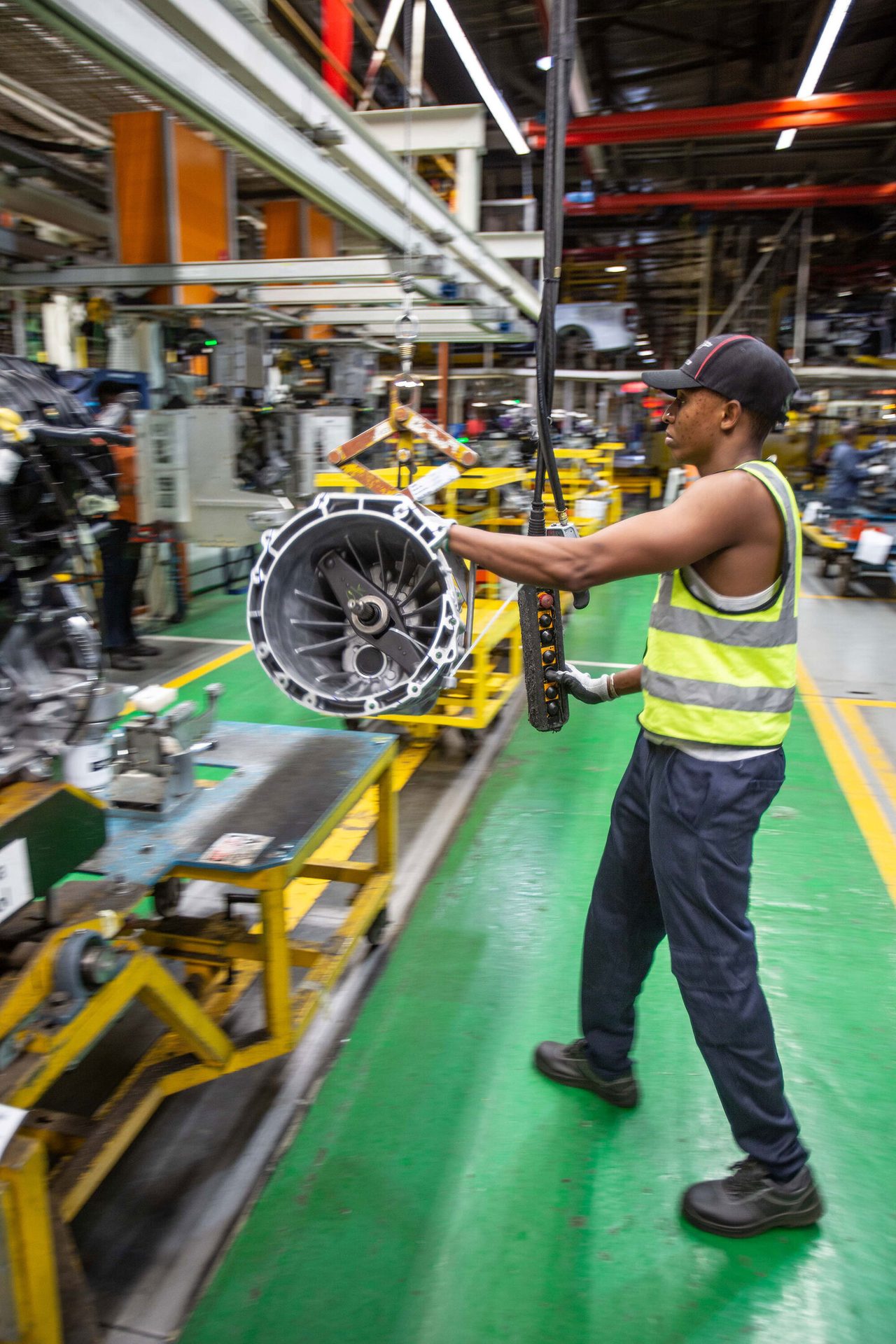
Nearly every major automotive OEM reported sales increases in the third quarter compared to the same period a year ago. Photo courtesy Ford Motor Co.
In November, union mechanics at the Boeing Defense factory in the St. Louis area approved a new contract, ending a three-month strike. The machinists union had rejected the company’s previous four offers. The new contract includes a $6,000 signing bonus, instead of the original $5,000 offered in August. However, Boeing extended the contract’s term from four years to five, with a 24 percent general wage increase—8 percent in the first year and 4 percent in each of the following years.
With the presidential election in the rearview mirror and a degree of certainty over future economic policies and interest rates, economists hoped manufacturers would recommit to capital investment in 2025. And they did.
For example, GE Appliances announced that it plans to invest $3 billion over the next five years to expand U.S. manufacturing, modernize facilities, and grow its product portfolio. The initiative will create more than 1,000 new jobs across Kentucky, Alabama, Georgia, Tennessee, and South Carolina. It’s the second-largest investment in the company’s history.
Not to be outdone, GE’s rival, LG Electronics, said it will spend $100 million to expand its assembly plant in Clarksville, TN. The project is aimed at increasing U.S. production of home appliances in response to tariffs imposed on imports. The project involves constructing a 560,000-square-foot warehouse adjacent to the factory, which will roughly double the company’s footprint in Clarksville. It will also provide space for a refrigerator assembly line.
Automotive Industry Keeps Rolling
In the automotive industry, nearly every major OEM reported sales increases in the third quarter compared to the same period a year ago.
Much like this spring when buyers hurried into showrooms ahead of tariff deadlines, the third quarter brought another sales surge. This time it was the expiration of the $7,500 federal EV tax credit at the end of September that drove a wave of deliveries, lifting U.S. light-vehicle sales and setting records for EV sales.
General Motors was among the biggest winners. The company’s U.S. light-vehicle sales rose nearly 8 percent in the quarter, helped by record EV sales. For the first nine months of the year, GM has already sold more EVs than it did in all of last year.
Ford also set a record for EV sales. Its overall U.S. sales rose 8.5 percent in the quarter. Ford’s electric models, including the Mustang Mach-E and F-150 Lightning, posted their strongest numbers yet as buyers raced to lock in incentives before they disappeared.
Overall, U.S. consumers are expected to buy 16.1 million new vehicles this year, a slight increase from the 16 million sold in 2024.
With sales up, OEMs are investing in people, plants and equipment. For example, in June, General Motors has announced a sweeping $4 billion investment across its U.S. manufacturing facilities over the next two years, aimed at increasing domestic production of both gas-powered and electric vehicles. Among the facilities targeted for upgrades are the company's factories in Orion Township, MI; Kansas City, KS; and Spring Hill, TN.
Only a month earlier, GM committed $888 million to upgrade its assembly plant in Buffalo, NY, to produce the company’s next-generation V-8 engine.
GM wasn’t the only OEM with billion-dollar budgets. Hyundai Motor Group will invest $21 billion in the United States from 2025 to 2028. The investment reflects Hyundai’s strategic focus on expanding its manufacturing capabilities, advancing future technologies, and enhancing energy infrastructure in America. Since entering the U.S. market in 1986, the Korean automaker has invested approximately $20.5 billion in this country.
Stellantis announced a historic $13 billion investment to expand its U.S. operations over the next four years—the largest in the company’s 100-year history. The plan will boost U.S. production by 50 percent, add five new vehicle launches, refresh 19 products, and create more than 5,000 jobs across Illinois, Ohio, Michigan and Indiana.
Toyota announced a $912 million investment to boost advanced powertrain production and expand hybrid-electric vehicle assembly across the U.S. The upgrades will enhance machining, casting, and electric-drive component manufacturing at plants in West Virginia, Kentucky, Tennessee and Missouri.
EV startup Scout Motors said it will invest an additional $300 million to build a supplier park next to its assembly plant under construction in Blythewood, SC. The project brings the company’s total investment in South Carolina to more than $2.3 billion. Production is expected to begin in 2027.
Isuzu North America began construction of a $280 million assembly plant in Piedmont, SC. The factory will produce both gas- and battery-powered trucks starting in 2027. At capacity, it will be able to assemble up to 50,000 medium-duty truck chassis annually.
In September, EV manufacturer Rivian began construction on a $5 billion assembly plant in Stanton Springs, GA. The facility, first announced in late 2021, represents the single-largest economic development investment in Georgia’s history and is expected to create 7,500 jobs once fully operational. Originally slated to open in 2024, the project will now be developed in two phases, with vehicles expected to begin rolling off assembly lines in 2028. Once complete, the plant will be capable of producing up to 400,000 vehicles annually.
Aerospace Industry Soars
In the aerospace industry, Boeing began construction on a major expansion of its assembly plant in North Charleston, SC, to increase production of its 787 Dreamliner. The project entails a $1 billion investment and will support 1,000 new jobs over the next five years. Boeing plans to produce 10 Dreamliners per month next year.
Meanwhile, Boeing’s rival, Airbus, opened a new assembly line for the A320 jetliner at its factory in Mobile, AL. The expansion doubles the company’s U.S. production capacity for the jet, supporting the company’s global goal of building 75 single-aisle aircraft per month by 2027. The project adds 1,000 new jobs and includes more than 1 million square feet of additional hangars, paint shops, logistics areas, and a new welcome center.
Aerospace start-ups are getting into the act, as well. In June, Otto Aviation announced that it will invest more than $430 million to build a new assembly plant in Jacksonville, FL. The 850,000-square-foot factory will create nearly 400 jobs. The facility will initially produce Otto’s new Phantom 3500, a highly fuel-efficient business jet.
Otto isn’t the only aerospace start-up with big plans. JetZero is building a new assembly plant in North Carolina, and Archer Aviation just opened a new factory in Georgia.
Aerospace suppliers are also spending. For example, GE Aerospace unveiled plans to invest nearly $1 billion in its U.S. factories and supply chain. The initiative aims to strengthen manufacturing and increase the use of innovative new parts and materials needed for the future of flight.
The short-term goal is to increase production capacity at several facilities that support the assembly of the company’s CFM LEAP engine, sales of which are expected to increase up to 20 percent this year. The engine, which consumes less fuel than traditional designs, powers single-aisle commercial aircraft, such as the Boeing 737 MAX and the Airbus A320neo.
In April, Pratt & Whitney said it will spend $285 million to expand its assembly plant in Asheville, NC, a move that is expected to create 325 new jobs. The factory, which began operations in October 2020, specializes in producing high-tech turbine airfoils, essential components for jet engines.

B. Braun will invest $20 million to expand and modernize its assembly plant in Hanover Township, PA, creating at least 200 new, full-time jobs over the next three years. Photo courtesy B. Braun
Medical Device Industry
Medical device manufacturers are spending. For example, German company B. Braun said it will invest $20 million to expand and modernize its assembly plant in Hanover Township, PA, creating at least 200 new, full-time jobs over the next three years and retaining 1,704 existing full-time positions.
In August, Philips announced plans to invest more than $150 million in U.S. manufacturing and R&D. The company will be expanding its facilities in Reedsville, PA, and Plymouth, MN. The Reedsville factory assembles transducers and ultrasound systems. Philips makes image-guided therapy products and medical scanning equipment at the Plymouth, MN, facility.
And in April, Swiss manufacturer SHL Medical opened a new state-of-the-art assembly plant in North Charleston, SC, to produce of autoinjectors. The project represents a $220 million investment.
Electronics Industry
In the electronics industry, the biggest news of the year was clearly Apple’s announcement that it plans to invest more than $500 billion in the U.S. over the next four years. As part of the initiative, the company is building a 250,000-square-foot factory in Houston that will mass-produce servers. In addition, Apple will double its U.S. Advanced Manufacturing Fund, create a training academy in Detroit, and grow its domestic R&D investments to support cutting-edge fields like artificial intelligence and silicon engineering.
Incredibly, that was not the only billion-dollar headline of the year. In April, IBM Corp. announced that it will invest $150 billion in the U.S. over the next five years to “accelerate its role as the global leader in computing.” This includes an investment of more than $30 billion in research and development to continue Big Blue’s prowess in manufacturing mainframe and quantum computers.
Rockwell Automation was also part of the “billion-dollar” investment club. In November, the company said it will build a new greenfield manufacturing site in southeastern Wisconsin. The project marks the next step in the company’s plan to invest $2 billion in factories, digital infrastructure and talent over the next five years. The new Wisconsin plant could become Rockwell’s largest manufacturing campus in the world.
In June, electronics manufacturer Jabil Inc. revealed plans to invest approximately $500 million over the next several years to expand its footprint in the southeastern United States to support cloud and AI data center infrastructure customers. The investment will include a new U.S. assembly plant.
That same month, Wiwynn Corp., a Taiwanese supplier of AI servers and components, said it plans to invest $300 million to build its first US assembly plant in Texas to avoid U.S. tariffs.
And, Orbic Electronics Manufacturing said it is building a new assembly plant in Hauppauge, NY, to reshore production from China and India. The $110 million investment is “in response to global supply chain challenges and increasing demand for domestically produced technology.”
Orbic builds a variety of 4G and 5G connected devices, including laptop computers, routers, smartphones, smart watches and tablets. The company plans to renovate and retrofit an existing 69,500-square-foot facility and add an additional 75,000-square-feet of production space. Completion of construction and start of manufacturing is expected in early 2026.
Inspection System
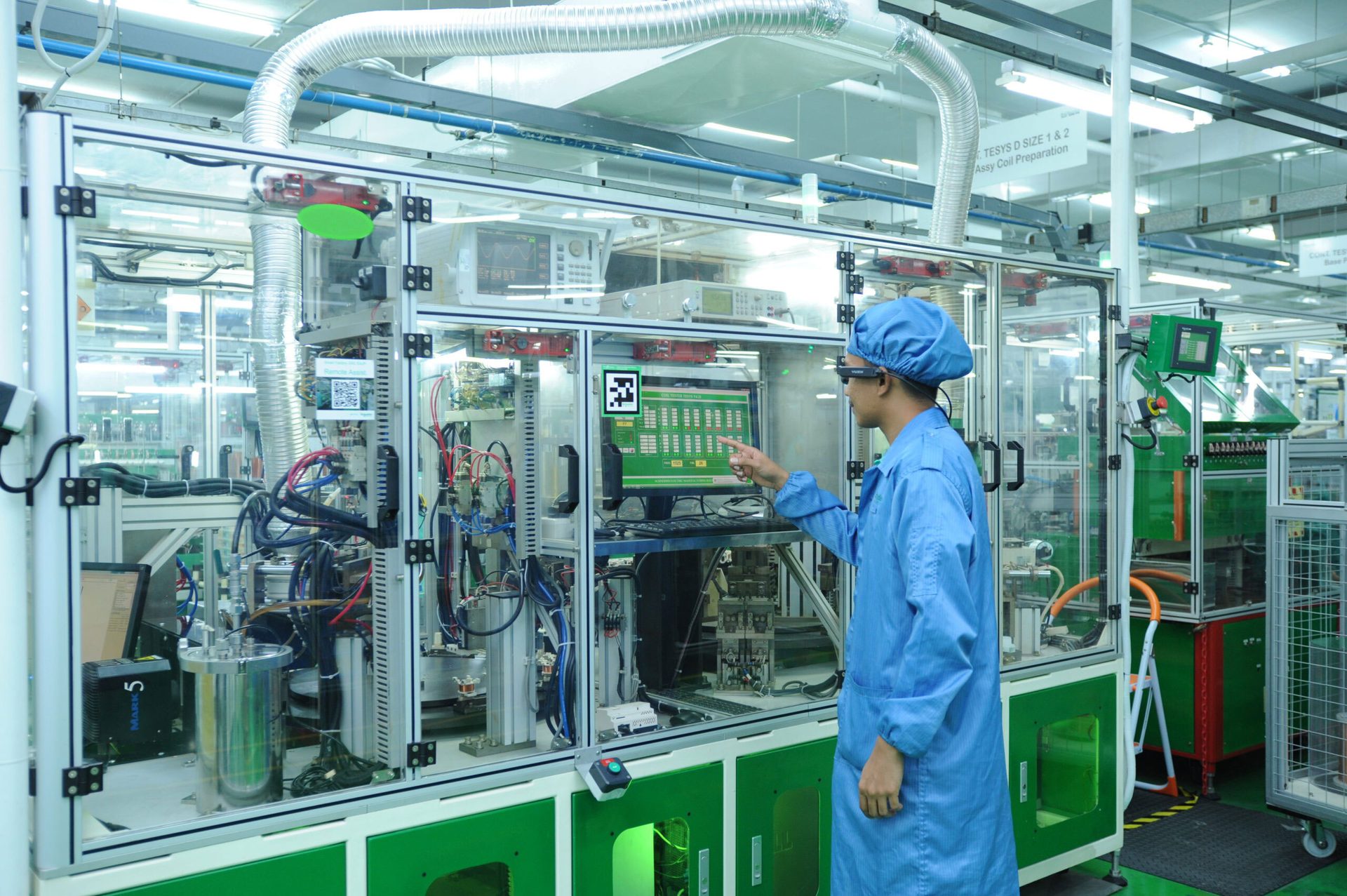
Schneider Electric it will spend several million dollars to modernize and expand its electrical equipment manufacturing facilities in El Paso, TX. Photo courtesy Schneider Electric
Electrical Equipment Industry Takes Charge
The past year brought a wave of investments from manufacturers of electrical equipment and alternative energy technologies. For example, in April, Schneider Electric said it will spend several million dollars to modernize and expand its electrical equipment manufacturing facilities in El Paso, TX. The project is expected to generate 300 new jobs. Schneider Electric makes energy management products, industrial automation, building systems and software. The upgrades are expected to increase manufacturing capacity for medium-voltage switchgear used in the Texas data center market.
In November, First Solar Inc. opened a new, vertically integrated assembly plant in Iberia Parish, LA. The $1.1 billion facility, which spans approximately 2.4 million square feet, employs more than 700 people and is expected to have 826 employees by the end of the year. At full capacity, the factory will be able to produce enough solar panels annually to generate 3.5 gigawatts (GW) of electricity. With the new facility, First Solar now has domestic capacity to produce enough solar panels annually to generate 14 GW of electricity.
The Louisiana facility is part of what is already the largest solar technology manufacturing and R&D footprint in the Western Hemisphere and includes three vertically integrated manufacturing facilities in Ohio, and one in Alabama, along with R&D centers in Ohio and California. That same month, First Solar announced that it would invest $330 million to build a new production line in Gaffney, SC, to onshore final production of its Series 6 solar modules.
In October, Eos Energy Enterprises, a manufacturer of zinc-based battery systems, said it is investing $352.9 million to expand its existing manufacturing operation in Allegheny County, PA, and relocate its headquarters from New Jersey to Pennsylvania. The project is expected to create at least 735 new jobs and retain 265 current positions.
In September, ABB said it will invest $110 million in four U.S. manufacturing sites to meet future demand in key industries including data centers and the grid. As part of the investment, a new production line will be built at the company’s factory in Senatobia, MS, to assemble its new Emax 3 circuit breakers. Additional upgrades will be made at ABB facilities in Pinetops, NC; Richmond, VA; and Arecibo, PR.
And in August, GE Verona said it is investing $41 million to expand its historic generator factory in Schenectady, NY, which serves as the company’s Center of Excellence for assembly and testing. The new funding will enhance the production of GE Vernova’s H65 and H84 generators, which accompany the company’s most efficient HA gas turbines.
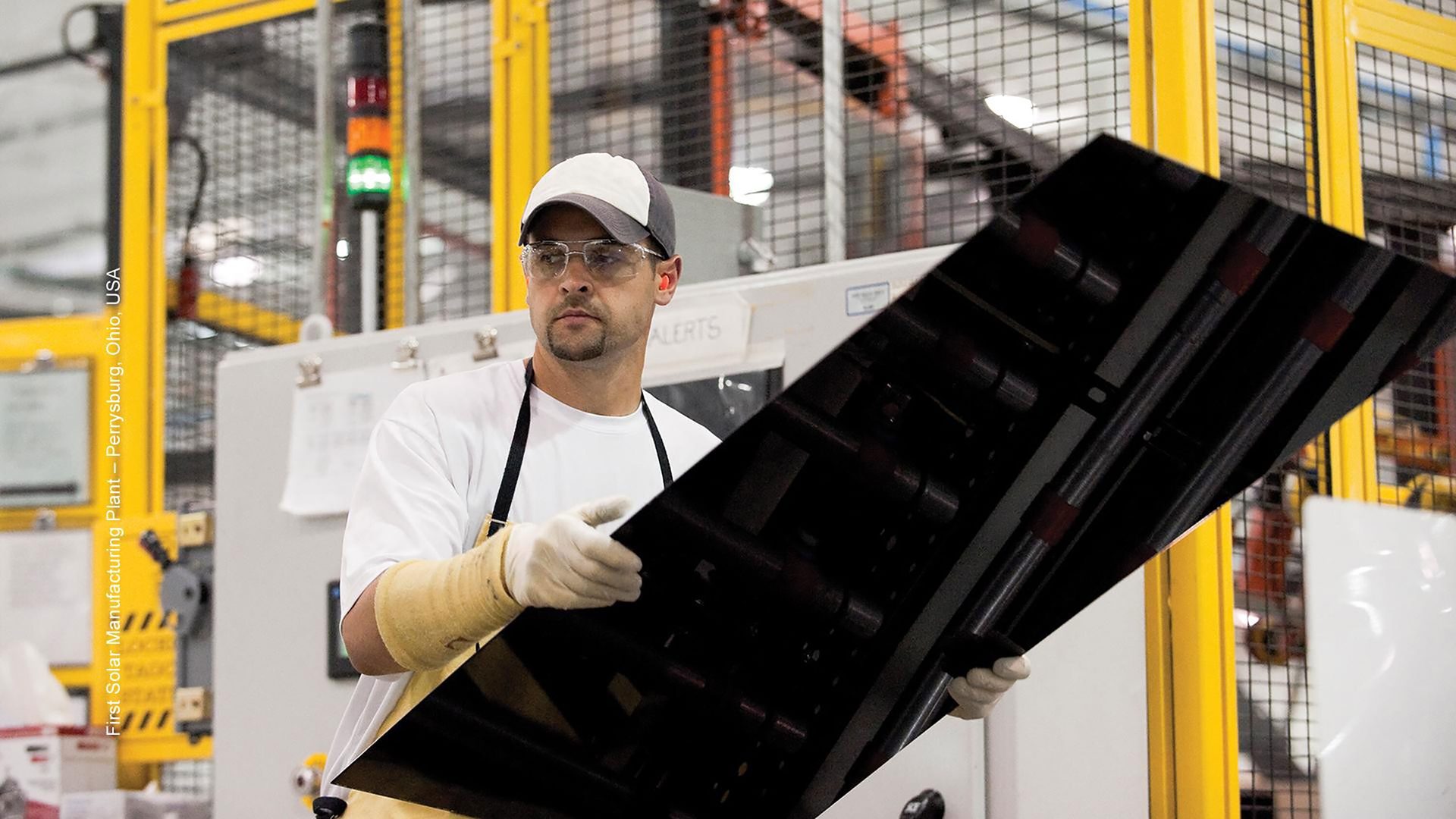
In November, First Solar Inc. opened a new, vertically integrated assembly plant in Iberia Parish, LA. The $1.1 billion facility employs more than 700 people. Photo courtesy First Solar Inc.
Capital Equipment Spending in 2025
In terms of specific manufacturing and assembly technology, the past year saw sales rebound.
For example, new orders for metalworking machinery totaled $493.1 million in September 2025, according to latest data from the AMT—The Association for Manufacturing Technology. This was a 7.2 percent decline from August 2025, but an 11 percent increase from September 2024.
Through September 2025, machinery orders totaled $3.93 billion, a 17.3 percent increase over the first three quarters of 2024. It’s the highest order value for the first nine months of a year since 2022.
Automotive manufacturers increased orders to the highest level of 2025. There had been a general lull in orders from the automotive sector following large investments in new production lines made in 2021 and 2022. Through September 2025, however, orders are up nearly 15 percent over the first three quarters of 2024, as some OEMs retool production lines away from EV production.
Forecasts presented at AMT’s annual MTForecast conference in October predicted some industrial slowdown in 2026, but whether that will affect manufacturing technology orders in the remainder of 2025 is an open question.
Similarly, North American robot orders also climbed in the third quarter of 2025. According to the latest data from the Association for Advancing Automation (A3), 8,806 robots valued at $574 million were ordered in Q3, an 11.6 percent increase in units and 17.2 percent rise in revenue compared to the same period last year.
Key growth sectors included food and consumer goods, which jumped 105 percent year-over-year, and automotive OEMs, which rose 68 percent.
A3 began officially reporting collaborative robot volumes earlier this year. In Q3 2025, companies ordered 1,174 cobots valued at $42 million, accounting for 13.3 percent of total units and 7.2 percent of total revenue. For the first nine months of 2025, cobot orders reached 4,259 units valued at $156 million, representing 16.1 percent of units and 9.4 percent of total revenue.
From January through September 2025, companies in North America ordered 26,441 robots valued at $1.7 billion. These volumes represent a 6.6 percent increase in units and a 10.6 percent increase in revenue compared to the same period in 2024.
“It’s encouraging to see robotics demand improve over last year, with more automation projects steadily returning to the pipeline,” says Alex Shikany, executive vice president at A3. “The market has experienced a substantial amount of economic and policy uncertainty this year, and it’s been a challenging environment for capital investment, but there is an upside. We’re seeing sustained interest from companies across the region…and more leaders are exploring automation as a long-term strategy to strengthen their operations.
“That enthusiasm is now starting to show up in the order data, particularly across general industry sectors. As industrial production improves into 2026 and supply chains stabilize, we expect automation to remain a strategic priority for manufacturers looking to compete, build resilience, and address persistent workforce pressures.”
Those higher sales are reflected in the quarterly reports of robotics companies. At Fanuc, for example, the Robot Division remains the company’s strongest performer, with sales up 16 percent year-over-year and 13 percent quarter-over-quarter. In the U.S., the company’s robot sales jumped 22 percent year-over-year and 29 percent quarter-over-quarter.
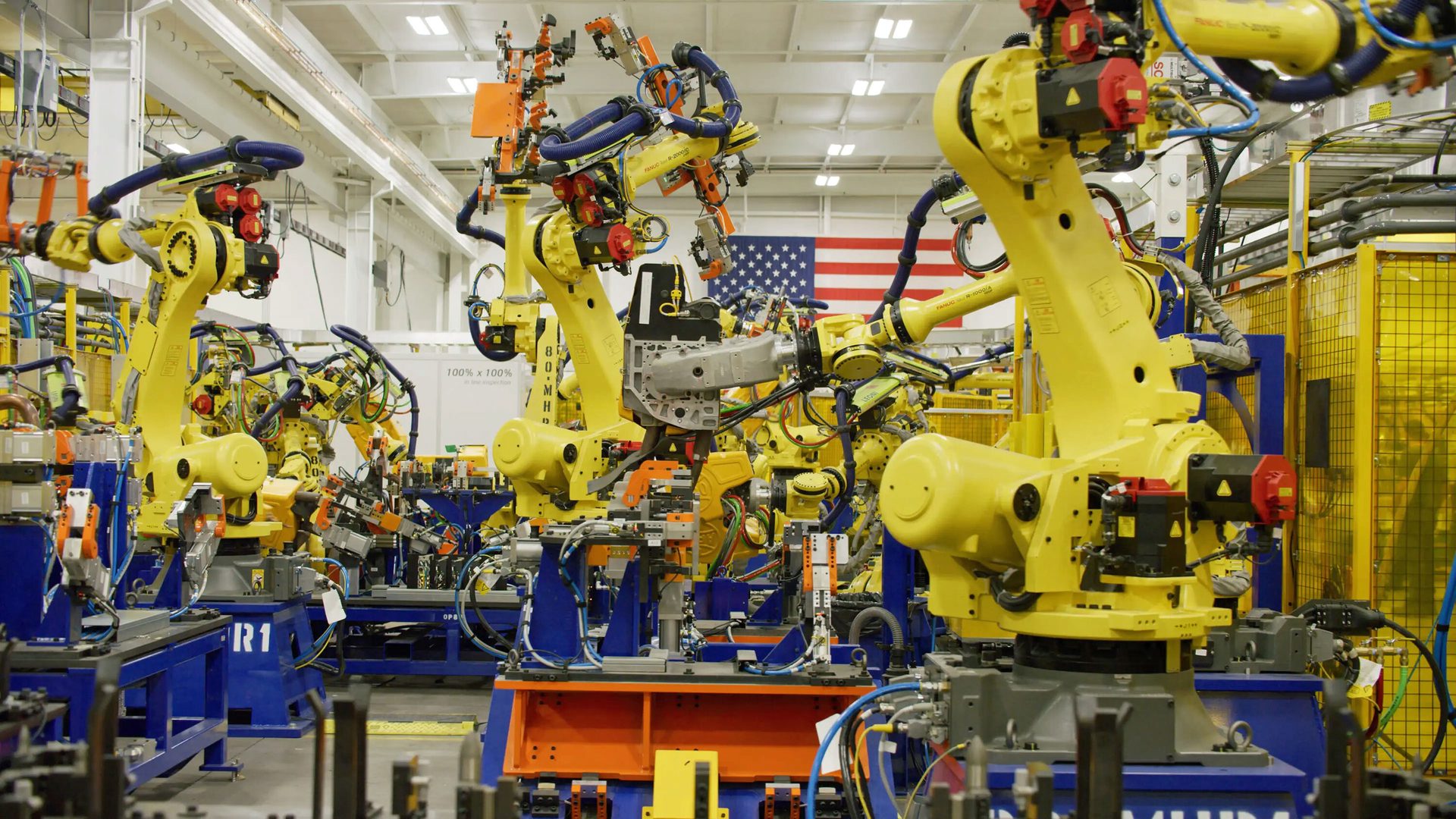
Through the first nine months of 2025, companies in North America ordered 26,441 robots valued at $1.7 billion. Photo courtesy JR Automation
Assembly Automation
For suppliers of multistation automated assembly systems, the year was a mixed bag.
“2025 was a challenging year for the automation industry, and we felt that as well,” says Tim Tate, president of Edgewater Automation, a systems integrator in St. Joseph, MI. “Capital spending delays and slower decision cycles created headwinds, but we stayed focused on execution and strengthening customer relationships. Those efforts are setting us up for a stronger 2026.
“Quoting activity and customer engagement are both trending up,” he continues. “We expect capital projects that were paused in 2025 to move forward next year.
“Life sciences, medical devices and consumer goods will remain strong focus areas for Edgewater, with emerging interest in energy and sustainability-related projects.”
Other integrators fared better. “2025 will be a record revenue year,” says the president of a systems integrator in the southeastern U.S. who requested anonymity. “The majority of our revenue came from vehicle electrification projects. In early 2024, we upgraded our facility and added staffing. Our
strategy is to go after larger, high-visibility projects—lines in the $2 million to $15 million range.
“Assuming no geopolitical foolishness crashes the economy, 2026 should set a new record for revenues based on our pipeline of orders. We expect more EV business,” he adds. “We are making slow and steady inroads into medical device assembly, but that industry will probably more relevant to our 2027 revenues.”
Suppliers to machine builders did pretty well, too, this year. “2024 was our best year ever, and it looks like 2025 will be about 90 percent of that,” says John Graham, owner and president of Feeding Concepts Inc., a manufacturer of parts feeding equipment in Noblesville, IN. “I expect 2026 will be among our top three or four years. I know several machine builders that are sitting on big systems right now; they are just waiting on the green light. We are seeing orders that people have been sitting on start to move.
“With the cut in interest rates, I don’t see automation stopping. Reshoring will continue, and labor is still the biggest problem manufacturers face. And if the housing market improves, that will create demand for windows, doors, sprinklers, appliances and other products. Then you’ll see the economy really start to gain momentum.”
If there’s a fly in the ointment for 2026, it might be uncertainty surrounding the future of EVs and the launch of new models. “Programs are being delayed, and volume ramps are being pushed out,” says one automation executive. “For suppliers, the ability to respond to OEM program timing will require accelerated development of products and processes.”
Because most of the components that go into automated assembly systems are imported, tariffs have been an issue for every integrator.
“Tariffs continue to create cost pressure and uncertainty on certain components, but we’ve managed it through supplier diversification and early sourcing strategies,” observes Tate. “Communication with our customers early and often has been a key to our success.”
“Tariffs are an issue for us,” adds Graham. “Not so much on steel, but on other components, such as electric motors and sensors, that go into our feeders.”
On the plus side, the supply chain issues that arose from the COVID pandemic have improved. “Lead times are more predictable than in the past few years, though we still see occasional delays in key servo and vision products,” notes Tate.
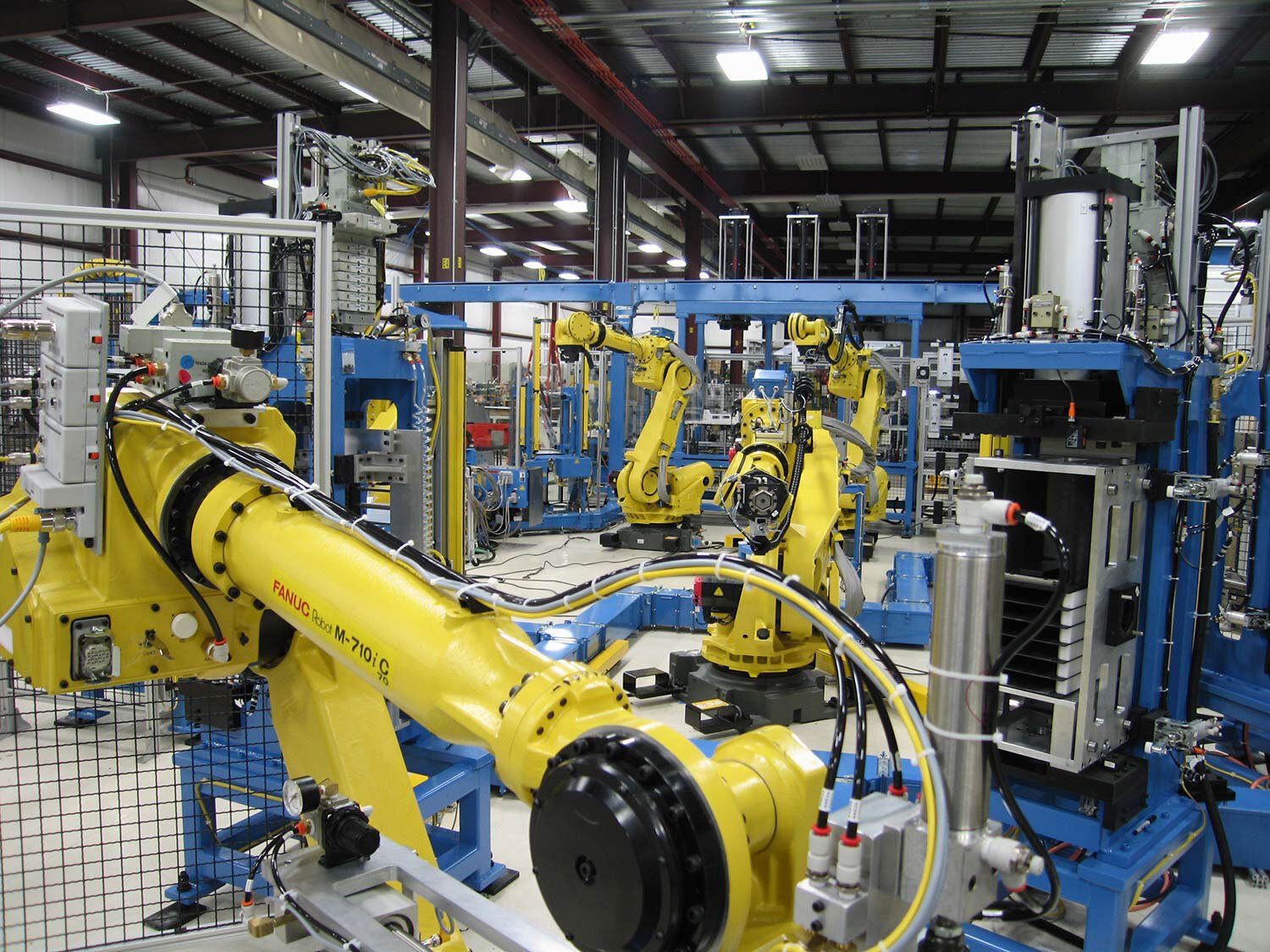
For suppliers of multistation automated assembly systems, the year was a mixed bag. Photo courtesy Edgewater Automation
“Our supply chain is a little like Swiss cheese: It’s mostly solid with some holes,” quips one automation executive. “The COVID era destroyed parts of our supply chain by resetting expectations of acceptable velocity. We had to replace some suppliers with whom we’ve had 20-year relationships because they were unable to deliver reliably. Fortunately, most of our suppliers seem a little hungry this year.”
“I don’t see a lot of supply chain issues,” says Graham. “There are just longer lead times. Companies are just not stocking like they used to. They are reluctant to hold inventory.”
Investing in assembly automation is not without risk, and manufacturers rightly have some concerns about implementing the technology. “Cost justification, flexibility for changing products, and labor shortages continue to dominate conversations,” says Tate. “Customers are cautious but committed to automation that truly drives performance.”
Other Assembly Technologies
For suppliers of other assembly technologies, 2025 started off slowly, but gradually improved.
“Overall, 2025 will be a successful year,” says Jacob Sponsler, president of Orbitform, a manufacturer of riveting and joining machinery. “We entered 2025 expecting mild growth, with the second half of the year to be stronger than the first. That has been the case so far.
“The second half improvement was due, in part, to certain automotive-related decisions that the election was a factor in and the lag time it takes for us to see movement based on that. However, the first half was below expectations due to uncertainty around tariffs.
“The tariffs had a short-term negative business impact for us, due to the uncertainty they created for our customer base. They were hesitant to make capital equipment decisions. On the other hand, we have seen some reshoring plans, which was partly the purpose of the tariffs. So, the long-term business impact for us could be positive, but it will take some time, possibly years, to be realized.
“We expect 2026 to be a mild growth year over 2025. There is still some lingering uncertainty around tariffs and related policies. Lead time is becoming a bigger point of discussion with customers. Many of them have waited to make decisions, which has compressed the timelines for when they need equipment.”
Some suppliers of fastening tools did well this year. “2025 was an excellent year, with several major automobile manufacturers converting their clutch assembly tools,” says Doug Hohenstein, commercial sales manager for industrial fastening at Fein Power Tools Inc. “We expect a good year in 2026. Continued tool conversions, plant expansions, new model production runs, and new products from Fein should make 2026 another good year. We are seeing an increase in requests for wireless data collection, even for non-safety-critical fastening applications.”
Jeff Cunningham, president of Visumatic, a supplier of automatic screwdriving systems, rates 2025 as a good year, but it could have been better. “Our success was driven by the versatility and diversity of our products,” he says. “We reached more industries and more new customers due to the build-up of electrical product manufacturing and reshoring. It could have been better, though, because the automotive industry did not require as much of our equipment as they typically do.”
Cunningham predicts a good year in 2026. “Manufacturing in the U.S. remains in a growth period,” he asserts. “But, the need to offset the higher costs of labor is more important than ever for manufacturing. Most manufacturers are still attempting to fix their supply chain disruptions from international events that have occurred every year since 2020. Many factories are replacing old, worn-out, machinery and outdated processes.”
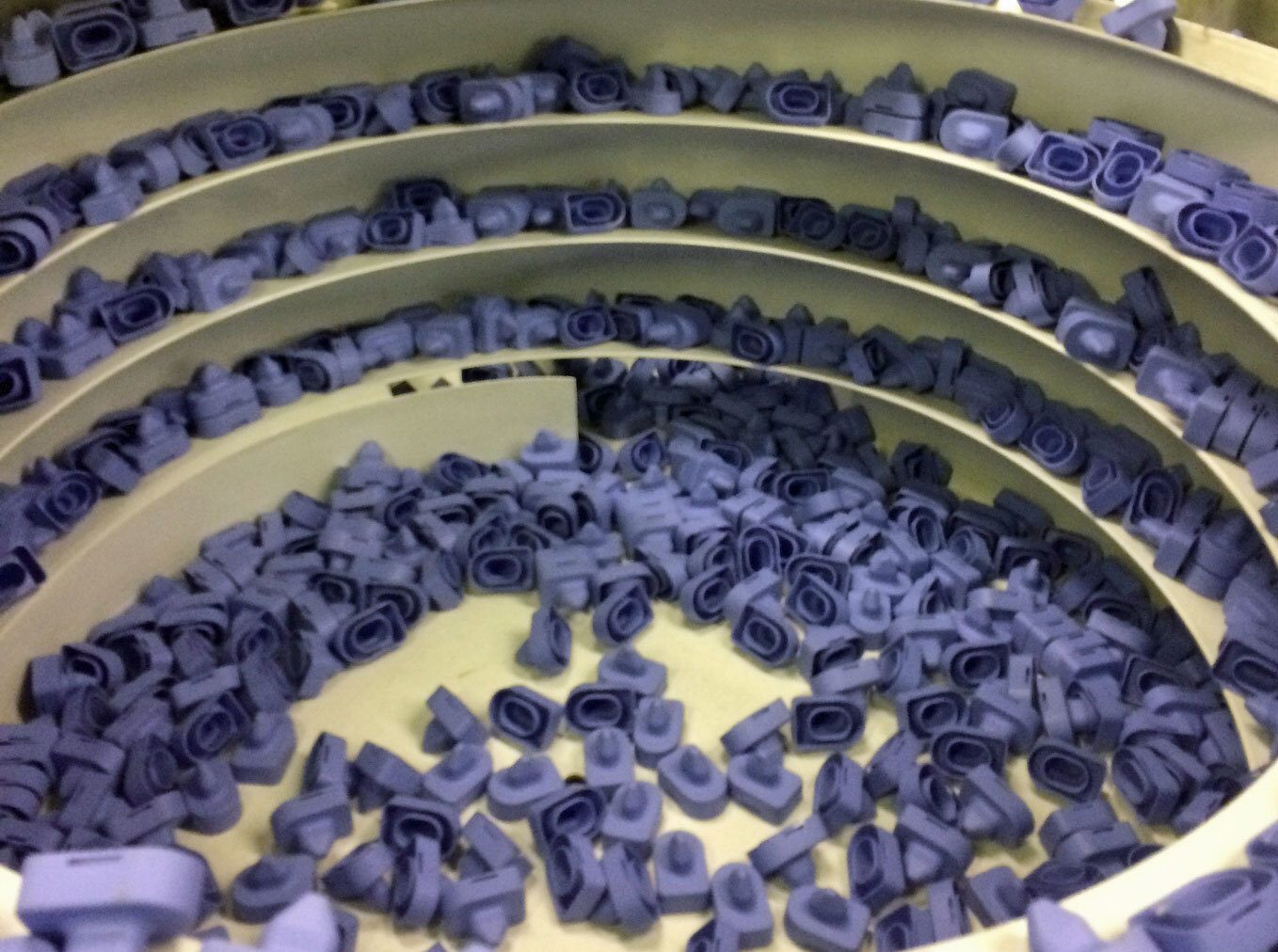
Suppliers of parts feeding systems expect a good year in 2026. Photo courtesy Feeding Concepts Inc.
For PVA, a supplier of adhesive dispensing technology in Halfmoon, NY, 2025 shaped up to be a strong year, with growth outpacing 2024. “A lot of that comes down to thoughtful planning, expanding into new markets, and making sure our full range of capabilities was visible to those who need them. Consistent, responsive customer support also played a key role,” says Kimberly Fagan-Riley, marketing communication manager at PVA.
“We’re optimistic about 2026,” she continues. “The strategic plan we’ve been following continues to build momentum, and we’re seeing steady progress quarter after quarter. We’re expanding our integration capabilities—not just in dispensing, but also in areas like pick-and-place, screwdriving, plasma surface treatment, and UV curing.”
Fagan-Riley is pleased with how her company responded to the supply chain issues of recent years. “We handle most of our fabricated components in-house, which gives us a lot of control,” she explains. “During COVID, we built out second sources for specialized parts and third sources for major components. That groundwork has helped us stay on track, even as lead times have generally gotten longer. Planning ahead has become more important than ever.”
Jeremy Crockett, general manager of MC Machinery Systems Inc. in Elk Grove Village, IL, says 2025 was an up-and-down year. “Due to economic uncertainty, we had a great start, slow middle and an OK outlook for the remainder of the year,” he says.
Nevertheless, the supplier of metalworking machinery, assembly presses and fastening tools expects a good year in 2026. “Stability in the tariffs and a stagnant 2025 will push industry to invest in 2026,” he predicts. “Also, we are launching a new controller platform next year.”
Thomas Parker, automotive market sales manager at Inficon Inc., a supplier of leak testing technology in Atlanta, says 2025 could have been better.
“This was a year that we were under budget,” he says. “What held us back was the tariffs and the pull-back of investments in EV manufacturing to better align with consumer needs. Now that manufacturers know that they will be living with tariffs, we do see several projects involving companies investing to manufacture more in the U.S. I consider tariffs a short-term pain for hopefully a long-term gain.
“We expect a good year in 2026,” he continues. “We see an increase in reshoring projects. In the automotive space, OEMs are retooling from making plug-in EVs to making hybrid vehicles. We are also seeing increased investment in fuel cell technology.”
According to Killian Dagneaux, marketing manager for ATEQ Corp., a supplier of leak testing instruments in Livonia, MI, “2025 was a great year for us, surprisingly. We had a very slow year in 2024 with the slowdown in manufacturing and investments, but we are seeing more and more production lines to be relocated to the United States.”
Tariffs are having a noticeable impact on the company’s sales. “In one hand, we have seen a number of companies relocating their manufacturing lines to the United States,” says Dagneaux. “But on the other hand, we had to increase our prices due to tariffs.
“We expect 2026 to be great year due to numerous investments in the United States, especially in the manufacturing industry.”
ASSEMBLY ONLINE
For more information on automation and capital spending, visit www.assemblymag.com to read these articles: