ASSEMBLY IN ACTION
Tesla Powers Transition of Blow-Molded Plastics Maker to Solar
It is safe to say that the debate about the environmental impact of plastic will continue. But, it is also a fact that many manufacturers of plastic products are quietly becoming greener.
A good example is Fairfield, IA-based Agri-Industrial Plastics Co. (AIPC), which specializes in the blow molding of large-scale industrial parts. These include fuel tanks for the turf equipment, power sports, agricultural and marine industries.
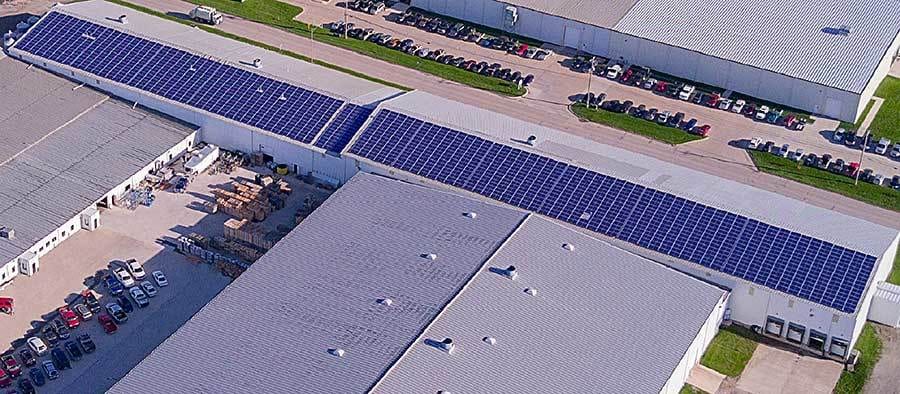
Mounted on the Agri-Industrial Plastics Co. manufacturing facility is a 517-kilowatt solar array. Photo courtesy Agri-Industrial Plastics Co.
Founded in 1978, the company operates a 340,000-square-foot advanced manufacturing facility. The plant is equipped with 20 monolayer accumulator-head blow molding machines and seven multilayer continuous extrusion machines. Robotic automation is also present, to complement a clean and modern work environment.
Blow molding is energy intensive and regularly produces electrical peaks at the facility. To better handle the costs associated with these peaks, AIPC installed a unique solar and energy storage system in 2019.
“We run 27 [production] lines 24 hours a day [on weekdays],” says Lori Schaefer-Weaton, president of AIPC. “This [creates] huge utility bills. Some of the [system] payback will be strategic, longer term, by building excitement around working [here] and being part of something bigger.”
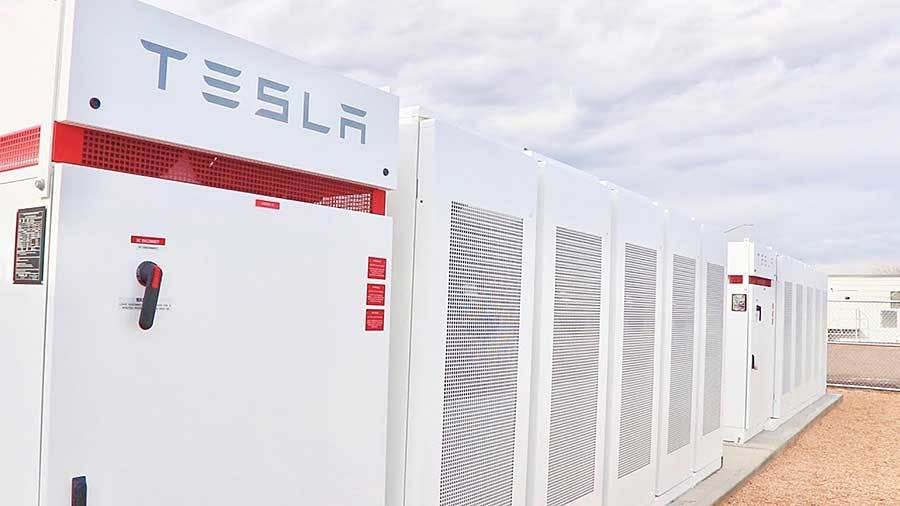
The AIPC plant features a 517-kilowatt, roof-mounted solar array that works in tandem with a 430-kilowatt-hour energy storage system composed of two battery-powered Tesla Powerpacks. During the day, the solar panels generate energy, which charges the Powerpacks and powers all manufacturing operations.
Schaefer-Weaton says that AIPC’s energy load is fairly consistent over the course of the year, with peak loads in the 2,500 to 3,000 kilowatt range. Weekend loads can drop to as low as 100 kilowatts, though they are higher when the company runs weekend shifts during busy times.
The primary purpose of the Powerpacks is to help AIPC achieve peak shaving with greater efficiency and reliability. AI-based controls ensure this by automatically charging the Powerpack’s 16 lithium-ion battery pods when electricity rates are at their lowest and discharging energy at times of high usage (or peak demand) to avoid or reduce costly demand charges.
Each Powerpack is modular, scalable and durable enough for outdoor use. It is also AC-coupled, rather than DC-coupled, meaning it operates completely independent of the solar array. This ensures that if the array or energy storage system goes down (for whatever reason), the other part of the installation will continue to operate.
A white paper from developer Ideal Energy estimates that the project will save AIPC an average of $55,000 per year for the foreseeable future. Equally important, it will prevent 9,377 tons of CO2 from entering the atmosphere over the next 25 years. The CO2 number is equivalent to that produced by burning more than 10 million pounds of coal.
As for the hoped-for benefit of attracting forward-thinking employees, Schaefer-Weaton is confident it will come to fruition in the long run. She believes the project shows all of its customers, many of which have green initiatives of their own, that AIPC is planning to be around for many years.
“I consider it a strategic investment for our future,” explains Schaefer-Weaton. “We are in it for the long haul—for our customers, our employees and the community of Fairfield.”
For more information on energy storage systems, call 888-518-3752 or visit www.tesla.com/powerpack.
The modular Powerpack energy storage system features 16 lithium-ion battery pods and is durable enough for outdoor use. Photo courtesy Tesla

Automated Coating System Increases PCB Production
Gentherm Inc. has been assembling a wide range of thermal management products for the automotive industry since 1991, when it was known as Amerigon. In 1996, the company created the industry’s first thermoelectrically heated and cooled seat system (called Climate Control Seat).
The seat was eventually adopted by Ford Motor Co. and introduced as an option on the 2000 Lincoln Navigator. Today, it is available on more than 50 vehicles sold by Ford, General Motors, Toyota, Kia, Hyundai, Nissan and Jaguar Land Rover.
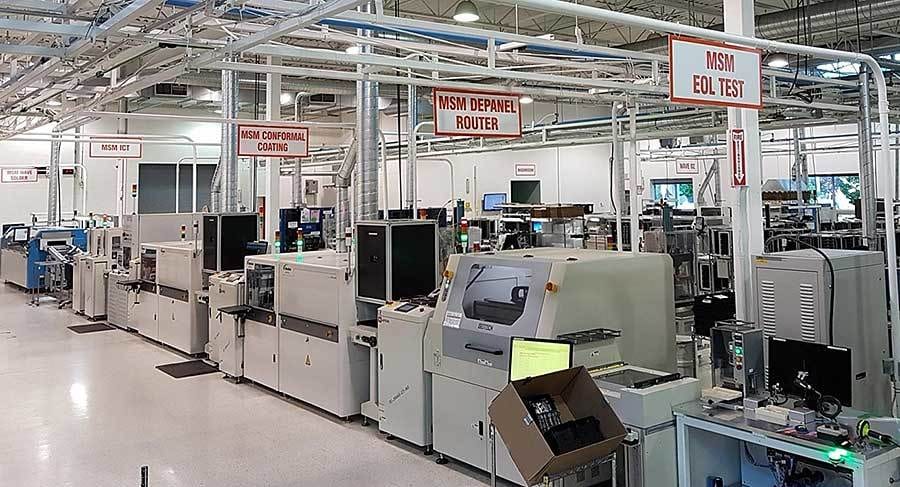
In 2019, Gentherm began PCB production on this automated assembly line. Photo courtesy Gentherm Inc.
Gentherm’s other automotive product offerings include heated seats, steering wheels and armrests, and battery and cable management systems. The company employs more than 13,000 people worldwide in many sales and manufacturing facilities.
Since 2016, when the company acquired medical company Cincinnati Sub-Zero, Gentherm has made patient temperature management systems. In 2017, advanced electronic controls manufacturer Etratech was acquired to further expand Gentherm’s market reach.
About two years after the acquisition, managers at the Gentherm facility in Burlington, Ontario, Canada, needed to purchase an automated conformal coating system that could meet the requirements of a new PCB production line. After evaluating several suppliers, Gentherm selected Nordson Asymtek’s Select Coat SL-940 system. Mike Renneboog, manufacturing manager at the Burlington facility, says the main reason is the SL-940 enables high uptime and throughput.
The production line encompasses three processes prior to conformal coating (inline wave soldering, in-circuit testing, automated optical inspection) and two afterward (depaneling by a router and end-of-line testing). Renneboog notes that the line’s advanced equipment provides greater accuracy and volume capability than what was required for previous Gentherm lines.
“We decided to purchase the Select Coat system based on [its] capabilities and applicator options,” explains Renneboog. “Its SC-300 applicator offers coating flexibility, whereas the SC-400 provides tight control around keep-out areas. [We also like the] user friendly, programmable [EasyCoat] software.”
Impressed with the performance of its first SL-940 system, Gentherm has since bought four more, and now uses them on three other manufacturing lines in various facilities. The systems support the production of automotive modules, recreational vehicle controls, medical devices and other consumer electronic controls.
Operators equip the systems with SC-300, SC-400, and SC-350 applicators as needed. The latter is designed to atomize coating fluids for excellent edge definition. All systems are run at high speed for optimum productivity, and yield, according to Renneboog. Other key options include the Qadence flow-control system, dual toggle application, a flow meter, a bar code recognition system (1D or 2D), a board presence sensor, a low fluid scale, manual material changeover and a pre-queue board station. The closed-loop Qadence system maintains a stable flow rate by volume and also automatically compensates for viscosity changes related to temperature, humidity and batch-to-batch variation.
For more information on conformal coating systems, call 760-431-1919 or visit www.nordsonasymtek.com.
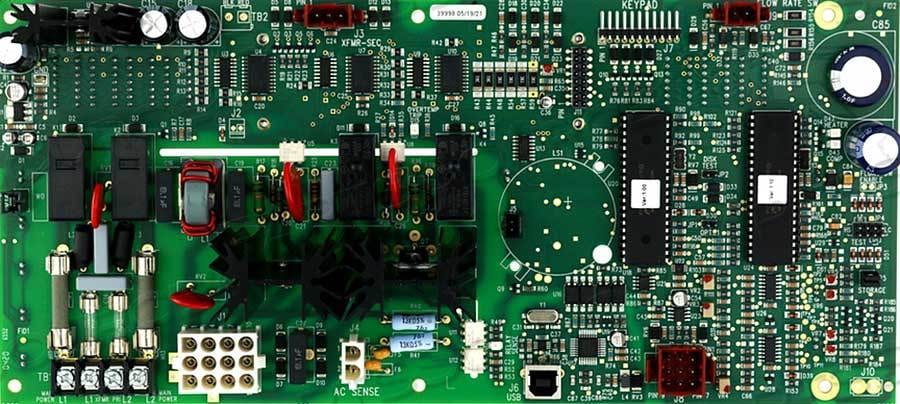
Gentherm makes patient temperature management systems that feature PCBs like this one. Photo courtesy Gentherm Inc.
Performance-Critical Assemblies Protect Combat Aircraft Engines
Above all else, electronic products for aerospace and defense equipment must be durable and reliable. Based in Gloucestershire, England, Ultra Electronics Precision Control Systems (UPCS) has been making such products for both industries since 1925.
The company’s aircraft-related products include position sensing and control units, high-integrity wire harnesses and ground-support equipment. For tanks, trucks and other land equipment, UPCS offers power management, generic vehicle architectures and situational awareness systems.
About three years ago, UPCS needed to improve the engine ice protection systems it makes for combat aircraft. The company hired TT Electronics plc (TTE), an electronics manufacturing services company, to build complex electronic assemblies for the systems.
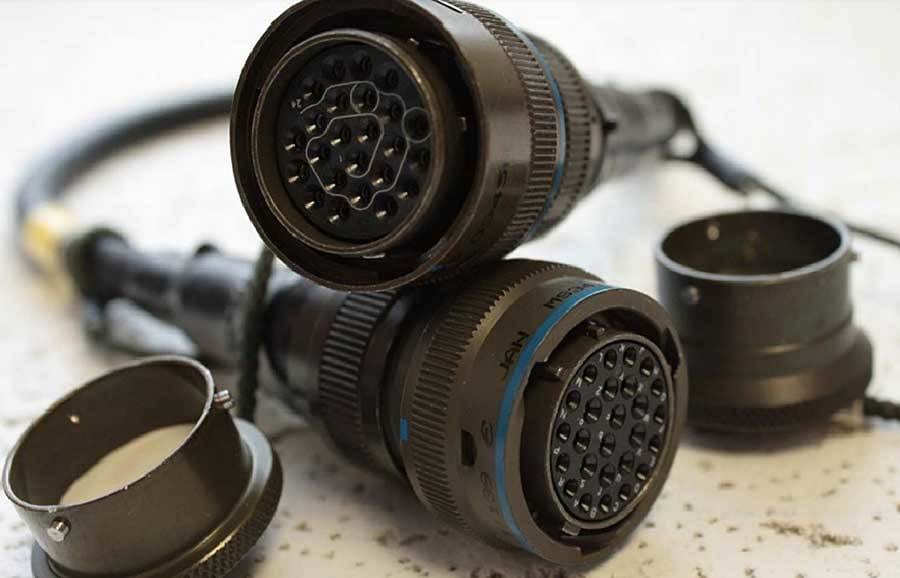
Ultra Electronics Precision Control Systems makes high-integrity wire harnesses and other products for the aerospace and defense industries. Photo courtesy Ultra Electronics Precision Control Systems
TTE was selected because of its decades-long working relationship with UPCS, notes Michael Leahan, executive vice president of global manufacturing solutions at TTE. The contract is worth several million dollars and requires TTE to build all assemblies at its Fairford, England, facility.
In 2015, this facility received Nadcap accreditation for Electronics Cable and Harness Assemblies (AC7121). The accreditation makes TTE one of only two companies in Europe to hold Nadcap certifications for both printed circuit board assembly (AC7120) and cable harness assembly.
“[This] location is an excellent example of how focused investment in our people and facilities are impacting our customers and paving the way for future partnerships,” explains Leahan. “Our teams, integrated across business units, have the capabilities, resources and skills necessary to deliver on the additional requirements of [the] UPCS order and those of many others. This [project] provides a firm foundation for future growth, and strengthens [our] position as a major supplier to the global aerospace industry.”
Another manufacturer benefitting from TTE’s engineered electronics capabilities is TRUMPF Laser UK Ltd. (formerly SPI Lasers). The company produces nanosecond pulsed fiber lasers with up to 250 watts of average power, and continuous wave fiber lasers with up to 10 kilowatts of power.
These lasers are used to process materials in a wide range of applications, primarily micro-manufacturing and marking. TRUMPF Laser sells its products globally, but has its major business operations, including R&D and manufacturing, in Southampton, UK.
A few years ago, SPI Lasers hired TTE to provide printed circuit board assemblies and box builds. Although TTE performed the work at various facilities in Europe and Asia, SPI chose TTE based on its reputation for strong manufacturing and test support in the UK, as well as being able to regionally transfer finished product in a seamless, low-cost manner.
Founded in 1906, TTE is headquartered in Woking, UK, and employs nearly 5,000 people worldwide. Over the past two years, the company has greatly expanded its North American presence. In early 2020, TTE acquired a company in Covina, CA, that designs and manufactures power electronics for the defense and aerospace markets. Later that year, TTE purchased Torotel, a U.S.-based company that makes power and electromagnetic assemblies and components.
Last year, TTE’s manufacturing facility in Cleveland became registered by the FDA and is now able to manufacture finished medical instruments and devices, such as imaging and diagnostic systems.
For more information on TTE’s electronics manufacturing services, call 978-567-9600 or visit www.ttelectronics.com.
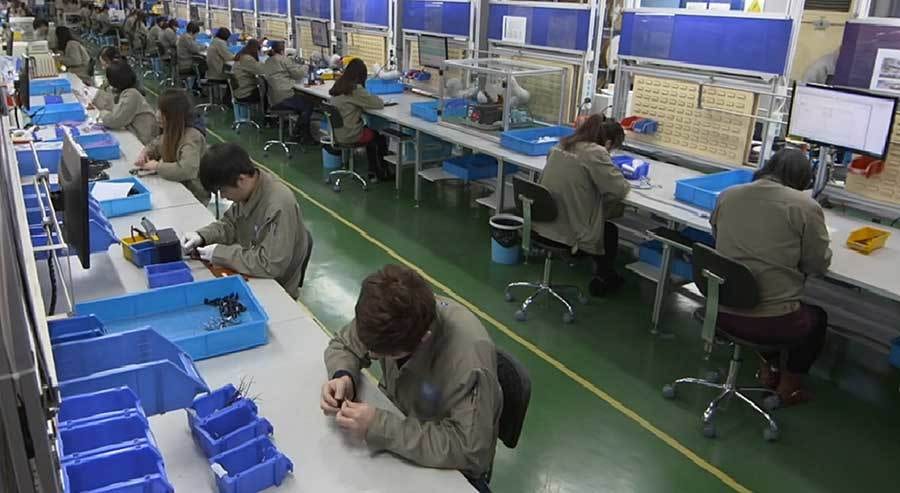
Headquartered in Woking, UK, TT Electronics employs nearly 5,000 people worldwide. Photo courtesy TT Electronics plc
February 2022