theme Robots
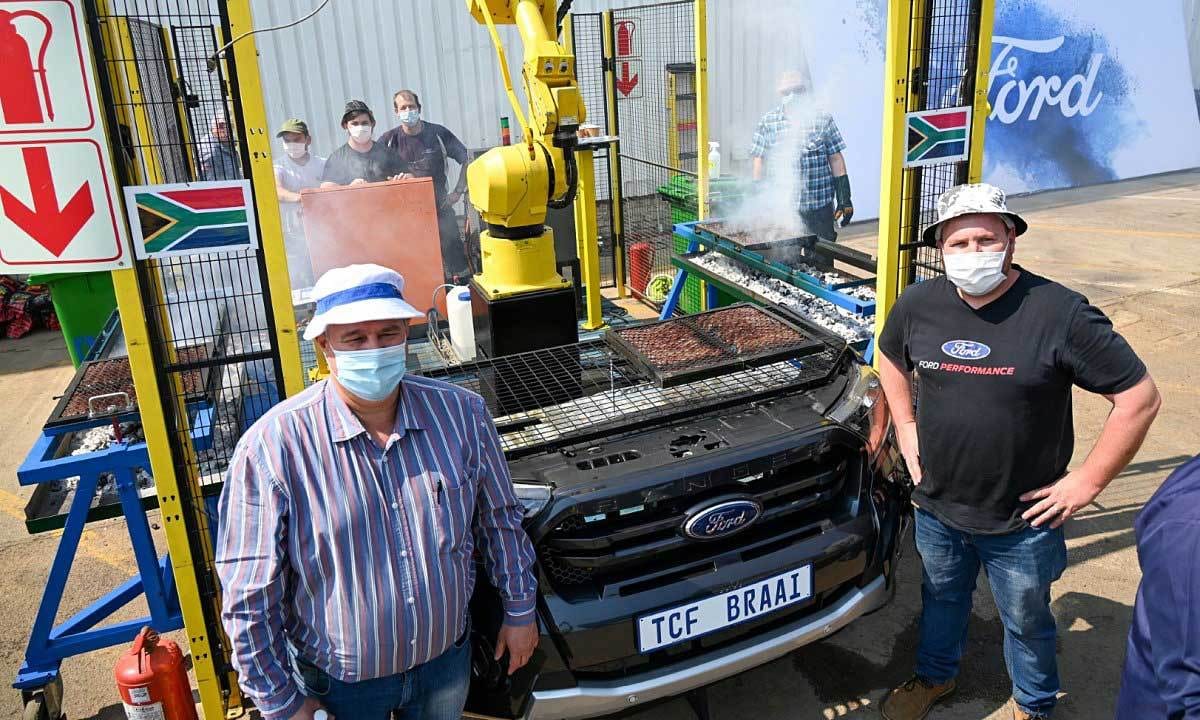
Engineers at Ford’s assembly plant in Silverton, South Africa, have programmed and equipped a Fanuc six-axis robot to tend a barbecue grill. Photo courtesy Ford Motor Co.
Six-Axis Robot Becomes Grill Master at South African Assembly Plant
THINGS
5
1
Engineers at Ford Motor Co.’s assembly plant in Silverton, South Africa, have programmed and equipped a Fanuc six-axis robot to tend a barbecue grill.
The robot, TCF BBQ, can grill 120 pieces of meat in 12 minutes. Ford engineers insist that BBQ stands for “braai boerewors quickly.” (Braai is Afrikaans for grill; boerewors are South African sausages made from beef, pork and lamb.)
TCF BBQ, which can calmly flip and move grills around with speed and precision, is the result of an internal competition held by Ford, in which various departments were encouraged to design something unique using scrap materials and decommissioned tooling.
Line manager Claude Roux came up with the idea of transforming one of the plant’s robots into a grill master. Roux had only one non-negotiable: safety compliance.
“This was when the innovation and curiosity of that ‘small child’ inside all of us came to life,” explains Roux. “We took our knowledge of [grilling] and our understanding of manufacturing vehicles and married the two to create a machine with the ability to pick up and manipulate the meat on a grill.
“We decided to use a Fanuc robot that was due to be disposed of during the extensive Silverton Assembly Plant upgrades, along with scrap metal, discarded wood pallets for a base, metal trolleys, and a Siemens PLC for the controls. We had a qualified electrician, qualified fitter, PLC programmer, and a controls specialist working on it for around four weeks during the plant shutdown,” explains Roux.
Emulating the smooth moves of a grill master was the next challenge. The robot is programmed to place a grill on one of three cooking stations surrounding the unit, then turn the grill after a set time. It can offload the grill from the coals onto a serving station, which was manufactured using a bumper and grille scrapped from a Ford Ranger pickup.
As a bonus, the robot can flash the headlights, parking lights turn signals, as well as beep the horn. TCF BBQ can also pour water or cool drinks and serve full trays of food. And as a final touch befitting of a proudly South African robot, it can wave the national flag.
“TCF BBQ has become a celebrity here at Ford South Africa, and is a perfect example of the creativity and ingenuity that defines everyone at Ford and echoes our proudly South African heritage,” says Ockert Berry, vice president of operations for Ford South Africa.
In February 2021, Ford announced that it would invest $1.05 billion to upgrade the assembly plant, marking the biggest investment in Ford’s 97-year history in South Africa.
2
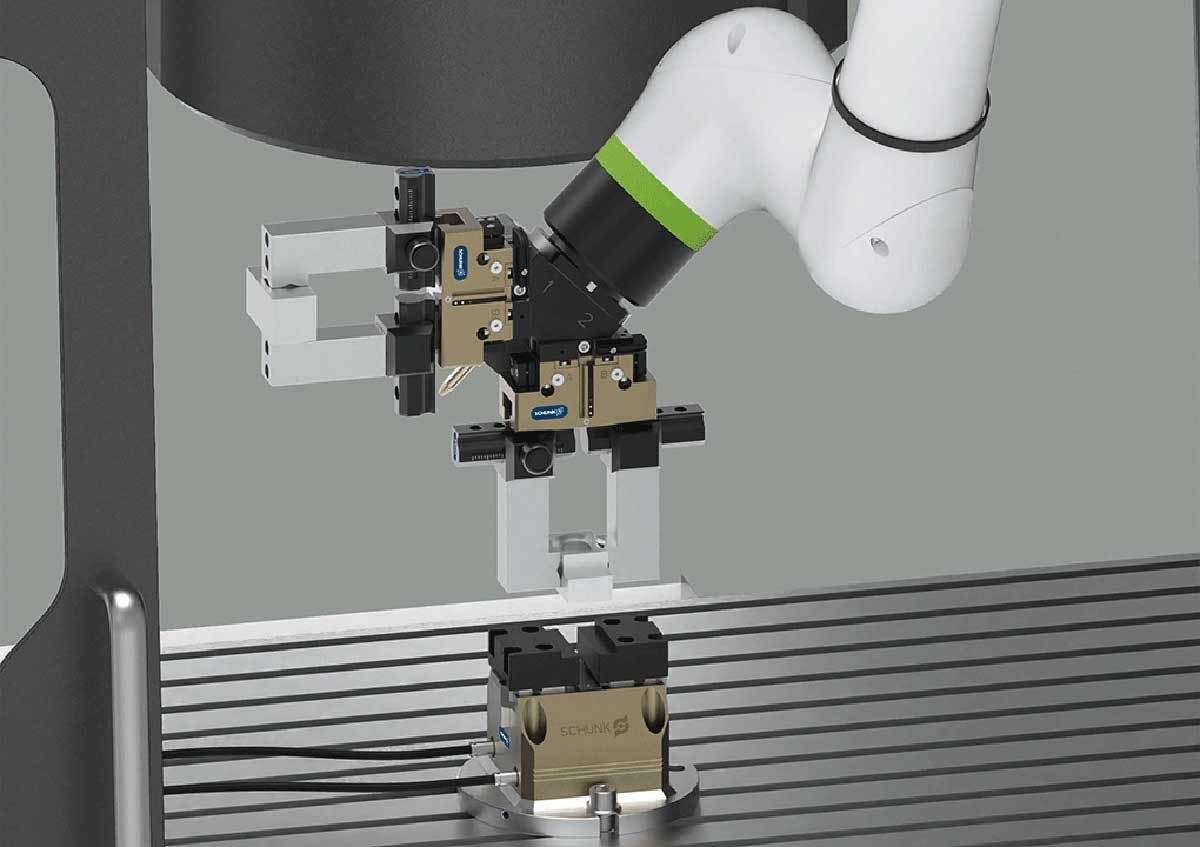
The new JGP-P two-finger parallel gripper has been optimized for increased gripping force, greater flexibility, and a variety of query options. Photo courtesy SCHUNK
High-Performance Universal Gripper
The new JGP-P two-finger parallel gripper from SCHUNK replaces the company’s JGP gripper and has been optimized for increased gripping force, greater flexibility, and a variety of query options.
This pneumatic gripper can be used for loading and unloading machine tools, assembly work, and pick and place tasks. The new model provides more robust T-slot guidance with longer base jaw guide than its predecessor. This allows for the use of gripper fingers that are 30 percent longer. The base jaws are fully guided in the housing in any gripping state. This improves performance and covers a wider range of applications.
The JGP-P also provides up to 50 percent more gripping force than its predecessor, without any increase in size. This is made possible by the increased surface area of the drive piston. This means that the gripper can handle heavier loads. As a result, engineers can use a smaller gripper size than they might ordinarily need to. That saves costs and reduces the variety of gripper types that need to be kept on hand.
Engineers can change from the old JGP to the new JGP-P at any time, since the grippers are fully compatible.
Ten matching sensor systems enable a wide range of interrogation options, such as monitoring the stroke position or workpiece differentiation. Good or bad parts can be sorted quickly and reliably based on dimensional deviations measured by the gripper. From size 64, the JGP-P is also available with diameter 8 inductive sensors.
Flexible mounting options on two sides allow the gripper to be mounted in three screw-on directions. The supply of compressed air is possible both via screw connection and via the hose-free direct connection. An integrated sealing air connection also improves process stability. This is particularly important after machining workpieces, since the gripper inevitably comes into contact with chips and coolant during cleaning. The integrated sealing air connection prevents penetration into the gripper.
3
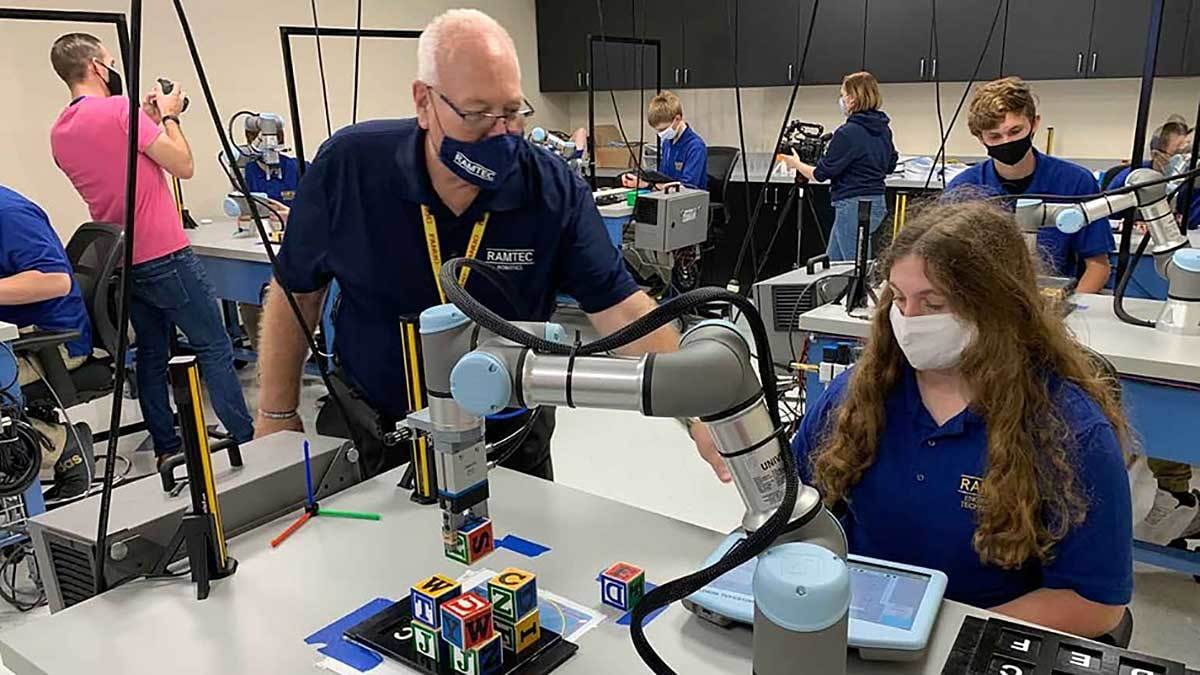
The federal Advanced Robotics for Manufacturing Institute (ARM) and the Ohio Department of Education have endorsed the cobot education program developed by Universal Robots (UR), paving the way for schools and industry to further leverage cobots and up-skill their existing workforce.
When schools teach students to master new technology, they need to validate that the hardware and software they use in the curriculum are relevant to companies employing graduates. Educational institutions also need to ensure that funding for acquiring the classroom technology is obtainable. The endorsements will enable educational institutions to do just that.
UR’s training program is the first to be evaluated and endorsed by ARM. At the state level, Ohio becomes the first U.S. state to evaluate and add UR courses to its Industry-Recognized Credential List. (Students who complete the training can earn six credit points toward a degree, beginning with 2021-22 school year.)
“These endorsements mean the world to schools hoping to introduce hands-on cobot courses in their classrooms,” says Corey Adams, channel development manager at Universal Robots. “The educational legitimacy of UR cobots opens the door to applying for both expanded federal funding, and in Ohio, state funding to acquire cobots. And, it gives schools confidence that they are not only offering students a diploma, but also an instant career path.”
To make the Ohio Department of Education’s credentialed list, numerous companies in the state, including major Tier 1 automotive suppliers and home appliance manufacturers, vouched for UR cobots, detailing how they use the machines on the shop floor and their need an ever-expanding, educated workforce to deploy, program and operate them.
“Ohio is industry-leading in recognizing manufacturing technology, and we expect this to quickly cascade out to other states as well,” says Adams, who is working with numerous states to obtain educational credentials.
Sponsored by the Defense Department, ARM was founded in 2017 to make robotics and automation more accessible to U.S. manufacturers and to train and empower the manufacturing workforce to use these technologies. ARM launched the Endorsement Program earlier this year in conjunction with RoboticsCareer.org, an offshoot of ARM that connects education seekers with training for manufacturing careers.
“It’s a very rigorous audit that made it apparent that UR listened and adapted to industry needs,” says Brian Wilson, who chairs the Education and Workforce Advisory Committee at ARM and who audited the UR Robotics Training Program. “There is a big push for cobots that are affordable, that can easily be redeployed in different applications, and that are for both the large enterprise but also for the entrepreneur. Our endorsement is not just an academic accreditation; we look at whether the program helps the industry educate the workforce they need right now.”
In its evaluation of the UR program, ARM stressed the “training of the trainer” aspect that ensures the quality of the teaching. “It’s also a course that can be offered to everyone from high school students to industry professionals,” says Wilson. “There are many on- and off-ramps in the lifelong learning journey, and UR figured out how to make people embark on that journey at different career stages.”
Educational institutions are already taking advantage of the UR program. For example, Columbus State Community College in Ohio is building a mixed lab space for cobots that will focus on both professional development for manufacturing employees while also educating the next generation workforce to hit the ground running with cobots.
“With their reduced footprint and intuitive programming, cobots have been a major disruption to industrial automation and are within that Industry 4.0 sweet spot of technology solutions that we find that our local employers need funded education programs for,” says Jeff Spain, senior training and performance consultant at the college. “When large companies endorse UR cobots, it has a ripple effect through the supply chains as automotive suppliers and other manufacturers realize that here is a vetted, nimble technology.”
UR’s curriculum was created to provide a student-focused, hands-on instruction with a blended (in-class and hands-on) delivery that includes student-based projects, expanded training on interconnectivity and a clearly defined pathway for students to pursue careers in advanced manufacturing and robotics. The program integrates employability skills, project management, problem solving and critical thinking skills with the UR Robotics I4.0 Environment. The program aligns with ARM, RIA and national credentialing standards.
The federal Advanced Robotics for Manufacturing Institute (ARM) and the Ohio Department of Education have endorsed the cobot education program developed by Universal Robots. Photo courtesy Universal Robots
State, Federal Agencies Endorse Universal Robots’ Education Program
4
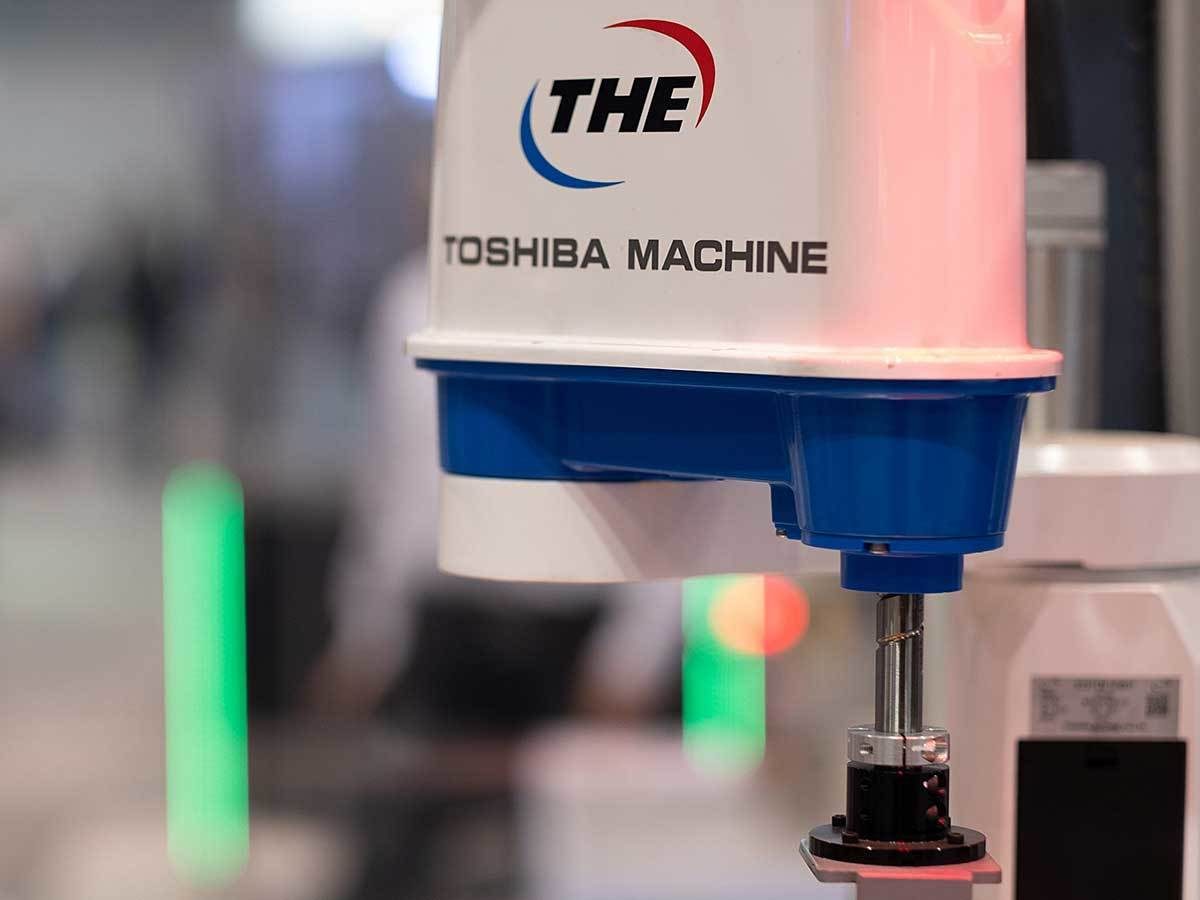
TM Robotics has won a large contract to supply THE600 SCARA robots to a global electronics assembly plant. Photo courtesy TM Robotics
Electronics Assembler Awards Major Contract to TM Robotics
TM Robotics has won a large contract to supply a substantial number of THE600 SCARA robots and TS5000 controllers to a global electronics assembly plant. The contract was given to TM Robotics’ Mexican distributor, Global Manufacturing Inc. (GMI), which beat competitors both on price and specification.
The SCARAs will be used to place parts onto circuit board assemblies.
The THE600 SCARA is designed for assembly and inspection applications in the electronics and automotive industries. The robot is faster and can carry heavier payloads than the previous model, the THE400.
Compared with previous controllers, the TS5000 provides improved synchronization and control. Its position cycle is three times faster than previous models, which allows for more control during fast movements. There is also an automatic adjustment function, which helps to reduce vibration and stress during times of acceleration.
“The customer is a major worldwide player in the consumer electronics industry,” explains Nigel Smith, president and CEO of TM Robotics. “The tireless dedication of GMI’s distribution team—including top management, technical support and the sales team—was crucial to winning this contract. For several months, we were in constant contact with the customer at all levels, from designers to production and project managers.”
5
Amount that will be invested in robotics and automation R&D by the European Union between 2021 to 2027, as part of the EU’s Horizon Europe program.
$240 Million
February 2022