ONLINE CONTENTS
ASSEMBLY WHITE PAPERS
Collaborative Robots and Machine Tending: The Prosperous Path Forward
This white paper takes an in-depth look at machine tending operations within today’s factories, and how cobots help machine shops free up valuable personnel, increase capacity, and breathe new life into idle equipment.
When to Automate: A Closer Look at the Most Frequent Automation Applications
There are numerous factors that influence the decision to leverage automation to solve an application-related problem or improve safety. This white paper looks at what ASG Automation considers to be the main underlying factors leading our customers to implement automation to streamline and improve their processes.
LATC Series Precision Indexing Conveyor
With our newly developed LATC series of precision indexing conveyors, we can achieve and guarantee a ±0.04 millimeter accuracy across the entire system. Similar to the LFA, the LATC is manufactured with an inner structure manufactured from aluminum extrusion and high-grade aluminum links.
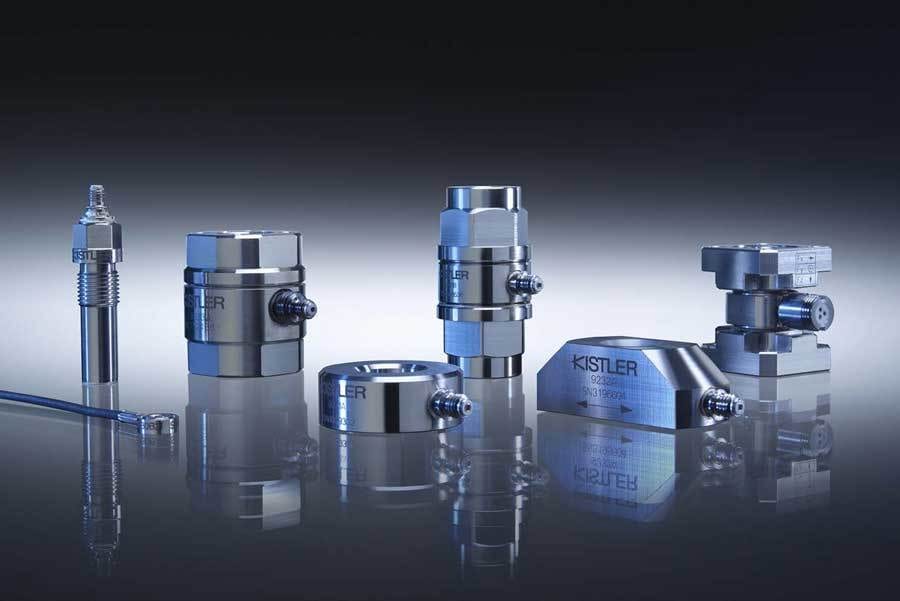
Piezoelectric force sensors play a critical role in semiconductor manufacturing. Photo courtesy Kistler Instrument Corp.
Using Piezoelectric Sensors to Measure Dynamic Force in Semiconductor Applications
New applications, such as AI, 5G, IoT, ADAS, and augmented and virtual reality, are opening multiple growth opportunities for the semiconductor industry. Adoption of these technologies is generating demand for increased performance.

ASSEMBLY WEBINARS
Why Automate? Manufacturing Considerations in Today’s New Normal
As the world emerges from the grip of the COVID-19 pandemic, one thing is certain: Manufacturing will never be the same. Companies from traditional and nontraditional automation environments are looking to the future and reimagining how to advance their manufacturing operations in our new post-pandemic normal. Building on the successful Automation 101 series, this presentation will explore the “how” and “why” of manufacturing from the vantage point of today's decision makers as they evaluate robotics and manufacturing within their business.
Onshoring the Manufacture of Consumer Packaged Goods With Agile Automation
Consumer packaged goods (CPG) manufacturing in the 21st century is undergoing an evolution. The past two years have severely strained the global supply chain. Implementing short-term fixes is no longer enough; onshore assembly is now viable and profitable—with agile automation platforms. CPG manufacturers can now gain control and meet regional demand.
Top Five Cobot Applications in Assembly
Manufacturers depend on precise, consistent processes to deliver high-quality products. Cobots automate many repetitive manual processes, such as screwdriving, dispensing and part fitting, so employees can focus on higher value tasks. Join this webinar to discover how cobots can help your assembly plant.
Ensuring high reliability in designing, building, and assembling products is principally an engineering challenge—but statistics plays a key role. Photo courtesy ZF Friedrichshafen AG
Automated Gluing with Collaborative Robots: No Longer a Sticky Situation
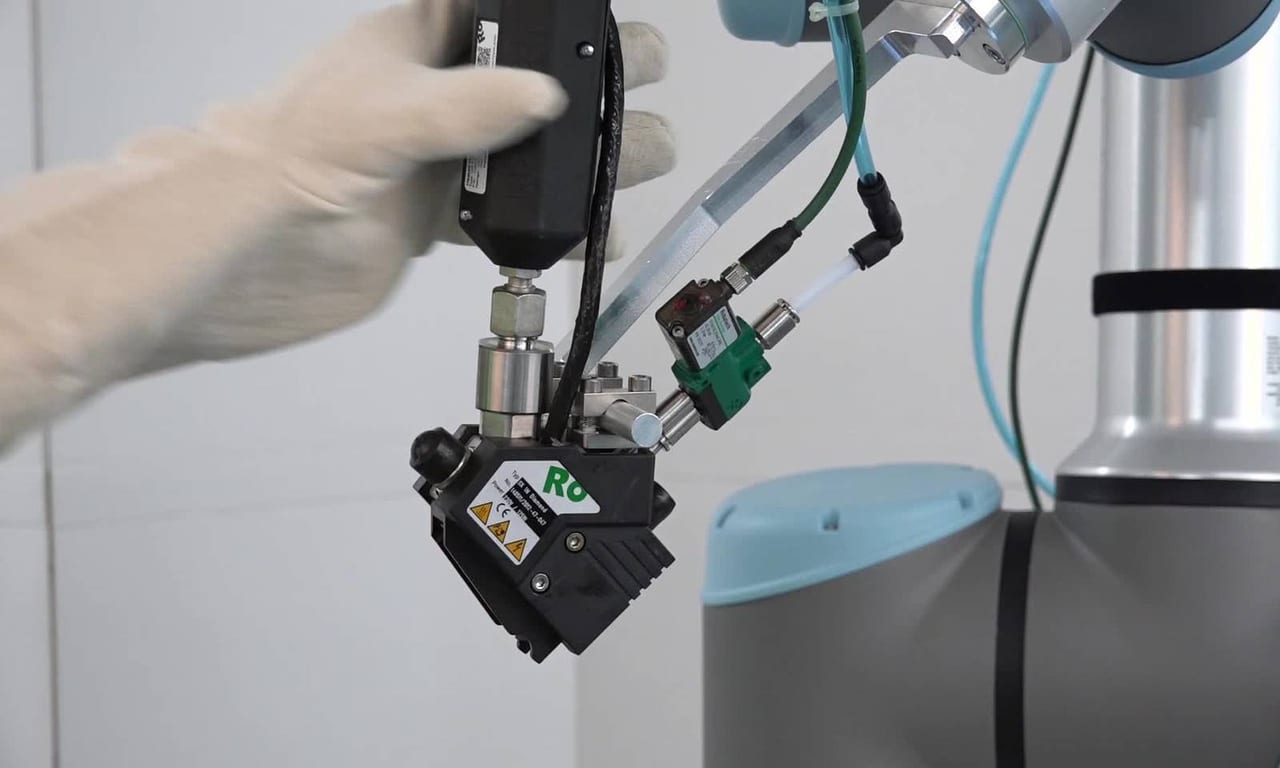
Adhesive dispensing has traditionally been carried out manually, which is typically slow, messy and inconsistent. Fortunately, there is a way to automate this task: collaborative robots. This technology makes it possible to automate dispensing in an efficient, safe and repeatable manner. You’ll be introduced to the Robatech 360° Gluing Integration Kit, an integrated system that connects UR’s collaborative robot to an adhesive application system, making it easy to install and program and achieve consistent high-quality results.
ASSEMBLY INFO CENTERS
Factory of the Future
The Industrial Internet of Things is transforming the world of manufacturing. Manufacturers are using internet-enabled technologies to improve their operations, from the granular level of individual manufacturing processes to the global level of worldwide supply chains. Here you’ll find information on the latest smart automation technologies.
Smart Pressing Technology
Assembling one part to another usually requires a third material—screws, rivets or adhesives—but it doesn’t have to. In fact, sometimes all you have to do is insert one part tightly into a hole in another part or bend, fold or deform a feature on one part to capture the other. Here you’ll find information on how to get the most out of servo-driven presses.
Sensor Solutions
Automation is dumb. It can only do what it's told, over and over again. Without a sense of sight or touch, automated devices can’t know if parts are present. They can't tell if parts have been picked up successfully. Here you'll find everything you need to know about sensors for automation.
Best Measurement Solutions for Manufacturing
Engineers rely on various sensors and systems to measure pressure, force, torque and acceleration. These
technologies are used to measure and analyze physical processes; develop, test and calibrate fastening technology; optimize manufactured products; and monitor and control pressing and molding processes. Learn about the latest technology here.
Future-Proof Facilities
Every manufacturer aims to streamline its production layout and floorplan for optimal efficiency and output. At the same time, however, manufacturers must be able to quickly adapt to changes. To efficiently respond to critical modifications, manufacturers need the ability to rearrange their processes faster. Learn how flexible power distribution systems can help achieve that goal.
ASSEMBLY PODCASTS
2021 Capital Spending Survey (Part 1)
ASSEMBLY Chief Editor John Sprovieri shares his expectations capital spending in the coming year, including which industries will drive growth as well as why manufacturers will purchase new equipment, in the first of this two-part series breaking down our annual Capital Spending Survey.
Schneider Electric Details Efforts to be More Sustainable
Schneider Electric’s assembly plant in Lexington, KY, has been recognized as a “lighthouse facility” for sustainable manufacturing. Innovation leader at Schneider Electric Mike Labhart talks about that accomplishment and what it takes to achieve such an award. He also details what other companies should consider to be more sustainable.
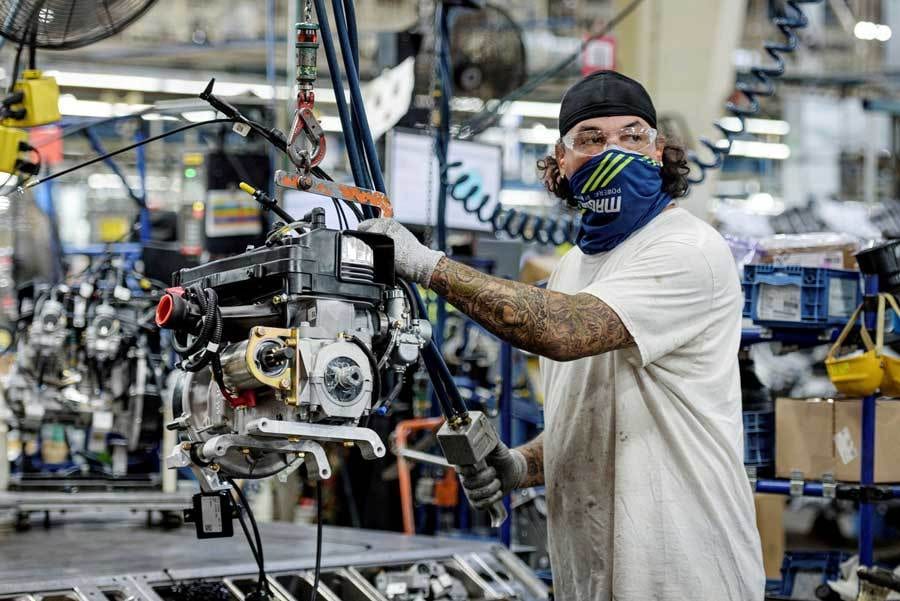
Data from our annual Capital Equipment Spending Survey indicate that U.S. assembly plants will spend $5.65 billion on new equipment in 2022, an increase of 20 percent from 2021. Photo courtesy Polaris Inc.
ASSEMBLY TV
Assembly Plant of the Year: GKN Driveline
Located in Newton, NC, GKN Driveline assembles automotive power transfer units and rear drive modules. The plant also produces many of the clutches, rings and pinions used in those products. New technologies, an aggressive overhaul of existing processes, and a culture change have led to significant improvements in productivity, quality, uptime and ergonomics. The factory employs state-of-the-art assembly technologies, including cobots, servo presses, automatic screwdriving systems and laser welding equipment. This video provides a look at our 2021 Assembly Plant of the Year.
Smart Manufacturing: Today and Tomorrow
Revolutionary changes in manufacturing are taking place at companies both big and small. Sudhanshu Gaur, chief architect for smart manufacturing at automotive supplier Hitachi Astemo, presented the keynote address at the 9th annual Assembly Show last October. He discussed the status of smart manufacturing today and explored its future. He outlined the keys and stumbling blocks to the successful implementation of smart manufacturing strategies.
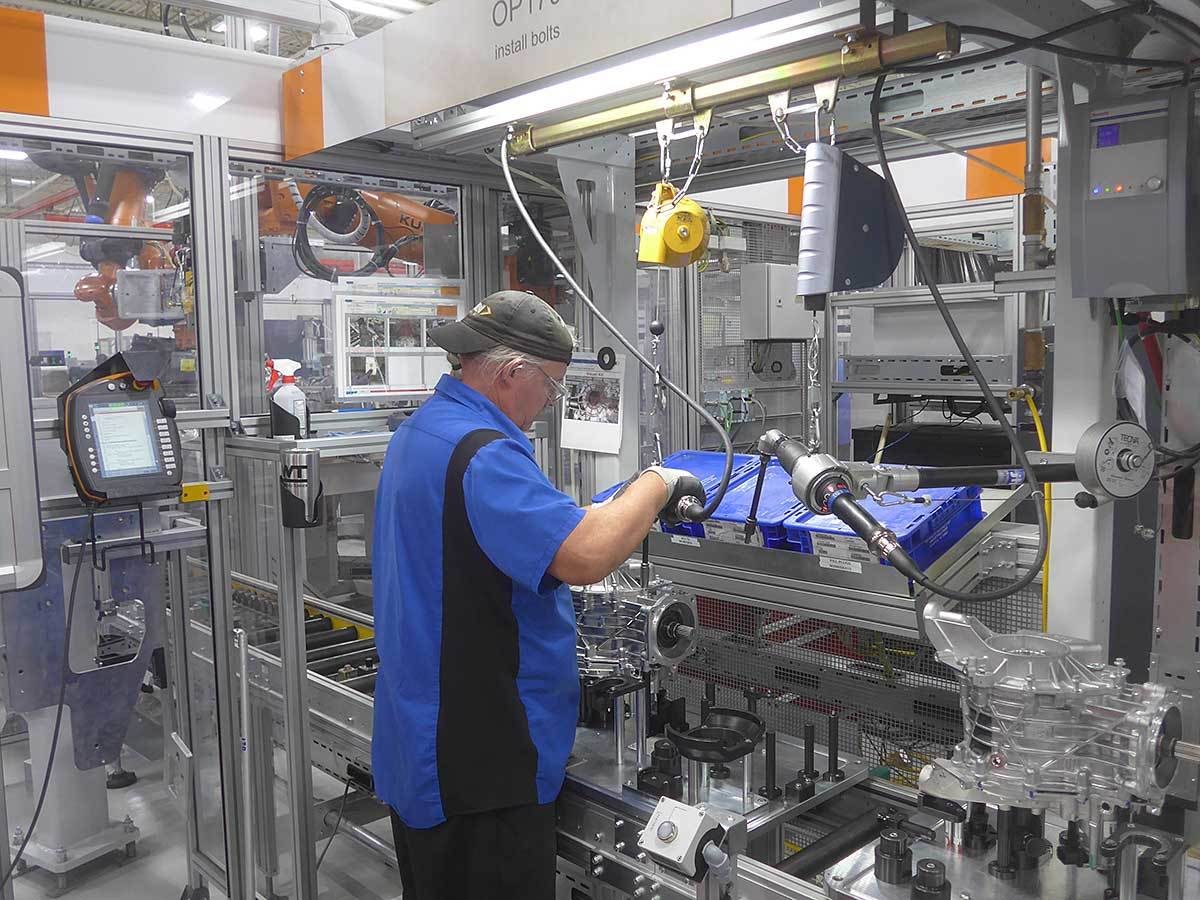
GKN Driveline’s assembly plant in Newton, NC, is the winner of our 2021 Assembly Plant of the Year. Photo courtesy GKN Driveline
February 2022