MONTH 2023

FROM THE EDITOR

Here we go again.
Between 2020 and 2023, a worldwide chip shortage crippled production in numerous industries, including automotive, aerospace, appliances and consumer electronics.
In 2022, for example, difficulties in obtaining semiconductor chips prompted Ford Motor Co. to temporarily halt or scale back production at eight assembly plants in North America. Nissan and Mercedes also cut back. At GM, some 95,000 vehicles—about 16 percent of its sales in the second quarter of that year—were assembled without certain electronic components. The partially finished vehicles sat as work in process until the parts could be delivered.
Myriad factors contributed to the shortage back then: the COVID-19 pandemic, a drought in Taiwan, a fire that destroyed a chip fab in Japan, and the trade war between the U.S. and China during the first Trump administration.
Flash forward three years and we’re right back in the soup.
In January, Samsung Electronics forecast a worsening chip shortage this year, thanks to burgeoning demand for AI data centers. Strong demand for semiconductors will benefit the company’s mainstay chip business but create headwinds for its other units like smartphones and displays. The company’s operating profit more than tripled to a record high in the fourth quarter, underscoring the pricing power of the world’s top manufacturer of memory chips.
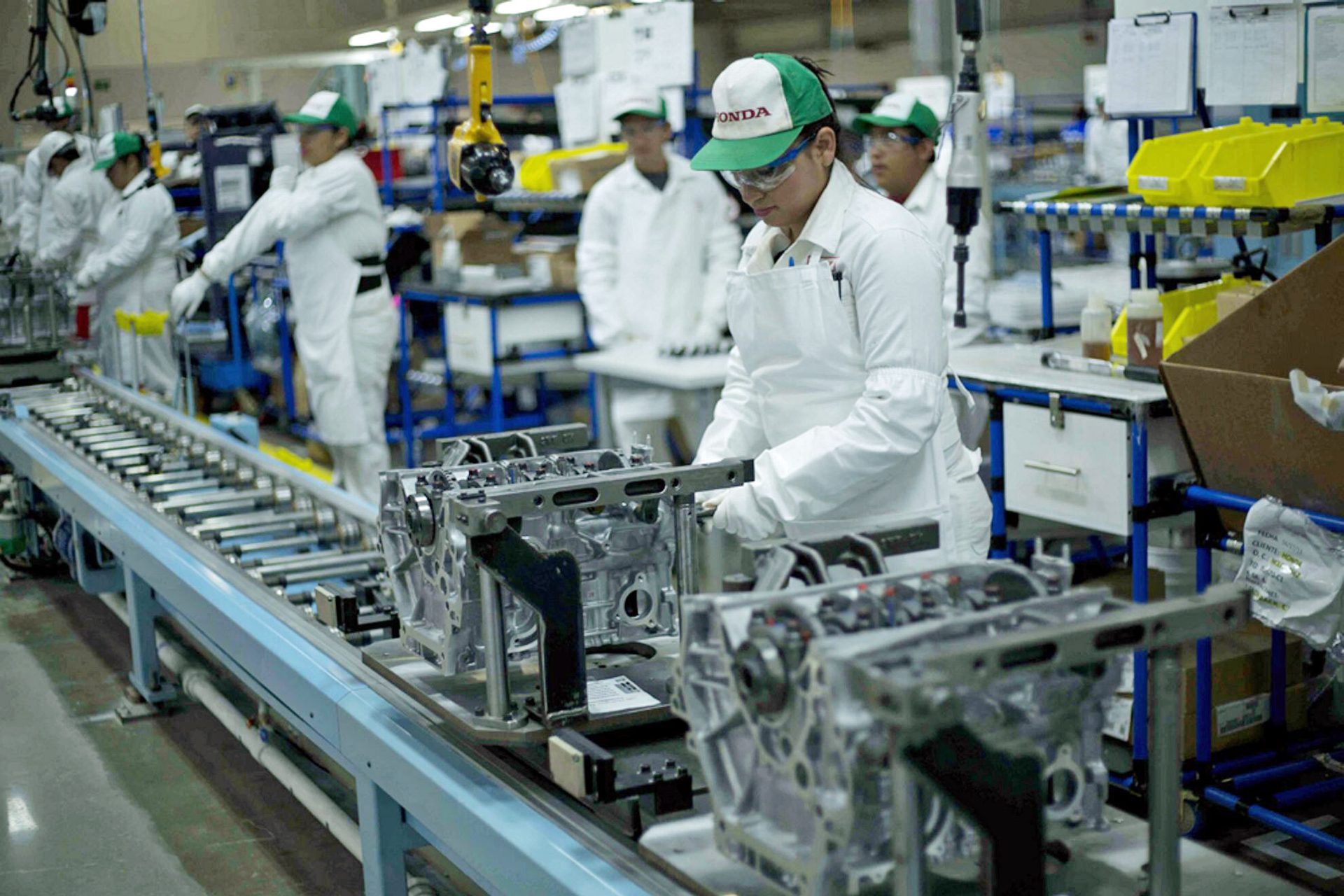
In October, Honda temporarily halted operations at its assembly plant in Mexico due to a shortage of semiconductors stemming from trade tensions between the Netherlands and China. Photo courtesy Honda Motor Co.
However, Samsung warned that surging memory chip prices are raising costs in its smartphone and display businesses. “A significant shortage of memory products across the board is expected to continue for the time being,” said Kim Jaejune, an executive with Samsung’s memory chip business. Kim expected any expansion of supply to be limited in 2026 and 2027 while AI-related demand remains strong.
The race to build AI infrastructure has prompted chipmakers to divert manufacturing capacity toward high-bandwidth memory for AI servers, squeezing the supply of conventional memory chips. That has allowed chipmakers to raise prices aggressively “because there is ample robust demand, and they can’t possibly fill it all,” said Tobey Gonnerman, president of semiconductor distributor Fusion Worldwide. “They’re in the enviable position of being able to dictate price [and terms] more than ever.”
Market analysis firm Counterpoint predicts that prices for memory chips could climb as much as 40 percent through the second quarter of 2026, and some analysts expect prices to increase as much as 60 to 70 percent.
That’s not good news for automakers, which need chips for EVs, advanced driver assistance systems, navigation, audio and connectivity systems.
As with the first chip shortage, trade disputes are not helping. Back in October, Honda Motor Co. had to temporarily halt operations at its assembly plant in Mexico due to a shortage of semiconductors stemming from tensions between the Netherlands and China over a Chinese chipmaker. The dispute also adversely affected Nissan and Mercedes-Benz.
The Dutch government decided at the end of September to place chipmaker Nexperia, a subsidiary of China’s Wingtech Technology Co., under state control, citing flaws in its corporate governance. China’s government retaliated by blocking exports of Nexperia’s products out of the country.
Hopefully, smart executives saw the problem coming and locked in favorable contracts. If not, it will be another year of eating price increases and low profits.
The risk of China decoupling is an important consideration for companies sourcing there.
About the Author
Harry Moser is the president of the Reshoring Initiative. His column will appear every other month, alternating with Austin Weber’s “On Campus.” Has your company reshored production? Are you thinking about it? We’d like to hear of your success or help you achieve it. With your approval, we would love to report on your successes or opportunities in future issues. Contact harry.moser@reshorenow.org.