JANUARY 2023

ASSEMBLY LINES
Artificial Intelligence Helps Streamline Assembly
CAMBRIDGE, MA—Engineers at the Massachusetts Institute of Technology (MIT) have developed a new algorithm that can be applied to a wide range of complex real-world assemblies. It can be used to help eliminate the need to manually design assembly plans and instructions before sending parts to assembly lines.
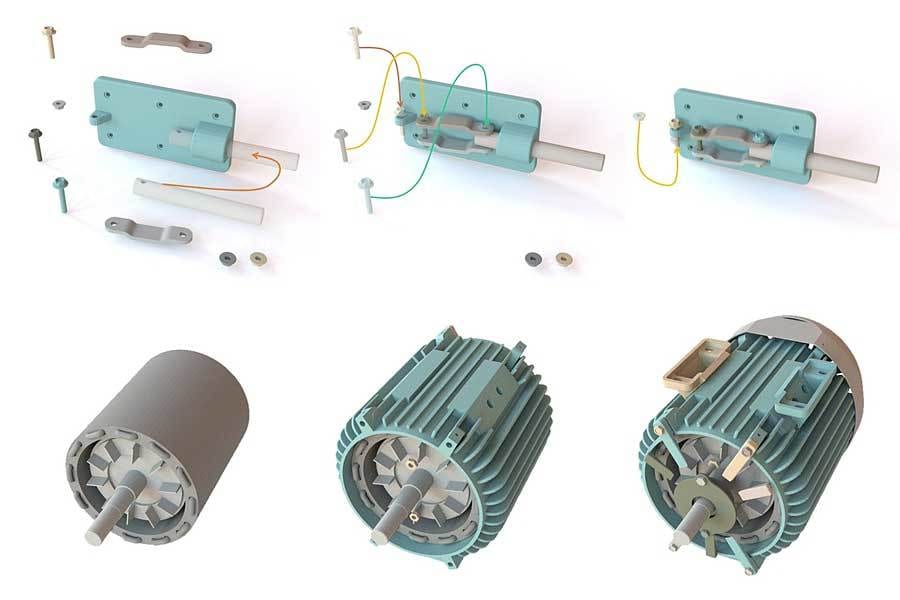
Working in conjunction with Autodesk Research and Texas A&M University, MIT’s Computer Science and Artificial Intelligence Laboratory (CSAIL) came up with a method to automatically assemble products. Their algorithm efficiently determines the order for multipart assembly, and then searches for a physically realistic motion path for each step.
A new algorithm efficiently determines the order for multipart assembly, and then searches for a physically realistic motion path for each step. Illustration courtesy Massachusetts Institute of Technology
“Instead of one assembly line specifically designed for one specific product, if we can automatically figure out ways to sequence and move, we can use a fully adaptive setup,” says Yunsheng Tian, a Ph.D. student at MIT who worked on the project. “Maybe one assembly line can be used for tons of different products. We think of this as low-volume, high-mix assembly, opposed to traditional high-volume, low-mix assembly, which is very specific to a certain product.”
Given the objective of assembling a screw attached to a rod, for example, the algorithm would find the assembly strategy through two stages: disassembly and assembly. The disassembly planning algorithm searches for a collision-free path to disassemble the screw from the rod. Using physics-based simulation, the algorithm applies different forces to the screw and observes the movement.
As a result, a torque rotating along the rod’s central axis moves the screw to the end of the rod, then a straight force pointing away from the rod separates the screw and the rod. In the assembly stage, the algorithm reverses the disassembly path to get an assembly solution from individual parts.
According to Tian, everything is typically hard-coded in assembly plants today. If you want to produce a given product, you have to precisely control or program instructions to assemble or disassemble a product. Which part should be assembled first? Which part should be assembled next? And how are you going to assemble this?
Previous attempts have been mostly limited to simple assembly paths, like a very straight translation of parts. To move beyond this, the engineers used a physics-based simulator—a tool commonly used to train robots and self-driving cars—to guide the search for assembly paths, which makes things much easier and more generalizable.
“Let’s say you want to disassemble a washer from the shaft, which is very tightly and geometrically assembled,” explains Tian. “The status quo would simply try to sample a bunch of different ways to separate them, and it’s very possible you can’t create a simple path that’s perfectly collision-free.
“Using physics, you don’t have this limitation,” Tian points out. “You can try, for example, adding a simple downward force, and the simulator will find the correct motion to disassemble the washer from the shaft.”
However, although the system handled hard, rigid objects with ease, future work needs to be done on applications that involve soft, deformable assemblies. Another long-term goal of Tian’s is to make an assembly line that can adaptively assemble everything without humans.
“Assembly is a longstanding challenge in the robotics, manufacturing and graphics communities,” adds Yashraj Narang, senior robotics research scientist at Nvidia Corp. “This work is an important step forward in simulating mechanical assemblies and solving assembly planning problems.
“It proposes a method that is a clever combination of solving the computationally-simpler disassembly problem, using force-based actions in a custom simulator for contact-rich physics, and using a progressively-deepening search algorithm,” says Narang. “Impressively, the method can discover an assembly plan for a 50-part engine in a few minutes.”
Automakers to Spend Big on Tooling
SOUTHFIELD, MI—Recent automaker profits will fund an increased number of new vehicle launches over the next few years, which will drive demand for domestic factory retooling. According to study conducted by Harbour Results Inc. (HRI), spending will increase 13.4 percent annually between now and 2025, growing from $5.7 billion to $8.3 billion.
Several trends are behind the big increase. First, despite a drop in North American vehicle demand from 15.8 million to 13.7 million units, most automakers are experiencing record levels of profit per vehicle sold. This strong performance is funding investment in technology and new vehicles.
From 2023 to 2029, the number of vehicle nameplates will grow 18 percent, from 210 to 249. In addition, electric vehicle nameplates will grow from 20 percent of the mix in 2023 to 46 percent of the mix by the end of this decade. New nameplates will generate new vehicle launches, which will require more tools.
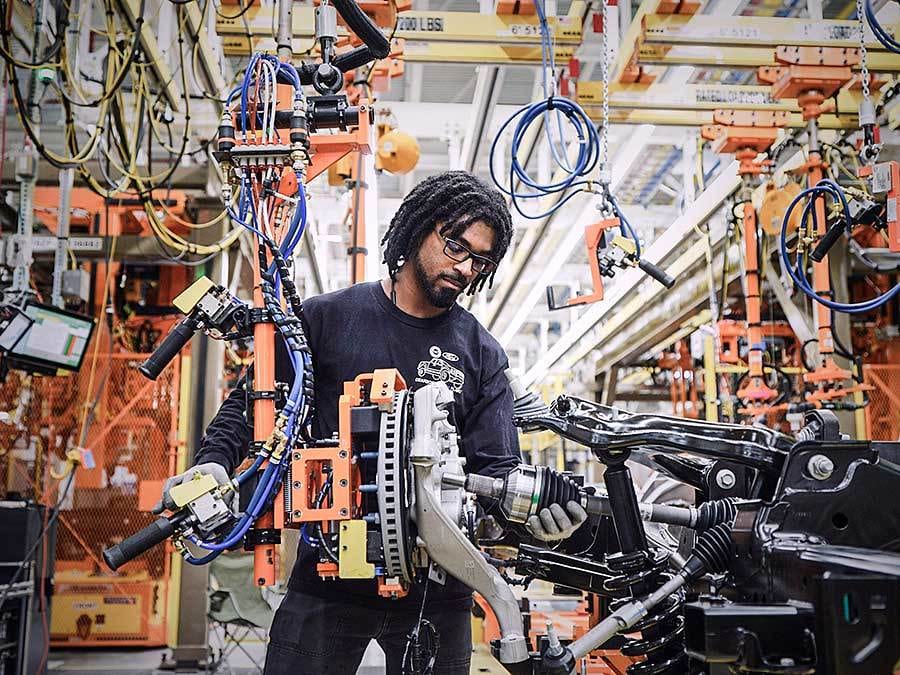
Recent automaker profits will fund an increased number of new vehicle launches over the next few years. Photo courtesy Ford Motor Co.
“Despite economic uncertainty and supply chain challenges, we are seeing a bright future [for] the automotive tooling industry,” says Laurie Harbour, president and CEO of HRI. “[While] we are seeing growth within the industry, it is important to note that North American tooling spend per vehicle for EVs on average are lower than ICE vehicles by about 30 percent. Although we are seeing the tooling spend and number of tools sourced go up over the next few years, the average spend per tool is decreasing.
“It will be important for mold and die companies to focus on improved efficiency and throughput,” claims Harbour. She predicts that automakers will continue to be faced with difficult strategic decisions about where to put their money and what vehicles to launch.
“Although our forecast is positive, there are a number of risk factors that could negatively impact tooling spend, including a prolonged recession, increased supply chain issues or a drop in vehicle demand below 13 million units,” warns Harbour. “Businesses need to continuously monitor the health of the industry and their customers to better understand how it will impact their bottom lines.”
Harbour says the auto industry’s top overall concern today is finding talent and the increasing cost of doing business. However, neither is predicted to improve significantly in the near term.
“As the tooling market grows, it is important that shops position themselves for the future,” Harbour points out. “Leadership needs to put steps in place today to improve flexibility, drive resiliency and focus on improved efficiency. Regardless of the forecast, now is the time to be smart and establish plans to shore up weaknesses and address the talent issue facing this industry.”

Accenture, Purdue Partner on Smart Manufacturing Initiative
WEST LAFAYETTE, IN—Accenture and Purdue University have formed an initiative that will focus on developing a smart manufacturing workforce. Specifically, Accenture will provide funding to support two strategic areas.
The Accenture Smart Factory will provide instructional laboratories, design studios and spaces where students from various disciplines can collaborate on smart manufacturing projects. It will also serve as a central hub for joint innovation projects.
The Accenture Smart Manufacturing Scholars Program will provide funds for select qualified students to receive the equivalent of in-state tuition every year for up to four years. It will also include a Women in Manufacturing scholarship designed to attract more female engineers, and drive inclusion and diversity in the industry.
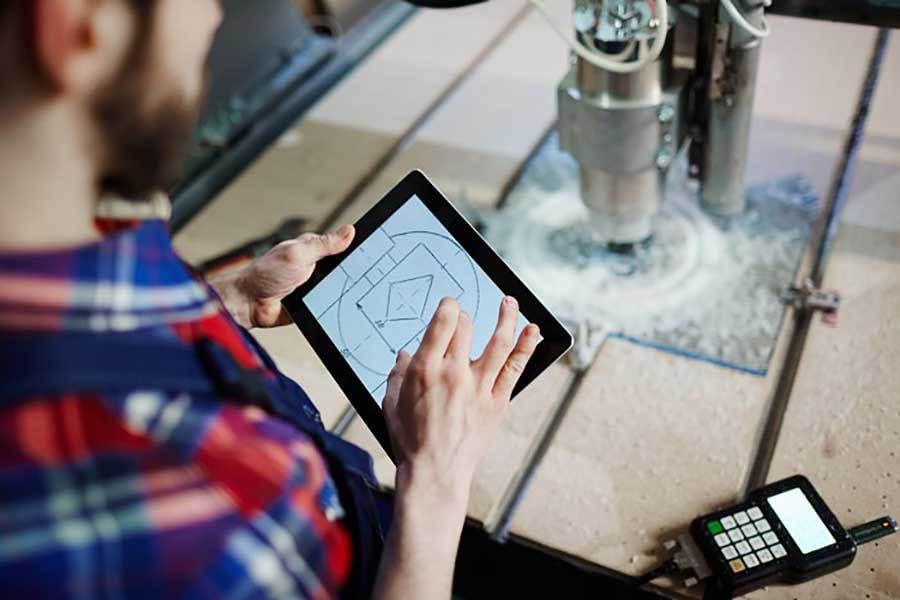
Accenture and Purdue University have formed a new initiative that will focus on developing a smart manufacturing workforce. Photo courtesy Accenture
“With the Accenture Smart Factory and the Accenture Manufacturing Scholars Program, we can prepare more students for exciting future careers in smart manufacturing,” says Daniel Castro, dean of the Purdue Polytechnic Institute, through which Purdue offers an undergraduate major in smart manufacturing industrial informatics. “At the same time, this venture allows [us] to meet the needs of our partners in industry who are desperately seeking career-ready graduates with the skills we will teach in this new facility.”
According to Castro, smart manufacturing uses digital technologies, such as artificial intelligence, the cloud, robotics and 5G, to build products. Industry experts believe the United States’ need for a workforce with core knowledge and skills in this field is growing faster than the country’s current ability to produce qualified workers.
“We are excited about this new partnership, particularly the Women in Manufacturing scholarship, which will help drive more inclusion and diversity in engineering roles,” notes Shiv Iyer, Accenture’s market unit lead for the Midwest. “By partnering with Purdue, we hope to inspire more students to pursue a career in digital manufacturing in the future.”
“Companies are not just rebuilding manufacturing in North America; they are reinventing it,” adds Aaron Saint, who leads Accenture’s digital engineering and manufacturing service, Industry X, in North America. “Factories of the future will rely on automation, data analysis and digital twins to enhance productivity, safety and quality.
“They need a workforce with those skills,” explains Saint. “The Accenture Smart Factory will provide the right platform for innovation in this next era, and this collaboration with Purdue will equip tomorrow’s workforce with the skills they need for a successful career in digital manufacturing.”
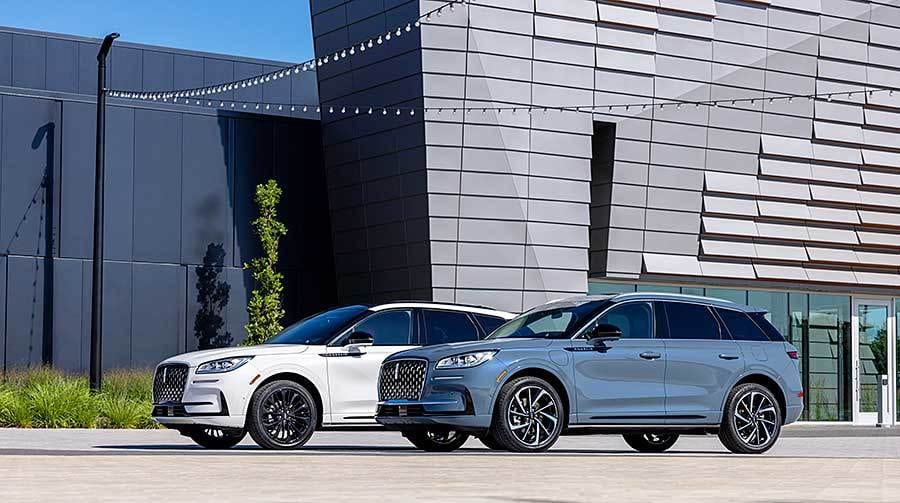
Lincoln SUV Tops ‘Made in America’ Index
WASHINGTON—The Lincoln Corsair ranks No. 1 in the latest Made in America Auto Index compiled by the Kogod School of Business at American University. The luxury SUV is assembled at Ford Motor Co.’s Louisville plant.
In 2021, the Corsair had a 25 percent U.S.-Canadian content and a foreign-sourced engine. That figure jumped to 72 percent in 2022, which contributed to a total domestic content score of 86. The ranking includes both the plug-in hybrid electric and conventional nonelectric model.
Tesla Inc. continues to have a strong showing on the index, with five of its cars placing in the top 10, including the Model 3 and Model Y. The Chevy Corvette Stingray dropped from No. 2 to No. 3. In addition, the Chevy Colorado is No. 4, while the Jeep Cherokee and Latitude models come in at No. 5 on the list.
The Lincoln Corsair ranks No. 1 in the latest Made in America Auto Index. Photo courtesy Ford Motor Co.
The 10th annual scorecard was created by Frank DuBois, Ph.D., an associate professor and global supply chain expert at American University. The index is a tool for consumers interested in learning the amount of U.S. content in their cars and the extent to which their purchase decisions impact the economy.
Body, chassis and electrical components comprise 50 percent of a vehicle’s overall score.
According to DuBois, the most recent ranking shows a growth in American content by foreign automobile manufacturers over the past seven years and a decrease in American content by American manufacturers. Since 2015, Hyundai, Kia, Nissan, Toyota and Volkswagen have all increased their U.S. content in vehicle production. During the same time period, Ford, General Motors and Stellantis have experienced slight decreases in domestic sourcing.
Manufacturing Remains the Backbone of the Global Economy
NEW YORK—The manufacturing world has seen significant changes over the past few years, but it still remains the economic backbone. According to a recent study conducted by ABI Research Inc., the sector’s value increased by 20 percent from 2020 to 2021 to reach more than $16 trillion.
“The five largest manufacturing verticals are automotive, computer and electronic, primary metal food and machinery,” says James Prestwood, industrial and manufacturing technologies research analyst at ABI Research. “Together, they total 51 percent of global manufacturing revenues. China, Germany, Japan and the United States generate more than 50 percent of the world’s manufacturing revenues.”
Volkswagen’s flagship Wolfsburg plant is one of the largest factories in the world. Photo courtesy Volkswagen AG
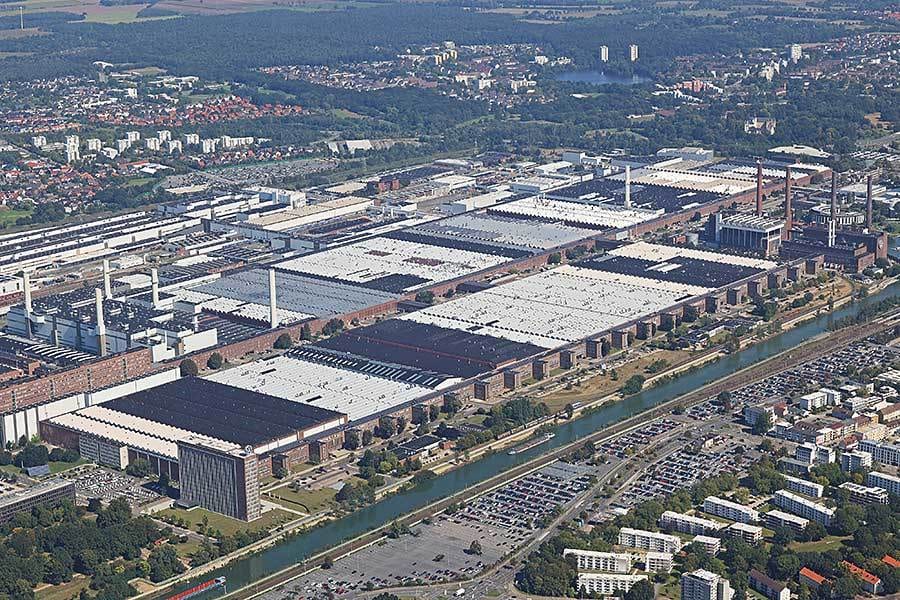
The largest manufacturing companies globally remain a mix of automotive, electronics, mining and petroleum refining. However, nine of the 10 biggest factories in the world produce vehicles, such as Hyundai’s Ulsan plant, Kia’s Hwaseong factory and Volkswagen's Wolfsburg complex.
Despite this, Prestwood claims the automotive sector lags behind other industries when it comes to investing in digital transformation initiatives.
“Interestingly, in the United States, out of the six CAPEX spends measured (machinery and equipment, computers and peripheral data processing equipment, software purchases, data processing and other purchased computer services, communications services, and professional and technical services), the automotive industry was only the top spender for three of these,” notes Prestwood. “The other three were dominated by the chemical manufacturing industry, where Dow, Dupont and Exxon Mobil are some of the largest players.
“However, the largest difference in spending did belong to automotive, with its data processing and other computer services coming in 469 percent higher than the closest [sector],” explains Prestwood. “Overall, this would appear to show that within the U.S. market, at least, the automotive and chemical market remain the biggest spenders in digital transformation.”