MONTH 2023

Adhesive Bonding and Dispensing
Labor shortages are driving new demand for automation.
Options for Screwfeeding
It’s important for heat-conductive particles to be evenly distributed throughout the material. Photo courtesy ViscoTec
System ensures even distribution of conductive particles.
Bubbles
System Dispenses Thermal Paste Without
Melanie Spiethaler // Content Manager // ViscoTec // Töging am Inn, Germany
BorgWarner is one of the 25 largest automotive suppliers in the world. The company was formed in 1928 from the merger of several smaller manufacturers that made timing chains, radiators, transmissions and springs for gas-powered vehicles.
Today, BorgWarner still makes products for gas-powered vehicles, but the company’s main focus is on power train products for hybrid and electric vehicles. Its portfolio includes controls, power electronics, inverters, battery chargers, and DC-DC and DC-AC converters. Operating 92 manufacturing facilities in 24 locations worldwide, BorgWarner tallied sales of more than $14 billion in 2024 and employs some 38,000 people.
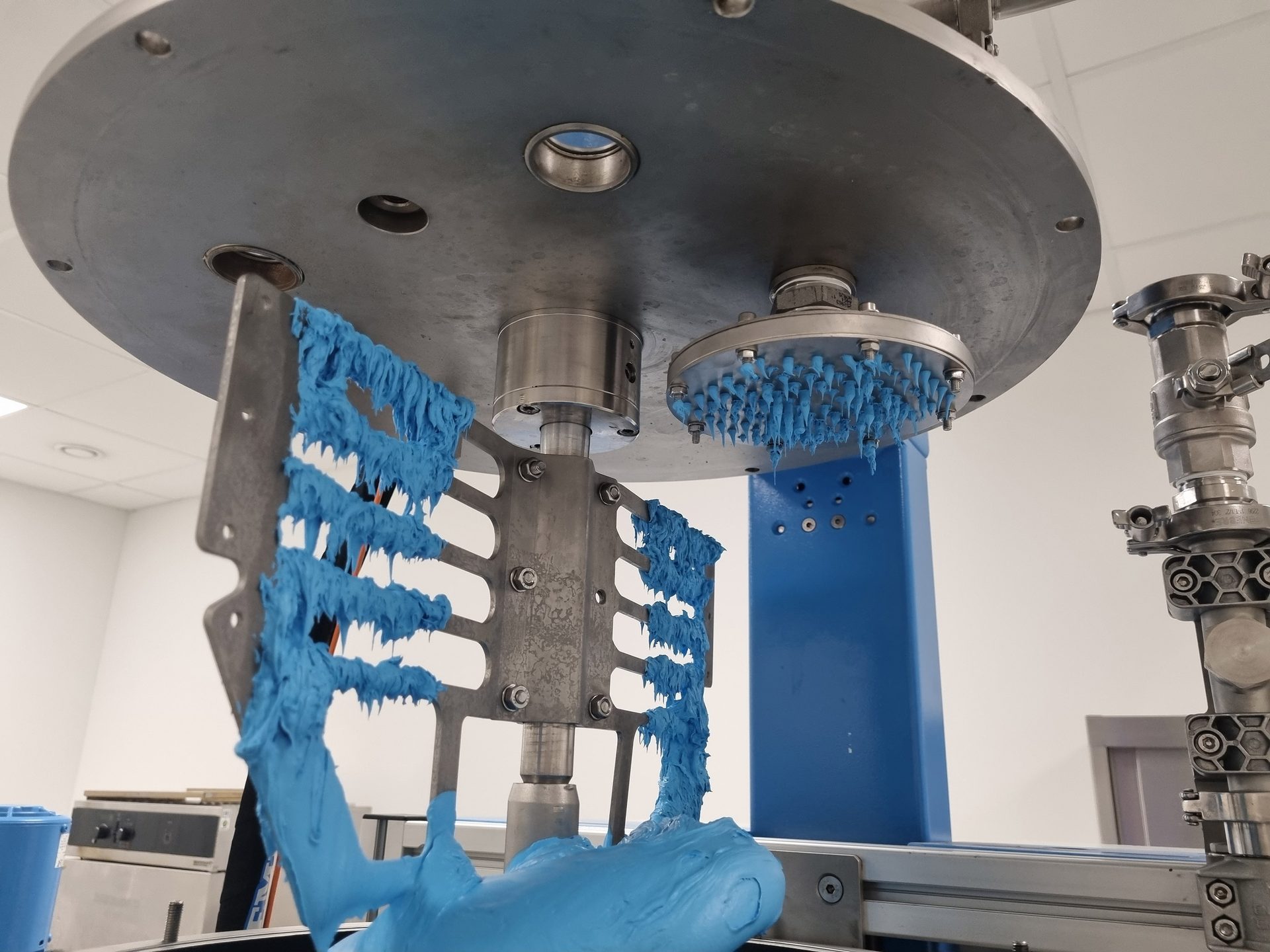
Inside the ViscoTreat-I, a stirring mechanism ensures even distribution of conductive particles and gets rid of any air bubbles. Photo courtesy ViscoTec
A key challenge of manufacturing EV components, particularly power electronics, is how to keep them cool. For many applications, BorgWarner uses thermal paste.
Also known as thermal grease or thermal interface material, thermal paste is a thermally conductive (but usually not electrically conductive) compound that is used as an interface between heat sinks and heat sources, such as high-power semiconductor devices.
Despite its name, thermal paste does not actually bond the heat sink to the heat source. Instead, screws or other fasteners must be used to hold the heat sink in place and to apply pressure to the joint, spreading and thinning the paste. (A thermally conductive adhesive would bond the heat sink.)
Thermal paste is formulated to maximize heat transfer and dissipation. It is made from of a polymerizable liquid matrix combined with an electric insulator as filler. The filler, which represents 70 to 80 percent of the paste’s total mass, also conducts heat. The filler may be made from aluminum nitride, aluminum oxide, boron nitride, diamond or zinc oxide.

Dispensing Thermal Paste
For thermal paste to work, it must be dispensed in just the right amount. Too little, and the material will be less effective. Too much, at it will simply flow out from the joint, creating a mess. It’s also important for the heat-conductive particles to be evenly distributed throughout the material. In addition, the paste must not contain bubbles, since air acts as a thermal insulator.
Unfortunately, inconsistent dispensing of thermal paste was exactly the problem BorgWarner was facing. BorgWarner received the paste in hobbocks—large metal buckets with handles on opposite sides. Feeding the material from the bucket directly to the point of dispensing was impossible. Besides noticeable separation behavior, the thermal paste exhibited significant cracks when it polymerized.
To solve the problem, BorgWarner turned to ViscoTec, which specializes in equipment for dispensing two-part materials and filled materials. ViscoTec’s approach was to empty the thermal paste from the hobbock using the ViscoMT-XS and then process it to the required quality standard using the ViscoTreat-I.

Operating 92 manufacturing facilities in 24 locations worldwide, BorgWarner tallied sales of more than $14 billion in 2024. Photo courtesy BorgWarner
Viscotec’s ViscoMT line of emptying systems are suitable for medium to high-viscosity liquids. The systems can pump material from a variety of vessels, including cartridges, cans, pails, buckets and barrels.
The heart of each pumping system is a vertically arranged progressive cavity pump, which conveys the material gently, evenly and with stable pressure. It functions like an endless piston, conveying the product from the suction to the discharge side. The dosing pump is mounted directly on the follower plate. Both are lowered together, and a flexible wiper ring or lip seals the vessel.
To start the emptying process, the follower plate is moved into the vessel until it rests on the surface of the liquid. The lowering device pushes the pump with the plate onto the material, which slightly increases pressure in the bucket. This facilitates emptying via the pump, which at the same time also has a certain suction effect. As emptying progresses, the follower plate moves down into the vessel, almost pressure-free and with gentle handling of the material.
During the process, the wiping lip seals off the inside wall of the vessel and removes any residue from the vessel wall. The system compensates for dents, bulges and creases in the container. At the end of the emptying process, the follower plate sits on the bottom of the vessel, ensuring that more than 99 percent of the material gets used.
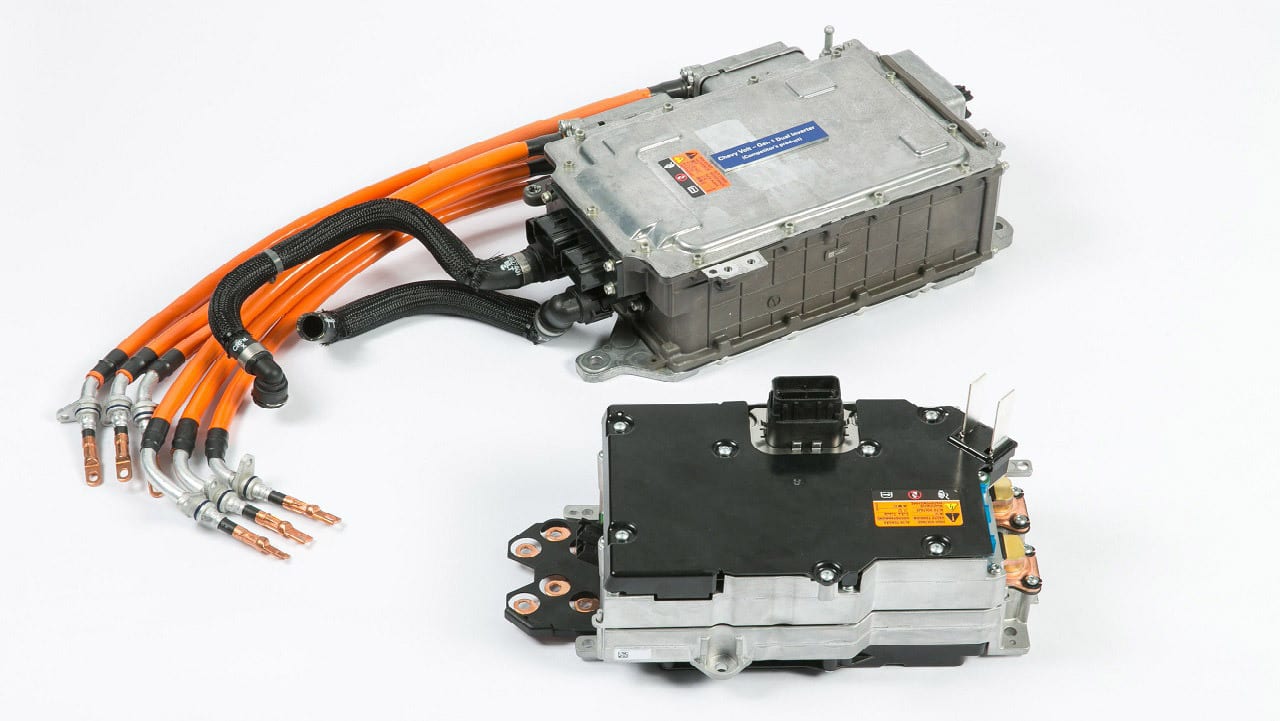
A key challenge of manufacturing EV components, particularly power electronics, is how to keep them cool. Photo courtesy BorgWarner
Sensors detect when the follower plate has reached the bottom. The emptying process is then interrupted. A ventilation valve on the follower plate is opened, and a pneumatic actuator lifts the plate and pump out of the container. In the event of partial emptying or interruption of production, the entire system remains in the vessel and serves as a closure.
The ViscoMT-XS can accommodate container sizes ranging from five to 50 liters. It can handle materials with viscosities of 30,000 to 7 million millipascal-seconds, and it can move material at a maximum rate of 810 milliliters per minute.
The ViscoMT-XS feeds the paste from the hobbock to the ViscoTreat-I, which stirs and degasses the material. The paste enters the ViscoTreat-I via a media distributor, a nozzle resembling a showerhead. Inside the ViscoTreat-I, a stirring mechanism ensures even distribution of the conductive particles and gets rid of any air bubbles.
Once it is bubble-free and well-mixed, the paste is smoothly delivered to the dispensing valve.
For more information on dispensing equipment, visit www.viscotec.com.
ASSEMBLY ONLINE
For more information on dispensing equipment, visit www.assemblymag.com to read these articles: