MONTH 2023

Robotics
Labor shortages are driving new demand for automation.
Options for Screwfeeding
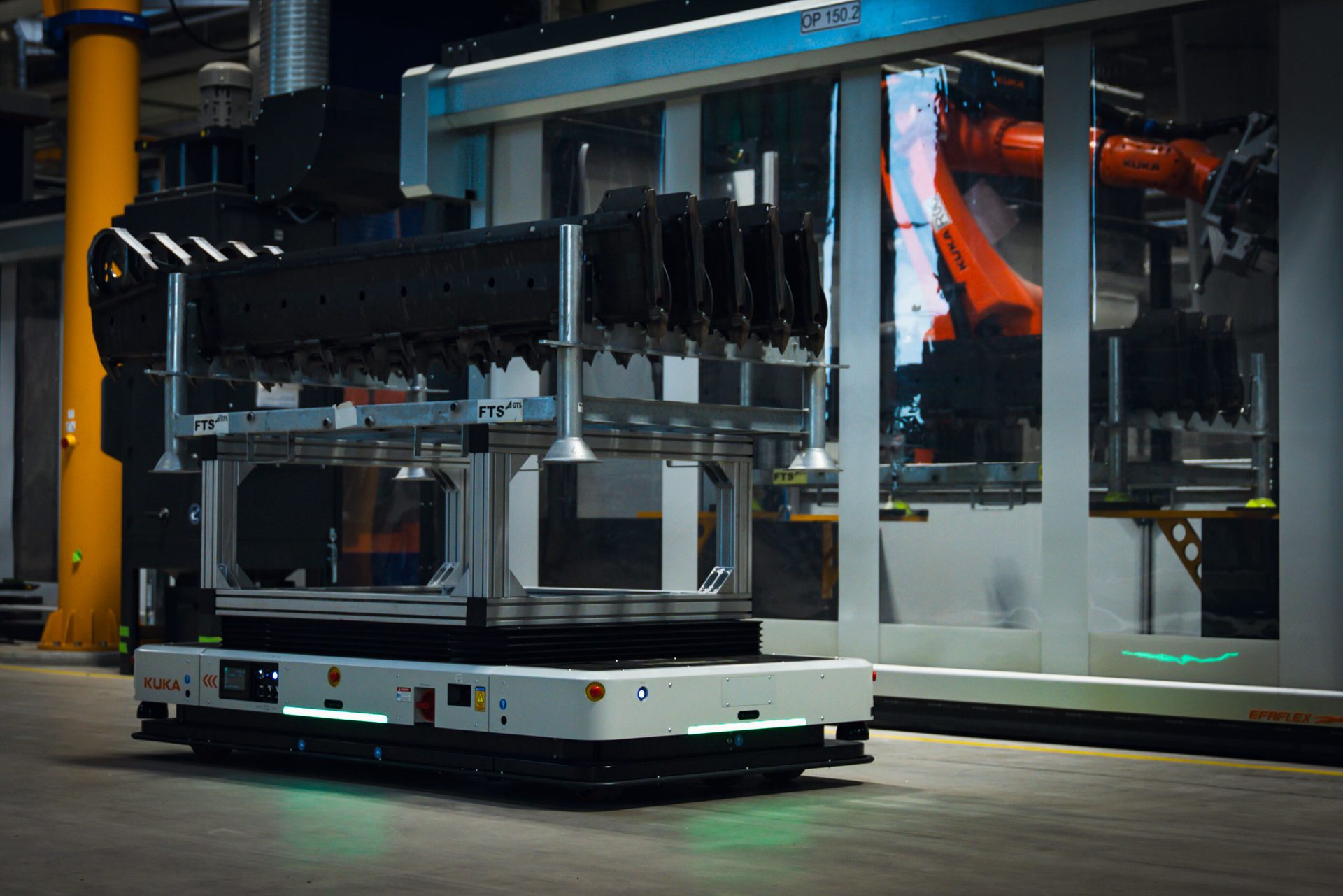
KMP 1500P AMRs automatically bring parts and supplies to a welding cell. Photo courtesy KUKA
Autonomous mobile robots eliminate the need for forklifts on the shop floor.
Machinery
Robots Automate Assembly at
Factory
Teresa Fischer // Corporate Communications Manager // KUKA // Augsburg, Germany
The Krone Group has been manufacturing agricultural machinery since 1924. Based in Spelle, Germany, some 36 miles north of Münster, the company specializes in equipment to cut and harvest hay and other forage crops. The production of wagons and trailers for hauling hay eventually led Krone to create a subsidiary devoted to making trailers for commercial trucking.
Although Krone has been in business for nearly a century, it has always strived to keep its manufacturing technology up to date. The company’s assembly plant in Werlte, Germany, which makes truck trailers, is no exception. There, six-axis robots automate handling and welding tasks, working together in a digital network with autonomous mobile robots (AMRs). All the robots are supplied by KUKA.
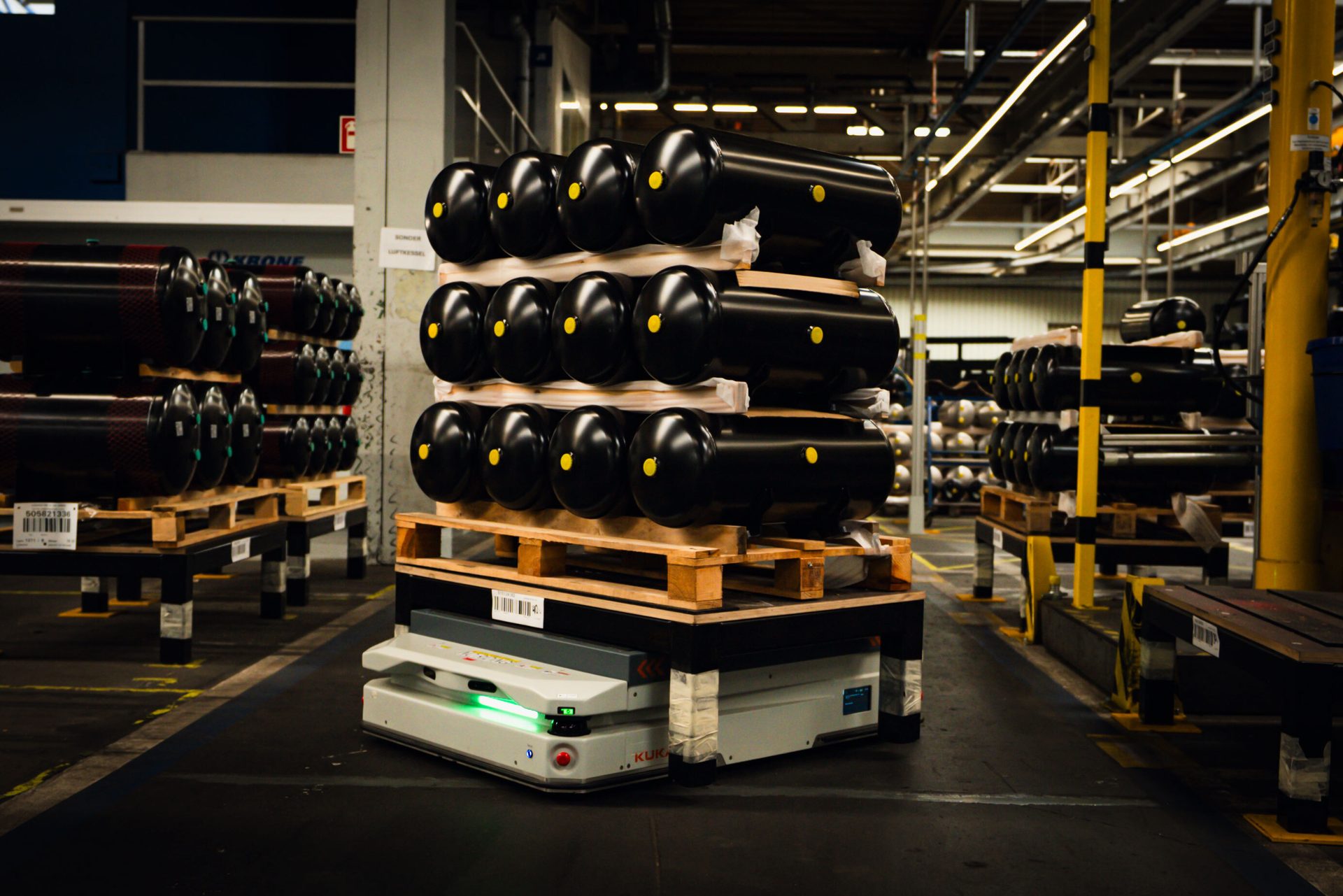
One of Krone’s goals in automating was to eliminate forklifts from production as much as possible. Photo courtesy KUKA
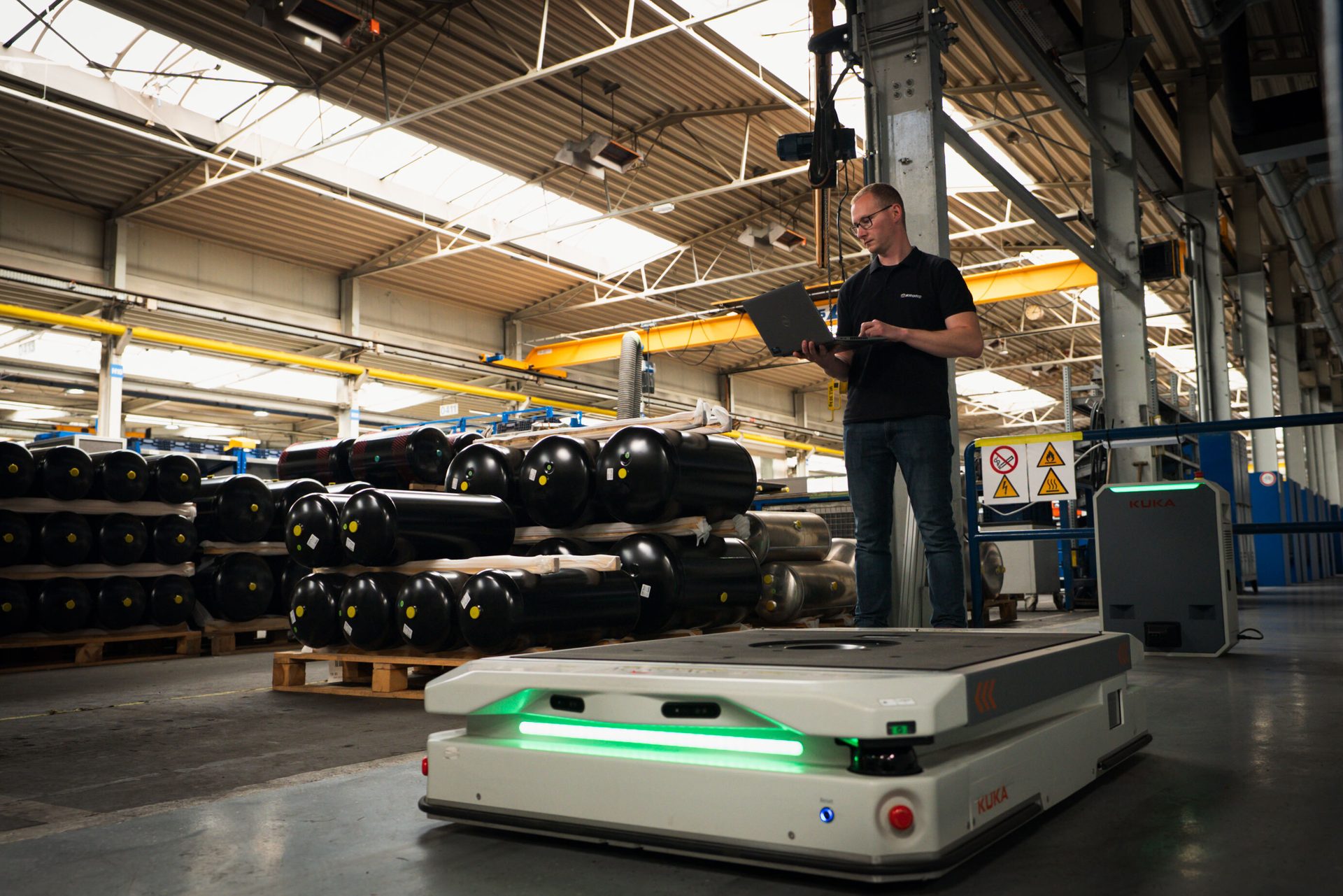
Robots enable Krone to deploy its employees for more efficient or value-adding activities. Photo courtesy KUKA
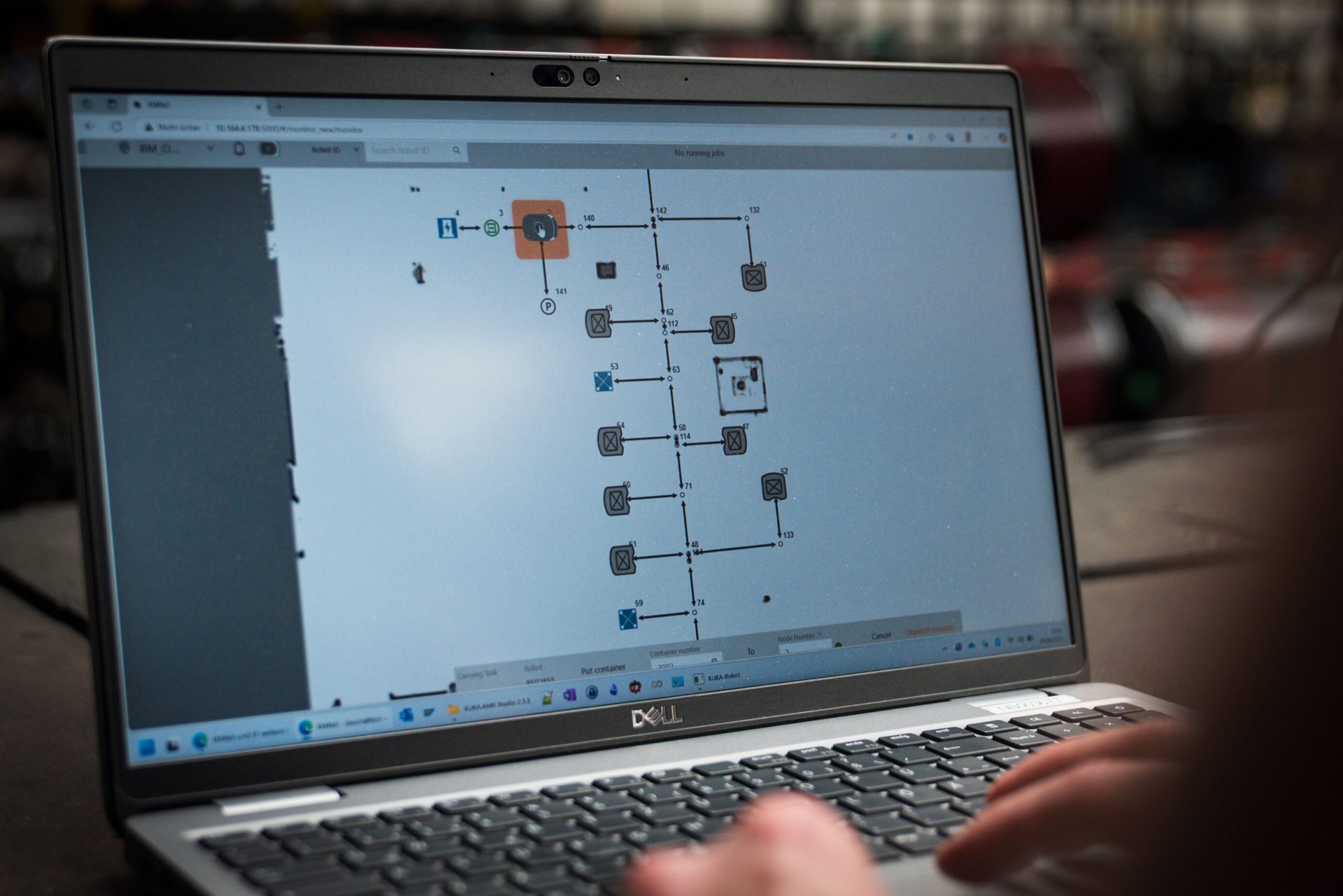
Every machine, robot and transport vehicle in the factory is digitally connected. Photo courtesy KUKA
This AMR can move up to three tons. Photo courtesy KUKA
Since Krone automated much of its production processes, employees now actively apply for positions on the shop floor. Photo courtesy KUKA
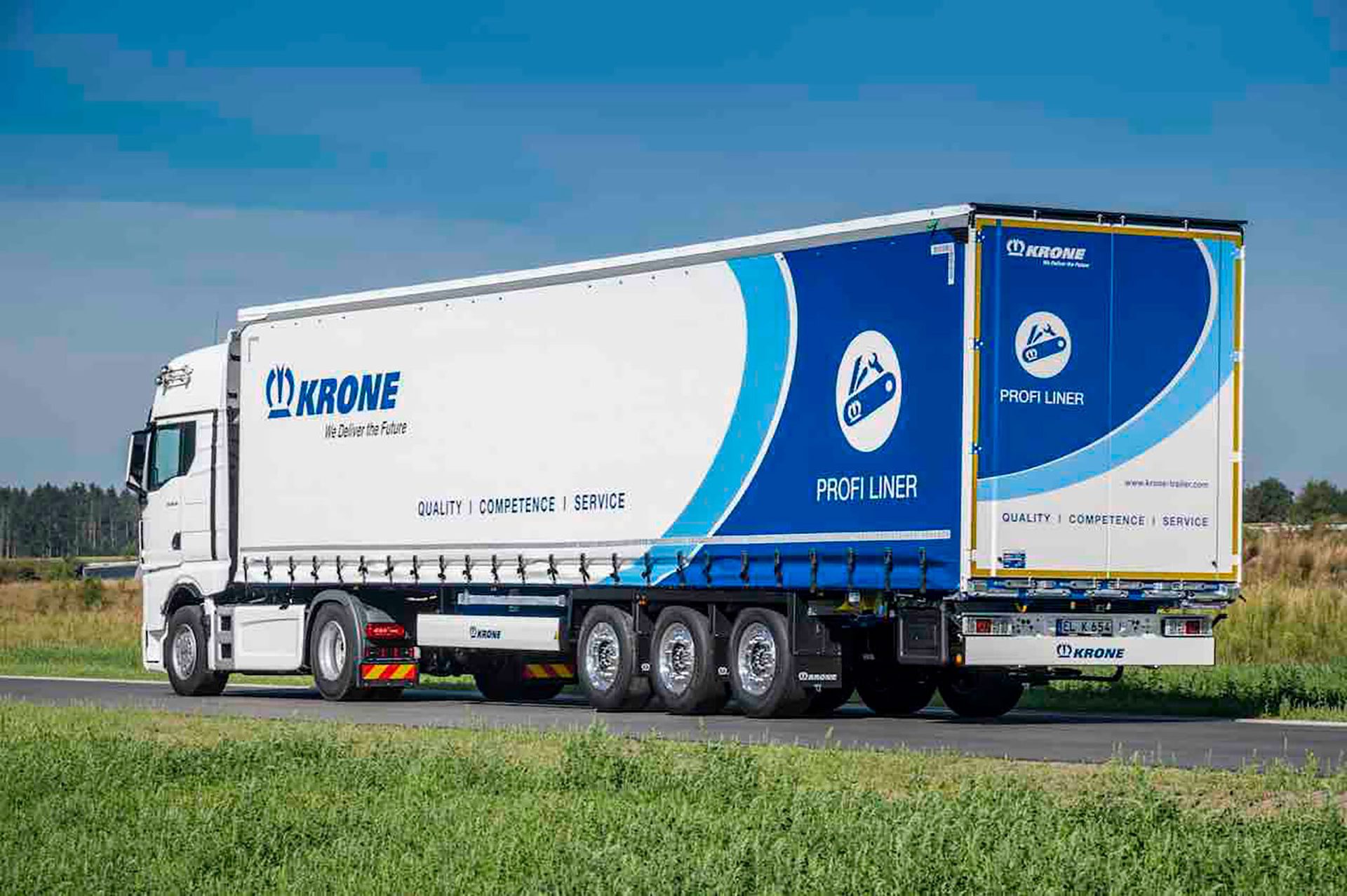
The production of wagons and trailers for hauling hay eventually led Krone to create a subsidiary devoted to making trailers for commercial trucking. Photo courtesy Krone
One of Krone’s goals in automating was to eliminate forklifts from production as much as possible. As a result, the welding robots are supplied by AMRs. Specifically, KMP 1500P AMRs automatically bring parts and supplies, such as compressed air tanks and door elements, to the welding cell. There, a handling robot places them in the welding cell. AMRs also transport finished assemblies away from the cell. This increases efficiency in production and intralogistics and relieves employees of heavy, monotonous tasks.
Volker Perk, production director at Krone Commercial Vehicle Group, sees robotics as a key factor in securing the company’s future. “We want to continue producing truck trailers…in Germany in the future,” he says. “To do this, however, we need to automate processes, because we simply cannot find skilled workers for many of the tasks required. Robotics gives us the opportunity to use our employees for more efficient or value-adding activities.”
Connected and Digital
While the Werlte assembly plant dates to 1963, the company’s newest factory is in Ibbenbüren, some 48 miles due south. The state-of-the-art, smart factory opened in 2023 and produces complex welded assemblies for the company’s tractors and trailers.
Every machine, robot and transport vehicle in the factory is digitally connected. This allows production to react immediately to any tolerance violations or malfunctions. The systems are adaptable; they learn and correct themselves independently.
In a single production cell, nine welding and handling robots from KUKA work synchronously with two machining centers and an automatic measuring cell. This has virtually eliminated downtime and allows production to be ramped up or scaled back flexibly. As at the Werlte factory, heavy-duty AMRs, such as the KMP 3000P, move parts and assemblies at the Ibbenbüren plant. Each AMR can move up to three tons—or twice as much in tandem. The AMRs can move omnidirectionally with precision, even in the tightest of spaces.

One thing is particularly important to Krone’s factory planners: Automation does not mean the end of human work, but rather its enhancement. Now, Krone employees actively apply for positions on the shop floor. Ergonomics also plays a role.
“The new workplaces are safer and less physically demanding. That makes them attractive, especially for younger generations,” says Perk.
Inspection System