MONTH 2023

Automated Assembly
Labor shortages are driving new demand for automation.
Options for Screwfeeding
Pella is a family-owned company that has been in business for 100 years. Photo courtesy Pella Corp.
AGVs, AI and robots help a century-old company thrive in a competitive industry.
Pella Opens a Window
Austin Weber // Senior Editor // webera@bnpmedia.com
Pella Corp. is a 100-year-old company known for innovation. Several decades ago, it was one of the first nonautomotive manufacturers to embrace lean production principles. Today, Pella is investing in automation to boost productivity and improve the quality of its windows and doors.
The fourth-generation family-owned firm produces a variety of made-to-order products that are sought after by architects, builders, remodelers and homeowners. Not content to rest on its laurels, the company continues to think outside the box and challenge industry norms with a fresh perspective.
Pella’s current marketing campaign reflects this unique philosophy. It’s based on the fact consumers today aren’t just looking for high-performance products; they’re looking for refuge. As extreme weather intensifies and the world feels increasingly uncertain, people want doors and windows in their homes that offer protection, comfort and peace of mind.
“What makes this campaign distinctive is how it transforms our century-old commitment to protection into a modern story about emotional and physical resilience,” says Keith Mann, Pella’s chief marketing officer. “We continue to rewrite the playbook, bringing innovation to all aspects of our business.”
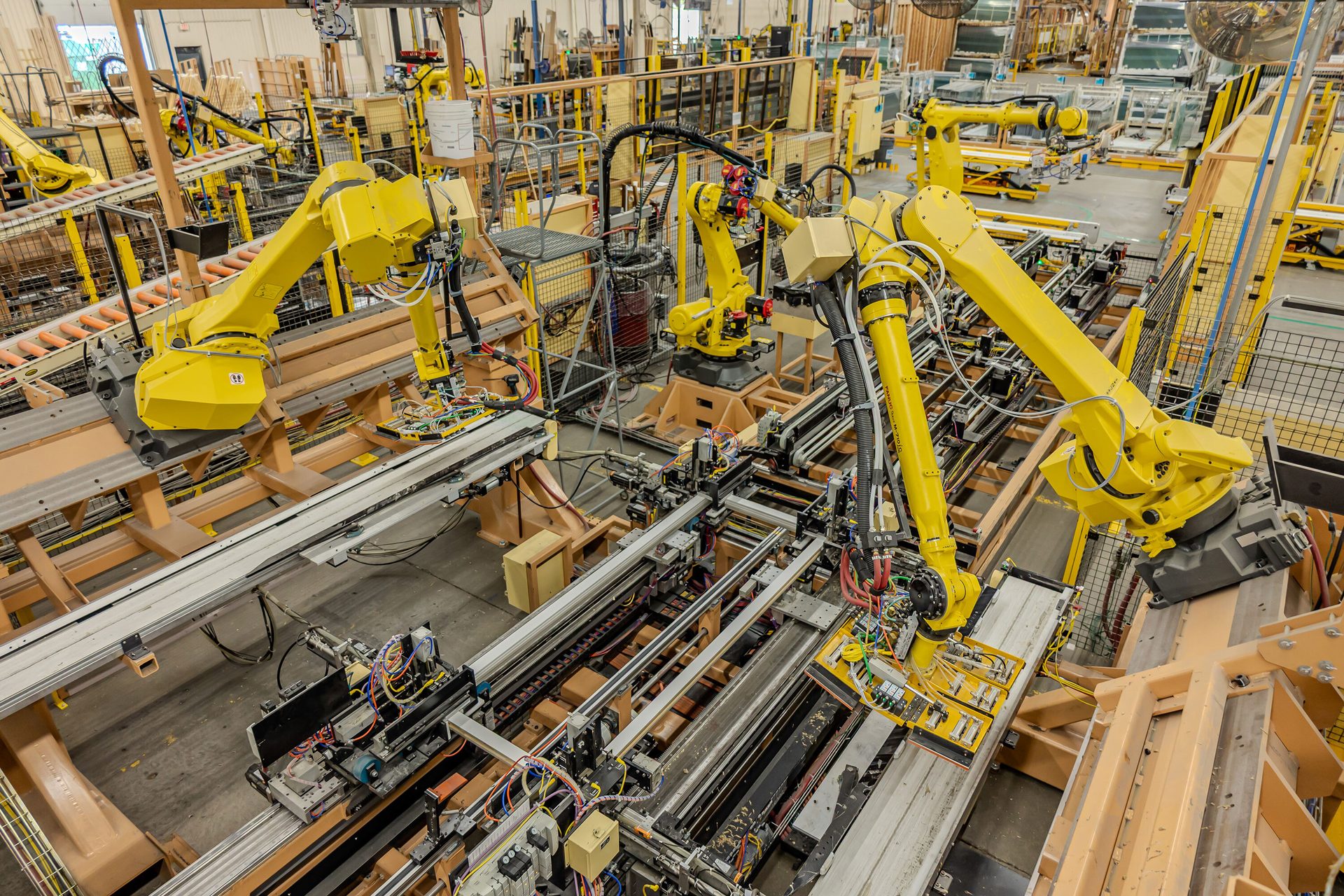
Pella is investing in robots and automation at its flagship factory to boost productivity and improve quality. Photo courtesy Pella Corp.
High-Mix Products
Pella specializes in residential windows and doors, producing them in multiple sizes, shapes, styles, colors and finishes. In fact, the company claims to have one of broadest product portfolios in the fenestration industry.
A wide array of customizable windows are available, including bay, bifold, bow, casement, corner, double-hung, picture, single-hung and sliding varieties. Sizes typically range from 15 to 60 inches wide.
Glass options include dual- and triple-plane designs. Argon gas insulation and layers of coating are also available to protect window treatments from fading.
Optional standard or custom simulated-divided-light grilles create the look of individual panes. Pella’s wide range of profiles are cut individually in a state-of-the-art woodshop and then manually applied.
Front doors, patio doors and storm doors are also produced to meet any need or style, ranging from classic to contemporary. Multiple handles, knobs, hinges and other hardware options are available.
Pella produces windows and doors made out of several materials, including fiberglass, steel, vinyl and wood.
Fiberglass is the strongest option for window frames. It holds up against dents, bends and breaks without compromising on style. In the late 1990s, Pella engineers pioneered new fiberglass manufacturing processes that made the material easier to mass-produce.
Steel is primarily offered as an option on front entry doors. Because it’s strong, durable and easy to care for, steel provides increased safety and is one of the most weather-resistant materials available.
Vinyl is the most popular material in the fenestration industry because it is affordable, durable and easy to care for. It resists corrosion and moisture, so it performs well in most climates.
Wood is the traditional material that’s used to make casings and frames for doors and windows. It offers natural beauty, warmth and design flexibility, all while delivering exceptional energy efficiency.
Pella builds most of its wood products from ponderosa and sugar pine, because those species are easy to work with yet extremely durable. However, cherry, Douglas fir, mahogany, red oak and white oak are also available. In addition, the company offers extruded aluminum-clad products that provide an extra layer of protection against things like termites or coastal salt exposure.
Pella prides itself on energy efficiency, in addition to impact, sound and weather resistance. It also has a proud history of sustainability. And, quality is part of Pella’s DNA. That’s why its products are tested to extremes. For instance, new door designs are opened and closed 100,000 times, while casement and double-hung window designs are each tested at least 6,000 times.

Innovative Spirit
Pella operates 21 factories and 250 showrooms throughout the United States. But, the heart and soul of the company is located in Pella, IA, a small town 45 miles southeast of Des Moines that is known for its Dutch heritage.
In 1925, Pete Kuyper, the owner of a local lumberyard, invested in a small firm that produced a new type of window screen that rolled up and down like a shade. A few years later, the Rolscreen Co. received a U.S. patent for a venetian blind. It began producing casement windows in 1937.
Since then, the company, which officially changed its name to Pella Corp. in 1992, hasn’t looked back. It has been at the forefront of change, racking up more than 150 patents for everything from door mechanisms to window cranks.
One of Pella’s biggest innovations in recent years is Steady Set, the fenestration industry’s first interior installation system for wood windows. It is designed to make the process safer, faster and more precise through smart, intuitive components.
After months of jobsite observations, Pella engineers discovered that 85 percent of installers were setting windows from the interior of homes, despite products being designed for exterior installation.
This insight led to an ambitious R&D project that culminated in an ingenious product that combines interior clips and a flexible exterior fin with continuous corner seals, sill shims and a head stabilizer.
The head stabilizer engages with the rough opening header to help temporarily stabilize the unit, eliminating the need for someone to hold the unit from falling inwards prior to fastening. A pop-up yellow fin deploys easily after the window is set to help ensure an exterior water barrier after being flashed. In addition, a flexible hinge adapts to wall variation and an integrated corner seal provides a continuous seal.
Pre-attached brackets securely attach the window to the rough opening and make an audible click upon reinsertion for installer confidence. Pre-applied sill shims also raise each unit 0.25-inch off the rough opening sill, allowing tools to be easily inserted to manipulate the unit, eliminating pinched fingers and damage when leveling.
Steady Set streamlines the window installation process, making it more than three times faster than traditional installs. In addition, crew exposure to the elements is reduced by 72 percent and 64 percent of the install process can be completed from indoors.
“Great design starts with deeply understanding the customers who experience our products,” explains Jenn Tuetken, director of innovation, design and brand experience at Pella. “By observing installers on jobsites across the U.S., we identified unseen opportunities to remove complexity and design a new installation process that is safer, faster and more intuitive.”
Since its launch in 2024, Steady Set has gained rapid adoption among builders and installers nationwide, earning praise for improving jobsite safety, installation consistency and crew confidence. The system has already been recognized with multiple industry honors and is changing how professionals think about window installation.

Pella produces a variety of windows and doors that are popular with architects, builders, remodelers and homeowners. Photo courtesy Pella Corp.
“For a company with 100 years of history, embracing new ways of thinking is what keeps us industry leaders,” says Travis Turnbull, vice president and chief information officer at Pella. “Our team members are encouraged to explore new ideas and are empowered to innovate.
“From IT and operations to engineering and beyond, teams are integrating new artificial intelligence tools that encourage bold thinking and collaboration to deliver meaningful [products] for our customers,” Turnbull points out.
For example, AI systems review camera images to validate that doors and windows are assembled with all of the correct parts, and that they meet fit and finish expectations prior to shipment.
As part of an “intelligent operations” strategy, IT and OT professionals work together as one team. They are encouraged to ignore traditional barriers and siloes that stifle the two functions in many manufacturing organizations.
All Pella employees continually experiment, take risks and develop ideas that drive meaningful change. “That mindset fuels a strong innovation pipeline and helps us bring new solutions to market with speed and consistency,” explains Turnbull.
“Technology is empowering our team members,” says Turnbull. “We are equipping them with smarter tools so they can focus on what matters most, which is delivering quality and care to our customers.”
The Pella Innovation Incubator (PII Lab) is where many new ideas take shape. “The name refers to the infinite number of possibilities that employees can achieve, never knowing where their calculations might take them until they’ve arrived,” adds Turnbull.
Totaling nearly 10,000 square feet, the PII Lab houses 3D printers, plastic injection-molding machines, laser cutters and other equipment that enable engineers to quickly develop new concepts and products.
A design assurance lab includes state-of-the-art simulation and testing equipment. It allows engineers to test new designs and confirm existing products’ performance and quality.
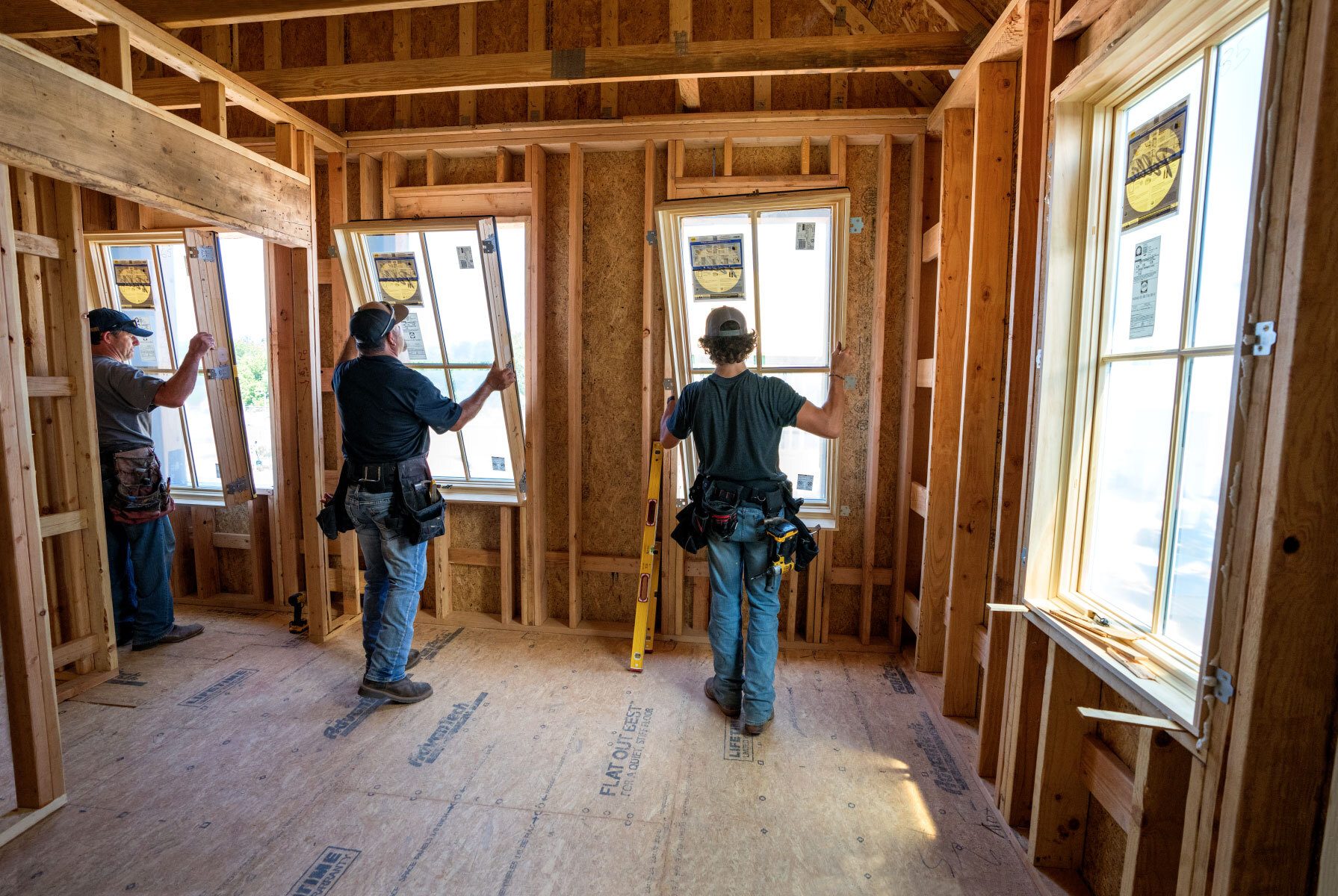
Steady Set is the fenestration industry’s first interior installation system for wood windows. Photo courtesy Pella Corp.
Lean Manufacturing Pioneer
The fenestration industry is extremely competitive and highly fragmented. Despite some recent consolidation activity, Pella and a handful of other large companies—many of them based in the upper Midwest—control less than 50 percent of the market. The rest of the industry is comprised of small firms that specialize in niche segments, such as garage doors or skylight windows.
“Today, the fenestration industry has become more complex,” says Laura Phillips, vice president of engineering and procurement. “Windows and doors have dramatically evolved with new features and attributes related to hardware, energy performance and materials.
“Most consumers don’t realize how much innovation and thought goes into the design of windows and doors,” notes Phillips. “It’s much more than just a piece of glass surrounded by wood frames.”
For instance, various metal and plastic parts need to be attached, including balances, brackets, clips, hinges, latches, shims and weather stripping. Doors and windows also rely heavily on screws and other types of mechanical fasteners.
Pella has doubled in size over the last decade, partially through a series of strategic acquisitions. For instance, it recently purchased Weather Shield, a manufacturer of high-end aluminum and wood windows and doors based in Medford, WI. During the past five years, Pella has also added Burris Windows, Lawson Industries Inc. and Win-Dor LLC to its family of brands.
To stay competitive, differentiate itself and maintain an edge in the industry, Pella was an early adopter of lean manufacturing practices in the early 1990s. In fact, it started to focus on continuous improvement long before most companies ever heard of the term.
Working with the TBM Consulting Group Inc., engineers identified daily opportunities for process improvement, increased employee engagement and focused on product improvement.
They initiated a series of week-long kaizen events designed to eliminate waste, improve production processes, reduce costs and boost quality.
One of the first sessions examined the way that Pella made double-hung windows, one of its most popular products. Within a few months, engineers were able to eliminate waste and cut floor space by more than 50 percent. Instead of making batches of products, assembly lines were reconfigured to enable high-mix production.
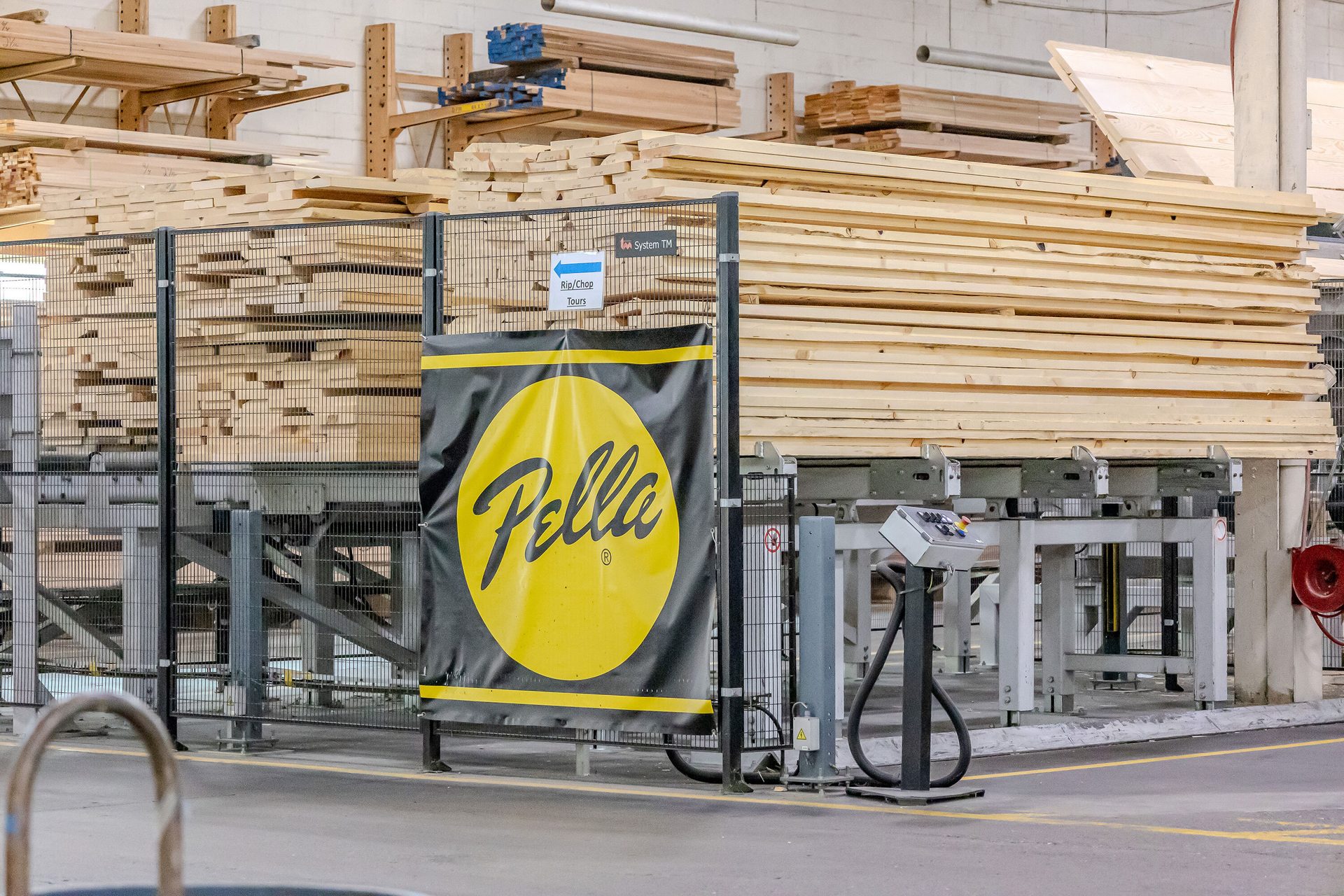
Pella’s world-class wood processing operation handles thousands of feet of lumber every day. Photo courtesy Pella Corp.
Delivery times improved dramatically. The time required to fill orders was reduced from 10 days to only five, while productivity increased by 25 percent. Within a few years, Pella was delivering more than 98 percent of its orders on time.
A secret weapon within Pella’s continuous improvement arsenal was its use of a 3P (product, preparation and process) system that not only transformed its product design and delivery capabilities, but also ensured better cost control and flexibility to adjust to the ebb and flow of changing market conditions. It gave the company the ability to serve customers with better quality and speed.
Another big change was expanding product options from three basic colors to 27 standard colors. Pella also made a strategic decision to expand into different markets, which created flexibility to meet various demand scenarios. That enabled the company to survive and thrive in a cyclical industry.
Today, continuous improvement is thoroughly ingrained in Pella’s culture. Since starting on its lean journey 32 years ago, the company has held more than 15,600 kaizens and implemented thousands of employee suggestions.
Daily operations have improved along with quality and safety. Factory floor space has been freed up, while cost per unit in some cases has improved by more than 50 percent.
Assembly Variables
In addition to several core factories scattered throughout Iowa, Pella has assembly plants in Arizona, California, Florida, Illinois, Kentucky, North Carolina, Ohio, Oregon, Pennsylvania, Texas and Wisconsin. Its flagship factory in its namesake city specializes in assembling doors and fixed wood windows.
“This is our largest manufacturing site,” says Phillips. “We have a lot of vertical integration here. Many parts we produce in Pella are shipped to our other plants.”
The 1.5-million-square-foot facility features nine assembly lines, with three additional value-add areas for custom products. Assemblers use a mix of manual and semiautomated tools, including nail guns and DC electric screwdrivers.
Pella also maintains an in-house print farm that uses additive manufacturing to create manual assembly devices such as drill guides, fixtures, pry tools and weatherstripping installers.
“Our ‘ready to build’ approach uses tools like voice-to-pick and defect detection in parts making, so when units enter the line, [engineers and operators have] a high level of confidence they’ll move through without rework or interruptions,” explains Phillips.

“Attribute-based workstations break the build process into manageable steps, allowing team members to focus on the specific details that matter for quality,” Phillips points out. “Digital work instructions and system-enabled checks support accuracy while reducing training complexity.
“The way our assembly lines are laid out is dependent on the complexity of our products and processes, as well as our continued evolution as a manufacturing business,” notes Phillips.
“In some areas, we’ve been able to move toward cellular manufacturing as a way to maximize the use of our assets and create flexibility to handle shifts in product mix and demand,” explains Phillips. “This requires more standardization of product designs and more flexible equipment as an enabler.
“In other areas, value stream complexity or unique product designs can drive us toward linear flow,” says Phillips. “We still have many areas that operate with linear flow through parts fabrication and assembly using more dedicated equipment.”
While doors and windows are assembled using similar tools and production processes, size is the biggest difference.
“The number of physical pieces or how they fundamentally go together isn’t significantly different in a door vs. a window,” claims Phillips. “But, many of our processes—especially in parts making—are driven off a lineal foot measure, not piece. For example, it takes twice as long to mold, dip, sand, interior finish and apply a glazing sealant bead on an 8-foot part vs. a 4-foot part.
“From an assembly standpoint, where it might take two screws to install a lock in a window, it can take 10 in a door.,” explains Phillips. “Each workstation has to be three or four times larger for a door vs. a window.
“Combine that with significantly fewer doors in each job than windows, and you get longer takt times on a door assembly line,” says Phillips. “All that can net out to a more complex list of jobs an [operator] has to train on and master in one role in door production.
“When Steady Set was introduced, we initially implemented it in an offline beta cell to validate the process,” notes Phillips. “As demand grew, we transitioned to installing it directly on our assembly lines.
“This required some targeted updates—adding fixtures, gauges, hand tools and part-processing equipment—to ensure smooth integration without major layout changes,” says Phillips. “We also added digital verification systems to ensure that every Steady Set unit has installation hardware that is configured correctly for the customer.”
More than 90 percent of production activity at Pella’s flagship factory involves build-to-order products. That presents a unique set of challenges for Philips and her team.
“Build-to-order manufacturing is about delivering for our customers,” explains Phillips. “Because every order is unique, our teams manage variability in product configurations, schedules and material needs.
“Lean inventory requires precise timing to ensure the right parts are available, and meeting tight lead times means we must respond quickly when plans change,” notes Phillips. “Customization also raises the stakes for quality, making real-time visibility into order status and performance essential.”
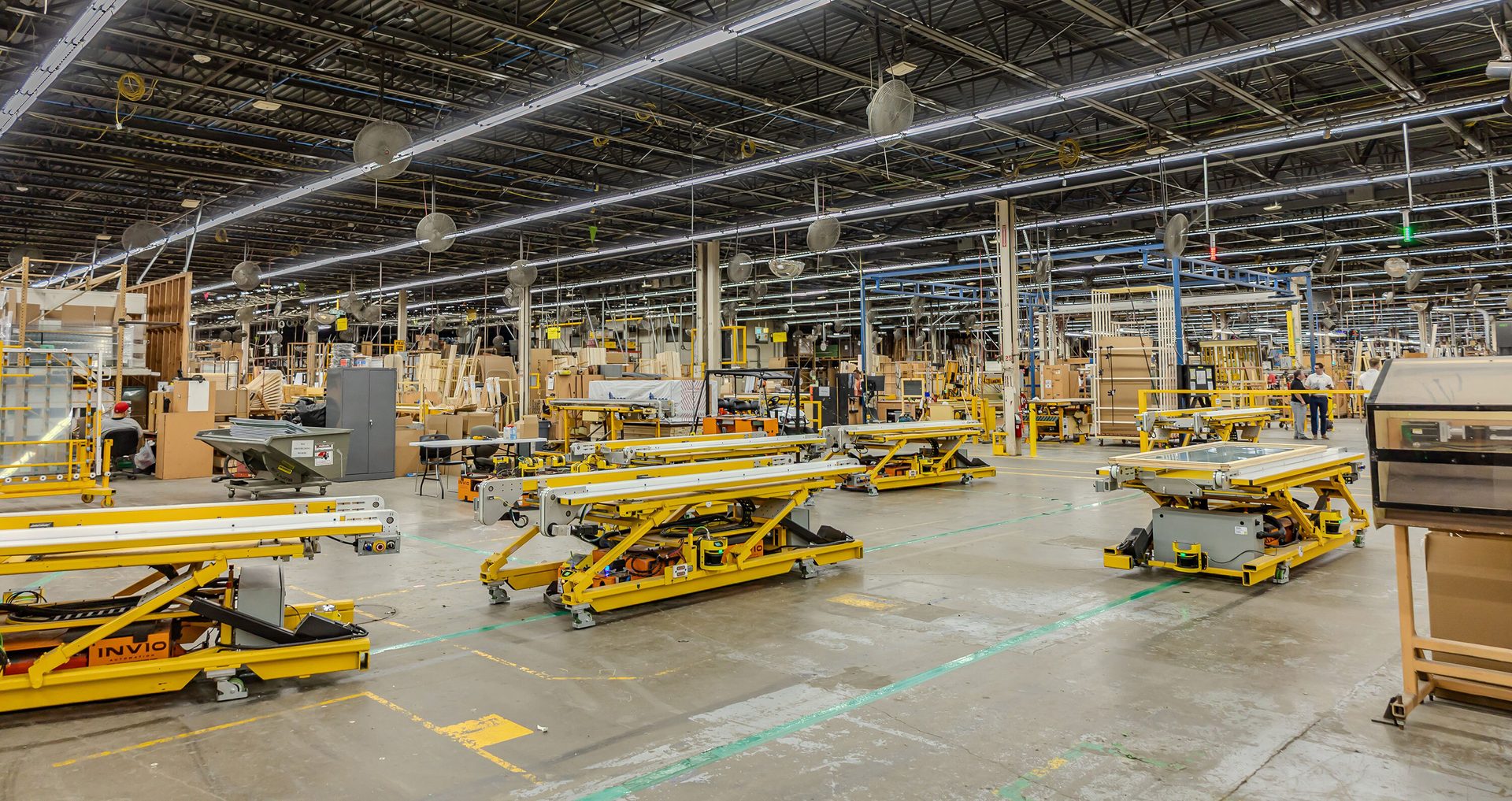
A fleet of automated guided vehicles are used to produce doors. Photo courtesy Pella Corp.
Technology Tools
To support daily operations, Pella uses technology that helps teams stay aligned and make faster, more accurate decisions. For instance, digital traceability gives live status and location information for components, while dashboards show order progress and line performance in real time.
Automated scheduling, abnormality-response tools, guided workstations and automated vision checks help keep production on track and reduce errors. Robotics and automation add consistency, and digital work instructions make complex builds easier for assemblers.
“Together, these tools help us manage variability and deliver custom products on time and with the quality customers expect,” says Phillips. “By integrating these technologies, we have transformed build-to-order manufacturing from a challenge into a competitive advantage—delivering custom products with speed, precision and quality.”
Several years ago, Pella implemented dynamic work instructions to improve productivity. In fact, the company recently received the Future of Manufacturing Award from the National Association of Manufacturers for the initiative.
“Voice-directed work technology has been a key enabler for reducing errors in processes where our team members are faced with a high level of job complexity,” says Turnbull. “By integrating voice-directed workflows with product configuration data from our ERP system, we are able to provide very specific instructions that dynamically change based on product attributes like size, color or glass type.
“These instructions are used in parts picking stock rooms to ensure the correct part is selected for a given unit,” explains Turnbull. “We also use [the technology] at workstations to ensure machines are set up correctly or the correct assembly steps are taken. All of these [tools] drive productivity by reducing material waste and labor inefficiency that results from making mistakes the first time through.”
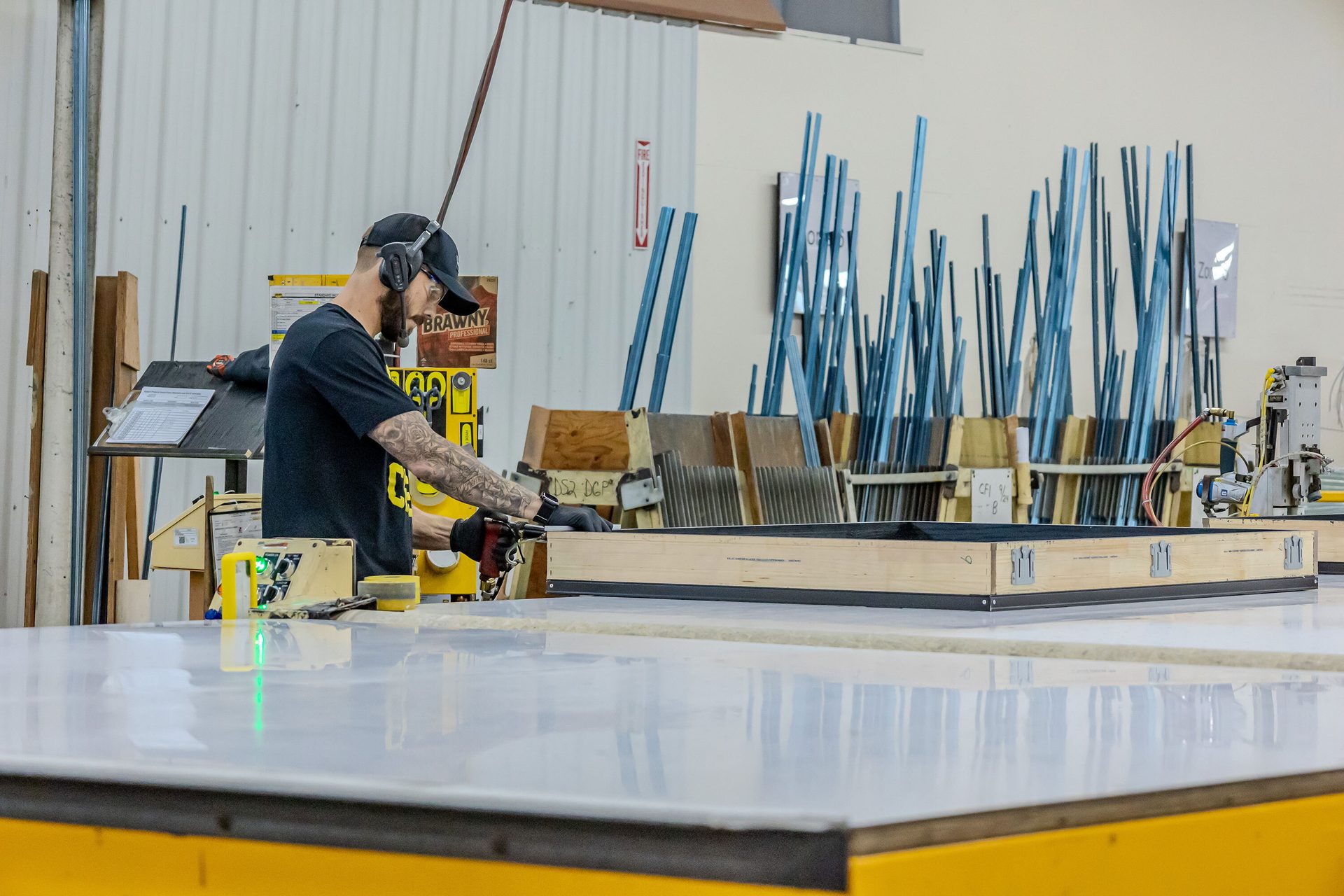
More than 90 percent of production activity at Pella’s flagship factory involves build-to-order products. Photo courtesy Pella Corp.
Voice-directed work has helped Pella dramatically reduce the amount of time required to train new employees. It also enables the company to hire a more diverse workforce, because the system can easily switch between languages. Benefits have included a 90 percent reduction in training time, while maximizing productivity and reducing employee anxiety.
“There are a lot of decisions that assemblers need to make every day because of the complexity of build-to-order production,” says Phillips. “That can be especially challenging for new employees.
“Our voice application provides instructions via a headset that enables people to be productive in a short amount of time,” explains Phillips. “The multilingual feature has enabled us to attract more talent, such as bilingual and non-native English speakers.”
Pella has also applied technology to its world-class wood processing operation, which handles thousands of feet of lumber every day. Improvements since 2020 have included a new dust collection system and a rough lumber milling operation that optimizes the ripping and chopping of rough lumber.
Automation has improved lumber yields and reduced waste. For instance, a vision-based scanning system identifies the best use for each board and ensures that cuts are made accordingly.
In addition, Pella currently is in the process of automating the finger jointing process, which is a method used to combine short pieces of wood into longer components. The goal is to increase throughput and eliminate the repetitive job of manually feeding blocks of wood into a machine.
Automation Improves Productivity
During the last five years, Pella has been investing in automation to streamline its operations and reduce assembly costs. By embracing artificial intelligence, automated guided vehicles, data analytics, digital tools, robotics and other cutting-edge technology, the company hopes to impress next-generation employees and show them that a career in manufacturing can be smarter, safer and more collaborative than most people think.
Pella deploys technology where it makes sense for the betterment of workers and the bottom line. That strategy is helping the company manufacture higher quality products and get them to customers faster. Automation is also making the workplace safer, more ergonomic and more pleasant, enabling workers to focus on innovation and craftsmanship.
“There’s more automation today and less physical labor in our factory than in the past,” says Phillips. “While we still have a lot of manual operations, it’s becoming more digitized and supported by physical automation.”
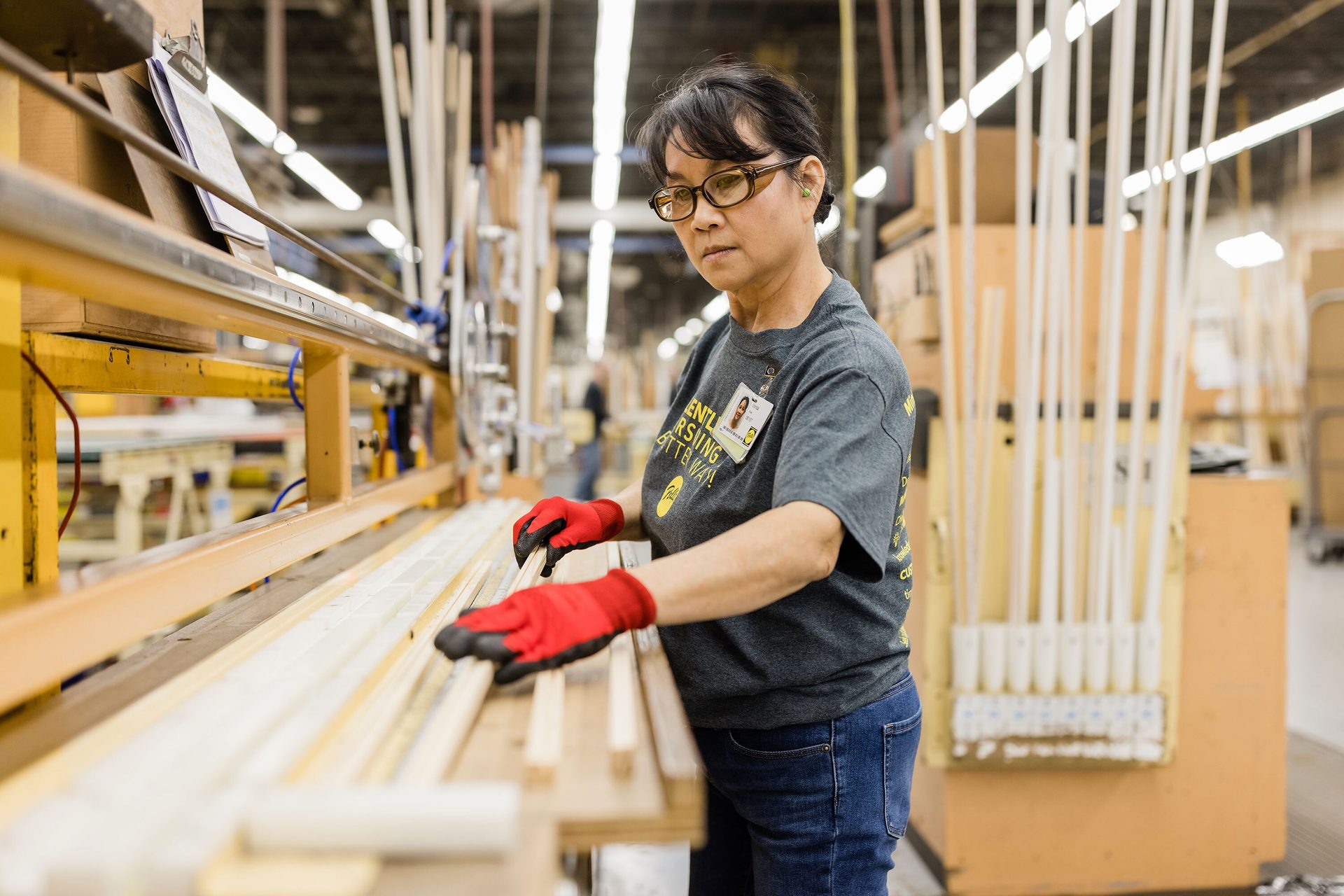
A flexible scheduling initiative recently improved employee retention by more than 50 percent. Photo courtesy Pella Corp.
To eliminate complexity and repetitiveness on the factory floor, Pella began investing in robots several years ago. Employees who were once manually sanding wood window and door frames, for example, were able to move into less physically demanding roles for equal or higher pay.
“Our automation and robotics improve efficiency and consistency, but the real advantage comes from designing the system to produce the right result the first time,” claims Phillips.
In early 2025, the sliding door assembly department implemented an automated workcell that features six-axis robots and automated guided vehicles. Ten robots and a fleet of 28 AGVs assemble and transport door panels that can weigh up to 300 pounds each.
The AGVs address ergonomic concerns by automatically adjusting to the preferred operator height. They also help prevent dents, dings and scratches that were sometimes caused by traditional material handling methods.
“Real-time visibility into what’s on the line, station by station, helps us balance flow and build the exact mix customers need,” says Phillips. “Automation also produces detailed unit-level data and cycle times, giving our teams the insights they need to drive ongoing improvements as production scales.”
Another robotic assembly application at Pella is a 3D inline bead inspection system that ensures consistent sealant is applied to windows. A state-of-the-art AI-based vision and adaptive process control system inspects the bead in real time, capturing 400 images per second along the entire dispensing path. It automatically detects even the smallest gaps or inconsistencies in the sealant bead, eliminating potential leaks before they happen, while improving throughput and overall production efficiency.
Safety is always the No. 1 priority in Pella’s factories. Whether it’s air tables to reduce the forces required to move a product from one station to another or utilizing powered tilt tables and overhead manipulators, safety is the focus of every automation initiative. That was one of the reasons why Philips and her manufacturing engineering colleagues decided to incorporate AGVs into the new wood door assembly system.
“It’s flexible, which enables us to build sliding doors, front doors and hinged patio doors all on the same line,” says Phillips. “With attribute-level scheduling and workstation routing, we can handle a ton of variation while not being constrained by one attribute.”

Pella’s corporate headquarters and flagship factory are in a small town in central Iowa. Photo by Austin Weber
Line Softening
Pella also continues to invest heavily in “line softening” efforts that help minimize the chances of products being damaged during movement through assembly. This involves regular inspection and preventative maintenance on equipment and workstations to eliminate potential problem areas.
“Maintaining an innovative edge is critical to our strategy at Pella, and advancements in AI represent an unprecedented opportunity to optimize manufacturing processes and quality controls,” says Turnbull
For instance, a maintenance chatbot helps troubleshoot and solve problems. AI-powered digital assistants support employees with on-the-spot troubleshooting while also serving as living knowledge libraries, preserving expertise as older generations of workers retire.
Pella’s AI Maintenance Doctor is an agentic AI system that leverages more than 20 years of historical equipment and maintenance data. Using that deep contextual understanding, it actively monitors machinery, diagnoses faults, prescribes fixes and even recommends needed parts based on historical fixes.
The system has already been deployed at more than 14 Pella factories, resulting in significant improvements in machine uptime. This has directly reduced costly production delays, improved workflow stability and elevated throughput across plants.
Pella is also harnessing data analytics technology to drive performance and improve productivity on its assembly lines.
“Data and analytics are built into daily factory workflows to help teams see issues early, act quickly and continuously improve,” explains Turnbull. “Factories recover faster, maintain sequence discipline, reduce scrap, and improve throughput and on-time delivery. These analytics-driven practices are now part of everyday routines across our plants.”
Pella engineers focus on several areas, including:
• Real-time visibility. “Digital traceability shows live status and location of materials and made-to-order components, helping [us] prevent delays and maintain flow,” says Turnbull. “Dashboards highlight sequence adherence, shortages and abnormal orders at a glance.”
• Personal-based reporting and shop‑floor accountability. “Coordinators, supervisors and managers receive metrics tailored to their responsibilities, whether it’s inventory, work in process, line health or abnormal orders, enabling faster, data-driven decisions and improving on-time shipments, labor efficiency and scrap,” notes Turnbull.
• Standardized digital processes. “Common signals, transaction methods and tracking standards across plants ensure the same action occurs everywhere, reducing waste and speeding problem-solving,” Turnbull points out. “Exception tools keep urgent parts visible to the right teams.”
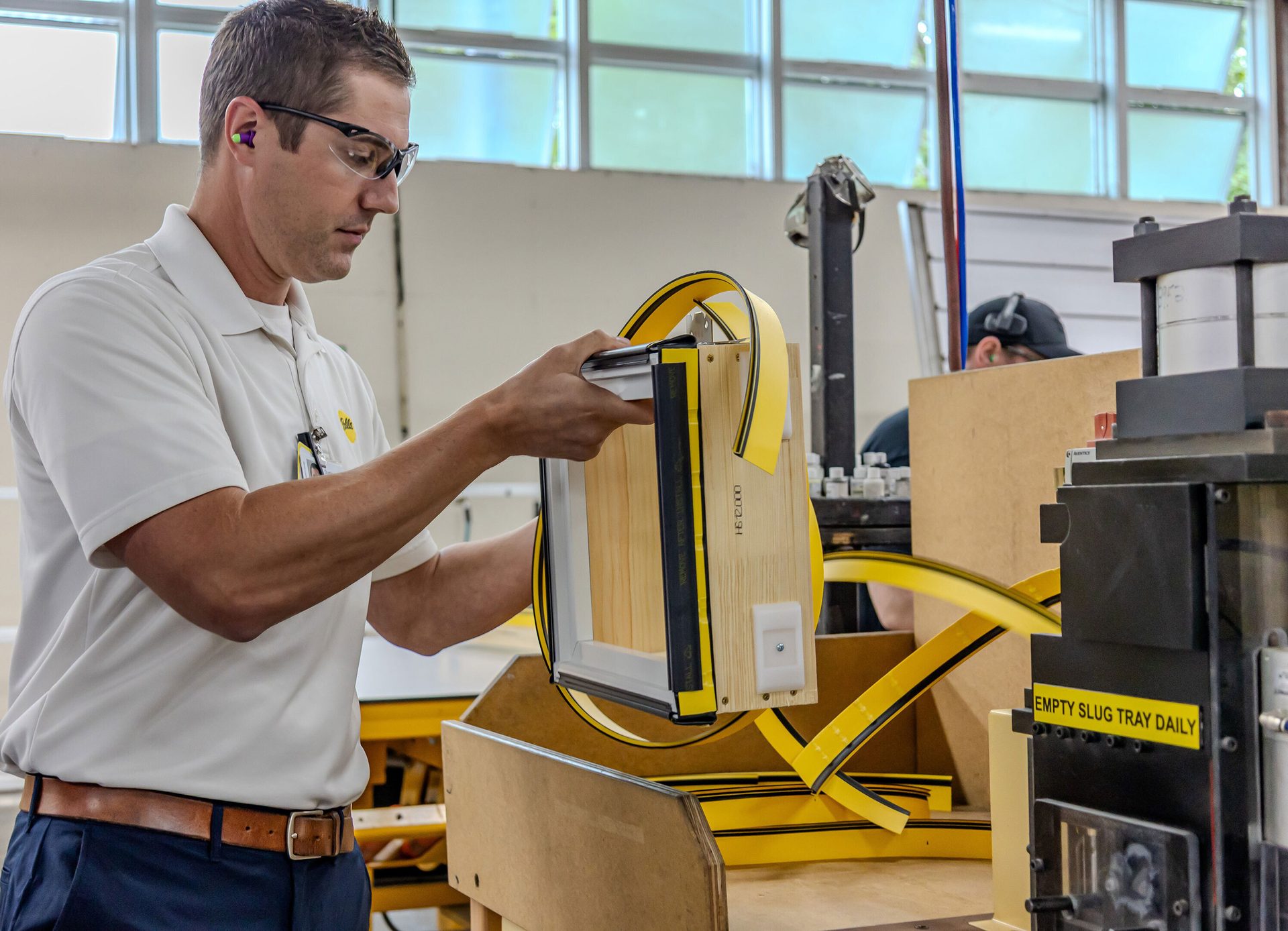
A digital verification system ensures that every Steady Set window has installation hardware that is configured correctly for each customer. Photo courtesy Pella Corp.
People Power
Like all manufacturers, Pella has been faced with labor shortages and workforce development challenges. However, unlike some companies in rural communities that have the luxury of being the biggest employer for miles around, it has to share the local talent pool with another company: Vermeer Corp.
The industrial and agricultural equipment manufacturer is also based in Pella. It operates a large factory located on the northeast side of town that produces everything from hay balers to pipeline trenchers.
As part of its commitment to the local community, Pella works closely with local schools and youth groups to build awareness and interest in manufacturing and STEM careers.
“Across our facilities, teams partner with K-12 districts and colleges to give students a firsthand look at modern manufacturing and the career paths available to them,” says Phillips. “Many of these informal partnerships begin at the local plant level.
“[We] host one-day job shadows that give students exposure to real roles and day-to-day operations,” explains Phillips. “We regularly host students on-site to show how manufacturing works and what a career at Pella can look like. Team members also visit classrooms to lead demonstrations that spark interest in engineering and problem-solving.
“On college campuses, we collaborate with student organizations and academic programs to connect with future engineers and technologists,” notes Phillips. “These include Women in Science and Engineering, industrial engineering and industrial technology groups, and mechanical engineering capstone teams.
“[We] also volunteer with local science centers to support hands-on learning,” says Phillips. “Many students we meet through these efforts later join our team.”
As part of its workforce development initiative, three years ago, Pella implemented a flexible scheduling initiative to enhance workplace wellness. The flexible schedules are designed to improve consistency in overtime requirements, time off and a better work-life balance.
The change improved employee retention by over 50 percent and allowed long-serving employees to scale back their hours while retaining full benefits. The addition of flexible schedules has also attracted more talent, enabling Pella to increase its manufacturing workforce by 45 percent.
ASSEMBLY ONLINE
For more information on dispensing equipment, visit www.assemblymag.com to read these articles: