
Robotics
Video:BugTiger / Creatas Video / Getty Images; Graphic: extracoin / iStock / Getty Images Plus
New products include a mobile, dual-armed robot and an AI-powered welding robot.
Robotics Technologies Transform Manufacturing

JJ Moore // Multimedia Editor
As robotics evolves beyond fixed automation, manufacturers are adopting a new generation of systems designed for flexibility, intelligence and real-world adaptability. In some cases, that shift is being driven by emerging concepts, such as physical AI, where machines can sense, adapt and make decisions in real time on the factory floor.
From AI-driven welding and mobile two-armed robots to advanced simulation software and high-performance collaborative systems, today’s technologies are enabling more responsive, data-driven production environments. This roundup highlights the latest robotics innovations aimed at improving throughput, simplifying deployment and helping manufacturers address ongoing labor and process challenges.
Mobile Dual-Arm Robot Expands Flexibility in Factory Automation
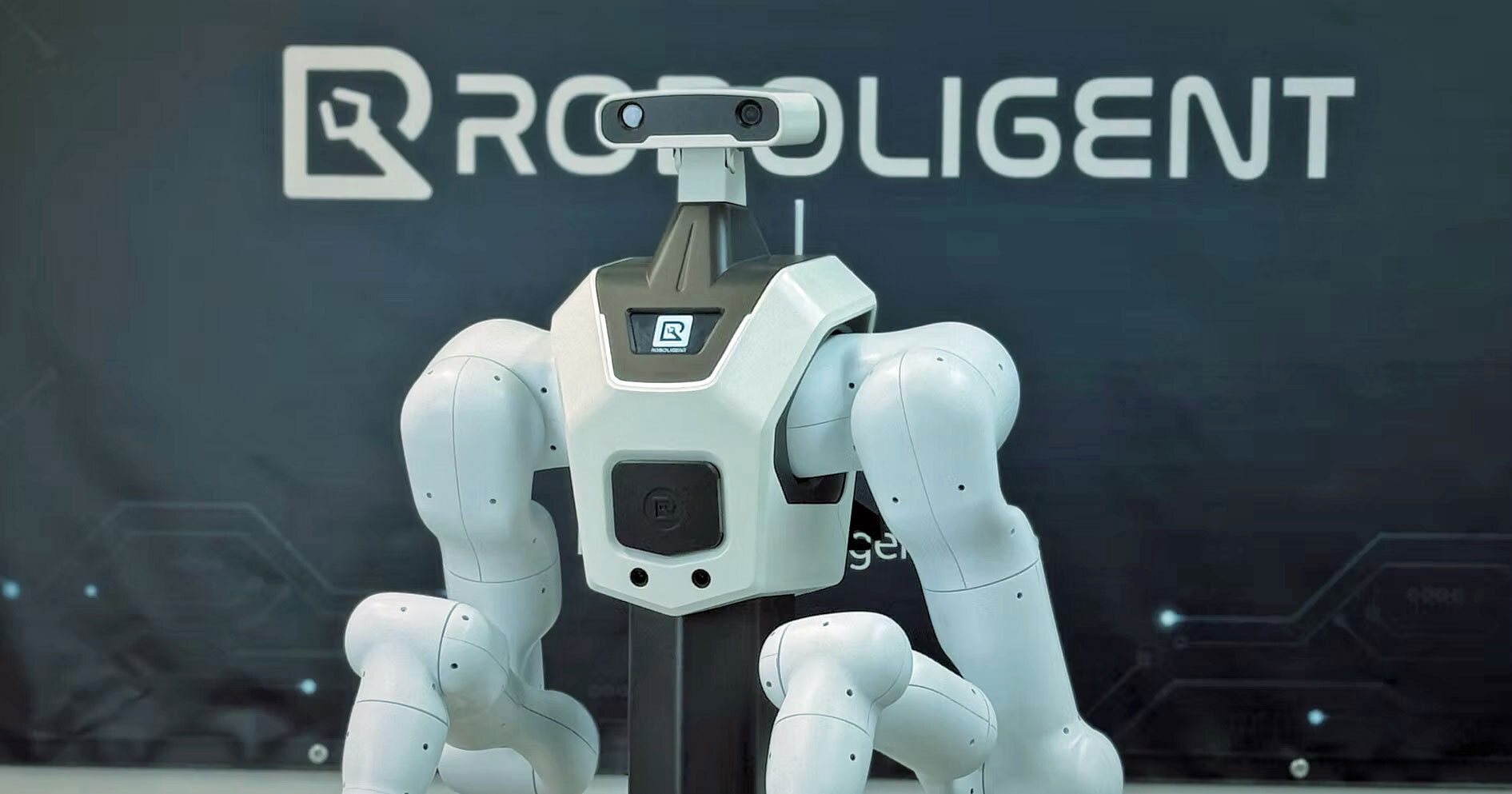
Roboligent has developed Robin, a mobile, dual-arm robot designed to automate machine tending and material handling tasks. The system combines a mobile base with compliant “soft robot” arms to navigate complex environments and perform delicate operations with human-like dexterity.
Robin is designed to automate loading and unloading of materials from CNC machines, presses and other equipment, using real-time communication with multiple machines to optimize workflows and increase overall productivity.
Using imitation learning, Robin can be trained through demonstration rather than traditional programming, reducing setup time and enabling rapid task adaptation. The robot can manage multiple machines simultaneously, optimizing workflows based on machine status and production schedules to improve overall efficiency.
Roboligent Inc.
Next-Generation Robot Simulation Software Enhances Automation Design
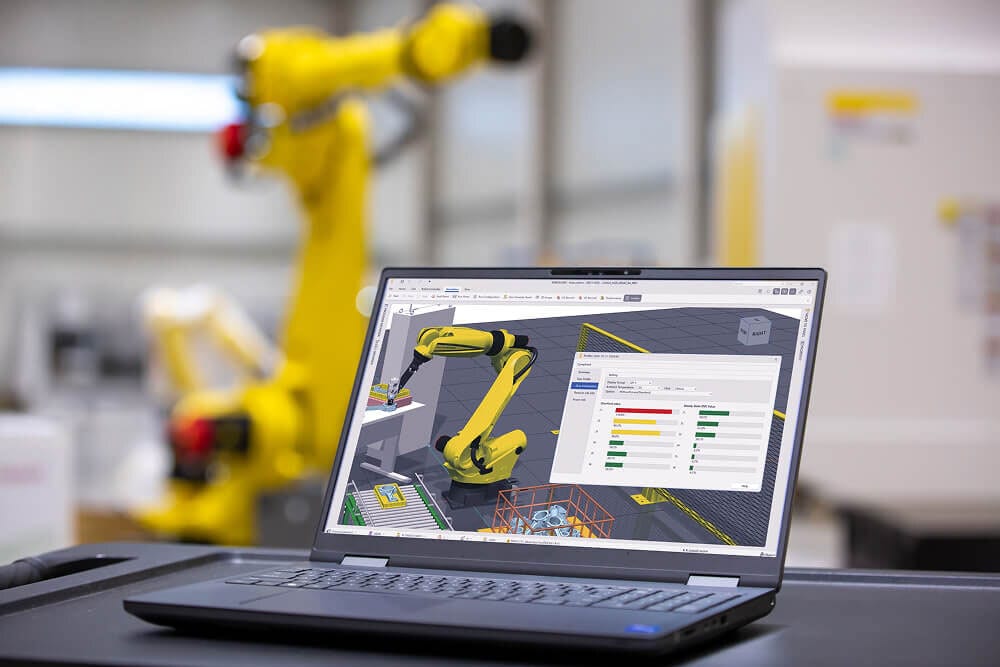
FANUC has released Roboguide Version 10, the latest iteration of its offline robot programming and simulation software, designed to improve efficiency, visualization and user experience. The platform enables users to create, program and simulate robotic workcells in 3D without physical prototypes, helping reduce costs and improve accuracy in automation planning.
The updated software introduces virtual reality capabilities that allow users to interact with simulated workcells in an immersive environment. Additional enhancements include a high-performance 64-bit architecture for improved processing power, a modernized user interface with drag-and-drop functionality, and expanded support for native CAD file imports to streamline system design and integration.
Fanuc America Corp.
AI-Powered Welding Model Brings “Physical AI” to Manufacturing
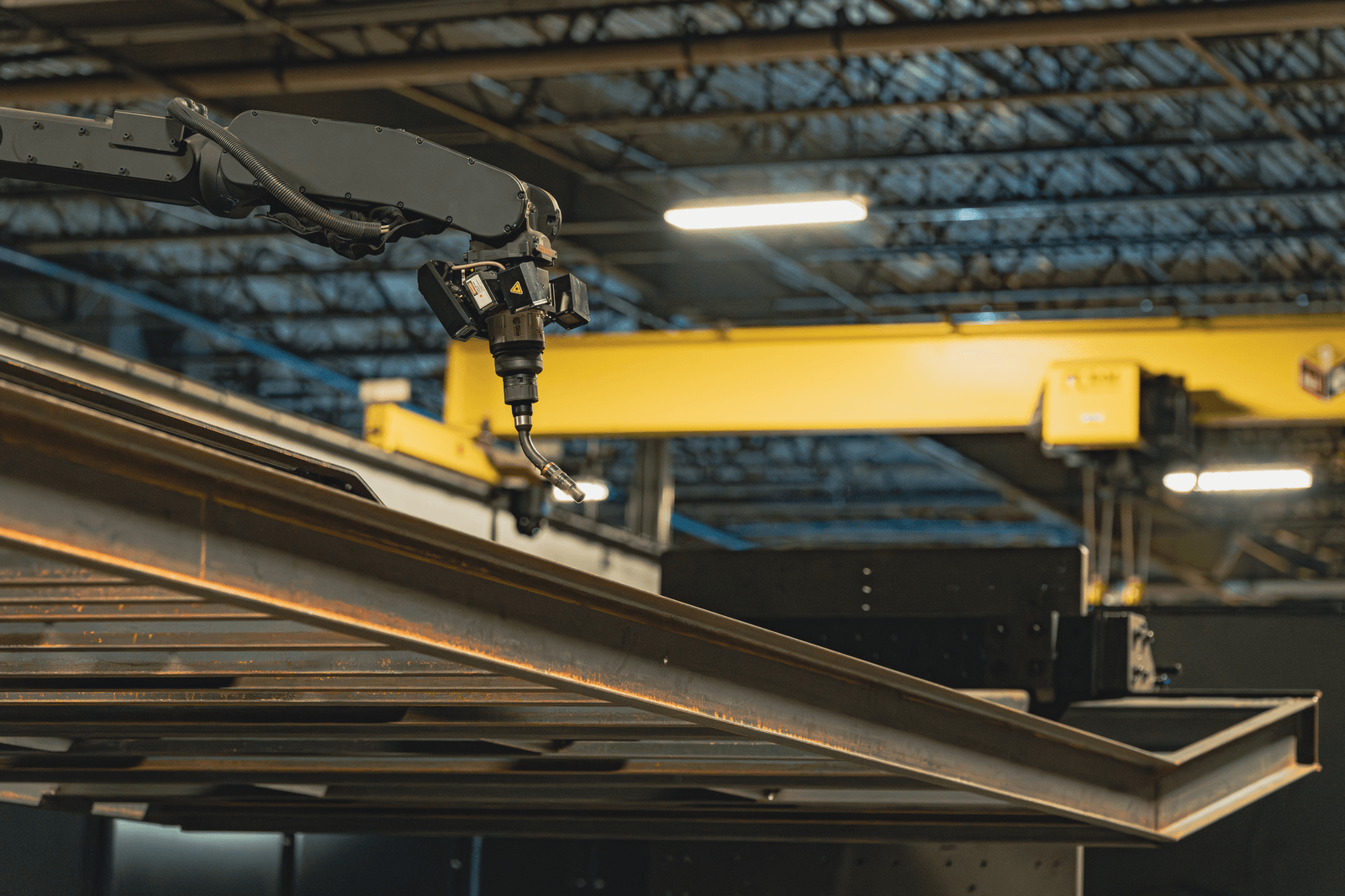
Path Robotics has introduced Obsidian, a foundational AI model designed specifically for welding applications. Trained on tens of millions of welded inches, Obsidian moves in the direction of physical AI, bringing machine intelligence to metal fabrication.
The system uses a proprietary vision system to scan every welding seam using lasers and optics. This data is used to develop weld and path plans in real time. During welding, the system monitors the weld pool and seam, adjusting for heat distortion as the process progresses to maintain consistent quality.
Obsidian enables autonomous operation by allowing the system to determine what to weld, where to weld and how to weld, while continuously adapting to changing conditions. Designed for high-mix, low-volume environments, the technology reduces the need for precise fixturing and repeated reprogramming, while improving throughput and helping address ongoing labor shortages.
Path Robotics
Heavy-Duty Collaborative Robot Combines Speed and Payload
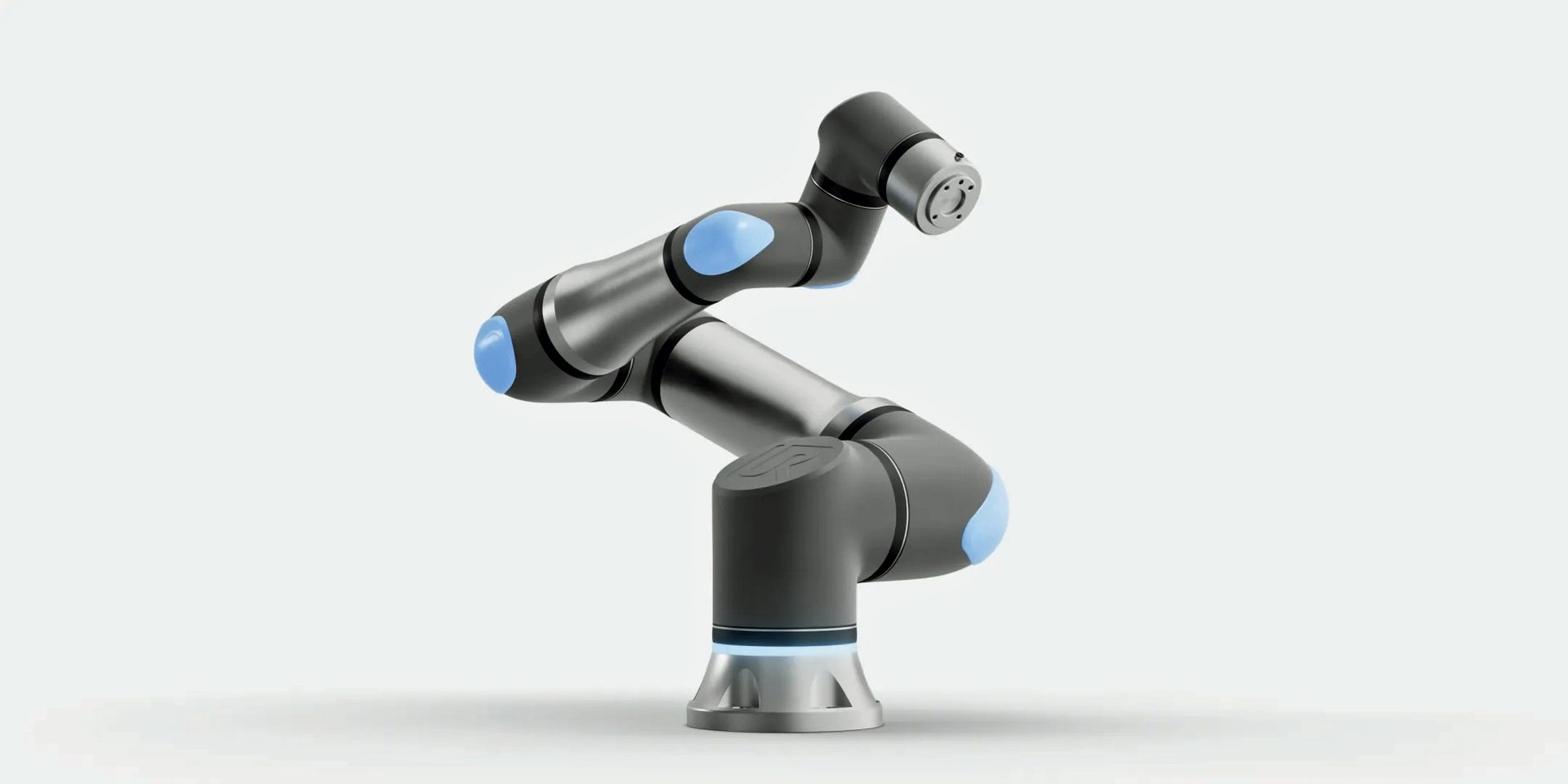
Universal Robots has expanded its portfolio with the UR18, a cobot designed to deliver high payload capacity and fast motion in a compact form. The system features a 950-millimeter reach and motion speeds up to 4 meters per second, making it suitable for pick-and-place, assembly and material handling applications.
Weighing 39 kilograms, the UR18 can be installed on standard gantry systems without major infrastructure changes. The robot includes advanced motion control capabilities and maintains compliance with safety standards for human-robot collaboration, supporting faster integration into production environments.
Universal Robots
High-Speed Cobot Advances Heavy-Duty Automation Performance
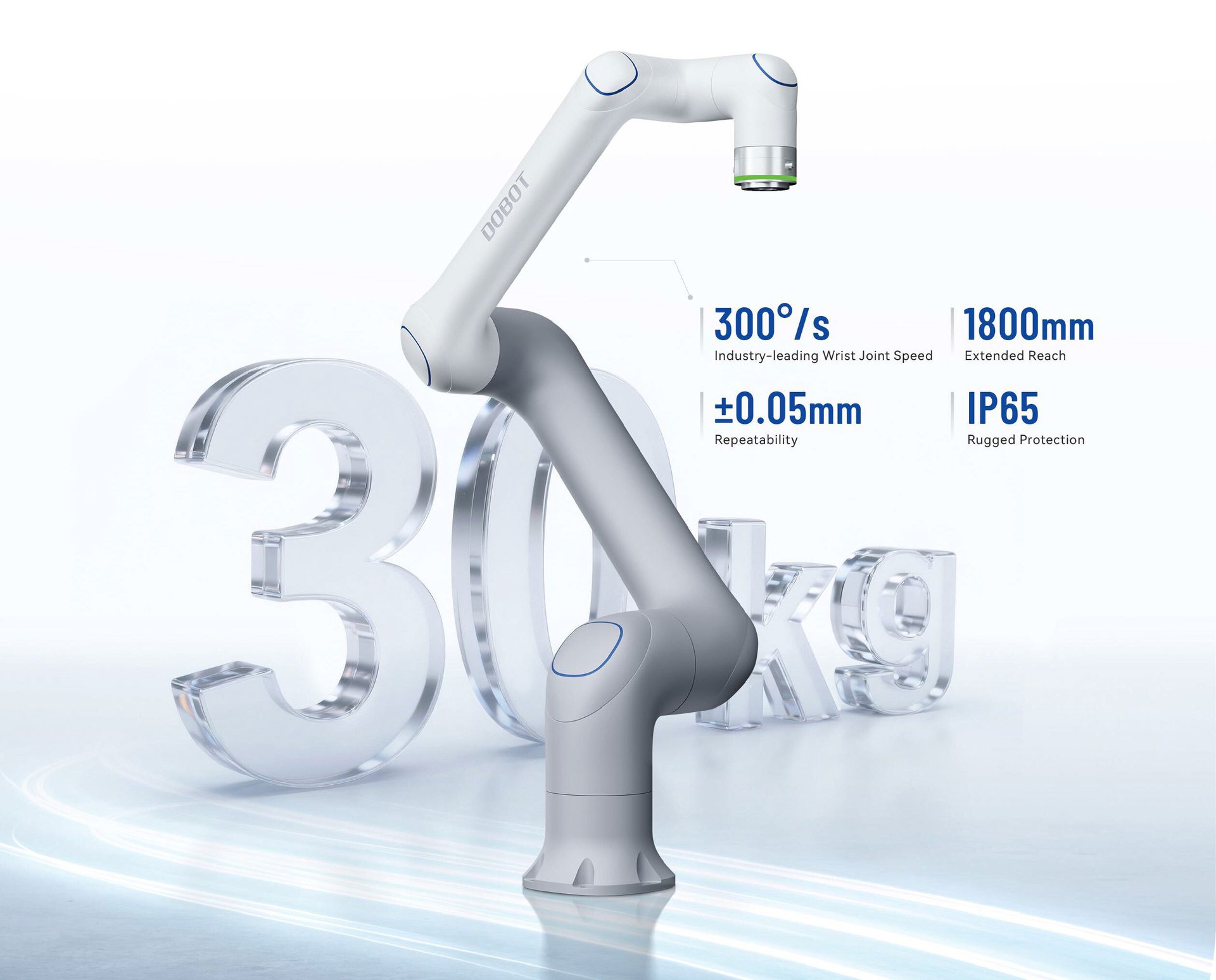
Dobot Robotics has introduced the CR 30H, a cobot designed to overcome traditional trade-offs between payload and speed. The system offers a 30 kilogram payload and joint speeds of up to 300 degrees per second, supported by motion control technology that increases efficiency by up to 20 percent.
With a reach of 1,800 millimeters and reduced vibration at full load, the CR 30H is suited for applications such as palletizing, automotive assembly and material handling. Variants include a touch-enabled model for drag teaching and a food-grade version designed for hygienic environments.
Dobot Robotics
Box Gripper Improves Reliability in Automated Packaging Lines
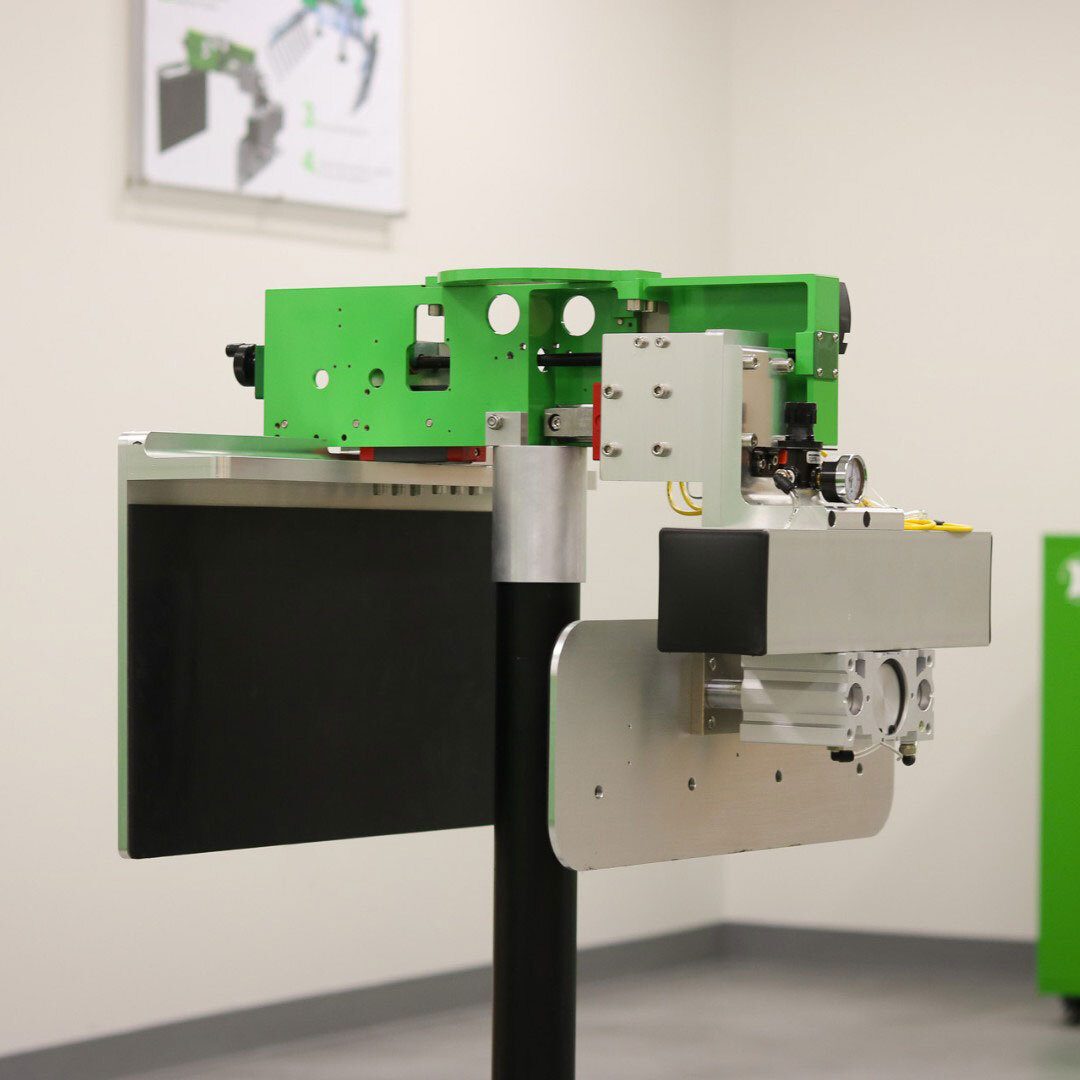
The Effecto Box Gripper is designed to handle cartons and packaged goods in palletizing and packaging applications. The pneumatically actuated system clamps boxes from the sides to maintain alignment and ensure consistent placement.
The gripper includes features such as failsafe payload support, adjustable clamps for different box sizes and integrated sensors to verify product presence. Designed for durability, the system can operate at more than 20 cycles per minute and integrates easily with robotic platforms.
Effecto Group
Force-Torque Sensor Adds Precision to Robotic Applications
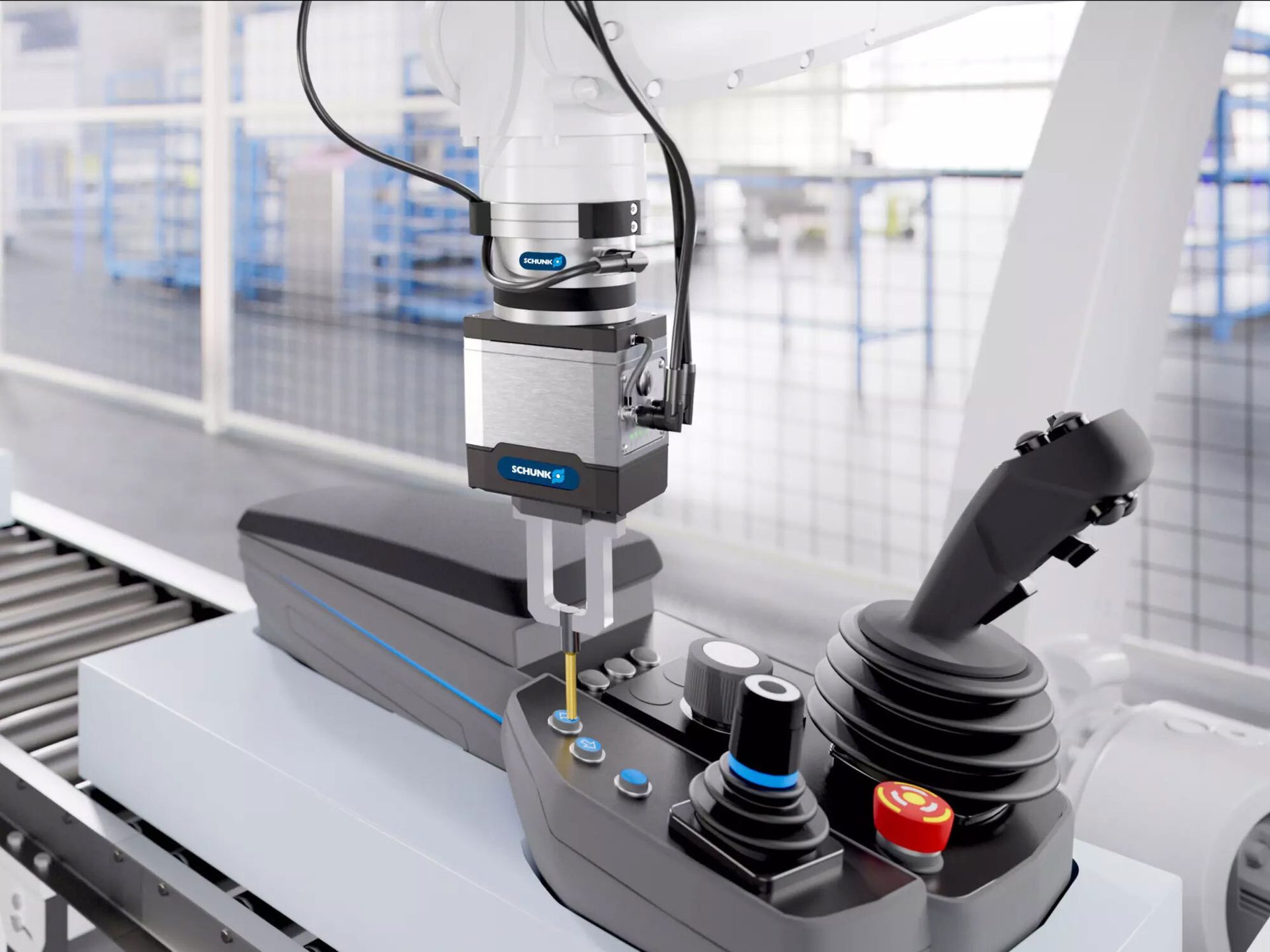
SCHUNK has introduced a six-axis force-torque sensor designed to improve precision and process reliability in automation. The sensor measures forces and torques across six degrees of freedom, enabling accurate monitoring and control in applications such as assembly, quality control and material processing.
By providing a “sense of touch,” the system allows robots to apply consistent contact force in delicate operations, such as battery module placement and electronics assembly, reducing damage and improving quality. High-resolution sensing and robust construction support reliable operation in demanding environments, while standardized mounting and industrial network compatibility simplify integration into existing assembly systems.
SCHUNK
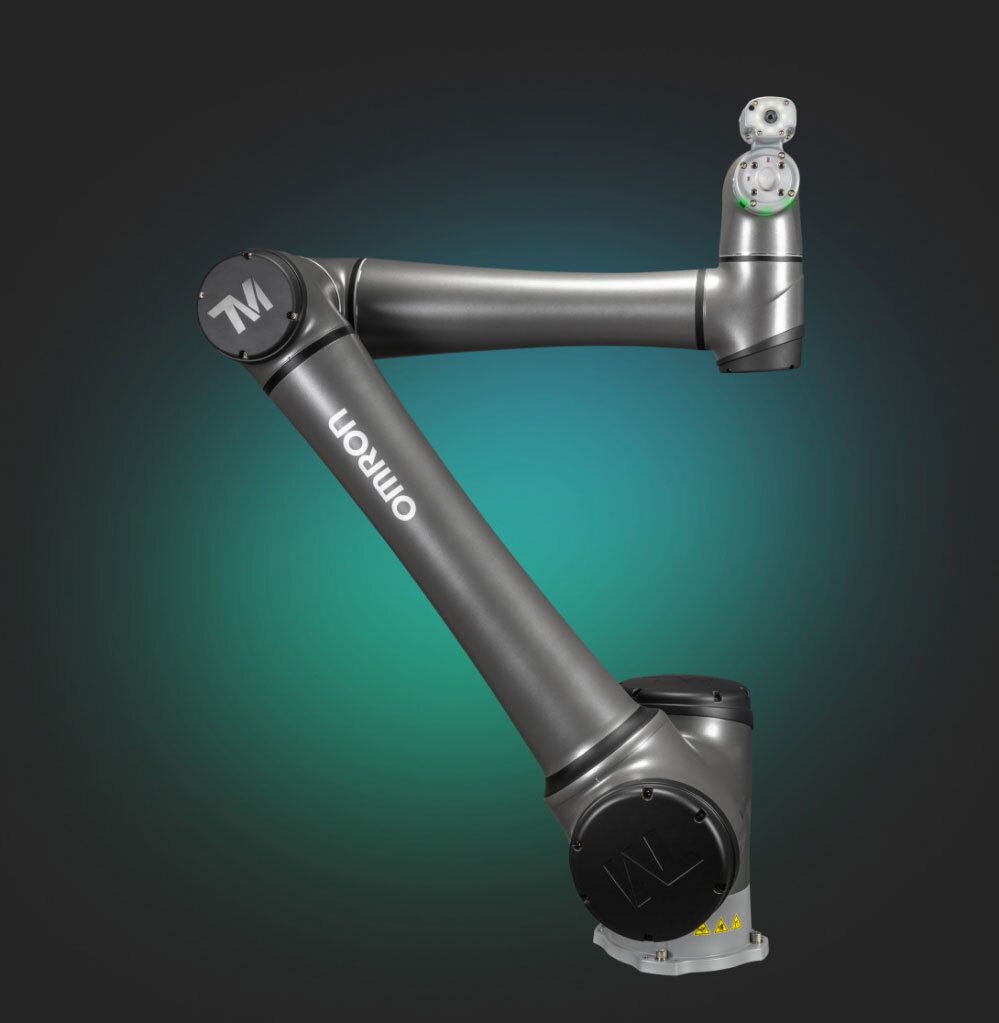
OMRON Robotics and Safety Technologies has expanded its TM S Series with three new collaborative robots and updated software capabilities. The new models offer payload capacities ranging from 6 to 30 kilograms, supporting applications such as palletizing, inspection, pick-and-place and precision assembly tasks.
Collaborative Robot Series Expands With New Models and Software
The updated platform includes hardware enhancements such as improved environmental protection and integrated force-torque sensing, enabling more precise insertion and delicate material handling. Vision-based positioning allows for faster redeployment across workstations, while built-in vision tools support inspection and part identification. Software upgrades add advanced safety configuration, remote operation and high-fidelity simulation for offline validation. The system is designed to support flexible production in high-mix manufacturing environments.
OMRON Robotics and Safety Technologies