MONTH 2023

Adhesives and Dispensing
Labor shortages are driving new demand for automation.
Options for Screwfeeding
The Audi Q6 e-tron can accelerate from 0 to 60 mph in 5 seconds. Photo courtesy Audi
High-strength polyurethane adhesives enable Audi to provide fast charging and a quiet ride.
Adhesives Play Key Role

in Electric SUV
John Sprovieri // Chief Editor
Some drivers resist adopting electric vehicles because they worry about limited driving range, performance and battery life. Drivers don’t want delays because their EV takes too long to charge.
These concerns were on the minds of engineers at German automaker Audi as they were designing the new Q6 e-tron SUV. Their goal was to ensure sufficient day-to-day capability without sacrificing performance. To meet that goal, the vehicle would have to charge very quickly without generating excessive heat.
The vehicle’s specs would suggest that they succeeded. The Q6 e-tron’s two drivetrains share the same 100 kilowatt-hour battery. The base powertrain consists of a single electric motor with 322 hp and 331 foot-pounds of torque. An optional powertrain consists of two electric motors that provide 456 hp and 427 foot-pounds of torque. The latter can accelerate from 0 to 60 mph in 5 seconds.
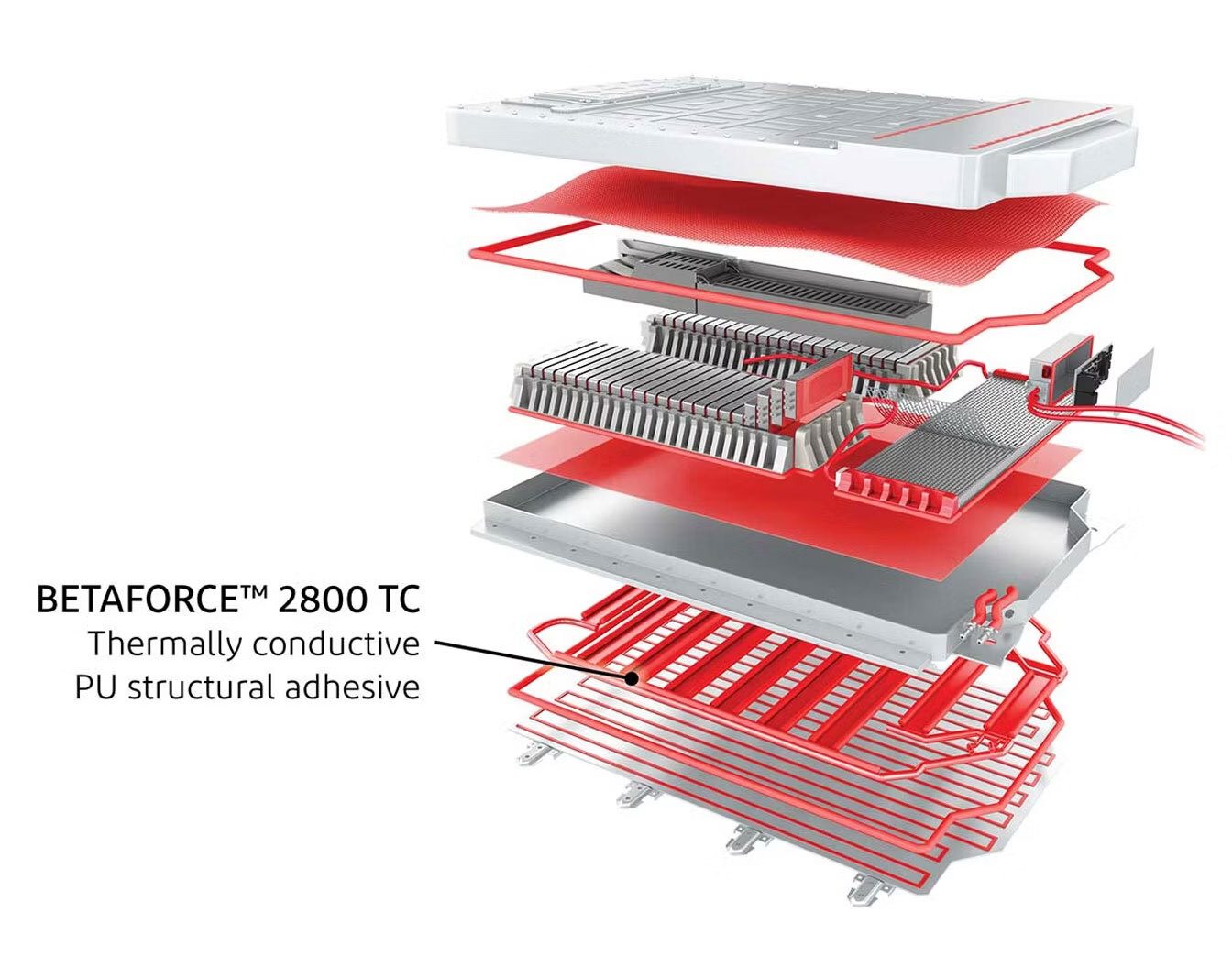
DuPont worked with Audi to formulate a version of Betaforce 2800 TC that would conduct heat away from the battery during charging and driving. Photo courtesy DuPont
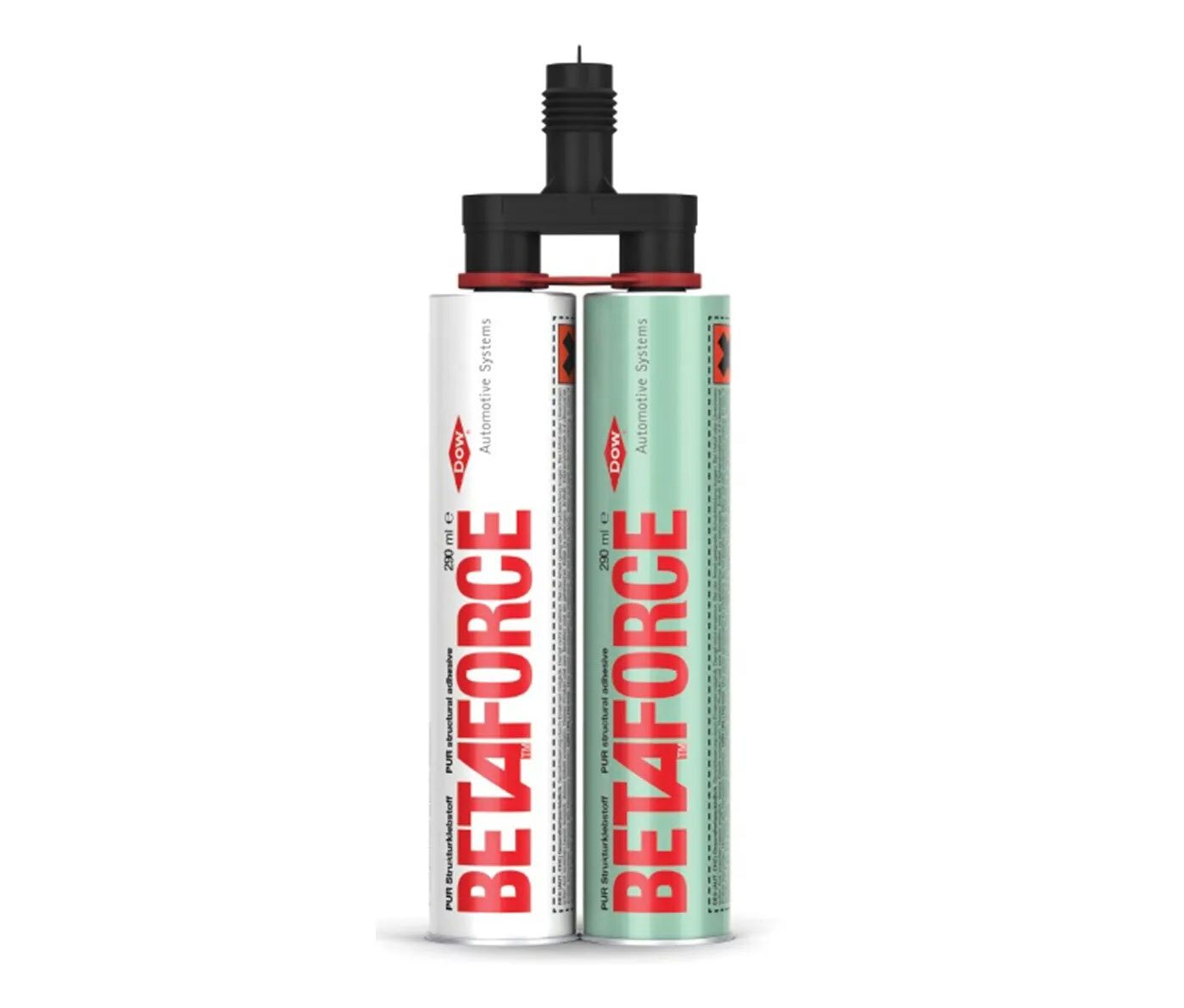
Betaforce 2800 TC is a two-component urethane adhesive that bonds composites and metals. Photo courtesy DuPont
The single-motor model with 18-inch wheels is rated by the EPA for up to 321 miles of range. (The all-wheel-drive version gives up some range in exchange for performance.)
Recharging is done through a CCS port, which can fully recharge the battery in about 14 hours using a Level 2 charger. Alternatively, the Q6 e-tron can DC fast-charge at up to 270 kilowatts, going from 10 percent to 80 percent in 22 minutes for rear-wheel-drive models and 21 minutes for all-wheel-drive versions.

A weather-resistant adhesive enabled Audi engineers to locate the battery back assembly in the floor of the passenger compartment, creating a low center of gravity for dynamic handling. Photo courtesy Audi
Adhesives Are Key
One of the biggest challenges in designing batteries for plug-in hybrid and electric vehicles is thermal management of the battery pack. Battery components must operate at the optimum temperature of 25 C while the car is running and below 60 C while charging.
Structural adhesives help engineers meet that challenge by performing triple duty: bonding components, protecting them from water and contaminants, and transmitting heat away from the battery pack.
For Audi, that adhesive was Betaforce 2800 TC from DuPont. This two-component urethane adhesive bonds composites and metals in a variety of lightweight designs. It can be used to bond dissimilar materials, including steel to aluminum, carbon-fiber composites to steel or aluminum, and sheet molding compound to aluminum.

The good shear thinning behavior of Betaforce 2800 TC allows for fast dispensing to support high-volume production. Photo courtesy Audi
With a mix ratio of 1-to-1, the adhesive can be dispensed from bulk containers with standard meter-mix equipment. Formulations vary based on the specific vehicle and production process, reflecting variables such as viscosity, application temperature, conductivity, cure time, strength, temperature, and modulus of elasticity.
DuPont chemists worked with Audi engineers to formulate a version of Betaforce 2800 TC that would conduct heat away from the battery during charging and driving. The material’s combination of high elasticity and elongation helps ensure that the battery pack and the bonded substrates that support it will last over the vehicle’s lifetime.
The good shear thinning behavior of Betaforce 2800 TC allows for fast dispensing to support high-volume production. Testing confirmed that the adhesive’s properties meet or exceed Audi’s requirements for heat curing, mixer dwell times, pump pressures, and press-in forces.
Inspection System

Using an adhesive to assemble the battery pack brought design benefits, as well. The weather-resistant adhesive enabled Audi engineers to locate the battery back assembly in the floor of the passenger compartment, creating a low center of gravity for dynamic handling.
Recent formulations of Betaforce offer a cycle time of around one minute and are being used in a variety of mass-production applications, including Audi. Open times can be adjusted to accommodate specific mounting requirements on the assembly line, such as a faster curing time with infrared treatment. The initial adhesion requires no additional fixing tools.
ASSEMBLY ONLINE
For more information on adhesives and automotive assembly, visit www.assemblymag.com to read these articles: