FOCUS ON AEM

Electric vehicles pose new chassis challenges for engineers, such as packaging, structural reinforcement and crash management. Illustration courtesy ZF
New platforms change how engineers tackle strength, weight and handling challenges.
A chassis is the structural foundation that holds a vehicle together and keeps it stable on the road. It’s the skeleton or base frame that supports battery packs, power electronics, suspension systems and traction motors, plus the body itself.
In the EV era, this structure has taken on even greater importance, because it doesn’t just provide strength and stability; it also houses the most valuable parts of a car and plays a central role in handling, performance, safety and efficiency.
Despite the structural and power train differences between battery-electric vehicles (BEVs) and internal combustion engine (ICE) models, the fundamentals of chassis layout and final assembly remain largely consistent across both.
Many legacy automakers continue to build BEVs and ICE vehicles on the same production lines, particularly when both variants are based on the same underlying platform. In those cases, the floor pan, front structure, rear structure and suspension architecture remain broadly similar, with modifications made to accommodate different power train components.
“The layout of the chassis is not much different,” says Pedro Pacheco, vice president of research at Gartner Inc. “It is just designed to accommodate different types of components.”
Nathan Eddy // Contributing Writer
The key structural difference lies in how the floor pan is used. In an ICE vehicle, the floor pan sits directly beneath the occupants, with the fuel tank typically located under the rear seat. In a BEV, the battery pack occupies the space between the axles, requiring the cabin to sit above it.
The front and rear structures attached to the floor pan serve similar roles in both types of vehicles. These assemblies house the crumple zones, suspension mounting points and drivetrain connections.
In ICE vehicles, the engine and transmission are commonly mounted together as a single front axle assembly, while BEVs integrate electric motors, inverters, suspension and braking components into a comparable modular structure.
The process of joining these systems to the vehicle body is largely unchanged. At a defined point in final assembly—commonly referred to as the “marriage”—the complete lower assembly is raised up and attached to the body-in-white.
Once the lower assembly is attached, the vehicle follows a familiar sequence regardless of power train type. Interior wiring, cabin components, exterior panels and lighting systems are installed later in the process using the same methods applied to ICE vehicles.
Motion Index Drives delivers high-speed cam-driven indexing solutions—including the RTX350 rotary index table and high-speed precision link conveyors—designed to increase throughput and accuracy in electric vehicle battery manufacturing. These systems provide exceptional positioning precision and reduced index times to support faster, more reliable automated assembly processes.
Motion Index Drives
info@mid.us.com
www.motionindexdrives.com
High Speed Rotary and Linear Indexing Devices

The divergence becomes more pronounced upstream in the manufacturing of the components themselves. Battery systems, electric motors and power electronics introduce different production requirements than engines and transmissions, but once those components reach final assembly, the integration process follows established automotive practices.
This continuity helps explain why many legacy automakers have been able to introduce BEVs without completely reinventing their factories. Shared platforms and mixed-model assembly lines allow them to spread investment costs and maintain flexibility as EV adoption ramps up.
At the same time, the placement of the battery introduces new challenges for engineers, such as packaging, structural reinforcement and crash management. The battery becomes a central structural element, influencing everything from floor height to occupant seating position.
Heavy battery packs must be offset with lighter and stronger structural components to improve cornering and suspension load. That is driving demand for new materials and innovative designs such as “skateboard” platforms.
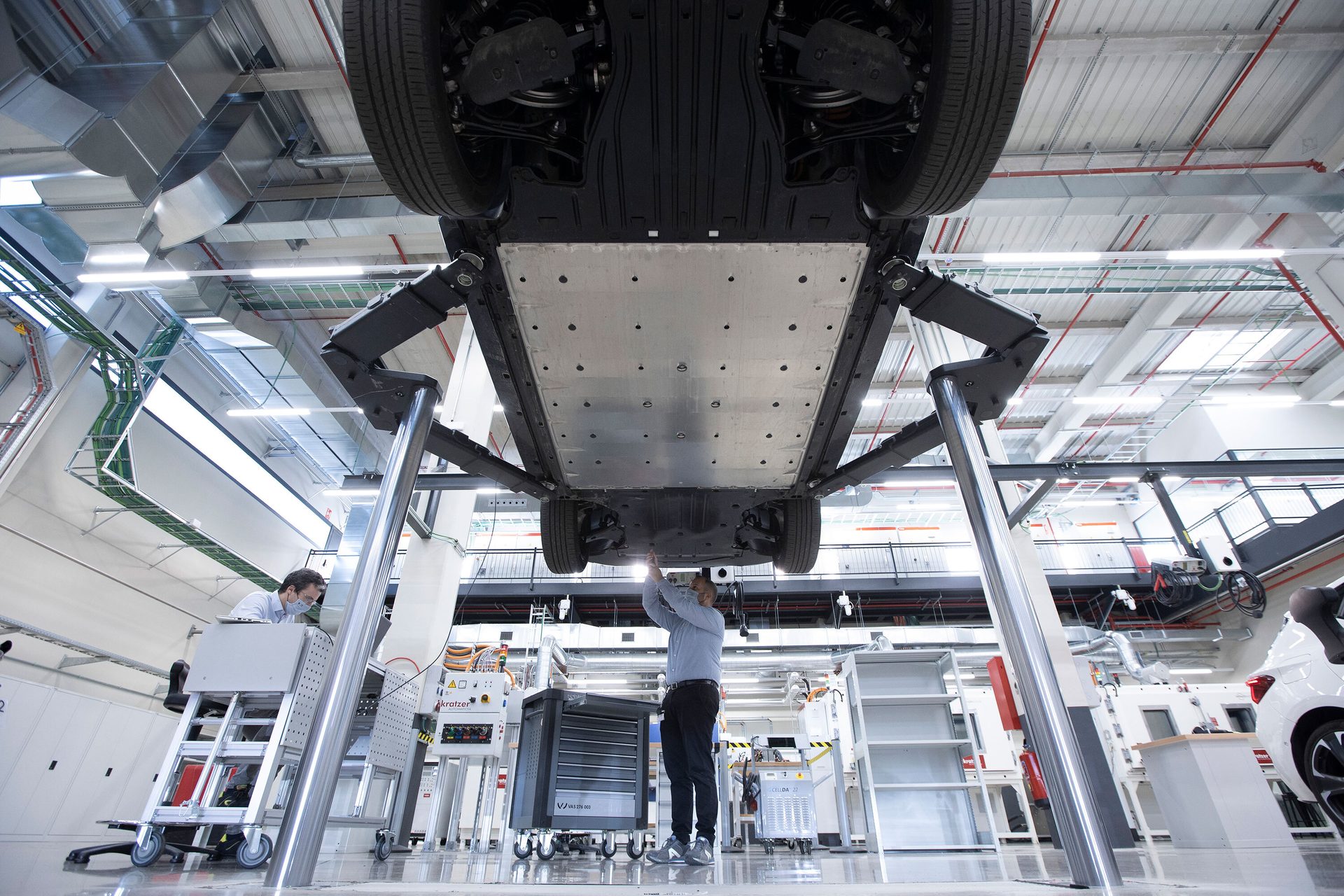
Many EVs use a skateboard chassis that mounts the battery low in the floor, improving rigidity, lowering the center of gravity and enabling sportier handling. Photo courtesy SEAT
Skateboards Drive EVs
Skateboard chassis are at the heart of most modern electric vehicles. This design places large battery packs flat along the floor of the vehicle, sandwiched inside a rigid protective tray.
Mounting the battery low and wide does two crucial things: it keeps the center of gravity stable, which improves handling and reduces rollover risk, and it frees up space inside the cabin because bulky engine components are no longer needed up front.
Bolted to this battery frame are several key components that determine how the EV moves and drives. Electric motors, usually mounted on one or both axles, provide power to the wheels. Because EV motors are compact and efficient, they can be installed where needed to create front-wheel drive, rear-wheel drive or all-wheel drive without the complex mechanical linkages that gas-powered cars rely on.
Next is the power electronics module, which acts as the control center for the motor and battery. It converts energy from the battery into the type of electrical power the motor needs and regulates how quickly the vehicle accelerates. This module also manages regenerative braking.
On top of the skateboard chassis sits the suspension system, which includes components like springs, dampers and control arms. These are essential for keeping the ride smooth, absorbing bumps and vibrations before they reach the cabin. Because batteries add significant weight, EV suspensions are often stronger and more precisely tuned than those in ICE cars.
Holding everything together is the body structure—essentially the shell of the car—which is attached to mounting points on the chassis. Automakers reinforce these joints with high-strength steel or aluminum because batteries, motors and electronics need protection in the event of a crash. Many EVs also use additional underbody shielding to guard the battery pack from impacts, road debris or punctures.
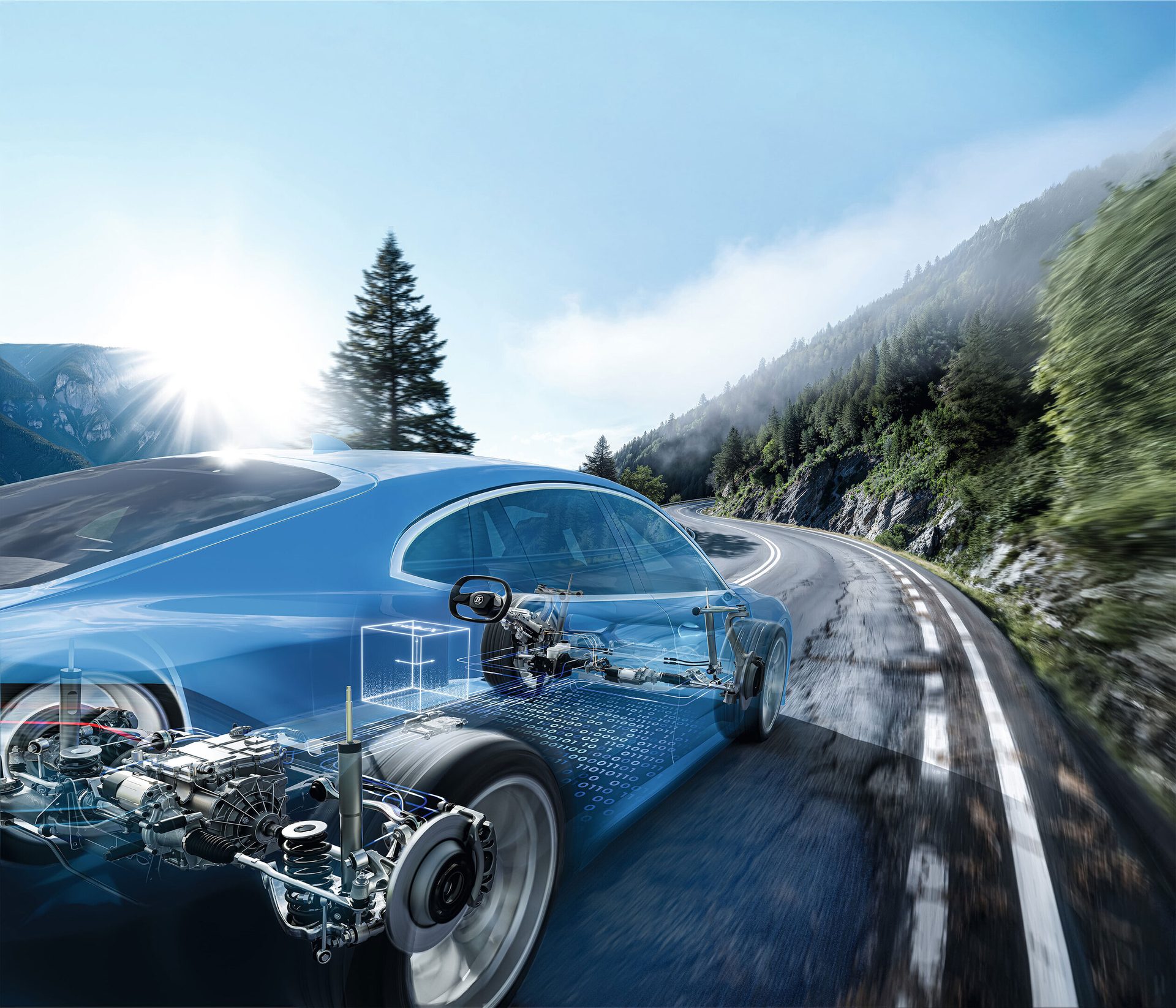
Heavy battery packs must be offset with lighter and stronger structural components to improve cornering and suspension load. Illustration courtesy ZF
Together, these elements form a tightly integrated system. The battery provides energy, the motor turns that energy into movement, and the suspension ensures stability and comfort. The chassis keeps everything aligned and protected.
The main difference in an EV chassis comes from the influence of the battery, mainly due to its high weight compared to an ICE vehicle.
“As a result, springs, shock absorbers and stabilizer bars need to be properly adjusted,” says Joan Roig, head of chassis development at SEAT, a Volkswagen brand in Europe that mass-produces compact EVs in Spain. “There is a strong impact on tire definition, especially in terms of diameter and width.
“At the same time, thanks to the battery integration, EVs benefit from higher body rigidity and a lower center of gravity, which allows us to define a sportier chassis setup for electric vehicles,” explains Roig.
“Regenerative braking through the electric motors also has an impact on brake behavior," Roig points out. "This is managed via electronic speed controllers, which allow brake blending—braking without hydraulic intervention.”
In addition, EVs offer different drivetrain configurations, all of which clearly influence the overall chassis setup.
“The chassis assembly process for EVs is currently very similar to that of ICE vehicles,” says Roig. “The main differences are related to the braking system, as EVs do not require vacuum pipes, vacuum pumps or related components.”
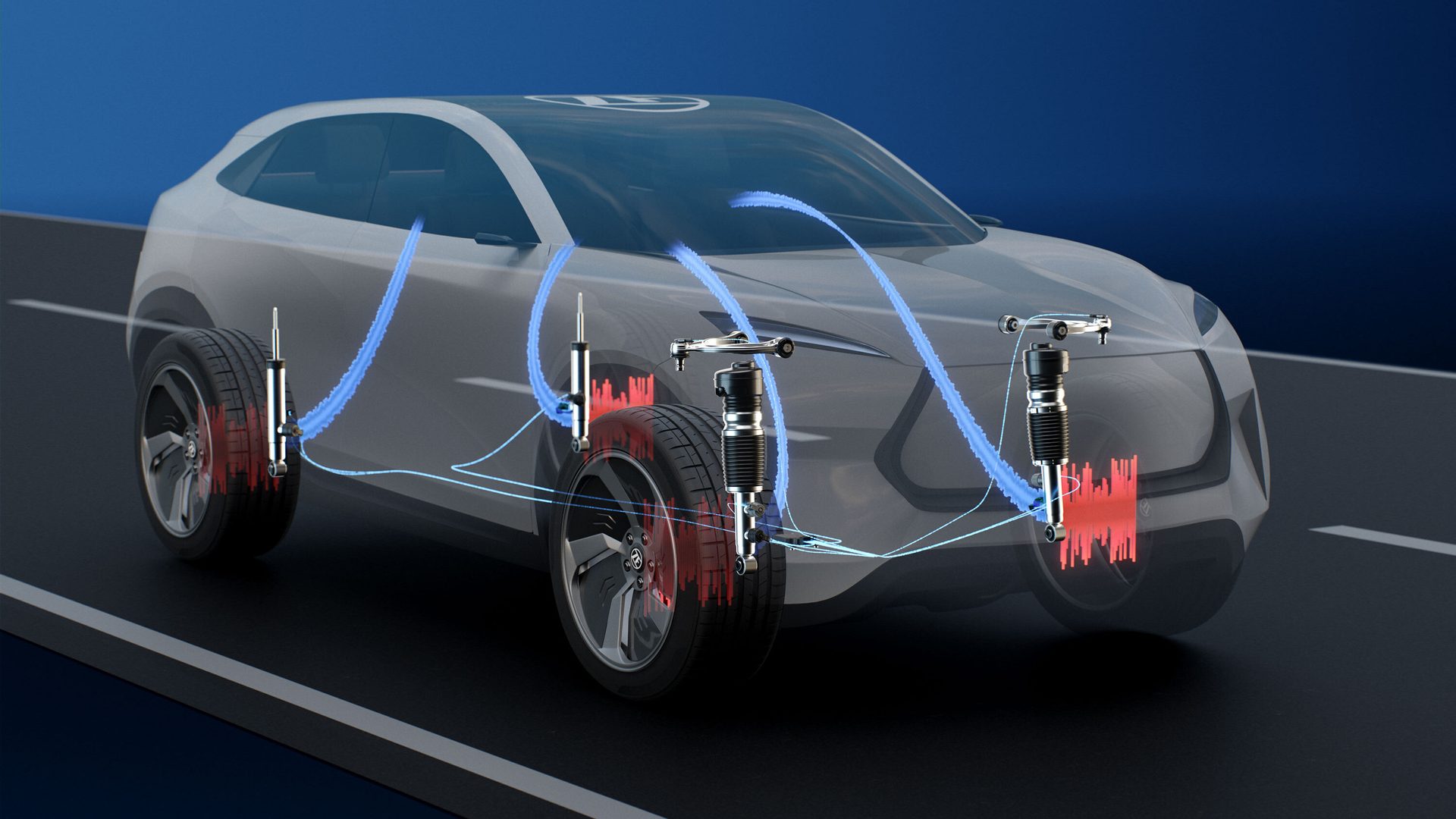
State-of-the-art sensors can adapt chassis in real time to changing road and surface conditions. Illustration courtesy ZF
Suppliers Play a Key Role
Although chassis assembly is the bread and butter of automakers, a handful of Tier One suppliers play a key role in developing and producing various components. Because electrification impacts chassis design, they are rethinking traditional approaches and methods.
For instance, at ZF, those changes are showing up less as a wholesale redesign of the chassis and more as a shift in requirements around weight, integration, automation and software. The company’s chassis portfolio spans braking, steering and suspension systems, in addition to structural components.
From a functional standpoint, the core building blocks of the chassis remain consistent across power trains. What changes are the operating conditions those systems must support.
With a battery-in-chassis approach, the battery becomes a structural element. That configuration lowers the vehicle’s center of gravity and improves stability, but it also tightens tolerances and raises demands on chassis components.
“We’re talking about up to 40 percent more weight for an electric vehicle,” says Philip Schuster, senior vice president of operations at ZF’s chassis division. “That directly affects the design and sizing of braking, steering and suspension components, along with the added weight from battery integration.”
The company’s manufacturing strategy emphasizes vertical integration in core processes, particularly as new technologies such as brake-by-wire and steer-by-wire move closer to mass production.
Material selection reflects the same balance between performance and manufacturability. ZF uses aluminum and steel extensively, while also expanding the use of plastics for weight reduction.
Automation plays a central role in ZF’s chassis manufacturing network, which includes 60 plants worldwide. The company relies on a mix of manual, semiautomated and highly automated assembly lines, with growing emphasis on “smart automation” such as cobots and autonomous mobile robots. It’s also deploying artificial intelligence technology across quality control, process monitoring and equipment maintenance.
“We are using AI in a camera system to detect deviations in the assembly process,” explains Schuster. “Predictive maintenance is another focus area, helping reduce downtime by identifying equipment issues before failures occur.
“The goal is to remain adaptable as EV platforms, manufacturing models and automation levels continue to evolve—supporting OEMs not just with components, but with integrated, production-ready chassis systems,” says Schuster.
At last month’s CES show in Las Vegas, ZF showcased its new Chassis 2.0 strategy, which combines smart hardware, artificial intelligence and software to “drive the transformation of the chassis into the digital age.”
One function is called AI Road Sense. It uses state-of-the-art sensors to adapt the chassis in real time to changing road and surface conditions. This raw data is then processed and utilized by ZF’s cubiX software to coordinate the control of smart actuators on semi-active and active damping systems. The latter reacts within 1 millisecond to adjust the dampers.
According to Schuster., future smart actuator integration will include steer- and brake-by wire for even more advanced control and capability.
ZF also recently unveiled active noise reduction software. The technology minimizes in-vehicle “tire-cavity” noise without additional noise-dampening hardware. It uses smart chassis sensors, as well as semi-active dampers, to counteract vibration noise.
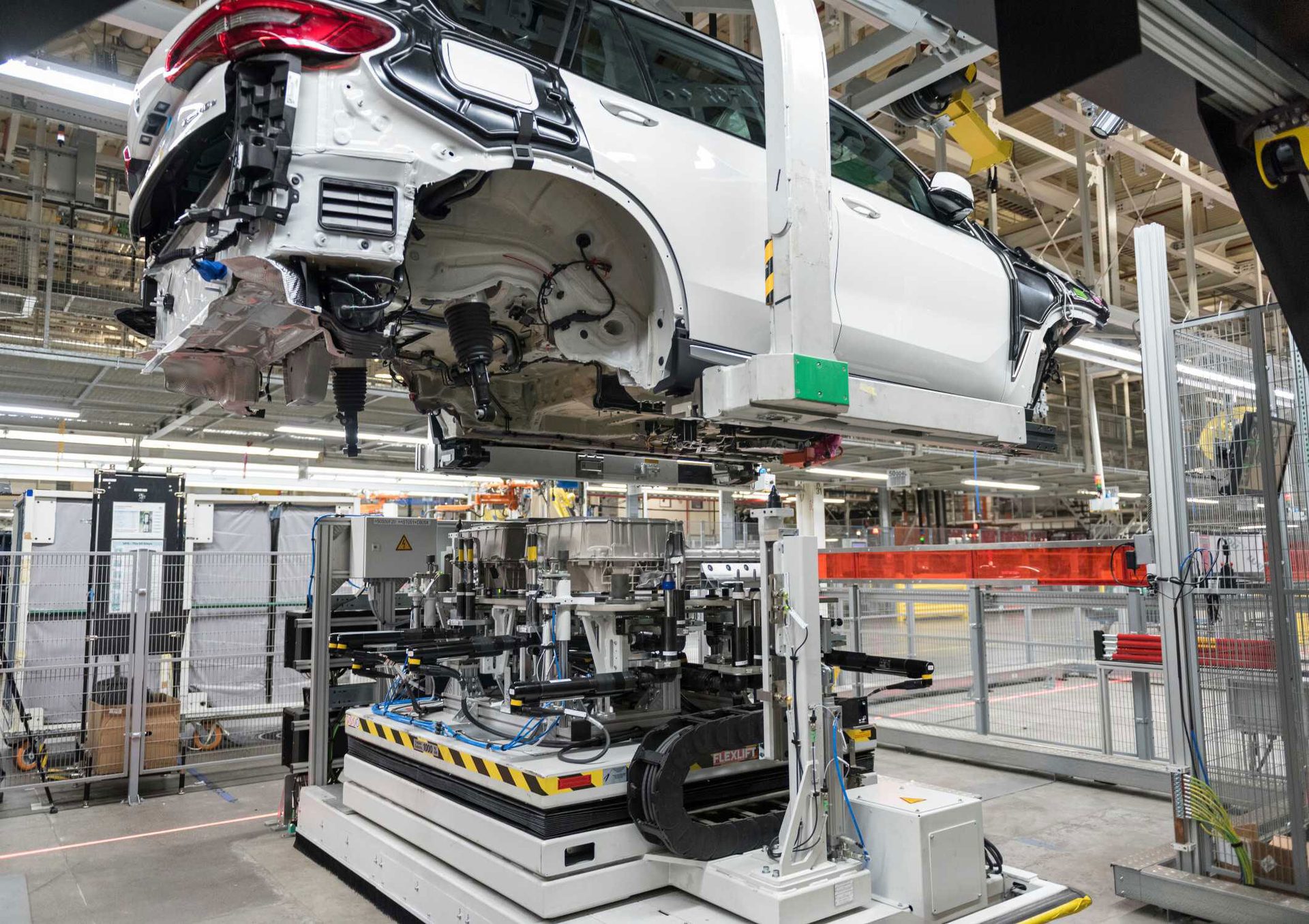
Neue Klasse EVs integrate a high-voltage battery directly into the chassis as a structural element, which reduces weight while increasing rigidity and safety. Photo courtesy BMW AG
BMW Takes a New Approach
Engineers at BMW have developed next-generation EVs that feature a new type of chassis. The first vehicles built on the Neue Klasse platform, such as the iX3 crossover, are being produced at the automaker’s state-of-the-art assembly plant in Debrecen, Hungary.
The chassis incorporates integrated crash structures and suspension systems optimized for weight and safety, while reinforced side sills further improve passive safety—a concept that enables scalability across other models and derivatives.
The Neue Klasse platform features a “pack-to-open-body” principle, which integrates the high-voltage battery as a structural element of the chassis.
“This approach reduces overall weight and enhances rigidity,” says Moritz Schmerbeck, a spokesperson for the BMW Group production network. “Additionally, we achieved a 30 percent weight reduction in the wiring harness and shortened its length by 600 meters compared to previous generations.”
The entire chassis is produced in-house, starting with large aluminum and steel sheets that are processed into individual parts and subsequently assembled into the complete chassis.
“Assembly is fully automated and digitalized, featuring live vehicle tracking and AI-driven quality checks,” says Schmerbeck.
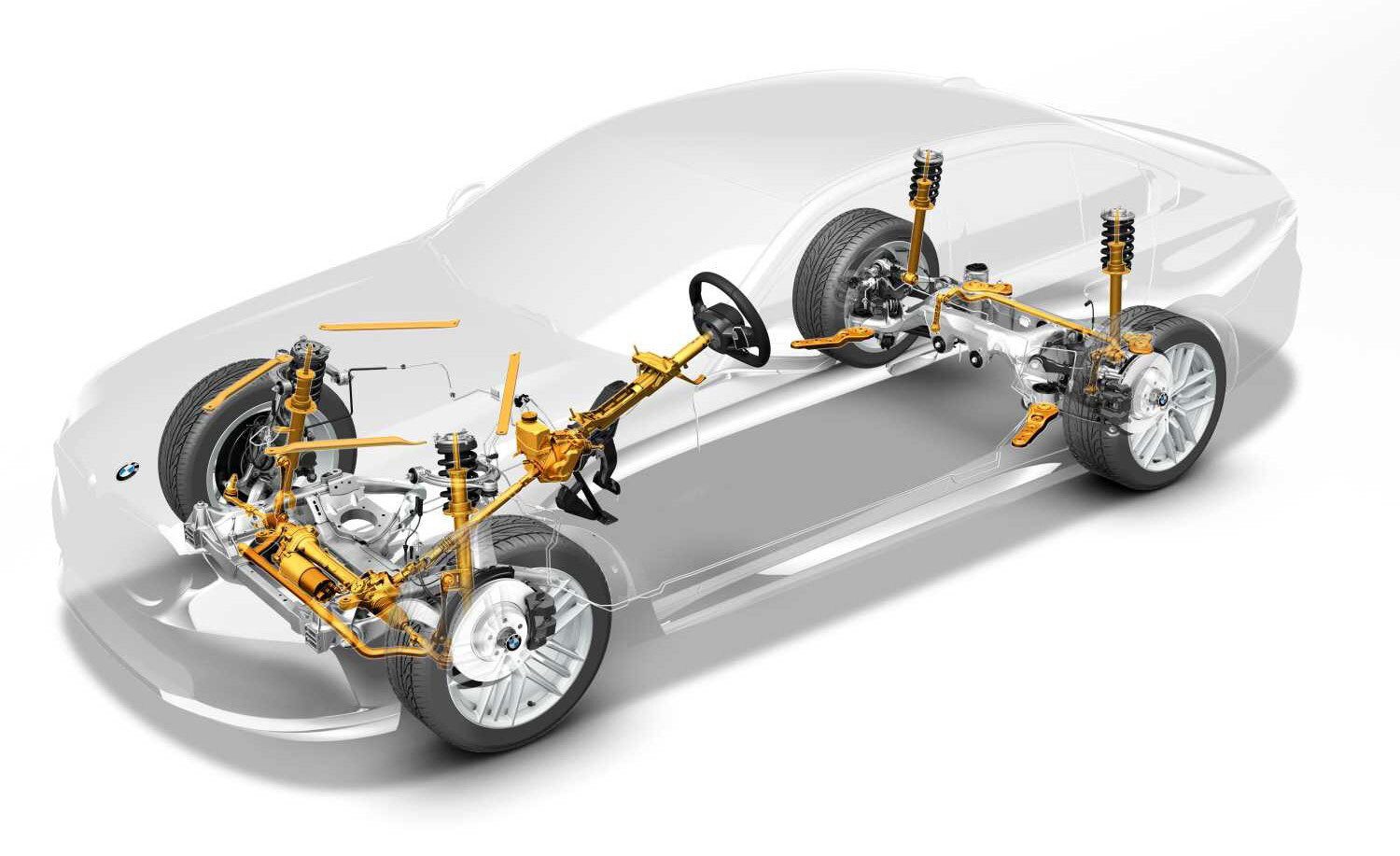
Chassis engineers must carefully balance braking, steering and suspension systems. Illustration courtesy BMW AG
On the Neue Klasse platform, the Gen6 battery pack forms part of the chassis and serves as a structural component to minimize weight. Battery cells are integrated directly into the pack, which eliminates the need for individual modules. Benefits include lower vehicle weight, leading to better efficiency and driving dynamics; a completely flat underbody, enhancing aerodynamics and increasing range; and improved crash safety, contributing to the structural integrity of the vehicle.
Unlike traditional EV designs where the battery is enclosed within a separate housing and then installed in the car, Neue Klasse vehicles have an open chassis until the battery pack is installed, forming the floor.
“Beyond this, the overall production process remains similar to that of combustion-engine vehicles,” says Schmerbeck.
While EV chassis assembly duration varies from model to model, the pack-to-open-body approach substantially reduces manufacturing time at the body shop.
Automation, AI and digital twins are core elements of BMW’s iFACTORY concept, with autonomous logistics systems handling component delivery. AI-based camera systems perform quality checks after pressing, and similar systems ensure precision and assist assemblers.
Meanwhile, predictive maintenance algorithms prevent downtime. On the assembly line, the in-house developed AIQX (Artificial Intelligence Quality Next) platform provides real-time quality feedback.
“In chassis manufacturing, processes are highly automated and only quality tasks, maintenance and servicing of the systems remain the responsibility of [humans],” explains Schmerbeck. “AI-based systems are used to support employees.”
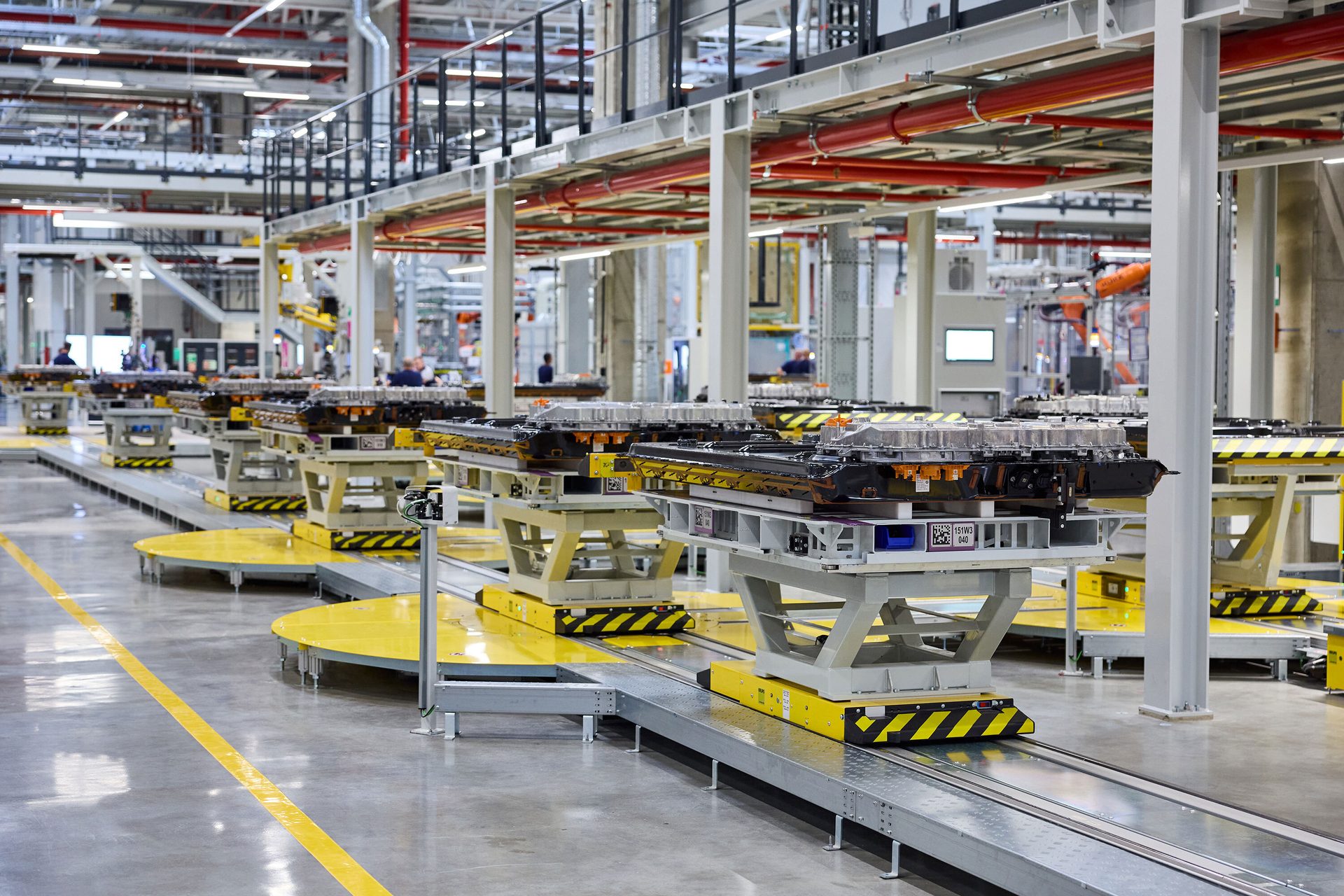
Because battery cells are integrated directly into the pack of BMW’s Gen6 design, it eliminates the need for individual modules. Photo courtesy BMW AG
Bosch Expands the Role of EV Chassis
As automakers redesign vehicle platforms around electrification, the chassis is becoming a focal point for both hardware and software innovation. At Bosch, that shift is reshaping how braking and steering systems are engineered, integrated and deployed.
Electrification introduces new constraints that did not exist in ICE vehicles, particularly for systems historically dependent on the engine. For instance, traditional hydraulic power steering relies on pumps driven by the engine belt.
“If you have a pure EV, you don’t have that anymore,” says Rich Nesbitt, vice president of product management at Bosch Mobility Vehicle Motion. “Even hybrids introduce complexity, since engines cycle on and off rather than running continuously.”
Those changes have accelerated the industry’s shift toward electric power steering. A similar transition is underway in braking, where vacuum brake boosters once relied on engine-generated vacuum.
“With a BEV vehicle or some form of electrification, that vacuum goes away,” notes Nesbitt.
In response, Bosch has focused on electrified braking architectures, including its iBooster and its Integrated Power Brake system. The latter combines brake boosting and modulation functions—traditionally spread across multiple components—into a single unit, merging driver force amplification with anti-lock braking and electronic stability program systems.
Beyond electrification, Bosch engineers are developing by-wire technologies that further decouple driver input from mechanical actuation.
“Steer-by-wire is a trend that we see emerging in the market,” says Nesbitt, noting that it introduces new flexibility in chassis design. By removing the physical steering column, OEMs can standardize components across platforms and simplify global vehicle variants.
“If you think about left-hand vs. right-hand drive, now you’re only moving the handle actuator, and everything in the chassis can stay the same,” explains Nesbitt.
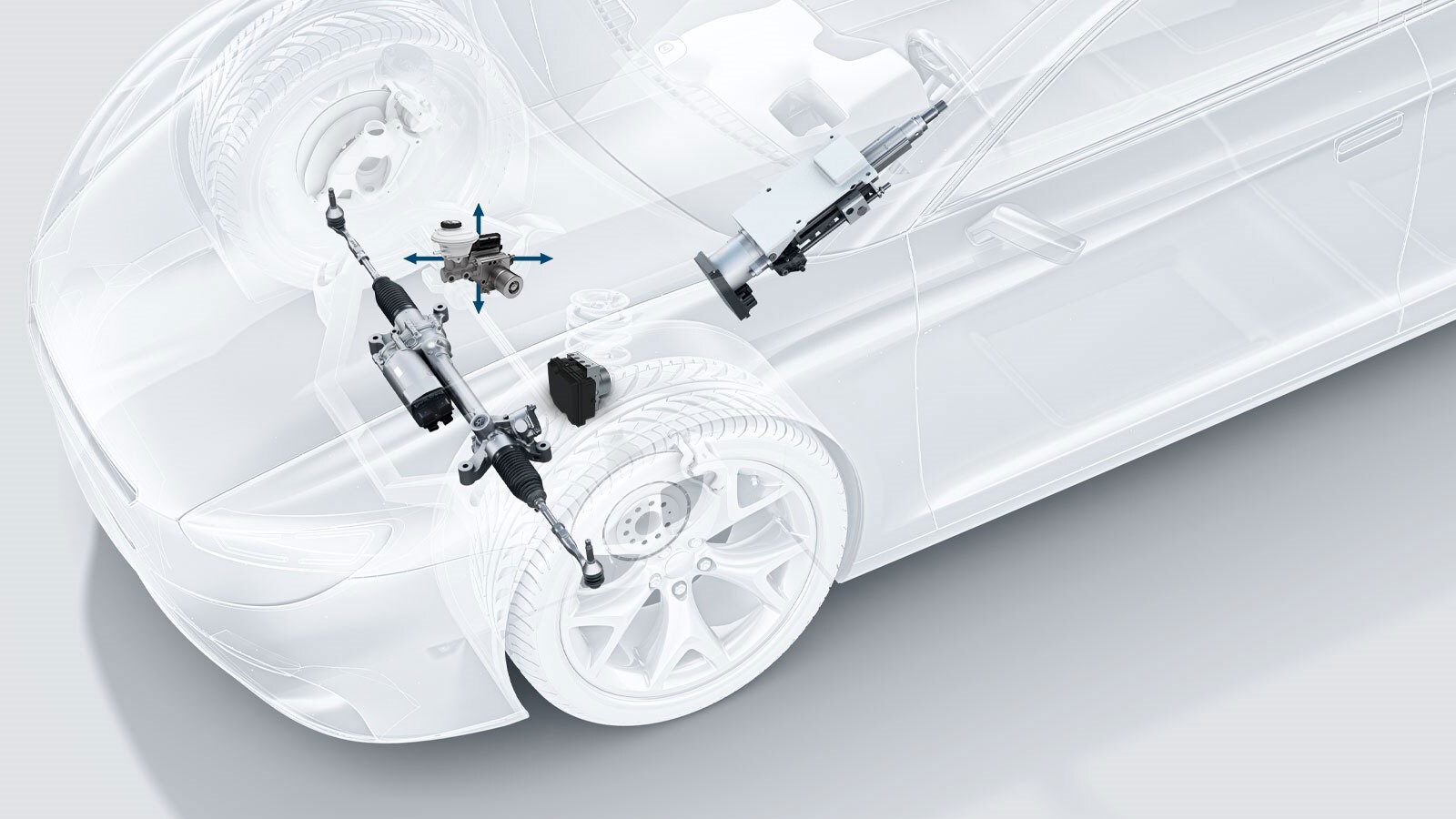
Brake-by-wire technology enables engineers to have greater freedom in packaging and redundancy. Illustration courtesy Bosch
A similar decoupling is possible with brake-by-wire systems. Separating the driver interface from the actuation hardware allows engineers to have greater freedom in packaging and redundancy strategies.
In some configurations, maintaining separate braking systems can support higher levels of automation by providing built-in redundancy.
Bosch does not assemble complete chassis systems, but it plays a central role as a Tier One supplier of braking and steering components that become core elements of the chassis. The company works closely with automakers to ensure that its components integrate smoothly into vehicle platforms.
That includes aligning component sizing with vehicle mass and performance requirements, as well as tailoring systems to fit specific packaging constraints. Bosch maintains in-house CAD and packaging expertise to support those efforts, and some braking and steering components can be customized for individual platforms.
“It can be as simple as sizing,” Nesbitt points out, adding that Bosch also advises automakers on peripheral components to ensure safe and effective system operation.
Chassis systems are also becoming increasingly software-controlled. As OEM strategies evolve, Bosch is focused on ensuring its hardware platforms can support advanced software features.
“It’s really important to continually monitor market trends,” says Nesbitt, pointing to skateboard platforms, manufacturing advances and software-defined vehicles as parallel influences on chassis design.
Bosch’s integrated braking systems are one example of how hardware consolidation supports flexibility. OEMs can choose between single-box or dual-box architectures depending on automation goals, redundancy needs and assembly preferences.
Despite those advances, vehicle mass remains a defining challenge for EV chassis design, driven largely by onboard energy storage.
“EVs today tend to be heavier,” explains Nesbitt. “That additional weight increases demands on braking and steering systems, requiring larger brake sizes and higher rack loads. Any amount of weight you can save with [software] systems is a benefit.”
Advanced materials and integration also help address the challenge. For instance, combining multiple functions into a single housing reduces the need for separate castings and mounting structures.
“We use advanced aluminum alloys to make sure that the component is as light as possible,” says Nesbitt, emphasizing the importance of compact, space-optimized designs.
Artificial intelligence technology is increasingly part of Bosch’s engineering toolkit. The company is applying AI and machine learning in appropriate areas, such as using digital twins to support both product development and manufacturing.
Looking ahead, Bosch sees its role as enabling OEM flexibility amid uncertain technology trajectories. Whether trends favor skateboard platforms, by-wire adoption or new assembly models, its goal is to provide hardware and software that can adapt.
As electrification expands beyond pure BEVs into hybrids and mixed platforms, chassis requirements will continue to evolve. However, Nesbitt views the current period as one of deployment and transition rather than disruption. “It’s an exciting time to be in the industry,” he concludes.

ASSEMBLY ONLINE
For more information on motorcycle manufacturing, visit www.assemblymag.com to read these articles:
February 2026 | ASSEMBLYMAG.com