EV Production Shifts From Disruption to Delivery
NEWS
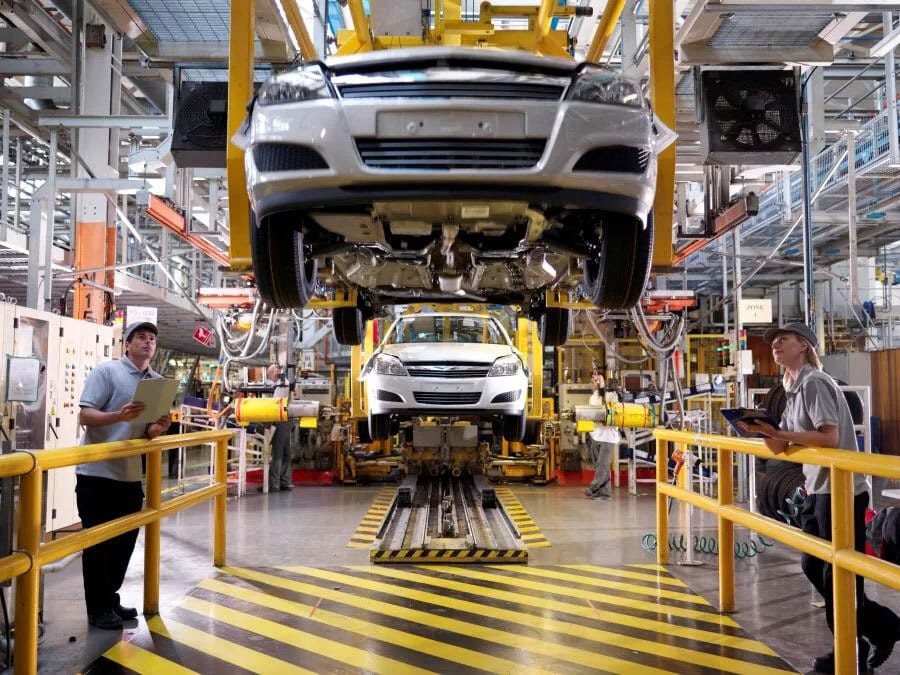
Automakers are showing growing confidence in their ability to build electric vehicles efficiently and at scale. Photo courtesy ABB Robotics
ZURICH—Automakers around the world are showing growing confidence in their ability to build electric vehicles efficiently and at scale. According to the latest automotive manufacturing outlook survey by ABB Robotics, EV production is becoming “a more established and predictable manufacturing discipline.”
The global survey shows that automakers expect EV output to rise in 2026 compared with 2025, signaling continued commitment to electrification at the manufacturing level despite uneven consumer demand in some markets.
“This year’s survey presents a more positive picture of EV manufacturing than we have seen in previous years,” says Joerg Reger, managing director of the automotive business line at ABB Robotics. “Key indicators such as manufacturing time, cost and integration show that EV production is increasingly becoming a known quantity.
“This is supported by sustained investment in automation…capable of creating a leap in productivity and flexibility by combining key skills to autonomously plan and independently perform diverse, complex tasks in real time,” explains Reger.
Confidence has also improved around the practical delivery of EV programs. More than one-half (51 percent) of respondents claim that EVs and their key components are now easier to manufacture than a year ago, compared with just 8 percent who believe they have become harder to build. “This suggests that EV assembly processes are becoming faster, more stable and less disruptive as experience grows, supported by developments in automation,” says Reger.
More than one-third (41 percent) report that EV manufacturing costs have decreased over the past 12 months, while a further 39 percent claim that costs have remained stable.
While EV production is expected to continue increasing, automakers predict even stronger growth in hybrid power train production over the same period. “This indicates that many producers view hybrid technologies as an important stepping stone, enabling them to balance electrification ambitions with real-world customer demand and operational flexibility,” notes Reger.
“Manufacturers are no longer asking whether they can build EVs—they are focused on how to build them efficiently, profitably and alongside other power trains,” says Reger. “Investment in robotics, automation and flexible manufacturing is a key driver behind this growing confidence, helping producers scale EV output while remaining responsive to changing market conditions.”
Uber to Acquire Fleet of Rivian R2 Robotaxis
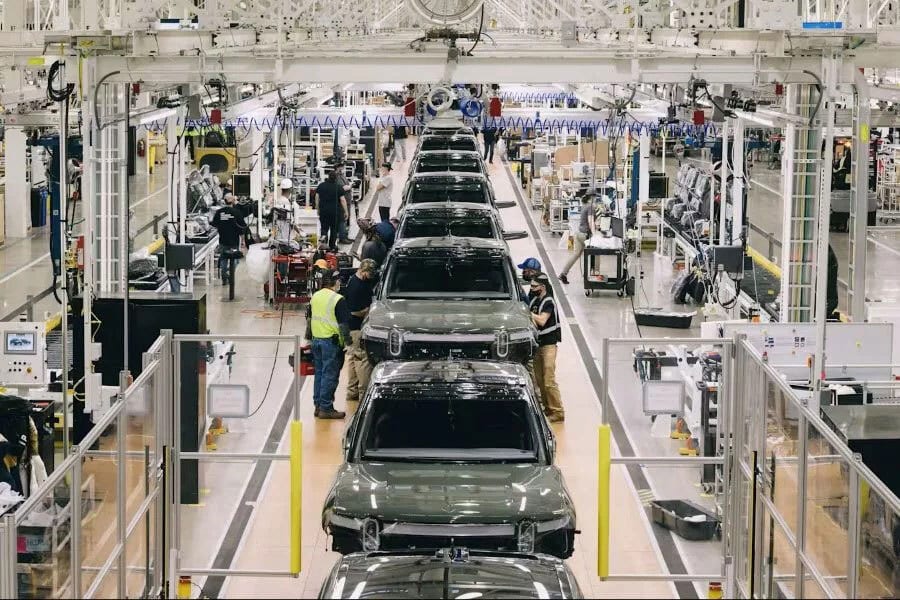
Uber has formed a strategic partnership with Rivian. Photo courtesy Rivian Automotive Inc.
SAN FRANCISCO— Uber Technologies Inc. has formed a strategic partnership with Rivian Automotive Inc. aimed at accelerating both companies’ autonomous vehicle plans. It plans to deploy 10,000 R2 robotaxis in the first phase of the initiative. Rivian is currently ramping up production of the new vehicle at its assembly plant in Normal, IL.
Initial deployments of the next-generation sport utility vehicles are expected to begin in Miami and San Francisco in 2028, and will eventually expand to 25 cities by 2031. Uber also plans to invest more than $1 billion in Rivian over the next five years.
“We’re big believers in Rivian’s approach—designing the vehicle, compute platform and software stack together, while maintaining end-to-end control of scaled manufacturing and supply in the U.S,” says Dara Khosrowshahi, CEO of Uber. “That vertical integration, combined with data from their growing consumer vehicle base and experience managing the complexities of commercial fleets, gives us conviction to set these ambitious but achievable targets.”
“We couldn’t be more excited about this partnership with Uber,” adds RJ Scaringe, CEO of Rivian. “It will help accelerate our path to level 4 autonomy to create one of the safest and most convenient autonomous platforms in the world.
“The scale of [our] growing data flywheel coupled with RAP1, our state-of-the-art in-house inference platform, and our multimodal perception platform make us incredibly excited for the rapid advancement of autonomy over the next couple of years,” notes Scaringe.
According to Scaringe, Rivian’s third-generation autonomy platform will be “one of the most powerful combinations of sensors and inference compute in a consumer vehicle in North America when launched in R2 in late 2026. It will feature 11 cameras, five radars and one lidar unit. The consumer platform is driven by two of Rivian’s in-house RAP1 chips, capable of 1600 TOPS of AI compute performance.
“This platform, including advanced connectivity and onboard intelligent data collection, utilizes data from all onboard sensors to power [our] data flywheel with real-world data, including the critical 3D lidar point clouds essential to the rapid progression of advanced end-to-end Physical AI,” explains Scaringe.
Drone Market Will Skyrocket in Next Decade
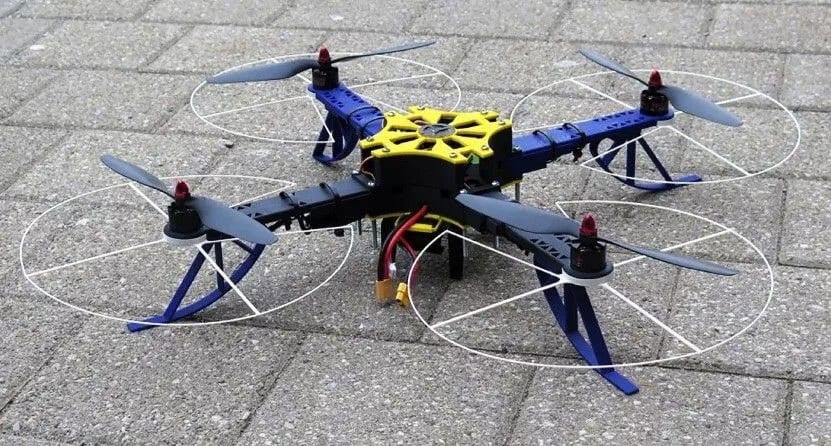
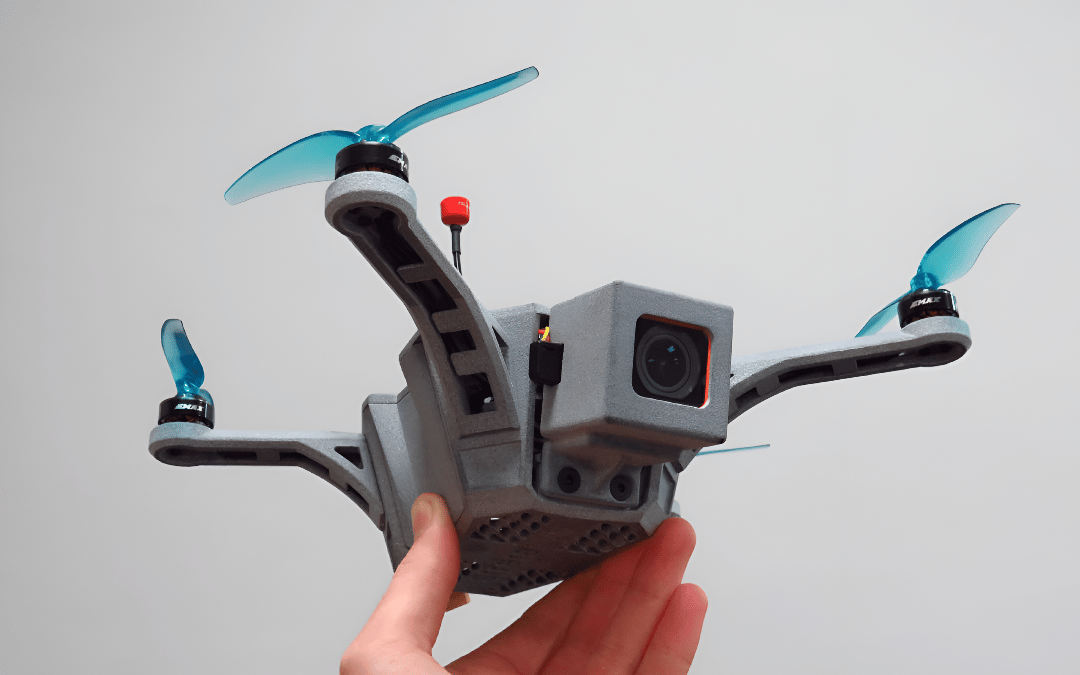
Demand for drones is expected to skyrocket over the next decade. Photo courtesy Stratasys Inc.
NEW YORK—Drones are making headlines everywhere these days, from Los Angeles to Ukraine, due to increasing military use of the technology. However, unmanned aerial vehicles (UAVs) are also in demand for applications ranging from agriculture to package delivery and emergency response to filmmaking.
The small fixed-wing or multiple-rotor aircraft will become ubiquitous over the next decade. In fact, according to a new study by Research Nester Ltd., the UAV market will grow more than 16 percent annually, surpassing $191 billion by 2035. Rapid technological advancements and increasing adoption across both defense and commercial sectors will drive demand.
The next decade will see increasing applications for aerial intelligence, surveillance and reconnaissance capabilities. That’s because UAVs provide governments, military organizations and commercial enterprises with a cost-effective and efficient way to collect real-time data from areas that may be difficult, dangerous, or inaccessible for traditional aircraft or ground-based monitoring systems.
Another major factor supporting market growth is the increasing integration of advanced technologies such as artificial intelligence, machine learning and high-resolution sensors. These innovations enable UAVs to perform complex tasks such as automated mapping, precision agriculture monitoring, disaster assessment, and security surveillance with high accuracy and efficiency.
Despite its strong growth potential, the UAV unmanned aerial vehicle market faces certain challenges related to regulatory frameworks and airspace management. Governments around the world are still developing comprehensive policies to regulate UAV operations and ensure safe integration with traditional aviation systems. However, ongoing efforts to standardize drone regulations are expected to facilitate broader adoption across industries.
Renault to Deploy Hundreds of Humanoids to Build EVs
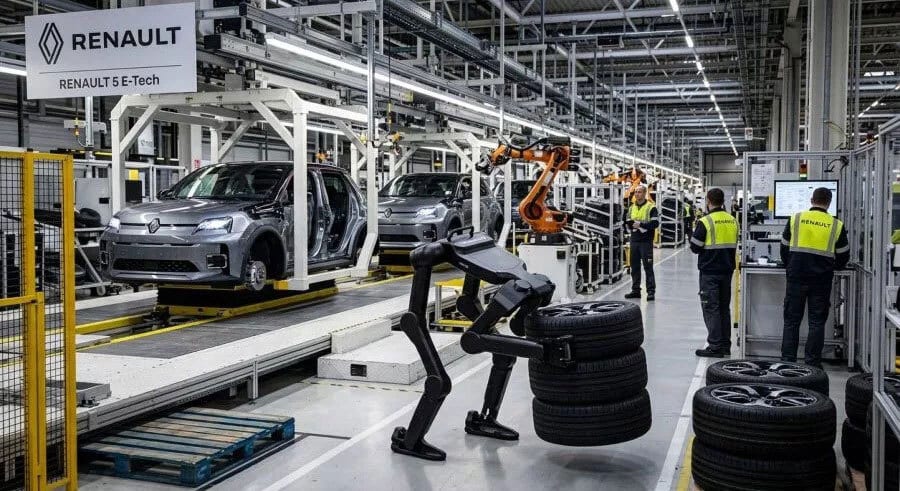
Renault plans to deploy more than 300 humanoid robots in its auto plants by the end of next year. Photo courtesy Renault Group
PARIS—Renault Group plans to deploy more than 300 humanoid robots in its auto plants by the end of next year. The first application will be at its ElectriCity facility in Douai, France, that assembles electric vehicles such as the Megane E-Tech sedan and the Scenic E-Tech sport utility vehicle.
According to the automaker, “these robots will support operators in repetitive or demanding tasks, improve efficiency, and contribute to safer and more flexible manufacturing operations.”
The first machines used by Renault will be Calvin-40 robots made by Wandercraft, a start-up French company that specializes in AI-enhanced exoskeletons. The humanoids can lift payloads up to 88 pounds.
Renault invested in Wandercraft in 2025 to “accelerate automation and to develop robots for our specific auto industrial use, giving us the opportunity to concentrate our people on more value-adding tasks and alleviate operators from painful and nonergonomic duties.” Initial material handling applications will include carrying parts in the body shop and lifting tires on the final assembly line.
MAy 2026 | ASSEMBLYMAG.com