MONTH 2023
Adhesives and Dispensing
Labor shortages are driving new demand for automation.
Options for Screwfeeding
The Vivo 18 nozzle can dispense bead widths ranging from 2 to 18 millimeters. Photo courtesy Robatech
Automation system applies hot-melt adhesive to particleboard.
IKEA Automates
Adhesive
Dispensing
John Sprovieri // Chief Editor
Known for its ready-to-assemble, “flat-pack” furniture designs, Swedish furniture manufacturer IKEA was founded in 1943 and has been the world’s largest furniture retailer since 2008.
The brand name is an acronym of the initials of the names of Ingvar Kamprad, the company’s founder; Elmtaryd, the family farm where Kamprad was born; and Agunnaryd, Kamprad’s hometown in southern Sweden.
Although IKEA originated in Sweden, its household products and furniture are manufactured in many countries. Swedwood, an IKEA subsidiary, produces all the company’s wood-based products, employing more than 16,000 people at 50 factories in 10 countries. Collectively, the factories produce more than 100 million pieces of furniture annually.
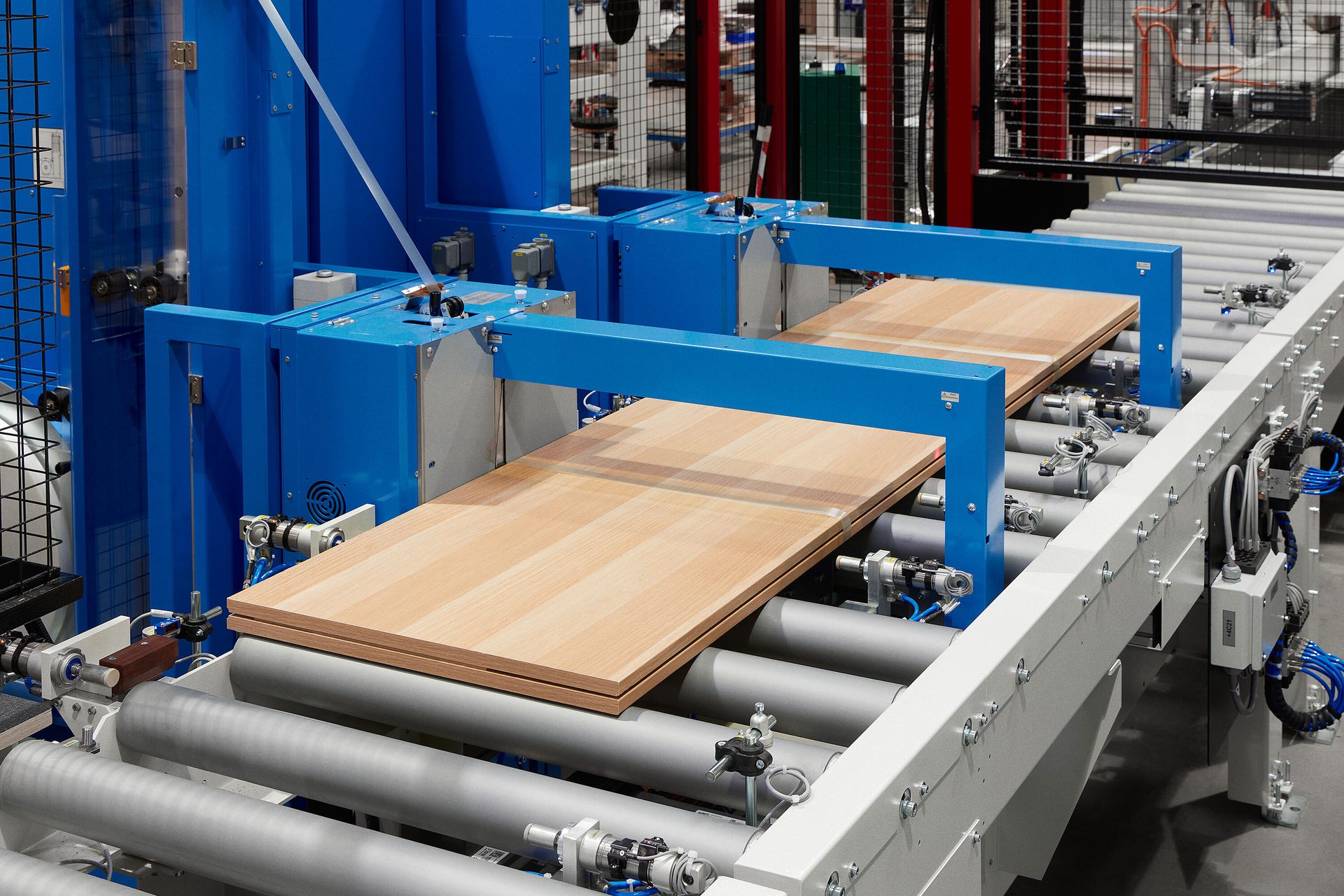
To automate assembly of a new product, IKEA turned to German company Lehbrink, which specializes in automated woodworking equipment, and Swiss company Robatech, which specializes in automated dispensing technology. Photo courtesy Robatech
One of the company’s newest products is the Pax 2.0 wardrobe, a foldable wall cabinet designed for faster, easier assembly, requiring less space and no heavy lifting. It features a one-piece, pre-glued back and side panel that unfold like a book. “Wedge dowel” joints snap together without the need for screws, cutting assembly time in half.
The vision behind Pax 2.0 is a wardrobe that can be assembled by one person without tools. Flat-pack furniture with a folding back panel has been around for some time. IKEA took the concept a step further by gluing the back panel directly to the side panels. The finished piece of furniture is then unfolded like an accordion and set up. The advantage of this design is that the back panel is attached to the side panels from behind, so no space is lost in the depth of the wardrobe.
However, for the concept to work, a fine strip of hot-melt polyurethane adhesive must be precisely applied to the joints. To get the job done, IKEA turned to German company Lehbrink, which specializes in automated woodworking equipment, and Swiss company Robatech, which specializes in automated dispensing technology.
Initially, IKEA tested the process of bonding the side panels to the back panel on a converted stand-alone machine from Lehbrink. With just a few adjustments, the technology worked flawlessly, even for the thicker side panels. A large order followed.
Automated System Bonds Panels
Lehbrink developed a continuous-flow production system specifically for the Pax 2.0 product. The system aligns the side panels and back panel with millimeter precision—the biggest challenge of the project. Everything else is a sequence of proven processes: cutting to the correct width, bonding and cooling.
Robatech supplied its RobaPUR 20 MOD melting unit, which melts the adhesive on-demand and feeds it to the application head. A custom-made heated hose ensures that the adhesive maintains its ideal temperature all the way to the nozzle tip.
The RobaPUR 20 MOD delivers adhesive from 20-kilogram containers. Gentle and consumption-dependent melting protects the adhesive properties even after extended interruptions.
The system aligns the side panels and back panel with millimeter precision. Photo courtesy Robatech
The press cylinder is a closed, airtight area. As the adhesive reacts to moisture, the press cylinder is additionally equipped with dry gas application. The melting grill is heated separately from the adhesive reservoir. Once there is enough melted adhesive in the reservoir for production, the melting grill is automatically switched off and actively cooled. This protects the remaining adhesive.
The adhesive supply can be refilled without system interruption before the block has been melted completely. Since the melting grill is still covered by some adhesive, no harmful adhesive vapors can escape when the cylinder is opened.
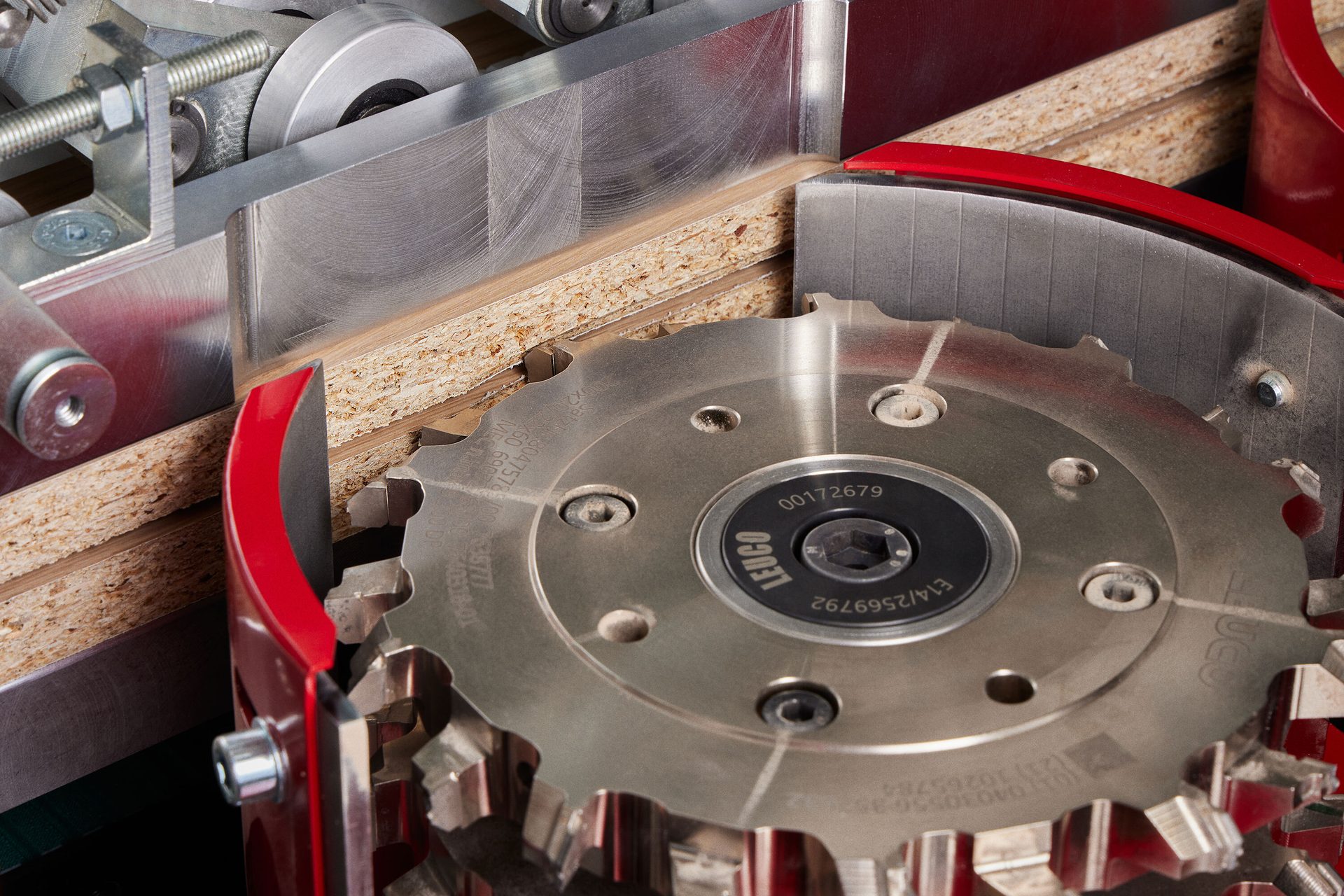
The highlight of the dispensing system is Robatech’s Vivo 18 flat nozzle. Robatech adapted the nozzle’s geometry specifically for this application to ensure precise and even application of the adhesive.
Designed for high-speed dispensing applications, the nozzle can apply hot-melt adhesive at a rate of 250 meters per minute. It can accommodate viscosities ranging from 100 to 10,000 millipascals. Bead width ranges from 2 to 18 millimeters.
Due to the vertical distribution in the nozzle, the Vivo 18 applies the specified coating weight precisely and uniformly from start to finish and achieves exact edge definition. The negative-closing injection element and the ability to precisely adjust the nozzle’s orientation relative to the substrate ensure clean removal.
Thanks to its compact design, two heads can be mounted in parallel for greater flexibility in installation and production.
Initial tests with the standard Vivo 18 nozzle were precise, but not optimal. The nozzle lacked the necessary tolerance to compensate for the rough surface of the particleboard. Working closely together, Robatech and Lehbrink revised the nozzle geometry several times.
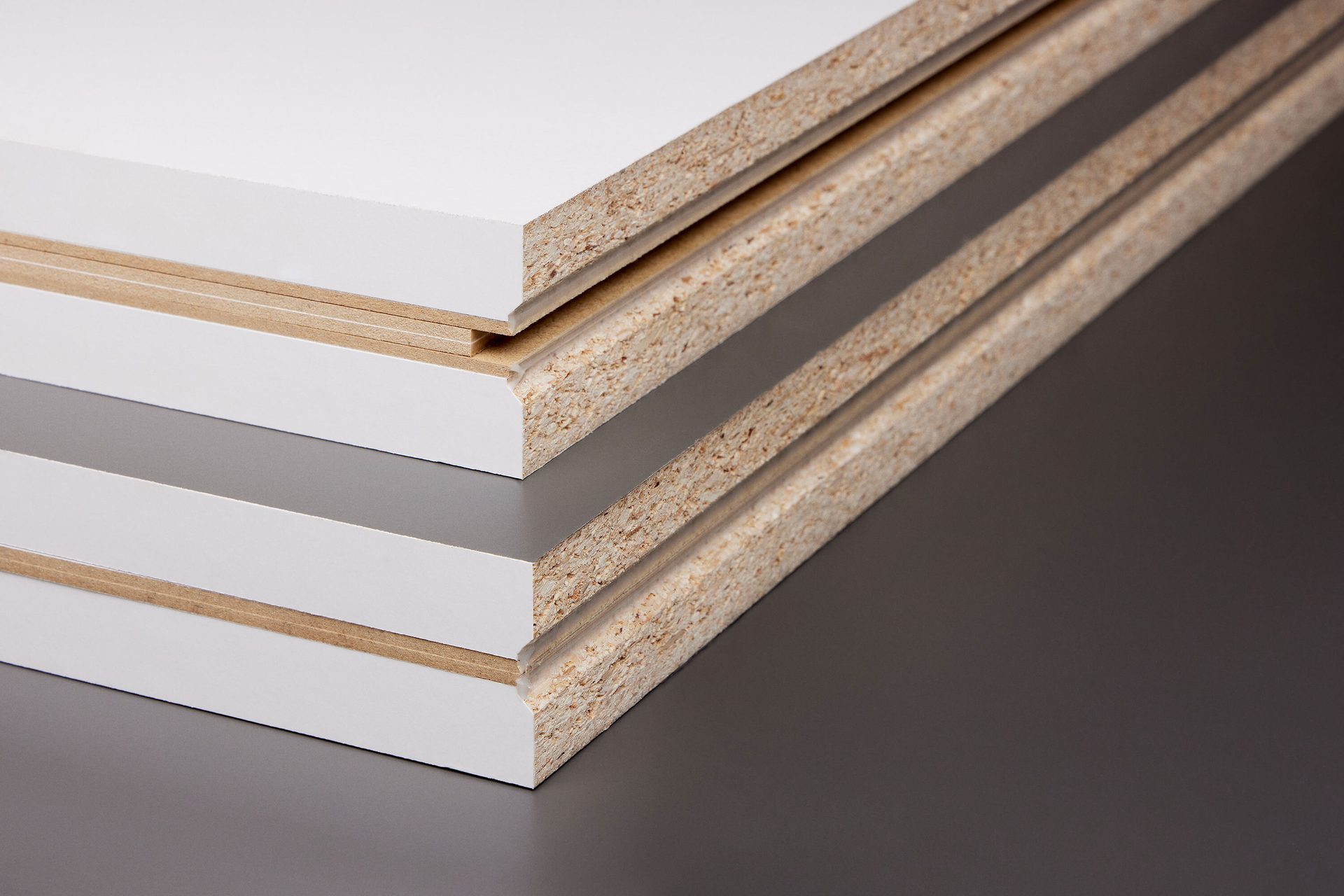
Robatech modified the shape of its dispensing nozzle to accommodate the rough edges of particle board. Photo courtesy Robatech
Maintaining consistent temperature control right to the nozzle tip is paramount for precision. This contrasted with the requirement for greater tolerance in the narrow adhesive joint. Engineers had to find a balance between precision and sufficient leeway for uneven surfaces.
Close collaboration was important to the project’s success. Robatech traveled to Sweden to train IKEA’s manufacturing personnel.
“We particularly appreciate the transparent communication and flexibility in the joint project with Robatech,” says Joachim Alves, area sales manager at Lehbrink. “This made the collaboration very pleasant and efficient.”
IKEA was so impressed with the system that it ordered two more even before the first one in Sweden was operational. Since then, additions systems have been shipped to IKEA factories in China and Italy.
For more information on automated woodworking equipment, click www.lehbrink.com.
For more information on automated adhesive dispensing technology, click www.robatech.com.
ASSEMBLY ONLINE
For more information on automated dispensing equipment, visit www.assemblymag.com to read these articles: