MONTH 2023

ASSEMBLY LINES
‘Assembly Plant of the Year’ Award Call for Nominations
CHICAGO—ASSEMBLY is seeking nominations for its 2026 Assembly Plant of the Year award. The 23rd annual award will recognize a manufacturing facility in the United States that has applied world-class processes to reduce production costs, increase productivity, shorten time to market and improve product quality.
Entries will be judged by ASSEMBLY’s editorial staff on a broad range of operational performance measures and the use of production tools. The winning facility will receive a crystal award and a commemorative banner. It will also be profiled in the October issue of ASSEMBLY.
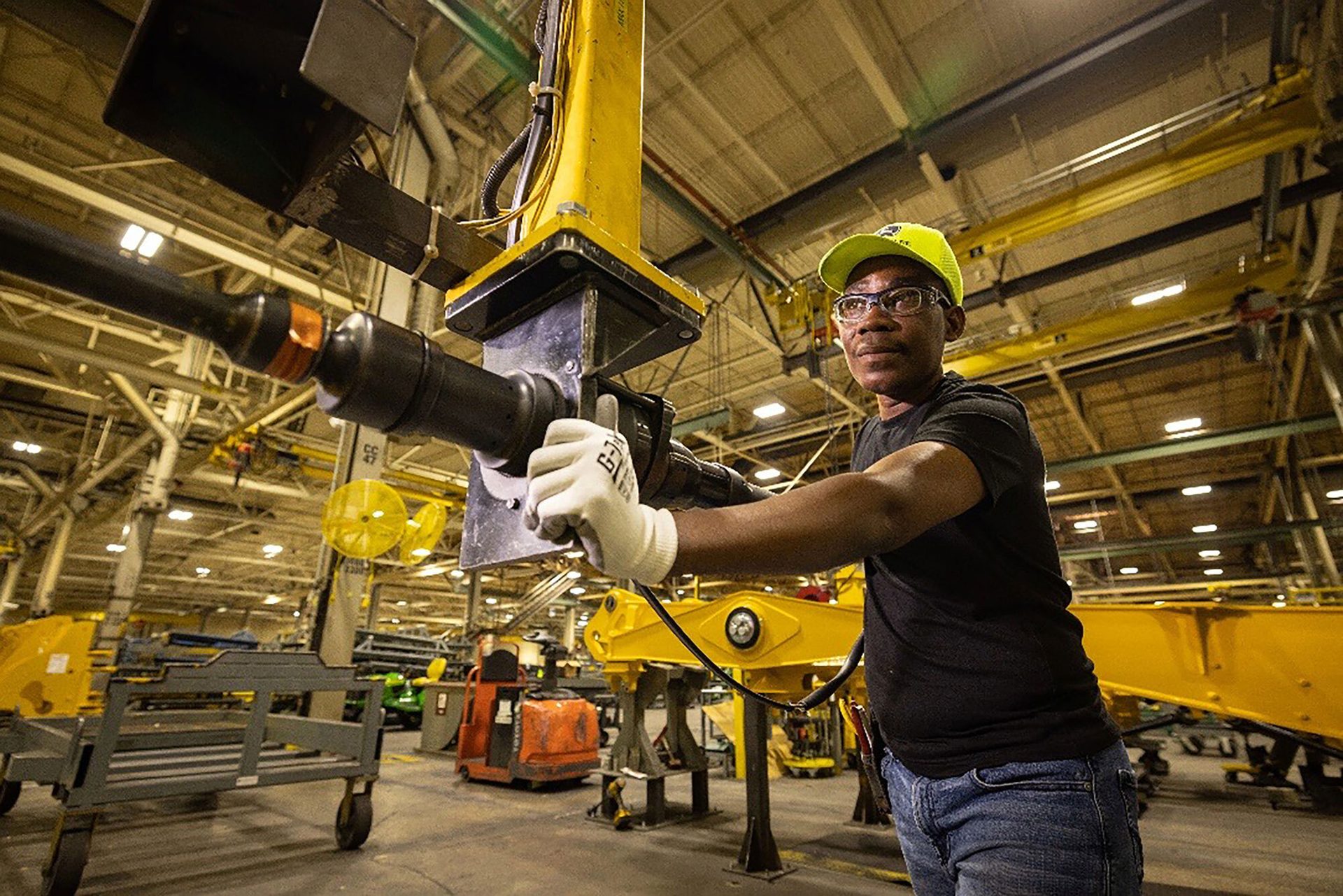
John Deere’s Davenport Works was the recipient of the 2025 Assembly Plant of the Year award. Photo courtesy Deere & Co.
Previous recipients have been John Deere, Davenport, IA (2025); GE Appliances, Louisville, KY (2024); Taylor Guitars, El Cajon, CA (2023); Brose Tuscaloosa Inc., Vance, AL (2022); GKN Automotive, Newton, NC (2021); Murakami Manufacturing USA Inc., Campbellsville, KY (2020); GE Appliances, Decatur, AL (2019); Ford Motor Co., Sterling Heights, MI (2018); AGCO Corp., Jackson, MN (2017); Bosch Rexroth Corp., Fountain Inn, SC (2016); Polaris Industries Inc., Spirit Lake, IA (2015); STIHL Inc., Virginia Beach, VA (2014); Northrop Grumman Corp., Palmdale, CA (2013); Ford Motor Co., Wayne, MI (2012); Philips Respironics, New Kensington, PA (2011); Eaton Corp., Lincoln, IL (2010); Batesville Casket Co., Manchester, TN (2009); IBM Corp., Poughkeepsie, NY (2008); Schneider Electric/Square D, Lexington, KY (2007); Lear Corp., Montgomery, AL (2006); Xerox Corp., Webster, NY (2005); and Kenworth Truck Co., Renton, WA (2004).
Companies interested in applying for the 2026 Assembly Plant of the Year award can fill out the online form at www.assemblymag.com/plantoftheyear. There is no entry fee, and more than one plant may be nominated.
The deadline for submissions is May 1. For more information, contact Austin Weber at webera@bnpmedia.com or 224-202-2340.
AI Remains the Hottest Trend in Robotics
FRANKFURT—According to the International Federation of Robotics (IFR), artificial intelligence remains the top automation trend affecting manufacturers today. AI enables robots to work independently and tackle more applications.
Analytical AI enables machines to process large datasets, detect patterns and provide actionable insights. This enables them to autonomously anticipate failures before they occur in smart factories.
Generative AI, on the other hand, marks a shift from rule-based automation to intelligent, self-evolving systems. GenAI creates new outputs and enables robots to learn new tasks autonomously and generate training data through simulation. This also allows a new kind of human-robot interaction with natural language and vision-based commands.
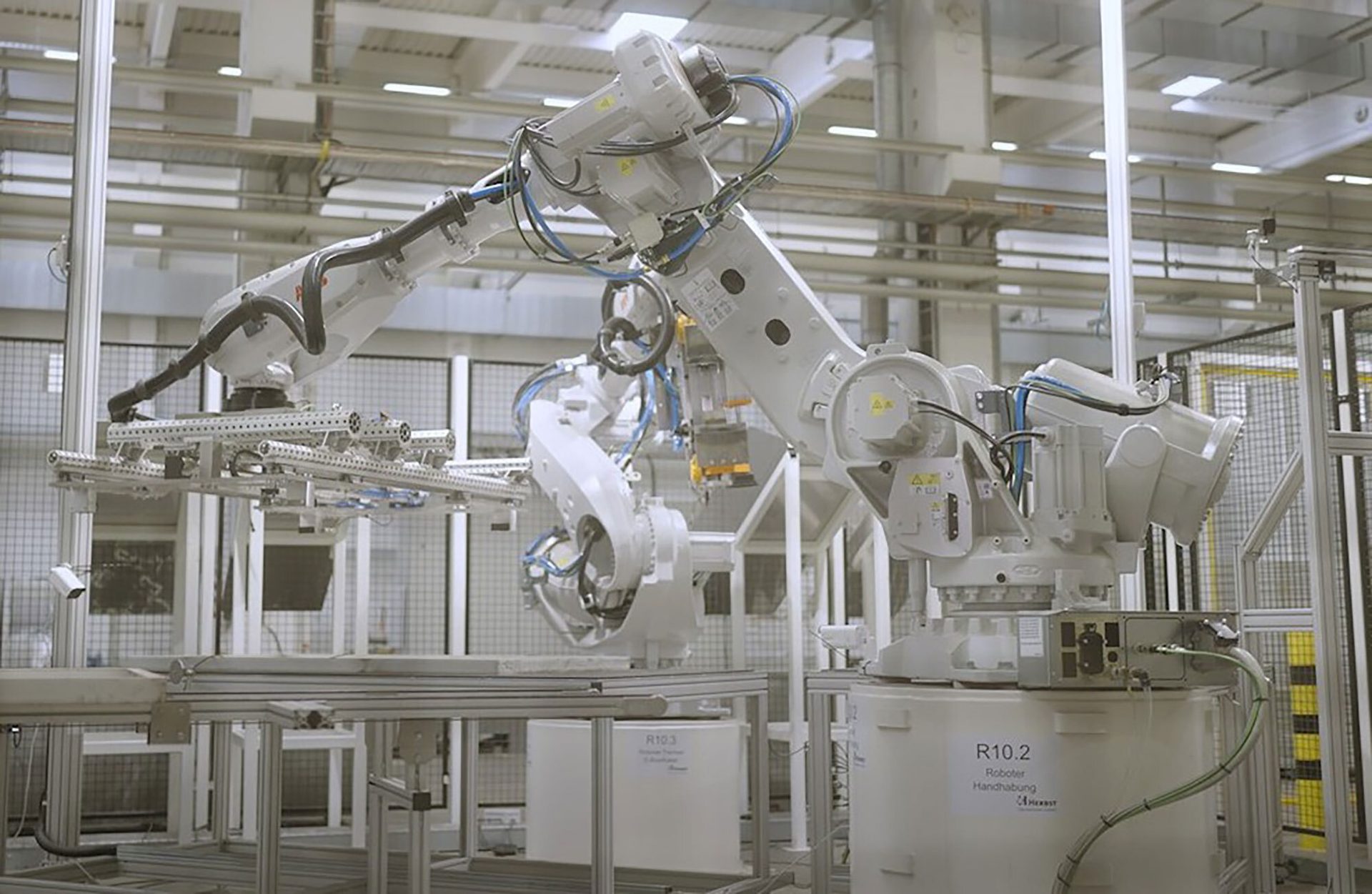
Artificial intelligence is the No 1 automation trend affecting manufacturers today. Photo courtesy ABB Robotics
Agentic AI technology combines analytical AI for structured decision-making, and generative AI for adaptability. The hybrid approach enables robots to work independently in complex, real-world environments.
The IFR claims that demand for versatile robots is accelerating. This directly reflects a market push toward a convergence of information technology (IT) and operational technology (OT). The merge of IT’s data-processing power and OT’s physical control capabilities enhance robotics versatility through real-time data exchange, automation and advanced analytics.
This integration is a foundational element of the digital enterprise and Industry 4.0. The IT/OT convergence breaks down these silos, creating a seamless flow of data between the digital and physical worlds, which significantly enhances the capabilities and versatility of robots.
The field of humanoid robotics is also expanding rapidly. The next-generation machines are a promising technology where flexibility is required, typically in environments designed for humans.

Today, companies are moving beyond prototypes to deploy humanoids in real life. Reliability and efficiency are key to success. In competing with traditional automation, humanoid robots need to match high industrial requirements toward cycle times, energy consumption and maintenance costs.
Industry standards also define safety levels, durability criteria and consistent performance of humanoid robots needed on the factory floor. According to IFR, humanoids intended to fill labor gaps need to achieve human-level dexterity and productivity, key measures to prove real-world efficiency.
As robots increasingly operate alongside humans in factories, safety is more important than ever. AI-driven autonomy fundamentally changes the safety landscape, which makes testing, validation and human oversight much more complex. Robotic systems need to be designed and certified in line with ISO safety standards and clearly defined liability frameworks.
In the context of AI in robotics and the convergence of IT and OT, a spectrum of safety and security concerns arise that demand robust governance and clear assignment of liability.
In addition, the rapid expansion of robotic systems into cloud-connected and AI-driven environments is exposing industrial production to a growing array of cybersecurity threats. As robots become more integrated into workplaces, concerns are mounting over the sensitive data they collect, including audio, video and sensor streams. The legal and ethical ambiguity surrounding liability has prompted calls for clear frameworks to govern AI deployment.
Self-Healing Composite Automatically Repairs Damage
RALEIGH, NC—Engineers at North Carolina State University have developed a self-healing composite that is tougher than materials currently used to assemble aircraft, automobiles, wind turbine blades and other products. In real-world scenarios, healing would only be triggered after the material is damaged by hail or other events, or during scheduled maintenance.
The self-healing material resembles conventional fiber-reinforced polymer (FRP) composites, but with two additional features that target interlaminar delamination, which occurs when cracks within the composite form and cause the fiber layers to separate from the matrix.
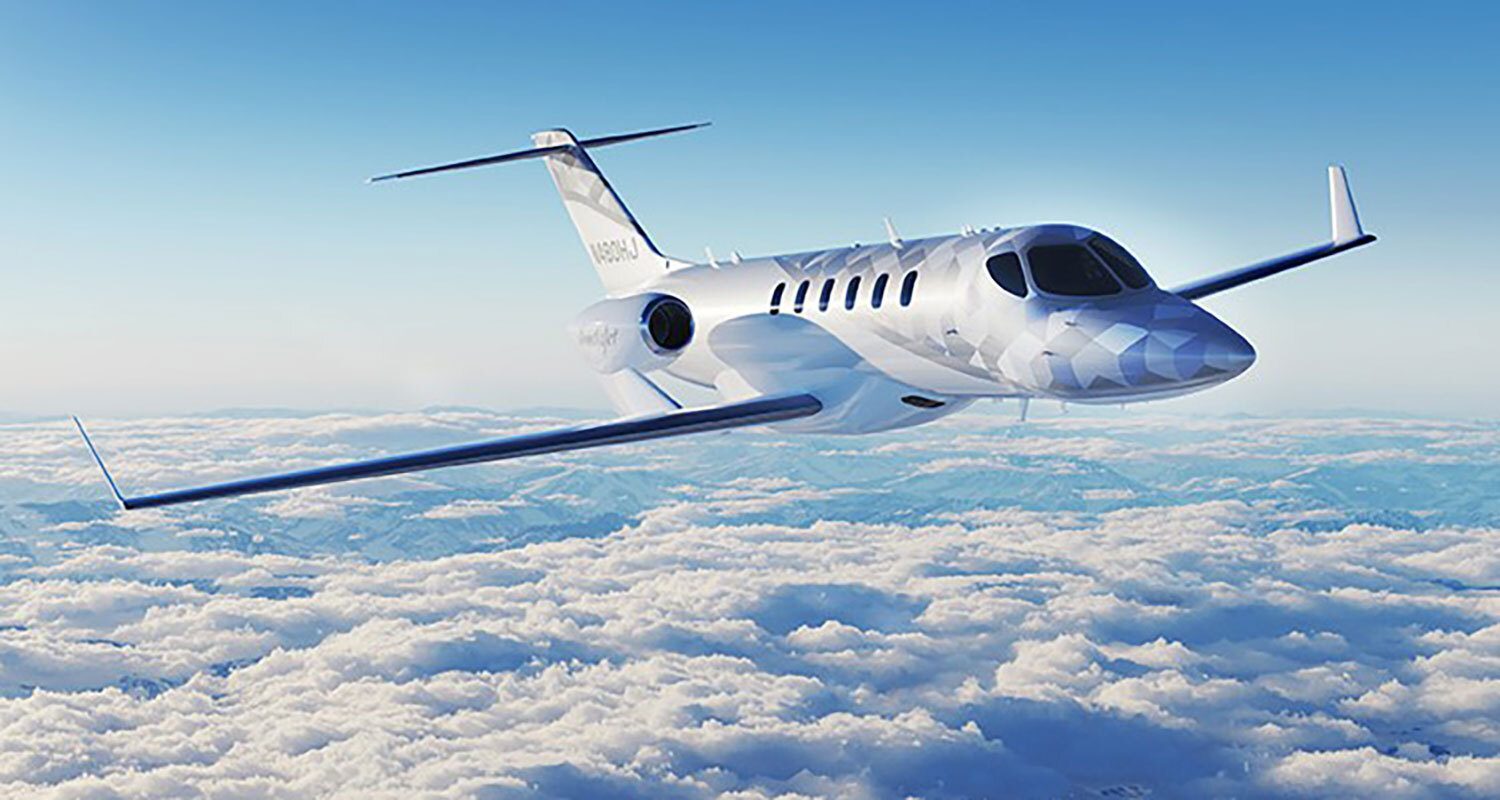
A new self-healing composite material could be used to assemble aircraft fuselages and wings. Photo courtesy Honda Aircraft Co.
First, a thermoplastic healing agent is 3D-printed onto the fiber reinforcement, creating a polymer-patterned interlayer that makes the laminate two to four times more resistant to delamination.
Next, thin, carbon-based heater layers embedded into the material warm up when an electrical current is applied. The heat melts the healing agent, which then flows into cracks and microfractures and rebonds delaminated interfaces, restoring structural performance.
“The self-healing technology that we’ve developed could be a long-term solution for delamination, allowing components to last for centuries,” says Jason Patrick, Ph.D., an associate professor of civil, construction and environmental engineering at North Carolina State University. “That’s far beyond the typical lifespan of conventional FRP composites, which ranges from 15 to 40 years.
“This would significantly drive down costs and labor associated with replacing damaged composite components,” claims Patrick. “[It would also] reduce the amount of energy consumed and waste produced by many industrial sectors, because they’ll have fewer broken parts to manually inspect, repair or throw away.
“This provides obvious value for large-scale and expensive technologies such as aircraft and wind turbines,” explains Patrick. “But, it could be exceptionally important for technologies such as spacecraft, which operate in largely inaccessible environments that would be difficult or impossible to repair via conventional methods on-site.”
To evaluate long-term healing performance, Patrick and his colleagues built an automated testing system that repeatedly applied tensile force to an FRP composite producing a 50-millimeter-long delamination, then triggered thermal remending. The experimental setup ran 1,000 fracture-and-heal cycles continuously over 40 days, measuring resistance to delamination after each repair.
Patrick has patented and licensed the technology through his startup company, Structeryx Inc. “We’re excited to work with industry and government partners to explore how this self-healing approach could be incorporated into their technologies, which has been strategically designed to integrate with existing composite manufacturing processes,” he points out.
Caterpillar Teams With Nvidia to Deploy AI in Factories
PEORIA, IL—As Caterpillar Inc. embarks on its second century, it is investing millions of dollars in artificial intelligence technology to transform its factories and products. As part of that initiative, the company recently announced that it’s collaborating with Nvidia Corp. to enhance its manufacturing operations.
“This engagement will transform how work gets done for [our] customers, dealers and employees,” says Joe Creed, CEO of Caterpillar. “As AI moves beyond data to reshape the physical world, it is unlocking new opportunities for innovation—from job sites and factory floors to offices.”
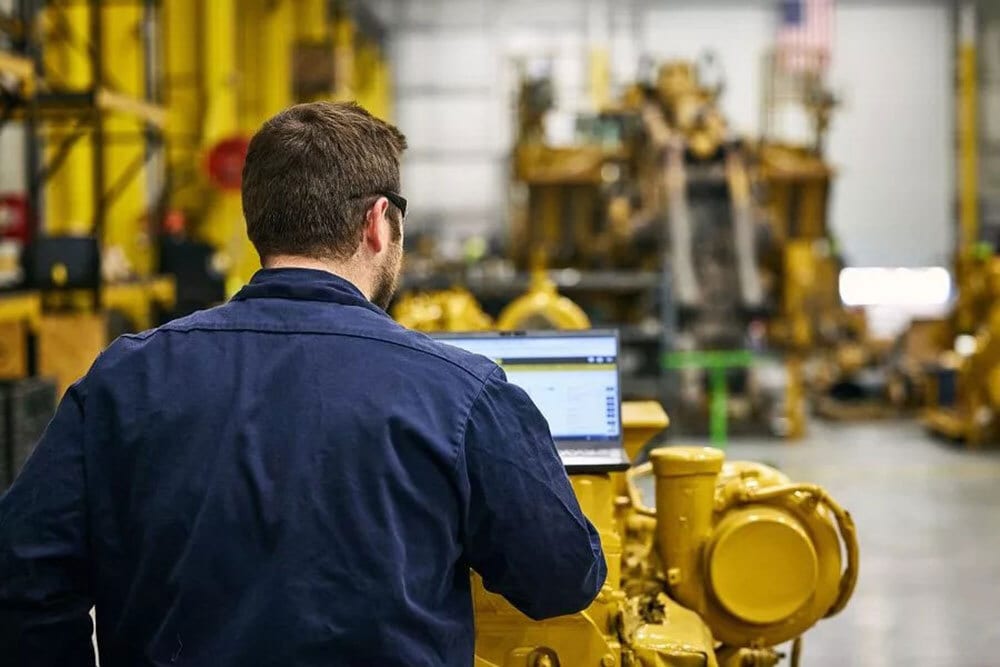
Caterpillar plans to invest in artificial intelligence technology to improve productivity in its factories. Photo courtesy Caterpillar Inc.
According to Creed, Caterpillar is creating an AI-driven ecosystem that “transforms machines, jobsites, factories and supply chains—changing how the world builds, moves and powers progress…. Caterpillar is still the company that builds and powers the physical world you rely on every day, and now we’re making the invisible layer of the modern tech stack more intelligent.”
Caterpillar recently unveiled the Cat AI Assistant, which will be embedded onboard bulldozers, excavators, scrapers and other construction equipment to help answer customers’ questions and provide personalized recommendations on equipment, parts and maintenance. It will use voice activation to enable settings, guide troubleshooting and connect users to the right resources across Cat apps and websites.
Caterpillar is also using Nvidia AI Factory to create safer, leaner, more resilient production systems, such as forecasting and scheduling.

Engineers are building physically accurate digital twins of the company’s factories on Nvidia Omniverse libraries and OpenUSD. Digital twins will enable them to design, simulate and optimize assembly line layouts and production processes before building in the real world. The technology will be used to help Caterpillar simulate line changes, test scheduling scenarios and optimize material flow before any physical retooling.
The 100-year-old company plans to invest $100 million over the next five years for workforce training and education, including a $25 million Global Workforce Innovation challenge to identify and scale systems that prepare workers for the next generation of AI-enabled industrial systems.