
MONTH 2023

Manufacturing Software
Labor shortages are driving new demand for automation.
Options for Screwfeeding
Toyota Astra Motor unified data across manufacturing, logistics, dealers and after-sales using Denodo’s logical data management platform. Photo courtesy Toyota Motor Manufacturing Indonesia
The success of microfactories depends not just on sensors and robotics, but on how well data is connected, contextualized and consumed.
The Data Imperative for
Smart Microfactories
Errol Rodericks // Product Marketing Director // Denodo // Palo Alto, CA
As manufacturers race to modernize operations and build resilience, the conversation has shifted from automation to intelligence, and from big, centralized factories to nimble, distributed microfactories.
But the success of these smart factories won’t be measured by robotics alone. It will depend on how well data flows across systems, roles and time horizons. Most manufacturers are underprepared for this new paradigm.
Microfactories are gaining traction across industries, including automotive, medical devices, aerospace and consumer goods. Microfactories are small, modular, hyper-automated facilities that are typically located close to their end markets.
The concept is becoming more popular for several reasons. Demand volatility requires flexibility and fast reconfiguration. Supply chain disruptions demand local manufacturing options. Sustainability goals push for shorter logistics chains. Customer expectations favor customized, low-volume production.
But microfactories are not just smaller replicas of mega-factories. They operate with radically different assumptions. Data is real-time and transient, not batch-processed. Production is modular, not linear. And, decision-making is distributed, not centralized.
These differences put enormous pressure on traditional data architectures.
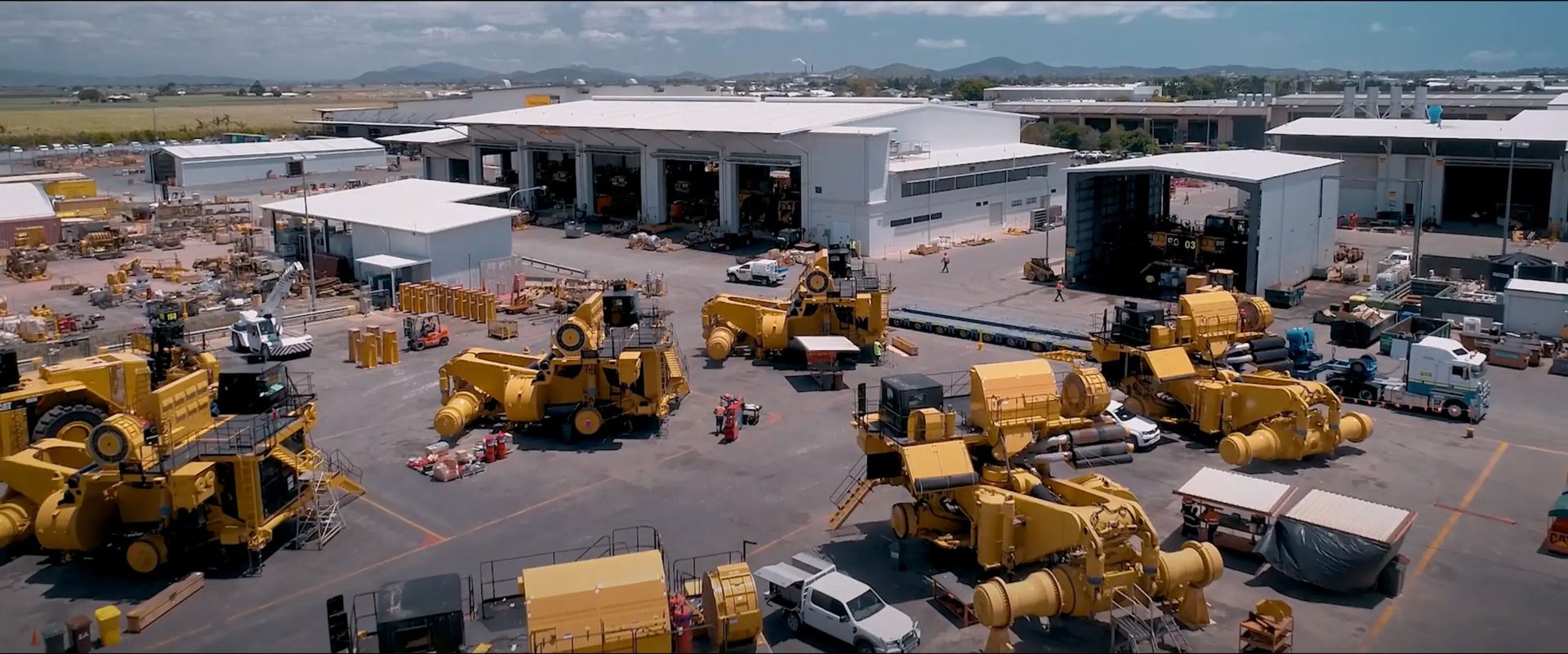
Construction equipment retailer Hastings Deering built a unified data marketplace on the Denodo platform, enabling governed self-service analytics and real-time operational insights across its enterprise. Photo courtesy Hastings Deering
A Hidden Bottleneck
Most manufacturers rely on data strategies designed for a different era. Data lakes, data warehouses, and other monolithic systems may serve well for historical reporting, but they struggle in high-speed, multi-system, low-latency environments like smart microfactories.
A data lake is a central location that holds a large amount of data in its native, raw format. Compared to a hierarchical data warehouse, which stores data in files or folders, a data lake uses a flat architecture and object storage to store the data. Object storage stores data with metadata tags and a unique identifier, which makes it easier to locate and retrieve data across regions, and improves performance. By leveraging inexpensive object storage and open formats, data lakes enable many applications to take advantage of the data.
Data lakes were developed in response to the limitations of data warehouses, which are expensive and proprietary and can’t handle the modern use cases most companies are looking to address. Data lakes are often used to consolidate an organization’s data in a single, central location, where it can be saved “as is,” without the need to impose a formal structure for how the data is organized.
Unlike most databases and data warehouses, data lakes can process all data types—including unstructured and semi-structured data like images, video, audio and documents—which is critical for machine learning and advanced analytics.
More recently, the “data lakehouse” was conceived as a modern alternative to the data lake. A data lakehouse is a new, open data management architecture that combines the flexibility, cost-efficiency, and scale of data lakes with the data management and ACID transactions of data warehouses, enabling business intelligence and machine learning on all data. (ACID—atomicity, consistency, isolation, durability—is a set of properties of database transactions intended to guarantee data validity despite errors.)
Data lakehouses are enabled by a new, open system design: implementing similar data structures and data management features to those in a data warehouse, directly on the kind of low-cost storage used for data lakes. Merging them together into a single system means that data teams can move faster, because they are able to use data without needing to access multiple systems. Data lakehouses also ensure that teams have the most complete and up-to-date data available for data science, machine learning and business analytics.

Even so, data lakehouses, like data lakes, are monolithic and unable to integrate data from supporting data sources without costly, complex, and time-consuming replication.
Consider the reality on the factory floor. Machine telemetry arrives by the second. Environmental sensors fluctuate by the minute. Updates from ERP software and status reports from MES software shift hour by hour. PLM specifications evolve with design cycles.
This flood of ephemeral, distributed and system-specific data creates a visibility gap. Manufacturing leaders need insights, not raw data. Data scientists need curated features, not fragmented fields. Operations teams need up-to-date dashboards, not stale reports.
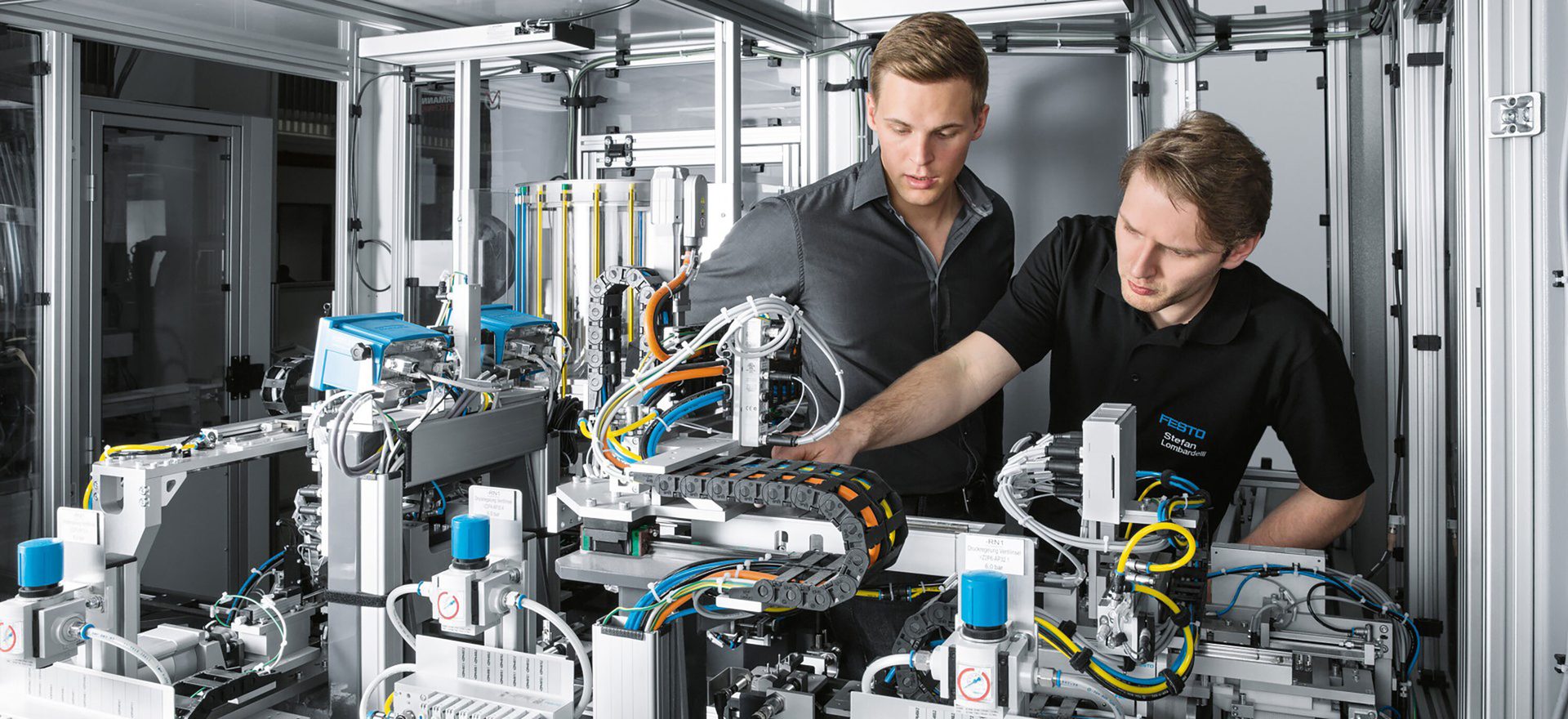
With Denodo’s help, Festo created AI-powered chat applications for intuitive data access. Photo courtesy Festo Corp.
Logical Data Management
This is where logical data management plays a critical role. It leverages a virtualized, real-time data access layer that connects disparate systems, from product lifecycle management (PLM) and manufacturing execution systems (MES) to internet of things (IoT) and enterprise resource planning (ERP) systems, without relying on first physically moving data.
It enables manufacturing teams to:
• Query data in place across cloud, edge and on-premises systems.
• Create AI-ready, governed data products tailored to use cases.
• Maintain end-to-end traceability for compliance and environment, social and governance reporting (ESG).
Deliver instant access to trusted data for digital twins, dashboards and AI models.
In essence, logical data management serves as the data orchestration layer that enables smart factories, and particularly microfactories, to function as cohesive, insight-driven environments.
Picture a medical device microfactory in mid-production. Suddenly, environmental sensors detect a spike in humidity and vibration. These very small anomalies could have big consequences.
Yet, with logical data management, edge devices can capture the data locally and make it instantly available for analysis. In the past, that kind of data might have gone unnoticed until post-production reviews. Now, it can be queried in real time, cross-referenced with batch data and machine diagnostics, and fed straight into a digital twin that spots deviations as they happen. Operators are alerted immediately, allowing them to recalibrate before the batch is compromised.
What’s unique about this situation is that after production finishes, the data doesn’t disappear. Instead, it is archived for quality control and future audits. The real win? Gaining immediate access to transient data across systems, without having to move it, copy it, or wait for it.

Bridging OT, IT and Engineering: The PLM Connection
PLM systems are evolving from static design archives to central hubs of cross-functional collaboration. PLM systems now have the potential to underpin smart manufacturing by acting as a coordination layer across engineering, operations and supply chain.
This vision is only achievable if PLM can:
• Connect to live production data for closed-loop feedback.
• Share specifications with MES and ERP systems in real time.
• Feed AI models with relevant design and test metadata.
Logical data management makes this possible by:
• Federating PLM data into operational systems without duplication.
• Creating virtual joins between design, production, and quality data.
• Enabling self-service access for engineering, QA, and operations.
This turns PLM systems into live nodes in the digital nervous systems of smart factories.
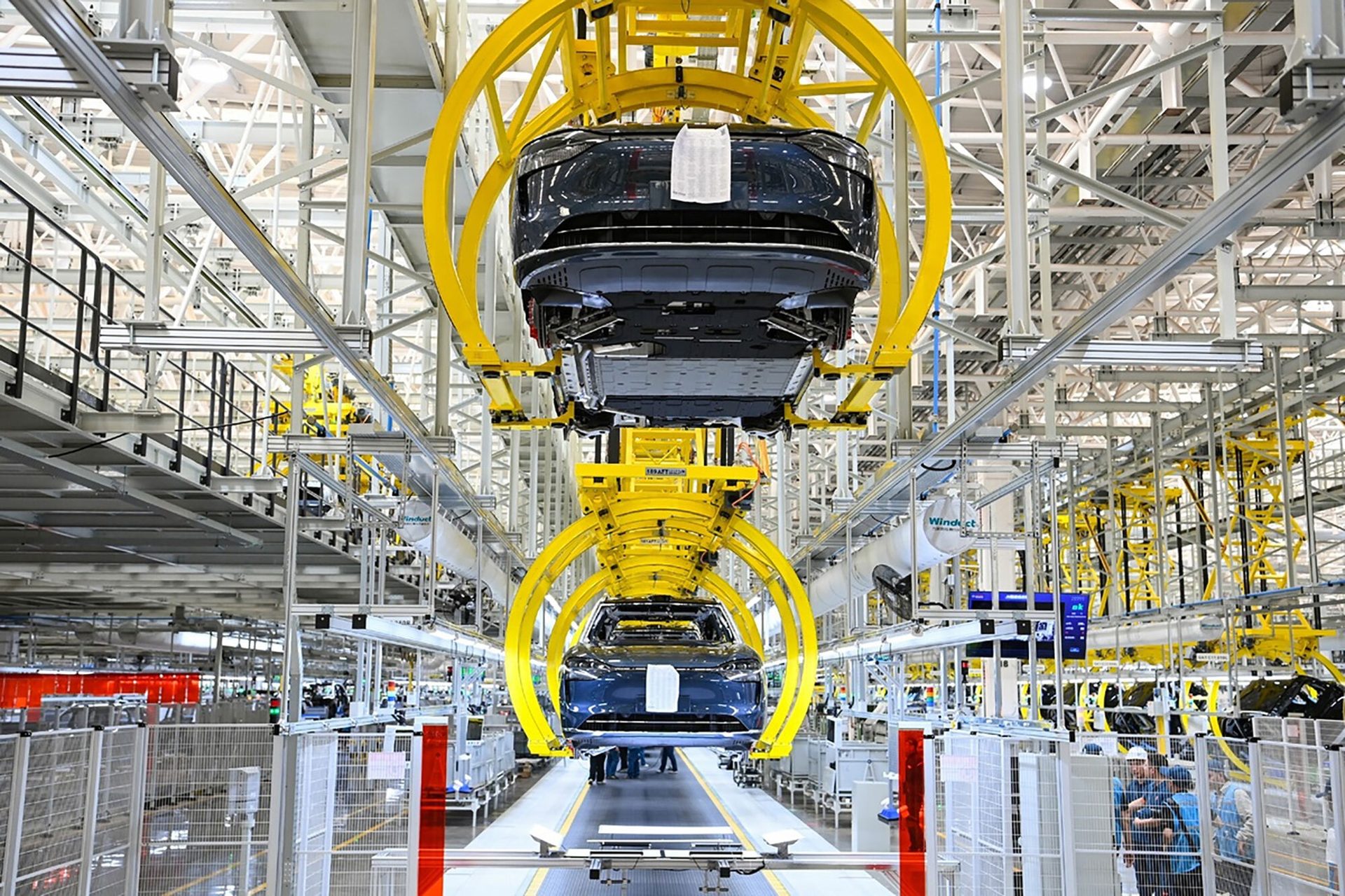
Chinese EV manufacturer Seres uses Denodo software for hasten decision-making in manufacturing and logistics. Photo courtesy Seres Group
Accelerating AI, Digital Twins and Compliance
Smart microfactories often embed:
• AI and machine learning for predictive maintenance, quality inspection, and adaptive production.
• Digital twins for virtual commissioning and real-time simulation.
• Compliance systems for traceability, sustainability and regulatory needs.
None of these tools function well with outdated or inaccessible data. Logical data management enables the creation of consistent and governed AI models, and it provides digital twins with live multi-source data feeds. It gives compliance teams the ability to generate on-demand ESG reports. This is all without rebuilding data pipelines or copying sensitive information into yet another silo.
Microfactories, digital twins, and AI-first manufacturing strategies are not science fiction, they are here. But their success depends not just on sensors and robotics, but on how well data is connected, contextualized and consumed.
Logical data management enables this shift by offering a real-time data access layer; federated views across operational technology, information technology and engineering systems; and agile data products for AI, compliance and decision support. As manufacturing becomes more modular, local and intelligent, companies need to rethink not just their machines, but their data foundation. Smart manufacturing isn’t just about what you automate. It’s about what you know and how fast you can act.
For more information, visit www.denodo.com.
ASSEMBLY ONLINE
For more information on manufacturing software, visit www.assemblymag.com to read these articles: