MONTH 2023

Robotics
Labor shortages are driving new demand for automation.
Options for Screwfeeding
Hiro’s disassembly systems rely on advanced technologies, such as artificial intelligence, machine vision and robots. Photo courtesy ABB Robotics
Automated system disassembles disused electronics to recover valuable parts and materials.
Waste
Robots Recycle
Electronic
John Sprovieri // Chief Editor
The world faces a growing mountain of electrical and electronic waste. Some 62 million tons were produced in 2024, of which 78 percent was not treated in compliance with regulations, according to the United Nations’ Global Waste Monitor. This represents an estimated cost of $90 billion to people and the environment, yet it also presents a huge opportunity: Harvesting the valuable materials locked away in this waste stream could generate some $95 billion in reusable resources.
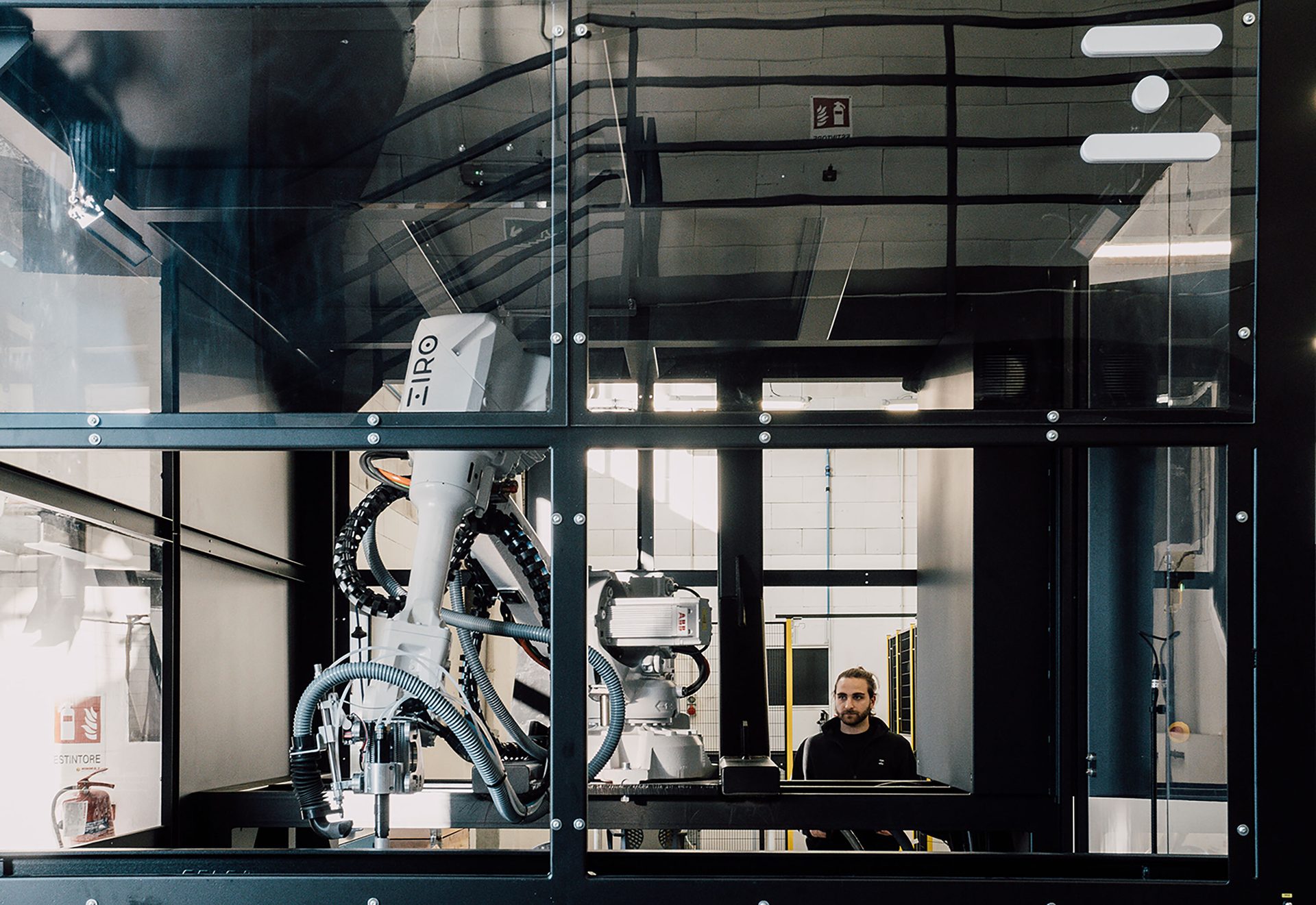
Hiro Robotics manufactures automated equipment to disassemble disused electronic devices. Photo courtesy ABB Robotics
The disassembly of electronic waste presents numerous challenges. Issues with complexity and poor ergonomics mean that traditional processes are slow and inefficient. Moreover, the use of methods such as indiscriminate shredding can lead to contamination of materials and the release of pollutants like mercury, reducing the amount of recoverable material, and impacting sustainability.
To meet the challenge of disassembling electrical and electronic goods for recycling, Italian company Hiro Robotics is developing automated systems that are helping to transform a problematic waste stream into a valuable resource.
Founded in 2018 in Genoa, Hiro Robotics manufactures automated equipment to disassemble disused electronic devices and recover valuable electronic components for reuse in new products. Serving waste companies as well as electronics manufacturers and distributors, the company already has projects operating in several recycling plants.
Complete Flexibility
To automate disassembly, Hiro’s systems rely on advanced technologies, such as artificial intelligence, machine vision and robots from ABB Robotics.
Disassembly systems must be extremely flexible. While traditional assembly processes churn out millions of identical items, recycling centers must be able to dismantle electronic devices of any model, size and material, many of which are also likely to be broken or dirty.
For example, Hiro’s Model TEIA disassembly system for flat-screen TVs and monitors uses three robotic stations: the first to unscrew the back case, the second to break the front bezel, and the third to unscrew the internal components. Human workers can then complete the final material sorting. This modular approach can be adapted to process up to 90 monitors per hour, significantly reducing processing time, improving efficiency, and reducing operating costs.
One of the company’s TEIA systems has been deployed at the recycling facility located at the Bollate Correctional Facility near Milan, Italy. A collaboration between Milan and local waste management companies, the recycling facility is a novel initiative that combines social benefits with sustainability improvements by providing inmates with an opportunity to carry out paid work and acquire marketable skills. At the 32,000-square-foot facility, inmates receive hands-on training to dismantle discarded electronic equipment and sort their parts. Working alongside them is HiRO’s automated system, which uses ABB’s IRB 2600 and IRB 460 robots to carry out repetitive tasks, including separating and sorting components. The robots are also used for handling heavy or potentially hazardous materials.
By combining human expertise with robotic innovation, the recycling project represents an effective circular-economy model that reduces waste, supports rehabilitation, and provides a benchmark for sustainable e-waste management.
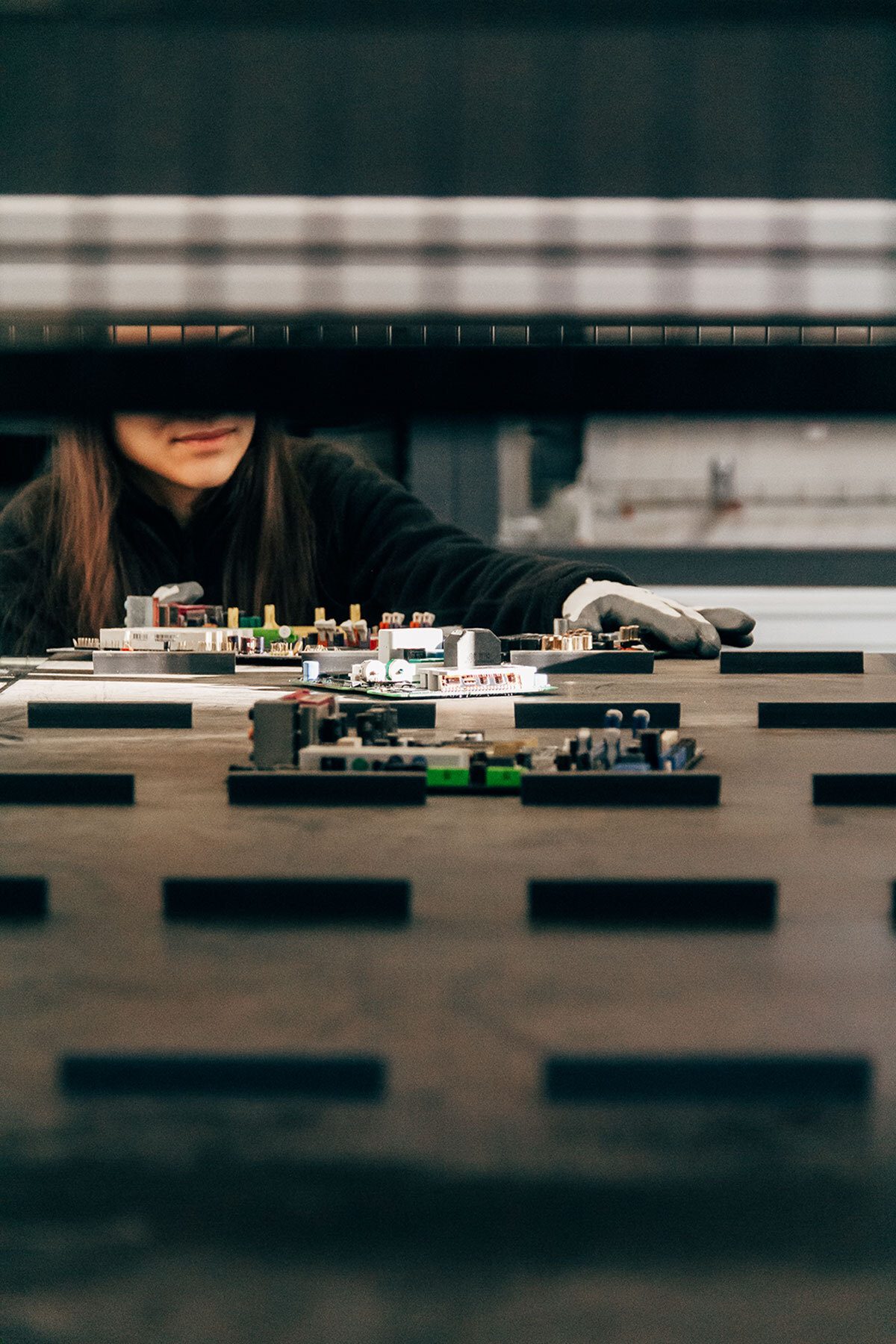
Hiro has developed robotic disassembly systems for solar panels, circuit boards and fastener removal. Photo courtesy ABB Robotics
Other Innovative Projects
The TEIA system was Hiro’s first automated disassembly product, but it soon developed similar systems for solar panels, circuit boards and fastener removal. In the future, Hiro plans to introduce disassembly systems for servers and data centers, telecommunications equipment, inverters, and hard drives. It’s also working on a system to detect flammable batteries in mixed waste streams.
Hiro Robotics hopes its vision will help shape the future of recycling in Europe over the next few years. With the United Nations predicting a 32 percent increase in the generation of global e-waste to 82 million tons by 2030, the turnkey recycling systems being developed by Hiro will be as important as the machinery used to assemble electronics.
For more information on automated disassembly systems, visit www.hirorobotics.com. For more information on robots, visit www.abb.com.
Inspection System