
MONTH 2023

Screwdriving and Riveting
Labor shortages are driving new demand for automation.
Options for Screwfeeding
Renault Trucks produces more than 3,000 electric trucks annually at its factory in Blainville-sur-Orne. Photo courtesy Renault Trucks
Tool location systems ensure quality control of safety-critical joints in electric trucks.
Thomas Preuss // Contributing Writer
Renault Trucks is deeply committed to the energy transition in the commercial trucking industry. Originally part of Renault—the French car company—Renault Trucks has been a subsidiary of the Volvo Group since 2001. Although the company still makes gas- and diesel-powered trucks, it also assembles a range of fully electric trucks with capacities ranging from 1,400 pounds to 44 tons. These vehicles are intended both for regional transport of goods as well as for applications such as waste collection.
Renault Trucks operates four factories in France. They are located in Bourg-en-Bresse, Blainville-sur-Orne, Lyon and Limoges. The Blainville plant is where electric trucks are assembled.
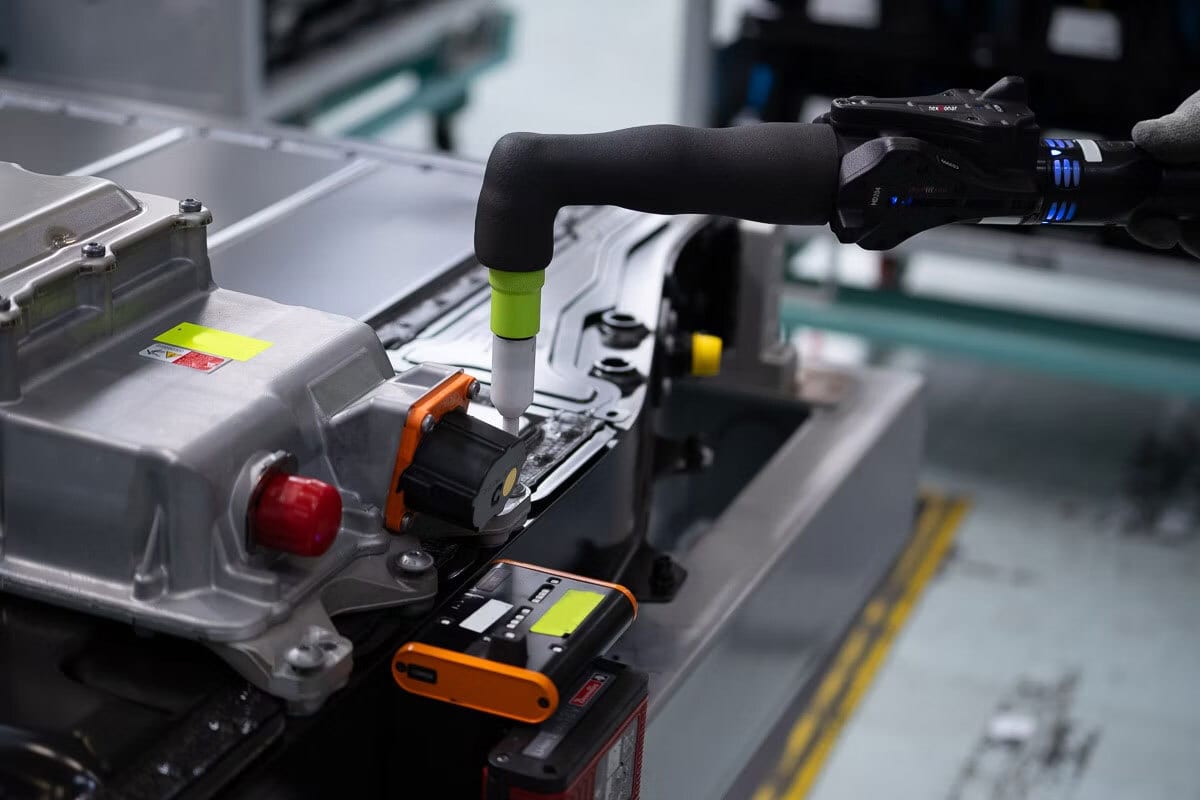
Nexonar integrates seamlessly with the factory’s traceability system. Photo courtesy Desoutter
A key component of Renault Trucks’ electric vehicles is the modular power box (MPB), which is located between the batteries and the electric motors that drive the wheels. This complex component contains numerous safety-critical joints. Assembly of the MPB is challenging, since it contains a large number of screws that are tightened to a variety of torque and angle specifications.
To error-proof assembly, engineers wanted to implement a system to guide workers through each fastening step while ensuring complete traceability.
The Nexonar real-time location system from Desoutter fit the bill. Desoutter had long-been supplying fastening tools to Renault, so adding the Nexonar technology was an easy decision.
How It Works
Each assembly station is equipped with an infrared camera positioned at a height of 3.5 meters above the MPB. A reference tracker is attached to the assembly while one or two other trackers—depending on the tightening angle—are installed on the screwdriver.
The Nexonar system offers the option of specifying the fastening sequence for the operator or working in “free order mode.” To support the assembler, a screen displays instructions for each fastener to be installed. Tightening is only permitted if the tool is correctly positioned on the correct screw. The results obtained at each joint are transmitted in real time to factory’s traceability software.
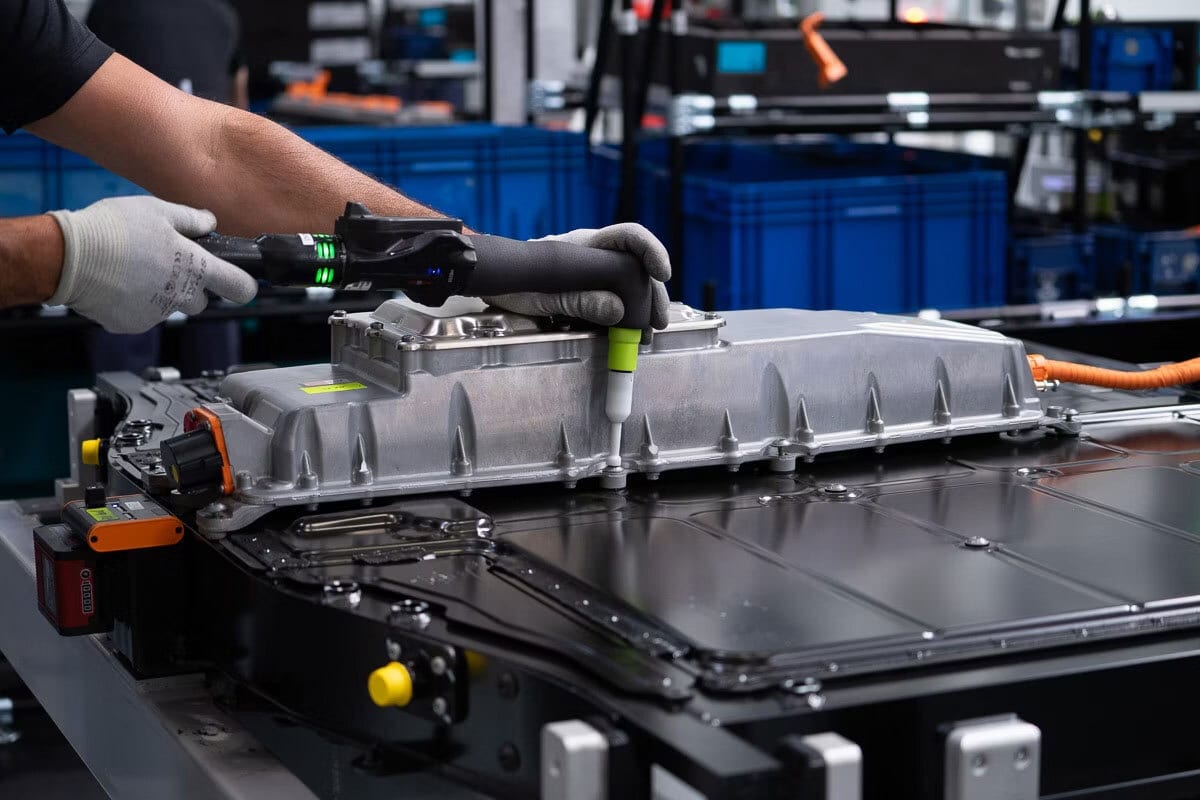
Nexonar detects each fastening location to within ±15 millimeters, even when the camera is positioned several meters above the working area. Photo courtesy Desoutter
In the case of MPB, the minimum distance between two screws is 30 millimeters. The complete system—including camera, reference tracker and tool trackers—allows detection and recognition of each fastening location to within ±15 millimeters, even when the camera is positioned several meters above the working area. This exceptional precision eliminates any risk of inversion of tightening torque for the same screw dimension.
Because Nexonar and the screwdrivers are wireless, assemblers are free to move as needed. The technology prevents missing a joint or fastening to the wrong torque or angle.
Due to its small size and its low weight, the infrared camera integrates discreetly into the work environment. The trackers are designed so that they do not hinder the assembler’s movements.
Since implementing the Nexonar system, the plant has met its goal of error-free assembly of the MPB unit, even though the Blainville plant assembles more than 3,000 electric trucks annually.
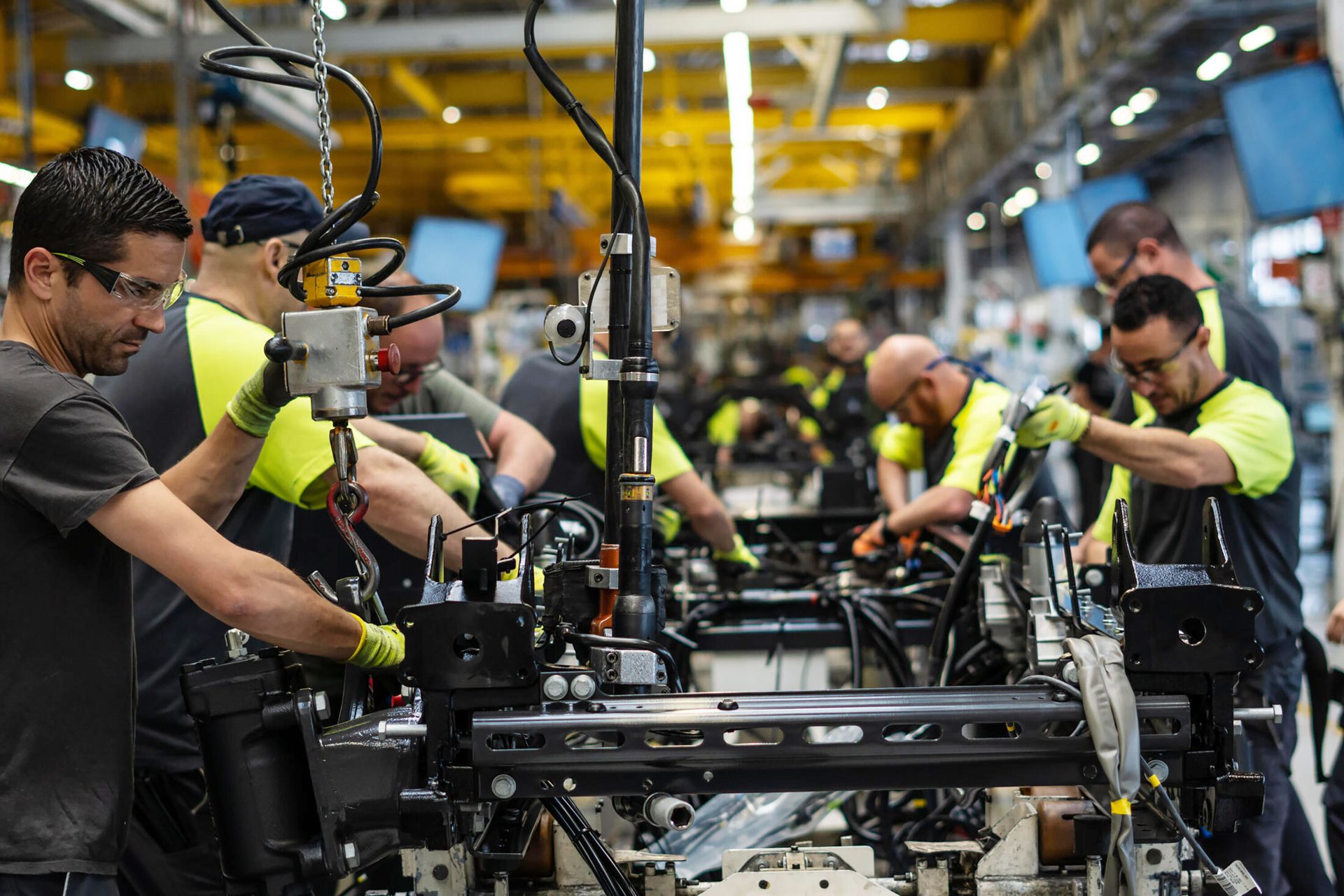
Renault Trucks manufactures a range of fully electric trucks with capacities ranging from 1,400 pounds to 44 tons. Photo courtesy Renault Trucks
“The installation of new assembly lines dedicated to manufacturing electric trucks was a major challenge for the company,” says Jerome Gohier, assembly methods and tightening expert at Renault Trucks. “We had to guarantee flawless quality to gain the trust of our customers. The support of nexonar and Desoutter contributed greatly to the success of this project.”
“We are happy to provide the Nexonar system to Renault Trucks,” says Gonzague Jaunatre, product manager at Desoutter. “The solution integrates perfectly into the working environment and the assembly traceability system already in place.”
For more information on fastening tools and error-proofing technology, visit www.desouttertools.com.
ASSEMBLY ONLINE
For more information on fastening tools, visit www.assemblymag.com to read these articles: