
ASSEMBLY LINES
New Robotic Control System Simplifies Programming
LAUSANNE, Switzerland—Engineers at the Ecole Polytechnique Fédérale de Lausanne (EPFL) have developed a new framework that makes it possible to teach a skill to robots with different mechanical designs, allowing them to carry out the same task safely without rewriting code for each.
Traditionally, upgrading a fleet of industrial robots often means starting from scratch—not only replacing hardware, but also reprogramming tasks. Even when two machines are built to perform similar jobs, different joint arrangements or movement limits mean that a task programmed for one robot often can’t be used on another.
According to EPFL engineers, enabling skills to transfer directly between robots could make these systems more sustainable and cost-efficient. Their concept of “kinematic intelligence” takes a human-demonstrated task, mathematically converts it into a general movement strategy, and then adapts it so that different robots can perform it based on their physical design.
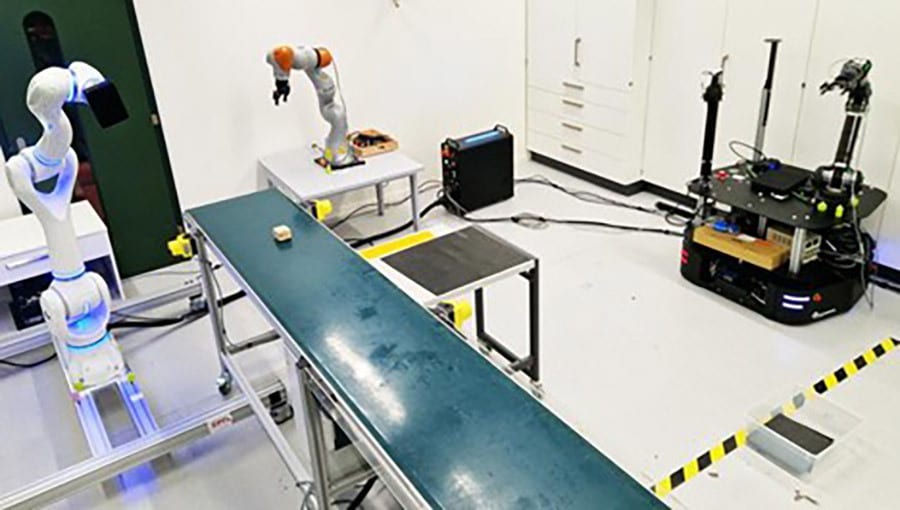
A new framework makes it possible to teach a skill to robots with different mechanical designs, allowing them to carry out the same task safely. Photo courtesy Ecole Polytechnique Fédérale de Lausanne
“This work addresses a long-standing challenge in robotics: how to transfer a learned skill across robots with different mechanical structures, while guaranteeing safe and predictable behavior,” says Aude Billard, Ph.D., the head of the Learning Algorithms and Systems Laboratory (LASA). “This approach could significantly reduce the time and expertise needed to deploy robots in real-world settings.”
To build their framework, Billard and her colleagues first took human-demonstrated object‑manipulation tasks, such as placing, pushing and throwing, and recorded them using motion-capture technology. Then, they mathematically converted these recorded tasks into general movement strategies.
They also developed a systematic classification of the physical limits of different robot designs, including how far their joints can move and which positions they must avoid to remain stable. The framework then uses this classification to automatically tailor the general movement strategies to different robot bodies, ensuring they can carry out tasks safely within their mechanical limits.
In an assembly line experiment, a human demonstrated a task by pushing a wooden block off a conveyor belt onto a workbench, placing it on a table and finally throwing it into a basket. By using Kinematic Intelligence, three different commercial robots were able to reproduce this same sequence safely and reliably. Each robot handled different steps of the task, and Billard says the system performed successfully even when the step allocation was changed.
“[We] aim to extend the framework to settings such as human-robot collaboration and natural language-based interaction,” notes Billard. “For example, kinematic intelligence could allow a person to instruct a robot with simple commands at home, with no need for technical programming.
“The approach is also relevant for emerging robotic platforms, where rapid hardware evolution means that today’s machines may soon be replaced by newer versions,” claims Billard. “Enabling seamless transfer of skills across such platforms could play a key role in making them practical and scalable. Our goal is to remove the need for technical expertise, while still ensuring safe and reliable operation.”
Humanoid Robot Market Is on the Brink of Explosive Growth
MUNICH—After years of hype, humanoid robots are on the verge of moving from the prototype phase to industrial-scale rollout.
A new report by Roland Berger Strategy Consultants claims that recent advances in artificial intelligence could enable humanoid systems to operate at running costs of around $2 per hour in the near future. This would make them cost-competitive in high-wage countries and enable manufacturers to counter the shortage of skilled labor.
According to the study, robotics manufacturers could reach revenues of up to $750 billion by 2035.
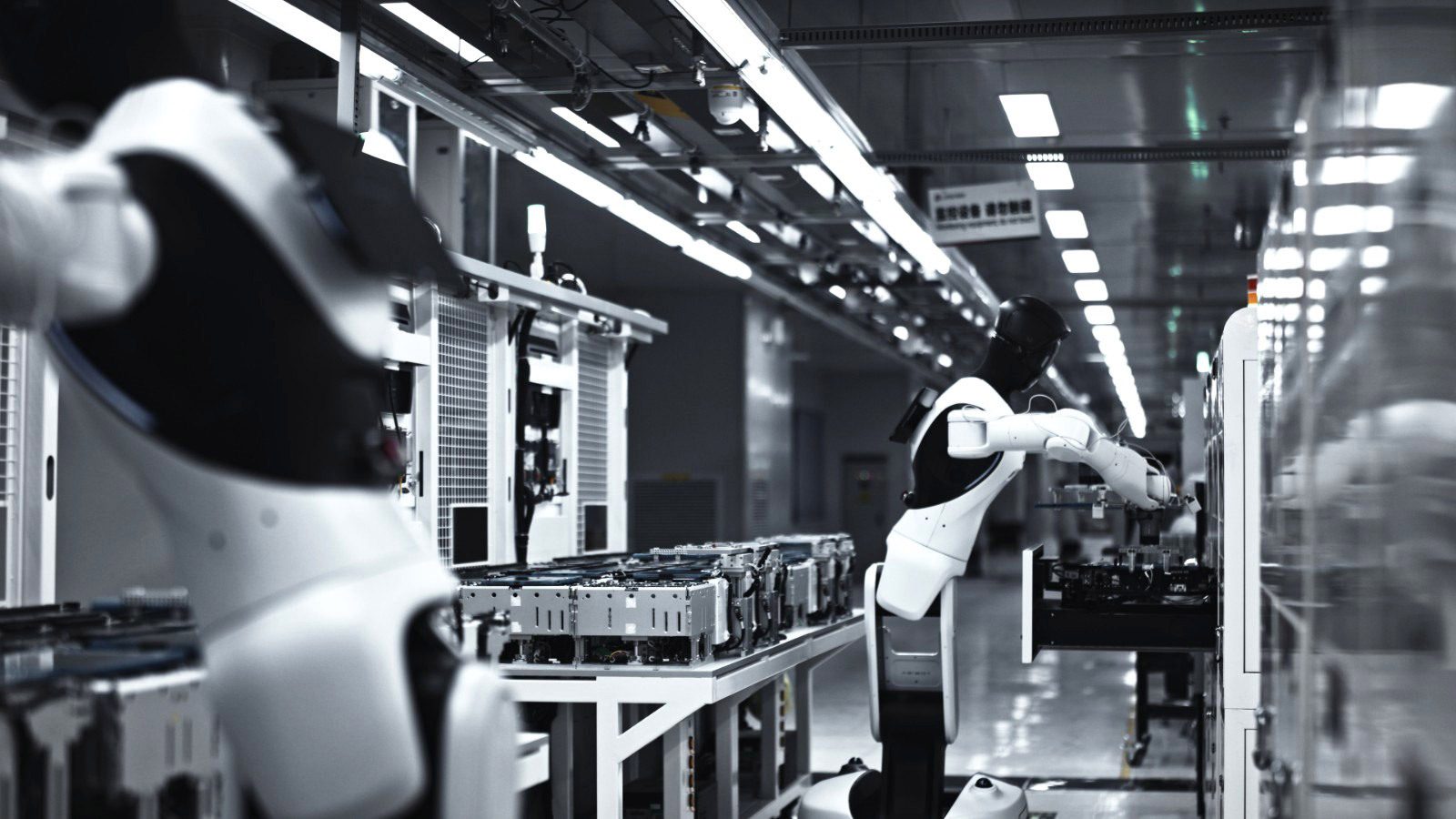
Humanoid robots may soon become cost-competitive in high-wage countries, enabling manufacturers to address the skilled labor shortage. Photo courtesy Agibot Innovation Technology Co.
“We are currently at the point where technological feasibility is meeting economic necessity,” says Thomas Kirschstein, a partner at Roland Berger. “The key question is no longer if humanoid robots are realistic, but how quickly they will scale.”
Kirschstein predicts that humanoids will create new markets far beyond the robot itself: from motors, mechanics and sensors to electronics and production equipment—a complex value chain that builds on existing industrial capabilities.
However, before humanoid robots can take on fully autonomous production tasks, Kirschstein warns that the technology must progress further. “While the hardware is already at an advanced stage, software, supply chains and regulations are maturing gradually,” he points out. “Benefits will initially emerge in clearly defined, repetitive applications such as unpacking or transporting items. Only as software maturity increases will the range of tasks expand.”
Issues such as durability, as well as safety and liability, will also determine the speed and breadth of industrialization. The complex systems must withstand continuous operation in sometimes harsh production environments.
Existing safety standards are designed for traditional, fenced-off automation. Humanoid robots, by contrast, work dynamically and move in the same spaces as people. Kirschstein believes this will require new testing and certification approaches, as well as harmonized legislation.
Wristband Enables Wearers to Control Robotic Hand
CAMBRIDGE, MA—Engineers at the Massachusetts Institute of Technology here have developed a wearable device that can control robotic movements. By moving their hands and fingers, users can direct a robot to play piano and shoot a basketball, or they can manipulate objects in a virtual environment.
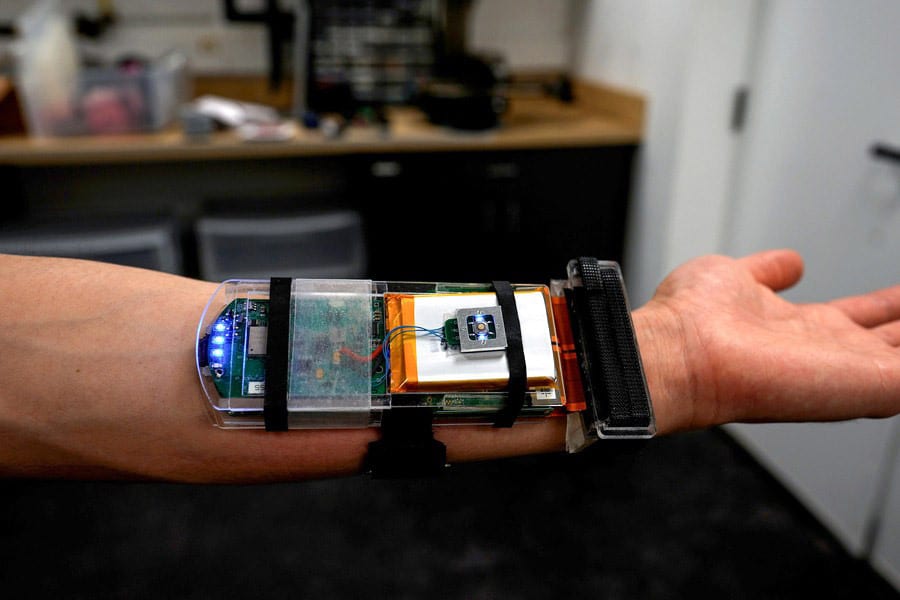
The ultrasound-based wristband precisely tracks a wearer’s hand movements in real-time. It produces images of the wrist’s muscles, tendons and ligaments as the hand moves, and is paired with an artificial intelligence algorithm that continuously translates the images into the corresponding positions of the five fingers and palm.
A person wearing the wristband can wirelessly control a robotic hand. As he or she gestures or points, the robot does the same.
This wearable device uses ultrasound technology to control robotic movements. Photo courtesy Massachusetts Institute of Technology
“We think this work has immediate impact in potentially replacing hand tracking techniques with wearable ultrasound bands in virtual and augmented reality,” says Xuanhe Zhao, Ph.D., a mechanical engineering professor at MIT who is heading up the R&D project. “It could also provide huge amounts of training data for dexterous humanoid robots.”
According to Zhao, human hands are incredibly complex devices. The seemingly mundane task of scrolling through a smartphone screen, for example, requires the coordination of 34 muscles, 27 joints, and more than 100 tendons and ligaments. Mimicking their many nuanced gestures has been a longstanding challenge in robotics and virtual reality.
There are currently a number of approaches to capturing and mimicking human hand dexterity in robots. Some approaches use cameras to record a person’s hand movements as they manipulate objects or perform tasks.
Others involve having a person wear a glove with sensors, which records the person’s hand movements and transmits the data to a receiving robot. But, erecting a complex camera system for different applications is impractical and prone to visual obstacles. And sensor-laden gloves could limit a person’s natural hand motions and sensations.
To address those challenges, Zhao and his colleagues experimented with various types of ultrasound stickers—miniaturized versions of the transducers used in doctor’s offices that are paired with hydrogel material that can safely stick to skin. They designed a wristband with an ultrasound sticker that is the size of a smartwatch, and added onboard electronics that are about as small as a cellphone.
The engineers are using the wristband to gather hand motion data from multiple users with different hand sizes, finger shapes and gestures. They envision building a large dataset of hand motions that can be plumbed, for instance, to train humanoid robots in dexterity tasks.
“We believe this is the most advanced way to track dexterous hand motion, through wearable imaging of the wrist,” says Zhao. “We think these wearable ultrasound bands can provide intuitive and versatile controls for virtual reality and robotic hands.”
Physical AI Will Take Human-Robot Collaboration to the Next Level
PARIS— Physical AI marks a shift in robotics from automation to autonomous action in the real world. A new report by the Capgemini Research Institute claims the technology will unlock new opportunities for manufacturers. For instance, it will enable robotics applications that were previously impossible or impractical.
“Physical AI is at an inflection point as technological breakthroughs and market forces converge to accelerate real‑world deployment at scale,” says Pascal Brier, chief innovation officer at Capgemini. “Advances in foundation models are equipping robots with the intelligence needed to operate autonomously in complex environments, while simulation technologies are compressing training cycles by enabling large‑scale learning."
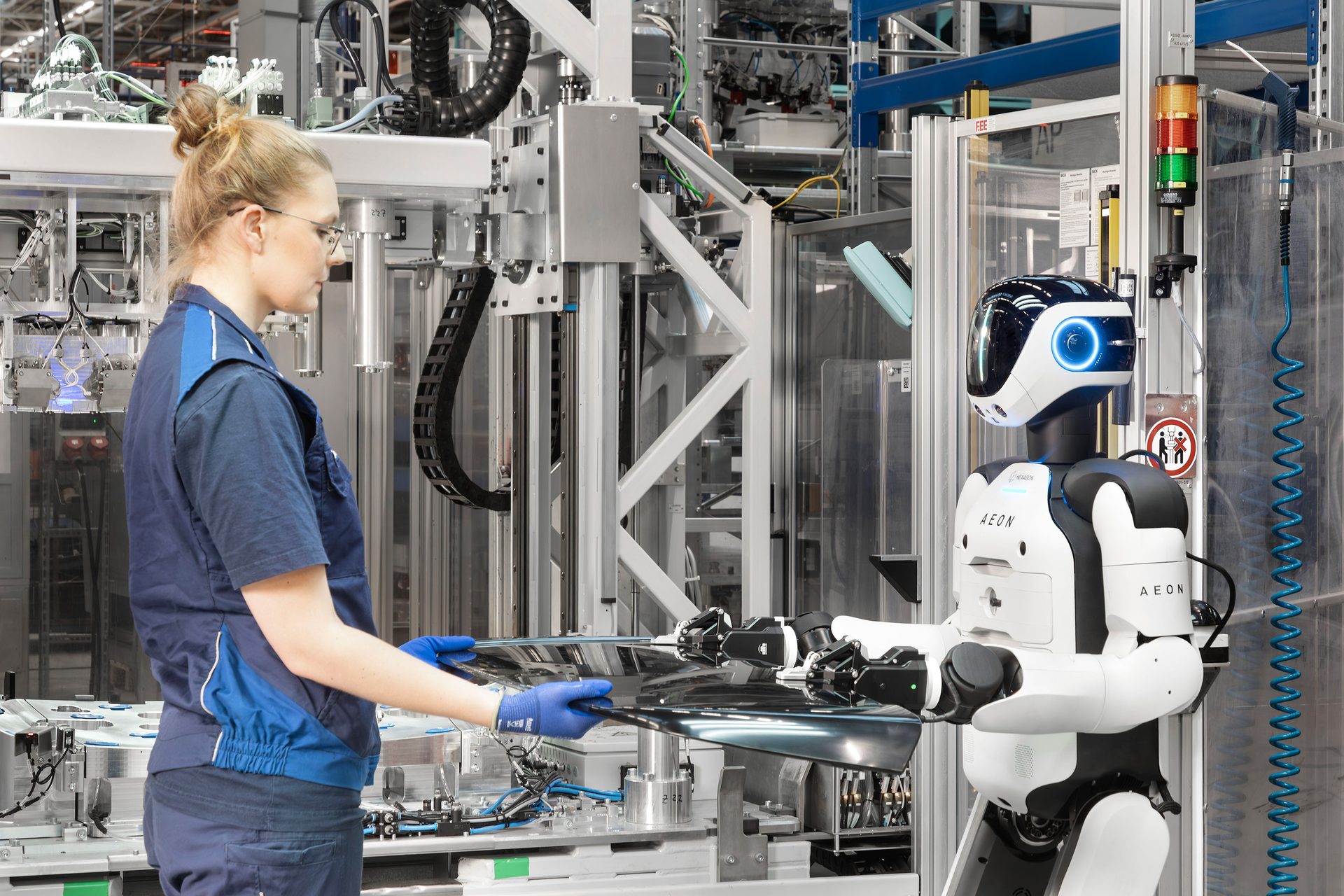
Physical AI will unlock new opportunities for human-robot collaboration in manufacturing. Photo courtesy BMW AG
An emerging AI‑robot‑data flywheel is reinforcing this progress, as deployed systems generate real‑world data that continuously improves performance and generalization. These gains are amplified by advances in edge computing and batteries, falling hardware costs, new commercial models such as robotics‑as‑a‑service, and connectivity breakthroughs such as private 5G and precise wireless positioning.
As reindustrialization efforts accelerate in Europe and the United States, Brier believes that physical AI is emerging as a key enabler. Indeed, he says that reshoring activity is increasingly driving interest in physical AI as a way to support domestic production at scale. Two-thirds of organizations claim it will be a high priority in their automation agenda for the next three to five years.
Improved flexibility is a key benefit, such as the ability to reconfigure production systems and workflows more rapidly than with traditional robotics or fixed automation. Improvements in safety and reduced physical strain are also advantages of investing in the technology.
“Physical AI marks a shift from systems that describe the world to systems that can act within it,” says Brier. “However, robotics has a long history of overpromising, as early breakthroughs created expectations the technology could not yet meet.
“What is different today is not the hype, but the convergence of AI, data and engineering maturity,” notes Brier. “The opportunity is real, provided we focus on what works at scale.
“Deploying physical AI responsibly, safely and progressively will be essential to building trust, with security by design, transparency and human oversight at the core of sustainable human‑robot collaboration,” warns Brier.