
AUTOMOTIVE ASSEMBLY
CONTACT
Austin

Lightweight battery-powered aircraft are ready for take-off.
Solar-Powered Vehicle Technology
Austin Weber // Senior Editor // webera@bnpmedia.com
Photovoltaic-integrated body panels could extend the range of EVs.
This lightweight three-wheeled vehicle is covered with solar panels. Photo courtesy Aptera Motors Corp.
AUTOMOTIVE ASSEMBLY PRODUCTS
“Let the Sunshine In” is a catchy song from the late-1960s musical “Hair.” It also is apropos today, as more people drive cars equipped with panoramic roofs instead of traditional metal hardtops.
Glass-roofed vehicles appeal to motorists who value improved interior illumination, prefer the feel of a spacious cabin or simply like the look of upscale aesthetics. A roof made from glass also makes it easier for engineers to integrate next-generation photovoltaic (PV) technology into cars.
Automakers and suppliers are actively exploring solar-integrated vehicle technologies to extend EV driving range, improve energy efficiency and reduce dependence on grid-based charging infrastructure. In addition, solar modules can help power auxiliary systems such as infotainment, lighting and ventilation systems to enhance vehicle performance while lowering overall energy consumption.
The sun is a free, powerful source of energy that has intrigued automotive engineers for decades. However, attaching solar panels to a bus, car or truck is much more challenging than simply putting them on the roof of a house. That’s because vehicles are subjected to constant vibration and are more likely to be hit by pebbles or other types of road debris.
Features
• Open frame designs allows access all around
• Tensioned with chordal compensating cam to reduce vibration
• Link pins use needle roller bearings for increased longevity
• Multiple drive options
Performance
• Zero-backlash in all directions
• High load capacity
• Long-term accuracy
• Fast and flexible indexing
Sankyo Automation
937-498-4901
beilert@sankyoautomation.com
www.sankyoautomation.com
IC80 Inline Chassis
“[Mobile] modules need to be adjusted to be lighter or better fitting for the application, such as curved surfaces,” says Martin Heinrich, Ph.D., group manager for encapsulation and integration in the photovoltaics division of the Fraunhofer Institute for Solar Energy Systems. “In addition, vehicle safety measures and crash worthiness issues need to be taken into consideration. But, mobile solar modules are usually operated at lower voltages than stationary installations.
“Today, solar cells are cheaper and more efficient than in the past, due to technology developments in the photovoltaic industry,” explains Heinrich, who has conducted R&D projects involving solar-powered commercial vehicles. “Technologies for vehicle applications have been developed which are specifically suited [to vehicles] and easy to implement.
“This includes things such as curved modules with crystalline silicon solar cells, lightweight modules for commercial vehicles fulfilling harsh environmental tests, new module technologies for hood integration of cars and power electronics,” notes Heinrich. “Substantial work in measurement of curved modules and prediction of yield has also been achieved.”
Motion Index Drives designed and manufactured a custom 9-inch precision link conveyor for an automotive application. The system indexes in precise 9-inch increments to match tooling spaced at 9-inch centers, ensuring accurate positioning and smooth integration into the customer’s manufacturing process.
Motion Index Drives
info@mid.us.com
www.motionindexdrives.com
Precision Link Conveyor for Automotive Parts Manufacturing
“Both the automotive and solar panel industries are changing dramatically and making huge strides in technology and efficiency,” adds Robert Fisher, senior manager at SBD Automotive Germany GmbH. “The cost to build a highly efficient solar panel has come down so dramatically that many automakers can now consider integrating them into vehicles.”
An extendable roof-mounted solar panel charges this EV while it is in motion and when it’s parked. Photo courtesy Nissan Motor Co.
Improved Technology
According to Fisher, a former engineer at Honda Motor Co., recent technological advancements include lightweight photovoltaic materials, flexible solar panels, higher conversion efficiencies and improved durability. Automakers and suppliers are also investing in design innovations to seamlessly incorporate solar panels into vehicle roofs, hoods and body surfaces without compromising aerodynamics or aesthetics.
“Photovoltaics in vehicles face significantly harsher operating conditions than stationary systems,” says Sebastian Erhart, director of product strategy and innovation at Webasto Group, a 125-year-old company that specializes in battery, thermal and roof systems for electric vehicles. “A moving vehicle is constantly exposed to vibration, mechanical stress and aerodynamic forces. These factors place higher demands on the durability, encapsulation and attachment of solar modules.”
Solar-powered vehicles are still a niche market that faces unique challenges, such as the relatively high upfront cost of integrating solar modules into vehicles and the limited surface area available for energy generation, which can restrict overall power output. Efficiency challenges under varying weather conditions, including reduced performance in low sunlight regions, may also impact adoption rates.
In addition, design complexities, durability requirements, and the need to balance vehicle weight and aerodynamics can increase manufacturing challenges.
Erhart claims that several factors have limited early adoption of mobile solar cells. “Vehicle surfaces offer only a small area, which means the total energy yield is modest compared to household photovoltaic installations,” he points out.
Omega 750 S enables fully automated wire harness production for automotive manufacturers. Supporting 0.13–1.5 mm² wires, it combines speed, precision, and software connectivity for optimized workflows. Designed for high-volume assembly, it ensures superior quality and cost efficiency, helping OEMs and suppliers maintain a competitive edge.

“Integrating solar modules into complex roof structures adds design, engineering and cost challenges,” explains Erhart. “Additionally, car manufacturers have historically focused on priorities such as battery development, range extension through drivetrain improvements and digitalization, pushing solar integration further down the list.”
Despite numerous benefits, solar power has failed to catch on with mass-produced electric vehicles in the past. A handful of legacy automakers, such as Hyundai and Toyota, have dabbled with optional solar panels on vehicles such as the IONIQ 5, the Sonata and the Prius Prime.
Before it went bankrupt, Fisker Automotive also offered a SolarSky roof on some of its models. But, consumers were underwhelmed by the overall performance of those vehicles.
Several new developments may lead to next-generation automotive applications, however. Hyundai, Mercedes-Benz and Nissan recently unveiled concept vehicles that feature integrated solar panels.
Improve consistency in lubrication, cleaning, pretreatment, and drying. The right nozzle helps precision spray systems reduce defects, save fluid, ensure long term stability, and integrates smoothly into automated or robotic environments.
Spraying Systems Co
1-800-95-SPRAY
www.Spray.com
Spray Support From Start To Finish
Earlier this year, Hyundai showcased a van in Europe called the Staria Electric Camper. It features a 520-watt solar panel system integrated into the roof. The automaker claims that five hours of sunlight per day can generate up to 2.6-kilowatt-hours of electricity. That energy can be stored and used to run onboard systems or add small boosts to range during extended off-grid trips.
At last October’s Japan Mobility Show, Nissan Motor Co. launched a version of its best-selling EV with an optional solar panel. The roof-mounted Ao-Solar Extender can charge the compact Sakura Keiboth while driving and when parked. Its name is derived from the Japanese word “aozora” (blue sky).
When stationary, an additional panel extends outward from storage, increasing the solar panel surface area and power generation potential to approximately 500 watts. The expanded panel also creates shade and helps block sunlight from entering through the windshield, reducing cabin temperature and lowering the need for air conditioning power consumption.
The system has been designed to minimize drag and integrate with the Sakura’s overall appearance. Nissan claims that, on an annual basis, it can generate enough solar electricity to power up to 1,864 miles of driving.
The BalTec ELECTRIC EA30 is a roller forming machine with 3-axis servo technology. With its three-inline servo motors, the EA30 can control with precision the stroke and rotation of the roller head assembly and articulation of the roller wheels. Each axis is individually programmable, offering superior forming capability and flexibility.
BalTec Corporation
724-873-5757
Articulating Roller Forming with 3-Axis Servo Technology
Solar Paint
During the 2025 IAA show in Munich, Mercedes-Benz Group AG turned heads with a concept car called the Vision Iconic. One of its most unique features is a coating of solar cells integrated into the vehicle’s body.
“[We are] researching innovative solar modules that could be seamlessly applied to the bodywork of electric vehicles, similar to a wafer-thin paste,” says Markus Schäfer, chief technology officer at Mercedes-Benz. “The photovoltaic-active surface could be adaptable to various substrates.
This concept car features a thin coating of solar cells that are integrated into its bodywork. Photo courtesy Mercedes-Benz Group AG
“When applied to the entire vehicle surface of the Iconic Vision, additional range could be harnessed from the sun, depending on geographical location and local condition,” explains Schäfer. “As an example, an area of 11 square meters (equivalent to the surface of a mid-size SUV) could produce energy for up to 12,000 kilometers a year under ideal conditions.”
Schäfer claims the coating does not contain any rare-earth materials or silicon and can be easily recycled. The solar cells have a high efficiency of 20 percent and generate energy continuously—even when the vehicle is switched off.
“The solar paint could be a very effective future solution for longer ranges and fewer charging stops,” Schäfer points out. “The solar paint contains only nontoxic and readily available raw materials. It is easy to recycle and considerably cheaper to produce than conventional solar modules. At 5 micrometers, the solar paint is extremely thin and at the same time very hard.
“Our research department is working hard to enable its use on all exterior surfaces of the vehicle, regardless of their shape and angle,” says Schäfer. “Our aim is to be able to apply solar paint to all exterior surfaces to maximize the energy yield.”
“It sounds to me like solar modules are applied as a thin film to the body panels in this application,” says SBD Automotive’s Fisher. “Then the paint is sprayed on top. The magic in the paint is that it can transmit solar radiation while reflecting specific colors, ensuring that the customer can still customize the paint to their liking.
“While there is some value in solar panels, it’s still not something ready for mass adoption,” warns Fisher. “It continues to be more of a niche option.”
Fisher believes the technology makes more sense with large commercial vehicles, such as heavy-duty trucks, because they contain a lot of unused rooftop space.
Large commercial vehicles contain a huge amount of unused roof space that is ideal for solar panels. Photo courtesy Fraunhofer Institute for Solar Energy Systems
“Things like air conditioning and refrigeration units need to stay powered continuously,” notes Fisher. “The roof of a 53-foot semi-trailer has enough [area] for about eight full-sized solar panels, which would generate around 4 kilowatts worth of power.”
Fisher claims that widespread adoption of PV technology will ultimately depend more on geography than technology. “For optimal results, you have to orient your vehicle in the right angle and direction—toward the south—to get the most sun exposure,” he points out. “During the winter months, that can be a big challenge in many parts of Asia, Europe and North America.
“So, there will always be parts of the world where the technology will be less appealing,” says Fisher. “Solar-powered mobility may work great in Arizona, California or Florida, but it doesn’t make as much sense for people in the Midwest.”
While solar-powered cars have been slow to catch on in many parts of the northern hemisphere, the technology is appealing in Africa and South America.
Using Chinese technology, a start-up company in Burkina Faso (a small land-locked country in West Africa) called Itaoua is producing electric cars equipped with solar panels for extended range and reduced dependence on charging infrastructure.
Another start-up called Bako Motors is currently producing a two-seat microcar called the Bee that’s equipped with a solar roof. It also makes a commercial version dubbed the B-Van. The company operates factories in Saudi Arabia and Tunisia.
According to the automaker, the solar panels can supply more than 50 percent of daily energy needs. It claims that the B-Van generates enough power for approximately 31 miles of driving per day.
Solar panels enable this small delivery van to drive more than 31 miles a day without charging. Photo courtesy Bako Motors
Three-Wheeled Sunmobile
The solar-powered vehicle that many people in the United States are keeping their eyes on is the much-anticipated Aptera. In March, the first $40,000 microcar rolled off the assembly line at the company’s factory in southern California. It marked a major milestone as it progresses toward regulatory certification and initial customer deliveries.
The three-wheeled vehicle, which has been in development for more than 15 years, uses multiple solar panels to reduce reliance on grid recharging. The panels wrap around the body, hood and roof of the funky vehicle, which boasts a range of up to 400 miles from a single charge in under 1 hour.
Aptera’s aerodynamic carbon-fiber composite body is covered in 3 square meters of solar cells. At least 90 percent of the power produced by the solar panels goes toward propelling the lightweight two-passenger vehicle, which can accelerate from 0 to 60 mph in 6 seconds and has a top speed of 101 mph.
Aptera integrates its custom solar panels at an in-house facility. It plans to sell them to Telo Trucks, a start-up company that hopes to soon ramp up production of a mini electric pickup truck dubbed the MT1.
Aptera’s vehicle achieves its efficiency via power electronics that convert solar energy into electricity to charge cylindrical battery cells made by LG Energy Solution. CTNS Co. produces the modules, which are integrated into battery packs by Aptera.
“We just completed the first vehicle off of our low-volume validation assembly line,” says Chris McCammon, head of marketing at Aptera Motors Corp. “We are targeting initial customer deliveries by the end of this year, with production ramping up in 2027. As noted in our SEC filings, this timeline is dependent on securing the necessary funding.”
Aptera’s 77,000-square-foot facility in Carlsbad, CA, will eventually produce up to 20,000 vehicles per year, with one car rolling off the assembly line every 12 minutes.
“Our facility uses a light assembly, microfactory approach,” explains McCammon. “This allows us to produce cars without the need for welding robots, massive machinery or a paint shop, as our vehicles are wrapped instead of painted. The layout is compact and flexible. [Eventually, we plan to] replicate it in other locations with roughly 100,000 square feet of space to scale vehicle deliveries around the world.
“Our validation assembly line currently has 14 workstations,” McCammon points out. “Within this facility, we assemble batteries, solar panels and vehicle bodies. The chassis line meets the body line in station five, [then] moves through station 14 to become a complete vehicle. All other components are designed to arrive as prebuilt subsystems from our supply chain.
“For our initial low-volume production, we will not use automated guided vehicles (AGVs),” adds McCammon. “However, [we eventually plan to rely on] AGVs for high-volume production.”
Aptera plans to mass-produce solar powered microcars at a factory in southern California. Photo courtesy Aptera Motors Corp.
Some Suppliers Love the Sun
Several Tier One automotive suppliers are bullish on the future of solar-powered vehicles. In fact, their engineers have been busy developing next-generation technology.
AGC Automotive Europe has developed a panorama-style glass roof that features a glass-glass design with high-efficiency back contact solar cells and a uniform full black appearance. Solar cells are laminated between the two sheets of thin glass.
“This vehicle-integrated photovoltaic panoramic sunroof enables plug-free charging, both when driving and when parked in the sun, growing vehicle mileage all year long,” says Loïc Tous, R&D project manager at AGC Automotive. “This offers real value to customers by improving daily comfort and convenience, while reducing the dependency on charging stations and the associated CO2 emissions.
“[It] enables more headspace and significant weight savings compared to roofs equipped with a traditional roller-blind system,” claims Tous.
Because the majority of traditional rooftop solar panels use silicon-based cells, they tend to be heavy and hard. To address demand for subassemblies that are lighter and more flexible, engineers at Aisin Corp. are developing perovskite solar cells.
Perovskite is a type of crystalline structure. Materials with this structure have a variety of electrical and magnetic properties. Because it has a simple structure, perovskite can be synthesized from a variety of substances.
The next-generation solar cells have a power-generating layer made of an organic material with a perovskite structure and are only about 0.001-millimeter thick. In addition to being thin and light, they are flexible and bendable.
A combination of back-contact solar cells and a low-emissivity coating on the inner glass pane optimizes thermal comfort within EVs and ensures a uniformly black appearance. Illustration courtesy AGC Automotive Europe
The efficiency of perovskite solar cells has now increased to a level comparable to that of silicon-based solar cells. They can also generate electricity even in dimly lit environments, such as indoors or on cloudy days. And, because they can be easily manufactured by painting or printing the material on a substrate, they enable automotive solar panels to be cost-effectively mass-produced.
Earlier this year, Metyx Composites received a JEC Composites Innovation Award for its new automotive PV modules.
According to Ugur Ustunel, CEO of Metyx, conventional glass-based PV modules are heavy, fragile and difficult to integrate onto curved vehicle surfaces. “Vehicle-integrated photovoltaics require materials that are lightweight, impact-resistant and adaptable to complex geometries.” he points out.
To address the issue, Metyx engineers replaced glass with lightweight, impact-resistant composites, developing PV modules that behave as structural, vehicle-ready components, not add-on panels.
Metyx developed a completely glass-free PV module made from fiber-reinforced composites with a highly transparent glass fiber-reinforced polymer front sheet and a lightweight carbon fiber-reinforced polymer sandwich back sheet. Instead of being produced via multistep lamination like traditional PV systems, Metyx’s PV modules are built using a single-step vacuum infusion process.
A low‑pressure injection molding process safely encapsulates fragile solar cells, enabling seamless integration on curved or complex vehicle exteriors. Photo courtesy Solarstic
“Lightweight composites combine structural performance, optical functionality and design flexibility, making them ideally suited to transform vehicle surfaces into active energy-generating components without compromising weight or safety,” claims Ustunel.
“By enabling lightweight, durable and shape-adaptive PV integration, this technology removes one of the main barriers to solar vehicles: the incompatibility of glass modules with vehicle design,” explains Ustunel. “Composite PV modules allow energy generation on roofs, hoods and side panels, supporting off-grid operation, extending driving range and powering auxiliary systems.
“This paves the way for new mobility architectures where energy generation, structure and design are developed as a single, integrated system,” says Ustunel.
At the 2026 Consumer Electronics Show in Las Vegas, Solarstic received an award for its injection-molded vehicle solar module. The South Korean start-up has already worked with Hyundai to develop a PV-integrated hood and roof.
Solarstic uses a low‑pressure injection-molding process to safely encapsulate fragile solar cells. The result removes glass weight and design constraints, enabling seamless integration on curved or complex exteriors. It enables automotive engineers to preserve original character lines while adding embedded solar functionality.
When installed on vehicles, Solarstic’s solar module generates energy both while driving and when parked. This supplemental charging extends driving range, reduces visits to charging stations and lowers overall charging costs.
Perovskite solar cells (right) are lightweight, flexible and inexpensive to mass-produce. Illustration courtesy Aisin Corp.
The module accommodates multiple types of solar cells and can be customized to specific vehicle models and design requirements, providing automakers with a flexible, scalable path to next generation, solar integrated mobility.
Webasto is another automotive supplier developing new types of solar technology for electric vehicle applications. It recently unveiled EcoPeak, a roof concept designed to demonstrate how lightweight construction and solar energy can be combined in one system.
“We’re using up to 80 percent sustainable and recycled materials,” says Erhart. “[It] also delivers weight savings of up to 40 percent compared to conventional roof systems. The concept expands the functional solar area by covering not only the roof, but also the rear window, enabling the system to supply the vehicle with up to 350 kilowatt-hours of solar energy per year, equivalent to roughly 1,553 miles of driving range depending on vehicle type and climate conditions.
“By integrating the rear window into the solar-capturing area, EcoPeak offers a larger active surface than typical solar roofs,” claims Erhart. “The system replaces glass and aluminum components with bio mass balanced polycarbonate and lightweight polymers, achieving substantial weight reduction, and improving energy efficiency and driving dynamics.
“The concept also includes an advanced integrated roller-blind system made from recycled polyethylene terephthalate bottles, which enhances comfort and shading while supporting circular material flows,” explains Erhart. “Its rapid CO₂ amortization—around two years in favorable conditions—further differentiates it from earlier-generation automotive solar [systems].”
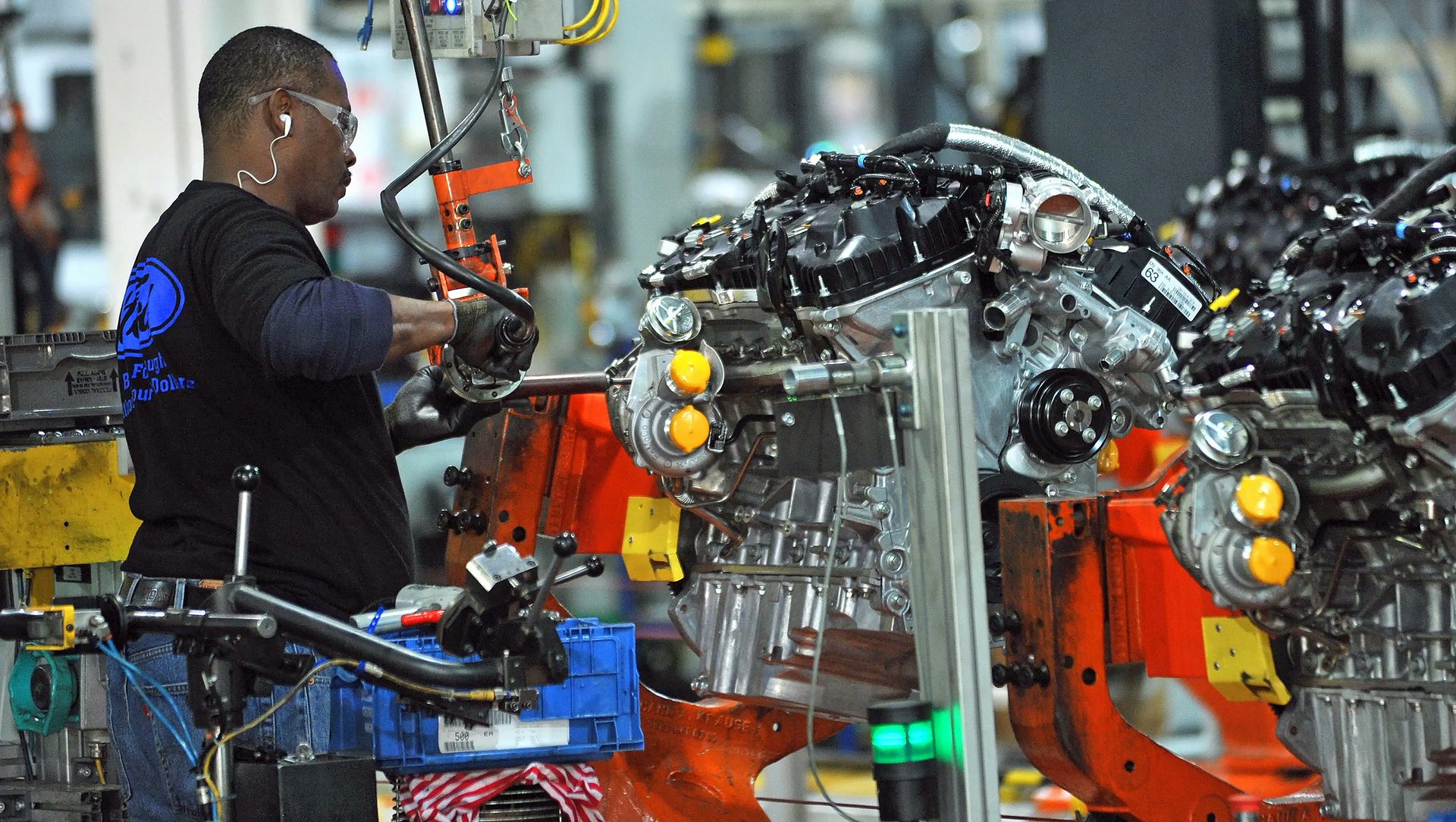
“A company with Ford’s scale can really influence the supply chain and business practices across our entire industry,” adds Sue Slaughter, purchasing director at Ford Motor Co. “It is so important that we not only think about how [we] can use our purchasing power to fuel our business needs, but also to advance sustainability.”
Because the automotive supply chain is extremely complex, the Guiding Principles contain expectations about business ethics, working conditions, human rights, health and safety, environmental leadership and supply chain due diligence for suppliers at all tiers. All suppliers are expected to uphold these standards and enforce them throughout their supply chain.
The Guiding Principles are based on fundamental elements of social, environmental and governance responsibility that are consistent with applicable laws and international standards created by organizations such as the United Nations.
Topics covered under the revised guidelines include the following:
Business ethics, including counterfeit parts and data protection.
Environmental issues, such as air quality, carbon neutrality, chemical management, circularity and water management.
Health and safety issues, such as personal protective equipment and workspace.
Human rights and working conditions, such as benefits, wages and working hours.
Responsible supply chain management, such as ethical sourcing of raw materials.
The BMW Group has implemented several projects in its packaging logistics unit to help the environment and conserve resources. The goal of the initiative is to work closely with suppliers to reduce carbon emissions and adhere to the principles of a circular economy.
BMW’s European assembly plants are using more recycled material in their packaging. For newly awarded contracts, the proportion of recycled material in reusable packaging for logistics purposes will almost double this year from around 20 percent to over 35 percent.
Using alternative sustainable materials, reducing single-use packaging, introducing lightweight packaging in certain areas and reducing transport volumes will also help cut carbon emissions.
BMW is monitoring the impact of individual measures via a CO2 calculator for packaging. The automaker’s overall aim is to reduce CO2 emissions in the supply chain by 20 percent per vehicle compared to 2019.
“Our re:think, re:duce, re:use, re:cycle approach is being implemented consistently in packaging logistics,” says Michael Nikolaides, head of production network and logistics at BMW Group. “We’re using innovative strategies to consistently reduce the volume of resources we use, thus reducing our carbon footprint.
“We are also doing our part to get the BMW iFACTORY up and running, with a particular focus on the ‘green’ side of things…with an emphasis on flexibility and efficiency, sustainability and digitalization,” explains Nikolaides. “It provides an answer to the challenges involved in the transformation to e-mobility and [leverages] the latest technologies to create a production process that uses minimal resources.”
According to Nikolaides, BMW is using more recycled material, such as expanded polypropylene (EPP) packaging. “Our newly developed EPP packaging already contains 25 percent recycled material,” he points out. “EPP is used in special containers, as its shape can be adapted to the components being packaged, allowing them to be transported safely.
“Around 360,000 of these containers are needed each year,” claims Nikolaides. “Using 25 percent recycled material allows us to save almost 280 tons of CO2 annually. There are plans to increase this proportion of recycled material even further, with the first pilot schemes with 100 percent recycled material currently underway. If these tests are successful, this configuration will become standard for new contracts from 2024.
“An additional 680 tons of carbon emissions savings can be made every year by using covers and so-called small load carriers with 50 percent recycled contents,” says Nikolaides. “As things stand, these measures are focused within the European markets due to the current waste management situation and available recycling infrastructure. But, we are working toward expanding to our locations in China, Mexico and the United States.”
BMW also plans to use folding large load carriers in place of traditional pallet cages made of steel. The plastic alternatives will be made from over 90 percent recycled material. They work in a similar way to the collapsible shopping crates that most people are familiar with.
When they’re empty, the carriers can be folded up, making them easier to transport. Nikolaides claims that using 15,000 of these new containers will reduce CO2 by around 3,000 tons per year.
“When it comes to packaging, the sky’s the limit,” says Nikolaides. “We’re launching pilot projects using bio-based materials to replace oil-based substances such as polyethylene and polypropylene.
“We are also investigating whether and in what ways we can use materials from recycled household appliances in our packaging,” explains Nikolaides. “In the long term, our aim is to use alternatives to raw materials across the board.”
BMW Initiative Targets Sustainable Packaging
BMW is using sustainable packaging in its assembly plants. Photo courtesy BMW Group
ASSEMBLY ONLINE
For more information on electric vehicle manufacturing, visit www.assemblymag.com to read these articles: