

Automated Assembly
Labor shortages are driving new demand for automation.
Options for Screwfeeding
A key element of the line is PIA Automation’s blade-handling modules, which singulate the razor blades and insert them into a cartridge. Photo courtesy PIA Automation
Custom system handles delicate blades quickly and safely.
Automated Line Assembles
Disposable Razors
John Sprovieri // Chief Editor
In 1974, the French company Bic revolutionized the men’s grooming market by introducing the first plastic disposable razor, providing a convenient and inexpensive alternative to traditional safety razors.
While some men might debate the pros and cons of each product, there’s no doubt which one has prevailed in the marketplace. Disposable razors quickly gained traction due to their convenience and cost-effectiveness, appealing to a wide range of consumers. Their affordability and practicality make them particularly attractive to budget-conscious individuals and travelers.
According to market research firm Dataintelo Consulting, global sales of disposable razors totaled $12.8 billion in 2025, and the market is projected to reach $19.6 billion by 2034.
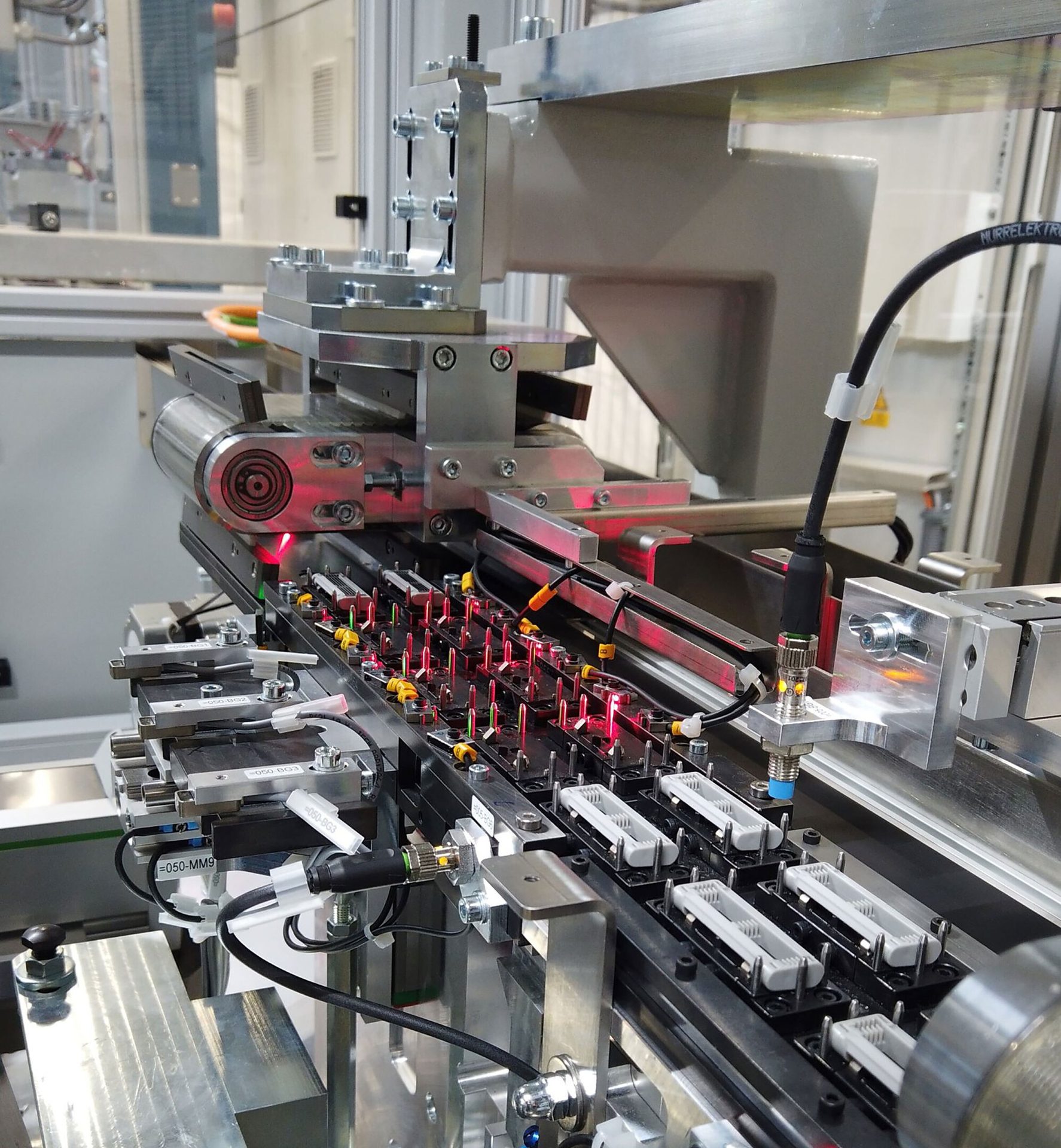
The system features two parallel high-speed transport systems to deliver consistent quality and reliability. Photo courtesy PIA Automation
Dataintelo predicts that sales of disposable razors will grow at a compound annual rate of 4.8 percent from 2026 to 2034, driven by subscription-based direct-to-consumer brands, expanded use among women, and new product offerings, such as eco-friendly designs.
Given the enormous production volumes, disposable razors are assembled on high-speed automated lines. Systems integrator PIA Automation of Evansville, IN, recently designed and built just such a system.
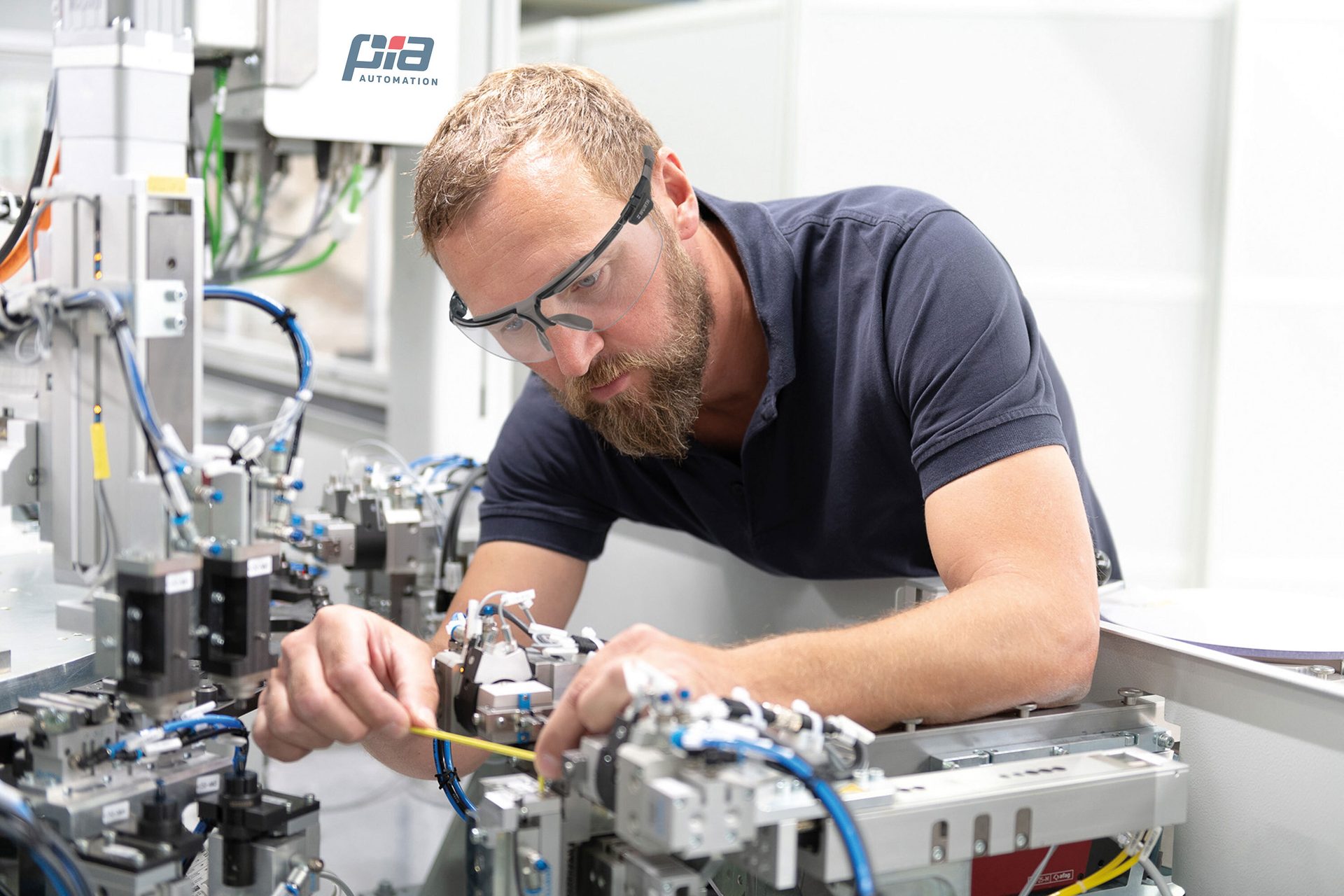
A technician fine-tunes a handling mechanism for an automated assembly system. Photo courtesy PIA Automation
Specifically, the system assembles and packages razor cartridges for personal shavers. The system features two parallel high-speed transport systems to deliver consistent quality and reliability under demanding production conditions.
Each cartridge must meet strict requirements for a close, comfortable shave. The thin, hardened and sharpened blades require precise handling, repeatable assembly and stable high-speed processing. To meet these demands, PIA Automation worked closely with the customer to develop a fully automated system capable of high-volume production while maintaining high quality.
“Our multi-blade stations are specifically engineered for high-speed applications of this kind,” says Tim Schuller, product manager at PIA Automation. “As part of this project, we further optimized the technology for both blade singulation from the magazine and precise insertion into the cartridge frame. The result is a highly stable, low-wear assembly process that ensures reliable long-term operation at maximum throughput.”
A key element of the line is PIA Automation’s blade-handling modules, which singulate the razor blades and insert them into a cartridge. The process must be done quickly and precisely, without nicking, bending or dulling the blade.
The system includes six of these modules, which are connected by two parallel transport systems. Each module is equipped with fully automated infeed and outfeed functions, ensuring a continuous flow of parts while allowing targeted decoupling of individual process steps.
“Assembly cycles with longer cycle rates can be executed multiple times within the same line without reducing overall output,” said Schuller. “The workpiece carriers are distributed across several cycle-critical stations, helping avoid any unnecessary downtime.”

At the end of the line, each cartridge is inspected with a combination of 2D cameras and 3D laser scanners. Following inspection, the cartridges are automatically inserted into packaging.
An additional challenge in designing the system was how to meet the varying requirements of different retailers. For example, one retailer might want a package of, say, six cartridges, while another retailer might prefer a package of 12. PIA engineers designed the packaging station to accommodate such variations without the need for changeover time.
For more information about automated assembly and packaging systems, visit www.piagroup.com.
ASSEMBLY ONLINE
For more information on automated assembly systems, visit www.assemblymag.com to read these articles: